Lead Testing in Englewood, CO | InspectandTest
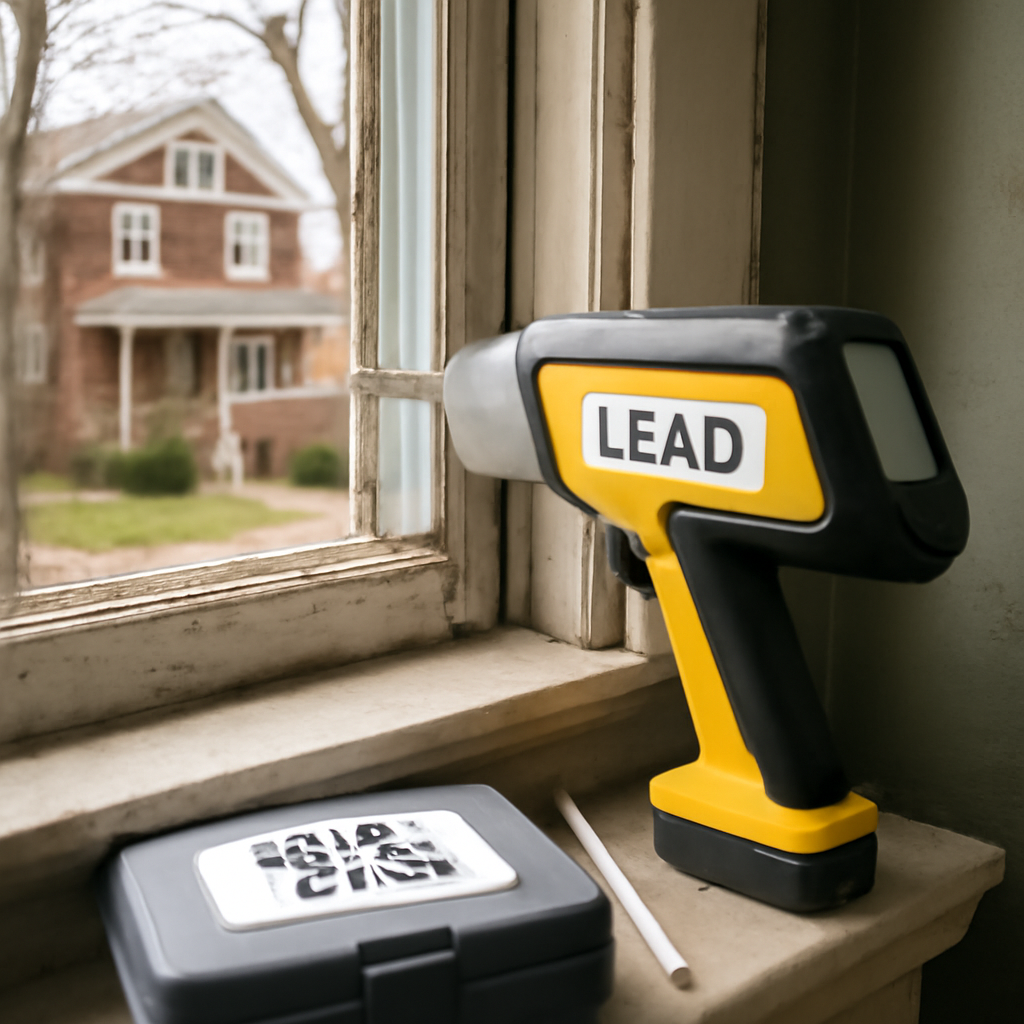
Englewood is one of metro Denver’s oldest inner-ring suburbs, sitting just south of the city along the South Platte River in Arapahoe County. Its housing stock is dominated by post-war ranches and bungalows built in the 1940s through the 1960s, which puts the overwhelming majority of homes here squarely in the pre-1978 window when lead-based paint was legal and common. That single fact makes lead a genuine concern for Englewood families with young children. This page explains how lead testing englewood homeowners should approach the question, why the local housing era matters, and what testing costs. This summary reflects EPA, HUD, and CDC guidance current as of 2026; consult a certified professional for any decision involving lead.
Part of our Lead Paint & Lead Testing guide — start there for the full picture →
Asbestos or biohazard concern? Speak with a certified contractor.
📞 Call (877) 742-8496Lead testing in Englewood: what to know
Lead testing identifies whether lead-based paint, lead in dust, or lead in water is present in a home at levels that can harm occupants. The federal government banned lead-based paint for residential use in 1978, so the age of a house is the single strongest predictor of risk. In Englewood, where most homes predate that ban by decades, the question is rarely whether lead paint was ever used but whether it remains and whether it is deteriorating.
Lead is most dangerous to children under six and to pregnant women, because it interferes with brain and nervous-system development. The hazard usually comes not from intact paint but from paint that is chipping, peeling, or being disturbed during a renovation, which creates fine lead dust that settles on floors and windowsills. For the underlying science and the pre-1978 framing, our guide to asbestos and lead in pre-1978 housing walks through the full picture. Lead testing in Arapahoe County more broadly is covered in our county lead testing overview.
Why testing matters even in a home that looks fine is worth stressing. Lead-based paint is often buried under newer layers, intact on the surface but exposed at friction points like window jambs, door frames, and stair treads where opening and closing grinds the layers together. A 1950s Englewood ranch can have pristine-looking walls and still generate lead dust every time a single-hung window is raised. Surface appearance tells you little; only testing the actual painted components and the dust they shed tells you whether a hazard exists.
Why Englewood homes need lead testing
Housing era is the driver. Englewood was largely built out during the post-war boom, and its Old Englewood, Broadway-corridor, and Englewood Knolls neighborhoods are full of 1940s-to-1960s ranches and bungalows with original or early-repainted woodwork. The EPA estimates that the older a home is, the more likely it contains lead paint, and homes from before 1960 carry the highest probability of all. Englewood’s core sits right in that highest-risk band.
Renovation activity raises the stakes. As these mature homes change hands and younger families update kitchens, refinish original trim, or replace old windows, the disturbance of pre-1978 paint is exactly what turns a dormant hazard into airborne and settled lead dust. A homeowner sanding original window casings in an Old Englewood bungalow without testing first can spread lead dust through the whole house in an afternoon. The mature trees and original architectural detail that make these neighborhoods desirable are tied to the same age that makes lead a live issue.
The occupancy pattern compounds the risk. These older Englewood homes are family homes, often bought specifically because they are affordable starter properties near Denver, Swedish Medical Center, and the redeveloped CityCenter. That means young children are frequently the occupants of exactly the housing most likely to contain lead paint. Children’s hand-to-mouth behavior and their developing nervous systems make them the most vulnerable group living in the most likely-affected homes, which is why lead testing is a standard step for families buying into Englewood’s older stock.
Soil and water add quieter pathways worth naming. In Englewood’s oldest blocks, decades of exterior lead paint weathering off pre-1960 siding and trim can leave elevated lead in the soil along foundation drip lines and in the very yards where children dig and play. Older service lines and interior plumbing can also contribute lead at the tap in some pre-1986 homes. Neither shows on a visual walk-through, which is why a thorough assessment of an older Englewood property looks beyond painted surfaces to the soil and, where warranted, the water, so a family understands every route by which lead could reach a child rather than only the most obvious one.
What an Englewood lead test covers
A professional lead assessment can take several forms depending on the goal. A lead inspection identifies the presence of lead-based paint on specific surfaces. A risk assessment goes further, identifying actual hazards such as deteriorating paint, contaminated dust, and bare soil, and recommending controls.
XRF testing and paint chip sampling
The most common professional method uses an X-ray fluorescence (XRF) analyzer, a handheld device that reads the lead content of a painted surface without damaging it. For ambiguous results, a technician may collect a small paint-chip sample for laboratory analysis. In an Englewood ranch, an inspector typically tests window components, door frames, baseboards, and exterior trim, the friction and impact surfaces most likely to shed lead.
Dust wipe and soil sampling
A risk assessment usually adds dust-wipe sampling of floors and windowsills, sent to a lab to measure settled lead, and sometimes soil sampling near the foundation and old painted exterior surfaces. In Englewood’s older neighborhoods, decades of exterior paint weathering can leave elevated lead in the soil along drip lines where children play, so soil sampling is often worthwhile around pre-1960 homes.
Lead testing cost in Englewood
A professional lead inspection or risk assessment in the Englewood market typically runs about $300 to $600 for a single-family home, depending on size and the number of surfaces and samples involved. A combined inspection and risk assessment sits at the higher end because it includes laboratory dust and sometimes soil analysis. DIY swab kits cost only a few dollars but are far less reliable and are not accepted for clearance or disclosure purposes.
For a real-estate transaction, the EPA-recognized professional assessment is the standard because its documented results hold up if they drive a repair request or a price adjustment. Buyers of older Englewood homes who plan to renovate often find the assessment pays for itself by identifying exactly which surfaces need lead-safe handling before work begins.
Weigh the cost against what it prevents. A few hundred dollars for an assessment is small against the lifelong cost of childhood lead exposure, which the CDC links to lost IQ, attention problems, and developmental delays with no safe blood-lead level. For a family moving into a 1950s Englewood ranch with a toddler, the assessment is not an optional upgrade but a basic safeguard that tells them precisely where the risk sits and how to manage it.
The cost also scales to the decision it informs. A buyer who plans to leave an older Englewood home largely as-is may only need a focused risk assessment of the rooms a child will use, which sits at the lower end of the range. A buyer planning a gut renovation of a pre-1960 bungalow benefits from a fuller inspection that inventories every painted component the work will disturb, since knowing in advance which surfaces are lead-positive lets the contractor scope lead-safe handling accurately rather than discovering the problem mid-demolition. In both cases the assessment fee is a small, fixed line item against an open-ended exposure risk, which is what makes it standard rather than optional on Englewood’s older stock.
Englewood regulations and disclosure
Federal law sets the framework. Under the Residential Lead-Based Paint Hazard Reduction Act, sellers and landlords of pre-1978 housing must disclose known lead-based paint and hazards and provide buyers with the EPA pamphlet and a 10-day opportunity to test. Because nearly all of Englewood’s core housing predates 1978, this disclosure requirement applies to most local transactions.
The EPA Renovation, Repair and Painting (RRP) Rule requires that contractors disturbing painted surfaces in pre-1978 homes be certified in lead-safe work practices. An Englewood homeowner hiring out a window replacement or a trim refinish in an older home should confirm the contractor is RRP-certified, because uncertified disturbance of lead paint is both a legal and a health problem. Colorado does not separately license home inspectors, so for any lead work tied to a sale, confirm the assessor follows recognized EPA protocols rather than assuming a state credential covers it.
Neighborhoods and areas served
Lead concern follows housing age across Englewood: the pre-war and post-war homes of Old Englewood and the Broadway corridor, the ranches of Northwest Englewood, and the bungalows of Englewood Knolls are all in the highest-probability band. Newer infill scattered through the city carries lower risk, but the city’s defining stock is its mid-century housing.
Service typically extends to adjacent Arapahoe and south-metro communities, including Littleton, Sheridan, Cherry Hills Village, and the bordering Denver neighborhoods, all of which share Englewood’s older-housing profile. Buyers comparing an Englewood bungalow against a similar-vintage home in neighboring Littleton face the same pre-1978 question, so treating lead testing as a default step across this older south-metro band reflects the shared age of the housing rather than any single neighborhood.
Within Englewood itself, the highest-priority homes are the pre-1960 properties closest to the historic Broadway core, where the oldest paint layers and the most weathered exterior surfaces concentrate. Rental properties deserve particular attention, since federal lead-disclosure obligations apply to landlords of pre-1978 units and tenant families with young children are a vulnerable group. A landlord or buyer of a converted older Englewood duplex or fourplex carries the same testing logic as a single-family purchaser, because the age of the structure, not its use, is what drives the lead risk.
How to choose an Englewood lead testing provider
Ask whether the provider is an EPA-certified lead inspector or risk assessor and whether they use a calibrated XRF analyzer plus laboratory dust analysis. A good assessor documents which surfaces were tested, the readings, and any hazards found, so the report stands up in a sale or guides a safe renovation. Pairing the lead assessment with a full home inspection is efficient when buying an older Englewood property, since it gives one coordinated view of both the structure and its hazards.
Confirm the analyzer’s calibration is current and ask whether the provider will collect dust wipes for the rooms a child will actually use, since settled dust is the most common exposure route. A competent assessor explains your options when a result is borderline rather than pushing an unnecessary full abatement, and distinguishes between intact paint that can be managed in place and deteriorating paint that needs action. That kind of measured guidance is the mark of an assessor worth hiring for an older Englewood home.
For families not in a transaction, the most useful first step is often a targeted risk assessment focused on the friction surfaces and the rooms young children occupy, rather than a whole-house inspection of every painted component. If that assessment flags deteriorating paint or elevated dust, a clear scope of lead-safe repairs follows. Either way, knowing the lead status of a pre-1978 Englewood home is far better than assuming, because the housing age here makes the presence of lead paint likely rather than rare.
References
- Lead-based paint, the RRP Rule, and disclosure — U.S. Environmental Protection Agency
- Childhood lead exposure and health effects — Centers for Disease Control and Prevention
- Lead-safe housing rules and disclosure — U.S. Department of Housing and Urban Development
Frequently asked questions
Does my Englewood home probably have lead paint?
If it was built before 1978, the chance is meaningful, and homes from before 1960 carry the highest probability. Because most of Englewood's core housing dates to the 1940s-1960s, lead paint is likely present, especially under newer layers and at friction surfaces.
How much does lead testing cost in Englewood?
A professional lead inspection or risk assessment typically runs $300 to $600 for a single-family home, depending on size and the number of samples. Combined assessments with lab dust analysis sit at the higher end.
Is intact lead paint a problem?
Intact, well-maintained paint is lower risk, but lead paint at friction points like windows and doors quietly generates dust as surfaces rub. Renovation that disturbs old paint is the bigger hazard, which is why testing before any work matters.
Do I have to disclose lead paint when selling an Englewood home?
Yes. Federal law requires sellers of pre-1978 housing to disclose known lead-based paint and hazards, provide the EPA pamphlet, and allow buyers a 10-day testing window. This applies to most Englewood homes given their age.
Who can safely renovate a pre-1978 Englewood home?
Contractors disturbing painted surfaces in pre-1978 homes must be EPA RRP-certified in lead-safe work practices. Confirm certification before any window replacement, trim refinishing, or sanding in an older Englewood home.
Most of Englewood’s housing predates the 1978 lead-paint ban, so testing an older home before a child moves in or a renovation begins is basic due diligence. To connect with a vetted local lead inspector, get in touch through our contact page.