Mold Inspection Greenwood Village, CO | InspectandTest
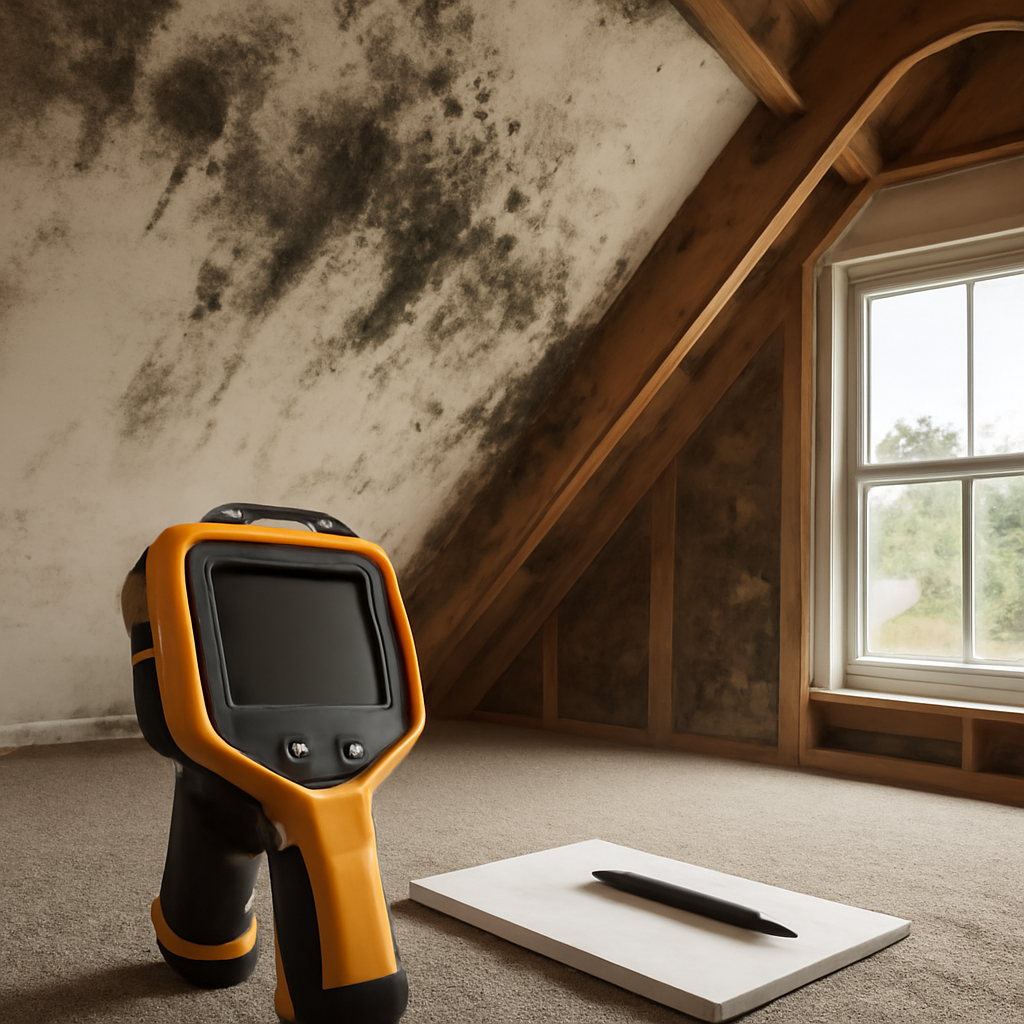
Greenwood Village is an affluent south-metro Arapahoe County community spanning the Denver Tech Center office corridor and large semi-rural estate neighborhoods like Greenwood Hills, The Preserve, and Sundance Hills. Its mix of 1970s-through-1990s custom homes with finished basements, mature landscaping along the High Line Canal and Cherry Creek corridors, and some newer luxury builds creates the moisture conditions where mold takes hold quietly. A mold inspection identifies where water is intruding, where humidity is collecting, and whether growth has begun. This page explains what mold inspection greenwood village homeowners should expect, why the local housing and landscape matter, and what the service covers. This summary reflects EPA and CDPHE guidance current as of 2026 and is general information, not a diagnosis; consult a qualified professional for your specific home.
Part of our Mold Testing & Inspection guide — start there for the full picture →
Is this mold, asbestos, or water damage? Get a free instant screen
Upload a clear photo of the suspect area. You'll get an instant AI screening opinion and what to do next. This is screening guidance, not a professional determination.
Screening guidance only. AI can be wrong. Confirm asbestos, mold type, or lead with lab testing or a licensed professional before acting.
Mold inspection in Greenwood Village: what to know
A mold inspection is a structured visual and moisture-focused assessment. An inspector looks for active growth, past water staining, elevated humidity, and the underlying conditions that allow mold to establish. In Greenwood Village, those conditions cluster in the large finished basements common to estate homes, around mature landscaping that holds moisture against foundations, and in the lower levels of custom homes built into sloping lots.
Mold spores exist in every home. The problem starts when a chronic moisture source lets them colonize drywall, framing, carpet, or insulation. For the science of how that happens and what sampling can and cannot tell you, our plain-language mold inspection and testing hub explains the fundamentals every Greenwood Village homeowner should understand before paying for a sample.
An inspection matters more than a quick look because the worst problems in these homes hide. A slow leak behind a finished-basement wet bar in The Preserve, condensation in a sealed mechanical room, or moisture wicking up a basement slab in a Greenwood Hills custom home can run unseen for months. A trained inspector uses moisture meters, sometimes a borescope, and a methodical process to find these while they are still small.
An inspection is also the right first step before any remediation. Removing drywall without understanding the moisture source invites regrowth. The inspection establishes whether a problem exists, how far it extends, and what is feeding it, so any cleanup targets the cause rather than the symptom, which matters in high-value homes where rework is expensive.
Why Greenwood Village homes need mold inspection
Finished basements are the local driver. The 1970s-through-1990s custom homes that define Greenwood Village frequently have large, fully finished lower levels, used as media rooms, guest suites, gyms, and offices, that put living space in direct contact with soil. A slab crack, a foundation seep, or a failed sump can introduce moisture that the finished surfaces then trap against framing and drywall.
Mature landscaping and the canal corridors add a moisture load. Greenwood Village’s established neighborhoods feature extensive irrigation and mature trees, and proximity to the High Line Canal and Cherry Creek corridors raises local groundwater and irrigation moisture against foundations. Overgrown beds, irrigation aimed at the house, and grading that has settled over decades can all drive water toward basements where it feeds mold.
Climate concentrates indoor moisture in winter. The Front Range’s cold season keeps homes sealed for months, and furnace-driven air exchange traps moisture from daily living. In large estate homes, condensation can form in poorly ventilated lower-level rooms and mechanical spaces, giving mold a quiet cold-season foothold even where summers stay dry.
The housing mix shapes the risk. Greenwood Village’s older 1970s custom homes carry aging plumbing and decades-old finishes that hide past leaks, while some sections include pre-1978 stock and newer luxury builds bring tight envelopes that concentrate any moisture that gets in. A home-specific inspection beats any assumption based on the neighborhood, because each estate home has its own moisture story.
What a Greenwood Village mold inspection covers
A thorough inspection starts with the building’s history and an exterior walk, evaluating grading, irrigation, downspouts, and how the mature landscaping and canal-corridor setting move water around the home. Inside, the inspector works room by room, with particular attention to the large finished basement, mechanical rooms, bathrooms, the laundry, and any wet bar or lower-level kitchen.
Visual assessment and moisture mapping
The inspector documents visible growth and staining, then uses a moisture meter to find damp drywall and framing that look fine to the eye. Elevated readings around a basement window well, a slab edge, or a plumbing wall point to an active source. In the expansive finished basements typical here, the inspector pays close attention to the base of walls, behind built-ins, and around below-grade window wells.
When sampling is warranted
Air or surface sampling is not automatic. The EPA notes that when visible mold is present, the practical question is the moisture source and cleanup, not the species. Sampling makes sense when growth is suspected behind a finished surface, when a buyer of a high-value home wants documentation, or when occupants report symptoms. A good inspector explains whether a sample is worth its cost rather than selling one by default.
Mold inspection cost in Greenwood Village
A visual mold inspection in the Greenwood Village and south-metro Denver market typically runs about $350 to $600 for a standard home, with the large estate homes common here landing at or above the upper end because of their size and the extent of finished space. Adding laboratory air or surface samples generally adds $100 to $300 depending on sample count.
The larger footprints of Greenwood Village homes are the main cost driver. A sprawling custom home with a fully finished basement and multiple lower-level rooms takes longer to inspect thoroughly than a standard tract house, which is reflected in the fee. Bundling a mold check into a full home inspection during a purchase keeps the incremental cost lower than a standalone visit.
Weigh the inspection against what it prevents. In a high-value Greenwood Village home, a $500 inspection that catches a wicking basement problem or a slow wet-bar leak can save tens of thousands in framing, drywall, and finish replacement, plus the cost of a full remediation if growth spreads unseen behind expensive finishes. For a buyer, that documentation is also negotiating leverage.
Greenwood Village regulations and disclosure
Colorado does not license mold inspectors or remediators and has no specific mold-clearance standard, so credentials and method matter more than any license. The Colorado Seller’s Property Disclosure asks sellers to report known moisture and mold problems, which means a documented inspection protects both sides of a Greenwood Village transaction, where the stakes are high.
Because there is no state license, confirm the inspector follows recognized national guidance, such as the EPA’s mold remediation framework and IICRC practices. For homes near the High Line Canal or Cherry Creek corridors, asking about irrigation history, prior basement water intrusion, and whether any past moisture problem was disclosed is reasonable and worthwhile.
Neighborhoods and areas served
Mold concerns appear across Greenwood Village’s housing. Large estate homes in Greenwood Hills, The Preserve, Sundance Hills, and Cherry Hills Vista carry extensive finished basements and mature landscaping, while DTC-area condos and townhomes and any older sections bring their own moisture patterns. Each calls for the same room-by-room, moisture-first approach.
Service typically extends to adjacent Centennial, Englewood, Cherry Hills Village, and Littleton, all within the same south-metro climate and canal-corridor landscape. For a county-wide view of how moisture and mold behave across this region, our guide to mold inspection in Arapahoe County places Greenwood Village in its broader context, and buyers comparing nearby cities can also see mold testing in Englewood just to the west.
How to choose a Greenwood Village mold inspection provider
Ask whether the inspector carries moisture-meter and thermal-imaging tools and follows EPA and IICRC guidance. A strong provider documents moisture readings, photographs problem areas, and explains the suspected source rather than jumping to a sampling upsell. For a large Greenwood Village estate home, an inspector experienced with extensive finished basements and below-grade window wells is worth seeking.
Independence matters. An inspector who only diagnoses, and does not also bid the remediation, has no incentive to inflate findings, which is especially important in high-value homes where a remediation contract is lucrative. If a provider both finds mold and wants to sell the cleanup, get a second opinion before committing to expensive work behind custom finishes.
Finally, confirm the inspection identifies the moisture source, not just visible growth. A report that names a wicking slab, an over-aimed irrigation zone, settled grading, or a failed sump gives you something to fix. A report that only says “mold present” without a cause leaves you to discover the source the hard way after an expensive remediation fails.
Mold inspection by Greenwood Village neighborhood
Mold risk varies meaningfully across Greenwood Village because the housing types and their relationship to water differ from one neighborhood to the next. In the large estate neighborhoods, Greenwood Hills, The Preserve, Sundance Hills, and Cherry Hills Vista, the dominant concern is the deep finished basement. These custom homes put media rooms, guest suites, wet bars, and home gyms in direct contact with soil across a large footprint, so an inspector spends extra time mapping moisture at the base of below-grade walls, behind built-ins, and around window wells where water can pool against the foundation. Homes built into sloping lots add a hydrostatic dimension, since groundwater and irrigation can press against the uphill side of a lower level.
The Denver Tech Center corridor presents a different profile. DTC-area condos and townhomes carry shared-wall and stacked-unit moisture patterns, where a leak in one unit can migrate, and mechanical rooms and below-grade parking introduce their own humidity questions. Across all of Greenwood Village, the mature landscaping and the High Line Canal and Cherry Creek corridors raise the moisture load against foundations through decades of established irrigation and settled grading. An inspector therefore reads the exterior, irrigation placement, downspout discharge, and grading that has shifted over time, as carefully as the interior, because in these neighborhoods the source of a basement problem is often outside the wall it shows up on.
A Greenwood Village mold inspection scenario
A representative case shows the inspection earning its place on a high-value home. A buyer goes under contract on a 1988 Greenwood Hills custom home with a fully finished walkout basement and notices a faint musty note in the lower-level media room. Rather than tear into the custom millwork on a hunch, they schedule a mold inspection during the contingency period. The inspector starts outside and finds an irrigation zone spraying directly against the foundation near the media room, plus grading that has settled to slope back toward the house over the decades, both classic estate-home faults.
Inside, the moisture meter reads elevated behind the media-room wet bar, and a borescope shows staining on the back of the drywall consistent with slow, chronic dampness rather than a sudden leak. The inspector ties the interior moisture to the exterior irrigation and grading, which points to an inexpensive landscape-and-grading correction plus limited drywall repair, not a gut of the finished basement. With that documented source in hand before the objection deadline, the buyer asks the seller to redirect the irrigation, correct the grading, and credit the drywall work. The lesson holds across Greenwood Village’s estate homes: identifying the moisture source, often outside the wall, turns a vague musty smell into a specific, negotiable repair and protects an expensive finished basement from a remediation that addresses symptoms instead of the cause.
References
- Mold cleanup and moisture control — U.S. Environmental Protection Agency
- Mold and moisture guidance — Colorado Department of Public Health and Environment
- Mold and your health — Centers for Disease Control and Prevention
Frequently asked questions
Why do Greenwood Village finished basements matter for mold?
The large custom homes here often have fully finished lower levels in direct contact with soil. A slab crack, foundation seep, or failed sump can introduce moisture that finished surfaces then trap against framing and drywall, feeding mold.
Does the High Line Canal or mature landscaping raise mold risk?
It can. Established irrigation, mature trees, and proximity to the canal and Cherry Creek corridors raise moisture against foundations. Settled grading and irrigation aimed at the house can drive water toward basements.
How much does a mold inspection cost in Greenwood Village?
A visual inspection typically runs about $350 to $600, with large estate homes at or above the upper end because of their size. Lab sampling adds roughly $100 to $300. Bundling into a home inspection lowers the cost.
Is mold inspection regulated in Colorado?
No. Colorado does not license mold inspectors or set a clearance standard, so confirm your provider follows recognized EPA and IICRC guidance and documents moisture readings rather than relying on a license.
Should I inspect for mold before buying a Greenwood Village estate home?
Yes. In a high-value home with extensive finished space, a documented inspection protects your negotiation and confirms the moisture source before you close, avoiding costly surprises behind custom finishes.
A Greenwood Village estate home with a finished basement and mature landscaping deserves a thorough look before small moisture problems become costly ones. To connect with a vetted local mold inspector before your closing date, reach out through our contact page.