Lead Testing Cherry Hills Village, CO | InspectandTest
Cherry Hills Village is among Colorado’s wealthiest communities, a low-density estate town just south of Denver in Arapahoe County. Although much of its housing is large newer custom construction, a meaningful share is mid-century estate homes built in the 1950s, 60s, and 70s, the pre-1978 window when lead-based paint was legal and widely used. That older stock means lead testing cherry hills village owners arrange is genuinely relevant, especially for families with young children in an older estate and for owners renovating original surfaces. Lead testing identifies where lead-based paint remains and whether it poses a hazard. This page explains how lead testing works, why the area’s mid-century homes warrant it, and what it costs. This summary reflects EPA, HUD, and CDC guidance current as of 2026; consult a certified professional for testing decisions in your home.
Part of our Lead Paint & Lead Testing guide — start there for the full picture →
Asbestos or biohazard concern? Speak with a certified contractor.
📞 Call (877) 742-8496Lead testing in Cherry Hills Village: what to know
Lead testing determines whether lead-based paint or lead-contaminated dust and soil are present in and around a home. The federal cutoff is 1978, the year lead-based paint was banned for residential use, so any Cherry Hills Village home built before then may contain it under newer coats. Testing is the only way to confirm presence, because lead paint looks like any other paint and is dangerous mainly when it deteriorates into chips and dust or is disturbed during renovation.
The central public-health point from the CDC and EPA is that there is no safe blood-lead level in children, and that the most common exposure path in older homes is lead dust from friction surfaces and from renovation, not from intact painted walls. That focuses testing on deteriorating paint, high-friction components, and dust. For the broader context of why pre-1978 homes carry this risk alongside asbestos, our guide to asbestos and lead in pre-1978 housing lays out the era’s hazards.
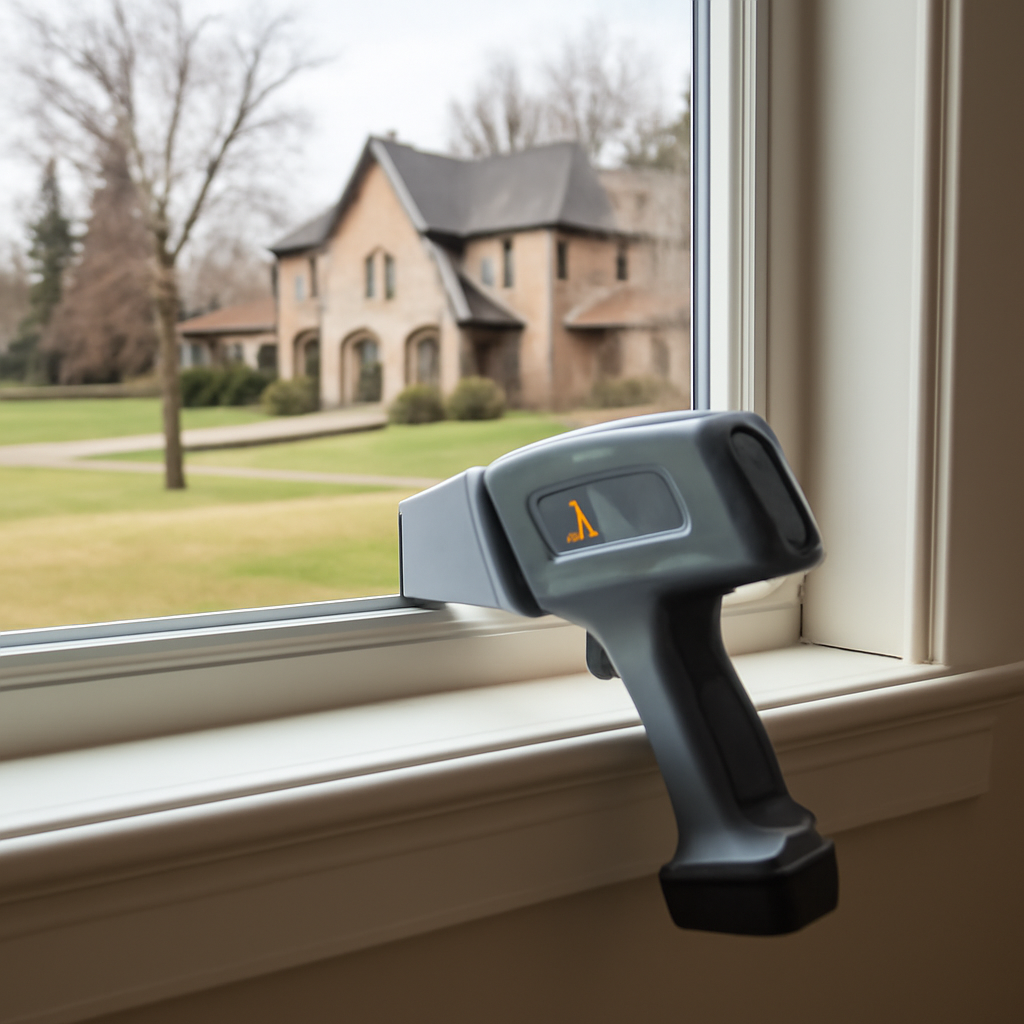
There are two main professional methods, answering different questions. An XRF analyzer is a handheld device that reads the lead content of painted surfaces in place without damaging them, mapping which components, walls, trim, doors, windows, contain lead-based paint, which suits an estate owner who wants a nondestructive survey of original finishes. Dust-wipe sampling collects settled dust from floors and sills and sends it to a lab to measure whether lead dust already exceeds hazard levels. A thorough assessment in a mid-century Cherry Hills Village home often uses both.
The distinction between an inspection and a risk assessment matters for what you learn. A lead inspection tells you where lead-based paint exists; a risk assessment tells you whether it is currently a hazard and what to do about it. For an estate family with a young child in a mid-century home, a risk assessment is usually more useful, because it ties testing to actual exposure, deteriorating surfaces and dust where a child plays, rather than cataloging every painted surface that happens to contain lead in a large home.
Why Cherry Hills Village homes need lead testing
The mid-century estate stock drives the relevance. Old Cherry Hills and the community’s earliest neighborhoods include substantial homes built before the 1978 ban, the population HUD and EPA target for lead-hazard concern. The oldest paint layers in these homes, often on original windows, doors, trim, and exterior surfaces, are statistically the most likely to contain high-lead paint, and a large estate has many such components, more windows, more trim, more linear feet of painted surface, than a modest house.
Renovation and restoration are where the risk concentrates. Cherry Hills Village’s mid-century estates are frequently restored or remodeled, and disturbing original painted surfaces, sanding old trim, replacing historic windows, stripping doors, can generate substantial lead dust if done without lead-safe practices. The very desire to preserve and update a mid-century home’s original character can put workers and occupants in contact with lead unless the surfaces are tested and the work is handled correctly. Testing before such work identifies which components carry lead so the renovation can proceed safely.
Children are why this is an occupancy concern, not just a renovation one. Young children are most vulnerable to lead because their developing bodies absorb it more readily and the effects on learning and behavior can be lasting. A toddler in a mid-century Cherry Hills Village estate, playing near a friction-worn original window or in a room undergoing restoration, is in a real-risk situation regardless of the home’s value. Testing identifies whether that specific home has a hazard so a family can control it before a child is exposed, which is the point of acting early.
What a Cherry Hills Village lead test covers
A professional assessment combines surface testing for lead-based paint with dust and sometimes soil sampling to gauge actual hazard, producing a report a family can act on. In a large estate, the survey covers the many original painted components.
XRF surface testing
Using a handheld XRF analyzer, the assessor reads painted components throughout the home, walls, trim, windows, doors, porches, and records which contain lead-based paint. This is nondestructive, which matters when an owner wants to preserve original finishes, and in a mid-century estate it typically flags the original window and door systems and exterior trim as the most likely lead-positive components.
Dust-wipe and soil sampling
The assessor wipes measured floor and windowsill areas and sends them to a lab to compare against federal dust-lead hazard standards. Where bare soil sits near the foundation or under old painted exterior surfaces, common around a mature estate with extensive grounds, a soil sample checks for lead that weathered paint left behind. Together these tell an owner not just where lead is, but whether it is reaching the places a child contacts. The county-wide picture is covered in our Arapahoe County lead testing hub.
Lead testing cost in Cherry Hills Village
A professional lead risk assessment in the Cherry Hills Village market typically runs about $400 to $800 or more, with larger mid-century estates at the upper end because there are many painted components to survey and often more dust and soil samples. A focused XRF inspection of specific components can be lower, while a comprehensive whole-home assessment with multiple lab samples sits higher. Some testers price per component or per sample, so a targeted scope costs less than a full survey.
DIY swab kits sold at hardware stores are inexpensive but only indicate possible presence on a surface; they cannot measure dust-lead hazard or quantify the result. For an estate family making a real decision about a child’s safety or a restoration of original finishes, the professional assessment is worth the difference because it measures actual hazard with calibrated instruments. In the context of a high-value home and a child’s health, the assessment cost is negligible.
The value is in what testing prevents. Childhood lead exposure can permanently affect learning and behavior, a cost far beyond any test fee. An assessment that identifies a deteriorating lead window or flags lead in surfaces slated for restoration, before a toddler is exposed or a renovation turns them to dust, is among the highest-return safety steps an owner of a mid-century estate can take. For any work disturbing pre-1978 paint, EPA’s Renovation, Repair, and Painting rule requires lead-safe practices by certified firms.
Preserving original character without spreading lead
A particular tension in mid-century estate restoration is the desire to keep original windows, doors, and millwork, the very features that give these homes their character, while those are also the components most likely to carry high-lead paint. The reconciliation is lead-safe restoration practice rather than wholesale replacement. A certified renovation firm can strip, repair, and repaint original trim and sashes using containment, wet methods, HEPA-filtered tools, and rigorous cleanup that capture lead dust instead of broadcasting it through the home, allowing an owner to preserve historic elements safely. Where a component is too deteriorated to save, lead-safe removal and disposal apply. The key is that the decision should follow testing: knowing which specific components are lead-positive lets the owner and contractor plan containment precisely, focusing the careful, costlier handling where the XRF data shows lead and treating clear components normally. For a Cherry Hills Village owner restoring a mid-century estate, that informed approach protects both the family and the home’s original design.
Colorado regulations and disclosure
Federal law requires that sellers and landlords of pre-1978 housing disclose known lead-based paint and provide the EPA lead-hazard pamphlet, and that buyers get a ten-day window to test. For renovations that disturb paint in pre-1978 homes, EPA’s Renovation, Repair, and Painting rule requires lead-safe work practices by certified firms, which is directly relevant to the restorations common on mid-century estates. Colorado follows these federal frameworks, and CDPHE supports lead-poisoning prevention.
For a Cherry Hills Village owner or buyer, the practical points are that a pre-1978 estate triggers federal disclosure, that a buyer can use the ten-day window to test before committing, and that any contractor disturbing original paint should be RRP-certified and follow lead-safe practices. Documented testing supports honest disclosure and protects both sides of a luxury sale, where buyers scrutinize condition closely and a restoration may be planned.
Neighborhoods and areas served
Lead concern in Cherry Hills Village follows the mid-century stock. Old Cherry Hills and the community’s earliest estate neighborhoods, along with mid-century homes in Cherry Hills Farm, the Buell Mansion area, Glenmoor, and Devonshire Heights, fall within the pre-1978 window where lead paint is common on original surfaces. Service typically extends to adjacent Greenwood Village, Englewood, Littleton, and nearby Denver, which include comparable mid-century estate housing with original finishes.
The unifying factor is age and original finishes, not a specific neighborhood. A friction-worn original window in an Old Cherry Hills estate, a similar one in Greenwood Village, and original trim in an Englewood mid-century home present the same lead-dust risk. Families with young children in any of these older estates, and owners restoring original surfaces, benefit from knowing their specific hazard picture, which is why treating pre-1978 age as the trigger for a risk assessment makes sense across the area.
How to choose a Cherry Hills Village lead testing provider
Ask whether the provider is an EPA or state-certified lead risk assessor or inspector, uses an XRF analyzer, and collects dust wipes for lab analysis when hazard is the question. For an estate owner preserving original finishes, the nondestructive XRF survey is valuable, so confirm they offer it. A good assessor explains the difference between an inspection and a risk assessment, recommends the one that fits your situation, and keeps testing separate from any abatement sale so the findings are not shaped by profit.
Be cautious with a provider who relies only on swab kits or who recommends costly full removal when interim controls, fixing deteriorating surfaces, specialized cleaning, lead-safe renovation practices, would manage the hazard while preserving original character. The most useful assessors match the response to the actual risk: a deteriorating lead window in a child’s room is urgent, while intact original lead paint under sound coats may simply need lead-safe handling during future restoration.
For a family outside a transaction, a risk assessment makes sense when a young child lives in or will move into a pre-1978 estate, or before any restoration that will disturb original paint. If the home is newer than 1978 or the original finishes are intact and undisturbed, a certified assessor may reasonably advise targeted testing only where it matters, keeping the response proportional even in a high-value home.
References
- Lead in paint, dust, and soil — U.S. Environmental Protection Agency
- Childhood lead poisoning prevention — Centers for Disease Control and Prevention
- Lead-safe housing rules — U.S. Department of Housing and Urban Development
Frequently asked questions
Which Cherry Hills Village homes are most likely to contain lead paint?
Mid-century estate homes built before 1978, common in Old Cherry Hills and the earliest neighborhoods. The oldest paint layers, often on original windows, doors, and exterior trim, are the most likely to contain high-lead paint.
How much does lead testing cost in Cherry Hills Village?
A professional risk assessment typically runs $400 to $800 or more, with larger mid-century estates at the upper end due to many painted components and more samples. A focused XRF inspection of specific components costs less.
Why does lead matter when restoring a mid-century estate?
Disturbing original painted surfaces, sanding trim, replacing historic windows, stripping doors, can generate lead dust without lead-safe practices. Testing first identifies which components carry lead so the restoration proceeds safely.
Are DIY lead swab kits good enough here?
They only indicate possible presence and cannot measure dust-lead hazard or quantify lead. For a real decision about a child's safety or a restoration, a professional risk assessment that measures actual hazard is far more reliable.
Does Colorado require lead disclosure when selling here?
Federal law requires sellers and landlords of pre-1978 housing to disclose known lead-based paint, provide the EPA pamphlet, and give buyers a ten-day testing window. Colorado follows these federal rules.
In a mid-century estate with young children, or before restoring original surfaces, knowing your lead picture is the protective move. To connect with a vetted local lead risk assessor who measures real hazard and respects original finishes, reach out through our contact page.