Thermal Imaging Inspection Cherry Hills Village | InspectandTest
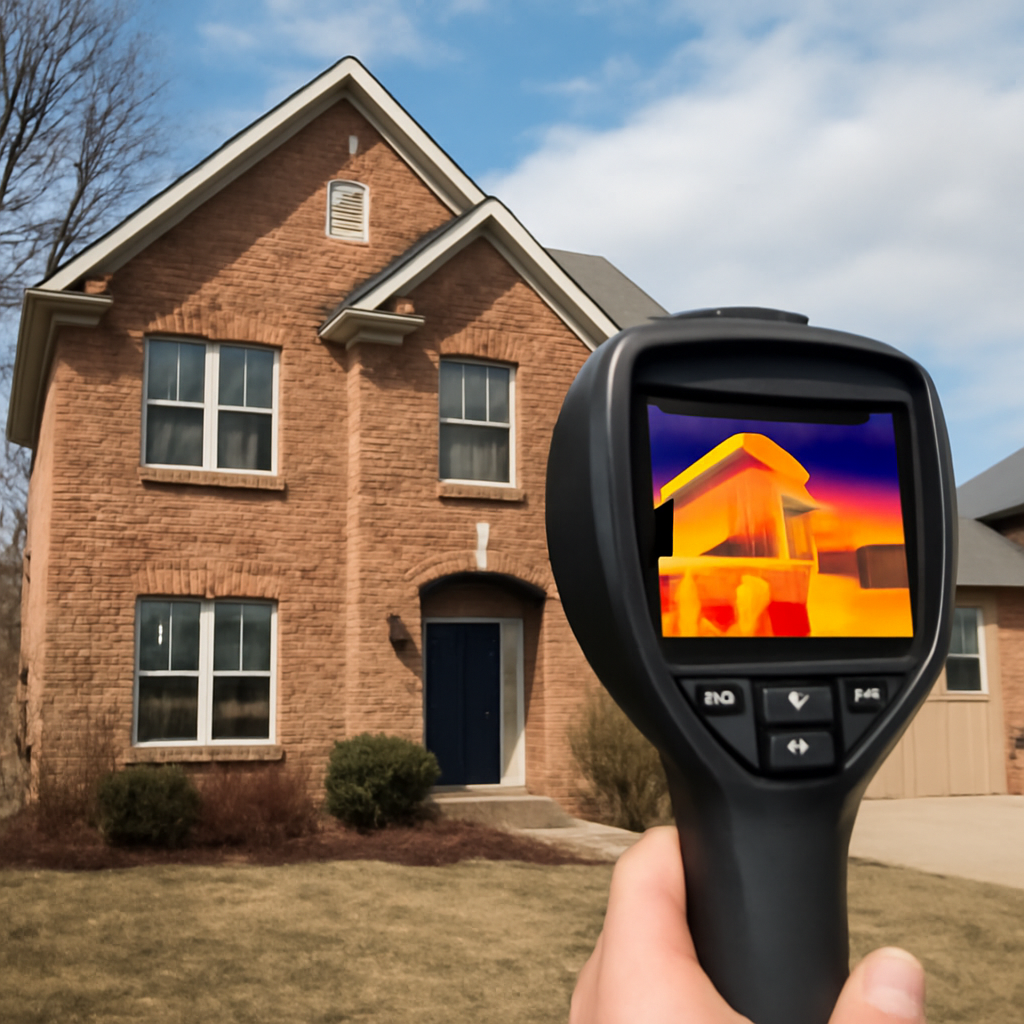
Thermal imaging inspection uses an infrared camera to reveal temperature differences across a home’s surfaces, exposing problems invisible to the naked eye, hidden moisture, missing insulation, air leaks, and overheating electrical connections. In Cherry Hills Village, one of Colorado’s wealthiest estate communities just south of Denver in Arapahoe County, that capability is especially valuable because the large custom homes here have deep finished basements, extensive building envelopes, complex roofs, and high-end finishes worth protecting, exactly the conditions where hidden moisture or a concealed defect is costly to miss. A thermal imaging inspection cherry hills village buyers and owners add to a standard inspection turns a visual evaluation into one that sees behind finishes across a large home. This page explains how thermal imaging works, what it finds in these estates, and what it costs. For broader context on inspection services, see our buyer’s guide to hiring a home inspector on the Front Range.
Part of our Thermal Imaging for Homes guide — start there for the full picture →
Thermal imaging inspection in Cherry Hills Village: what to know
A thermal, or infrared, camera detects the heat every surface emits and renders it as an image where temperature differences appear as color contrasts. It does not see through walls; it reads the surface temperature of walls, ceilings, and floors, and those temperatures reveal what lies just behind, a cold patch where insulation is missing, a cool wet area where water has intruded, a warm spot at an overloaded electrical connection. In a large Cherry Hills Village estate, that translates visible symptoms into a map of hidden conditions across extensive square footage.
Thermal imaging is a supplement to a standard inspection, not a replacement. It adds a detection layer but still requires a trained inspector to interpret the images, since a temperature difference can have several causes. Used well, it directs attention to areas warranting a closer look or a confirming test, a moisture meter on a cool basement wall, for example. For an estate buyer or owner, it is a high-value add-on because a large home with deep finished basements and complex systems hides exactly the issues infrared excels at flagging, and the finishes at risk are expensive.
The conditions of the scan affect what it can reveal. Infrared works best when there is a temperature difference between inside and outside, so a cold Colorado morning or a hot summer afternoon makes insulation gaps and air leaks stand out, while a mild day with little contrast shows less. In a large estate, an inspector may run the multiple HVAC systems to create a gradient across the home. An owner scheduling a scan benefits from timing it to a day with good thermal contrast, since that is when the camera does its most useful work over a big footprint.
Interpretation separates a thermal scan from a colorful picture. The same cool area could be a plumbing leak, missing insulation, or a cold exterior corner, and only context, a moisture-meter confirmation, knowledge of the home’s layout, the weather, distinguishes them. A skilled inspector treats the thermal image as a lead to investigate rather than a diagnosis, which is the responsible way to use the tool. In a large estate with many surfaces, that disciplined interpretation is what keeps the scan informative rather than alarming.
Why Cherry Hills Village homes benefit from thermal imaging
The deep finished basements are a leading reason. Cherry Hills Village estates commonly have large finished and walkout lower levels against soil, where moisture from seepage or condensation can intrude behind expensive finishes, and infrared is one of the best non-invasive ways to spot that moisture before it becomes visible damage. In a finished theater, gym, or guest suite, a thermal scan can reveal a damp area behind costly drywall or paneling that a visual inspection would miss entirely, catching it while the repair is still small.
The large, complex building envelope is another. Estate homes have extensive wall and roof area, and even well-built homes can have insulation gaps, settled insulation, or air leaks that drive uneven heat loss through cold Colorado winters across a big footprint. A thermal scan maps where insulation is missing or compromised and where conditioned air escapes, giving an owner a targeted efficiency list rather than a guess. In a large home with high heating and cooling loads, that map has real financial value for comfort and energy cost.
Electrical and system safety rounds out the case. Large estates have extensive electrical systems, multiple panels, and complex mechanical equipment, and an overheating breaker or a loose connection shows up as a hot spot under infrared before it fails. A thermal scan of the panels and major connections can flag a developing problem while it is still a cheap fix, which in a high-value home with a lot of equipment is meaningful protection against both inconvenience and hazard, beyond the moisture and insulation findings.
What a Cherry Hills Village thermal imaging inspection covers
A thermal scan covers the accessible interior surfaces, walls, ceilings, and floors, plus the electrical panels and major systems, with the inspector interpreting temperature anomalies and confirming significant findings with secondary tools, scaled to the size of the estate.
Moisture and insulation scanning
The inspector scans walls and ceilings for the cool, irregular patterns that signal moisture intrusion, focusing on the deep finished basements, areas under bathrooms and roof valleys, and any spot with a history of leaks. The same scan reveals insulation gaps and air leaks as broad temperature differences across the large envelope. In an estate, the finished-basement moisture findings are frequently the most valuable, since they catch hidden water before it damages expensive lower-level finishes.
Electrical and confirmation
The inspector images the electrical panels and accessible connections for hot spots indicating loose or overloaded connections, a real concern given the extensive electrical systems in large homes. Significant thermal findings are confirmed with a moisture meter or a closer inspection, so the report distinguishes a confirmed problem from an anomaly to watch. A thermal scan pairs naturally with a full inspection, and many Cherry Hills Village buyers add it to their home inspection in Cherry Hills Village for a more complete picture of a complex home.
Thermal imaging inspection cost in Cherry Hills Village
Thermal imaging is usually offered as an add-on to a home inspection, and in the Cherry Hills Village market it commonly adds about $150 to $350 to a standard inspection, higher than the regional average because scanning a large estate’s extensive surfaces takes more time. A standalone infrared scan focused on a specific concern, a suspected leak in a finished basement or an energy audit, may run $300 to $600 depending on the home’s size and scope.
The value comes from what infrared catches early in an expensive home. A thermal scan that finds hidden moisture behind a finished basement wall lets an owner dry and repair it before it becomes a mold remediation or a finish-replacement project, far cheaper interventions caught early, and in a luxury lower level those finishes are costly. Similarly, a flagged electrical hot spot fixed for a small sum can prevent a failure in a home full of equipment. The add-on fee is modest against the problems infrared surfaces while they are still small.
For owners focused on comfort and efficiency, the payoff adds to the case. A scan that maps missing insulation and air leaks across a large envelope gives a precise, prioritized list of sealing and insulation work that can improve comfort and reduce the substantial heating and cooling loads of a big estate. Spending a few hundred dollars to know exactly where the home loses energy, rather than improving blindly, makes the budget go further. A contrasting smaller-home market is described in our thermal imaging inspection in Sheridan guide.
Colorado regulations and disclosure
Colorado does not license home inspectors or set a separate standard for thermal imaging, so the qualification that matters is the inspector’s training in infrared interpretation, ideally a recognized thermography certification, alongside ASHI or InterNACHI membership. Because temperature anomalies are easy to misread, and a large estate generates many, the inspector’s competence with the tool is what makes the scan reliable, and a buyer should ask directly about that training and experience with large homes.
Thermal imaging findings feed into the same disclosure framework as any inspection result. If a scan reveals moisture or a defect in a finished basement or elsewhere, it informs the buyer’s contingency decisions and may become part of a repair negotiation, while a seller who has addressed a known issue can document the fix. Because the state sets no inspector standard, the buyer’s diligence in choosing a trained thermographer experienced with estates is what ensures the infrared findings are trustworthy.
Neighborhoods and areas served
Thermal imaging is valuable across all of Cherry Hills Village’s estate neighborhoods. Old Cherry Hills, Cherry Hills Farm, the Buell Mansion area, Glenmoor, and Devonshire Heights all feature the deep finished basements, large envelopes, and complex systems that give infrared much to reveal. Service typically extends to adjacent Greenwood Village, Englewood, Littleton, and nearby Denver, which share the same mix of large estate and custom homes.
The common thread is scale and below-grade living space rather than any single neighborhood. A mid-century estate in Old Cherry Hills, a new custom build near Cherry Hills Farm, and a large home in Greenwood Village all have the kind of hidden conditions, concealed dampness in finished basements, insulation gaps across a big envelope, extensive electrical, that infrared surfaces well. Treating a thermal scan as a high-value add-on for any large estate home reflects how these conditions distribute across the area.
How to choose a Cherry Hills Village thermal imaging provider
Ask whether the inspector has formal thermography training, experience scanning large homes, what camera they use, and how they confirm thermal findings, ideally with a moisture meter and a documented interpretation. A good provider explains that infrared reveals leads to investigate, not instant diagnoses, and times the scan for good thermal contrast across the estate. Knowledge of the area’s deep finished basements and large envelopes helps the inspector focus the scan where it pays off in a big home.
Be cautious of anyone who presents raw thermal images as alarming proof without confirmation, or who lacks interpretation training, since misread anomalies cause needless worry or missed issues, and a large home generates many anomalies. The most useful providers integrate thermal imaging into a broader inspection, correlate infrared findings with other evidence, and report confirmed problems separately from items to monitor, which keeps a large-home scan genuinely informative.
For an owner not buying, a standalone thermal scan makes sense to chase a suspected leak in a finished basement, plan insulation and air-sealing work across a large envelope, or check electrical safety in a home full of equipment. Timing it to a day with strong indoor-outdoor temperature contrast gives the clearest results, and a trained thermographer will advise on that. In Cherry Hills Village’s large estates, that combination of certification, careful interpretation, and good timing is what makes infrared a practical diagnostic rather than a novelty.
References
- Residential standards of practice — International Association of Certified Home Inspectors (InterNACHI)
- Home inspection standards of practice — American Society of Home Inspectors (ASHI)
- ENERGY STAR: Seal and Insulate — U.S. Environmental Protection Agency (ENERGY STAR)
Frequently asked questions
What does a thermal imaging inspection find in Cherry Hills Village estates?
Hidden moisture behind finishes in deep finished basements, missing or settled insulation across a large envelope, air leaks, and overheating electrical connections. In these homes the finished-basement moisture findings are often the most valuable.
How much does thermal imaging cost here?
As an add-on to a home inspection it commonly adds $150 to $350, higher than average because scanning a large estate's surfaces takes more time. A standalone infrared scan may run $300 to $600 depending on the home's size and scope.
Does an infrared camera see through walls?
No. It reads surface temperatures, and those temperatures reveal what lies just behind, like a cold insulation gap or a cool wet area. A trained inspector interprets the images and confirms findings with other tools.
When is the best time for a thermal scan in an estate?
On a day with a clear temperature difference between inside and outside, such as a cold winter morning or a hot summer afternoon. The contrast makes insulation gaps, leaks, and moisture stand out across the large home.
Is thermal imaging worth adding to an estate inspection?
Often yes. Deep finished basements prone to moisture, large envelopes with insulation gaps, and extensive electrical are exactly what infrared detects well, so the add-on frequently catches expensive problems while they are still small.
Infrared sees the hidden moisture and heat loss a large estate tends to conceal behind expensive finishes. If you are buying or improving a home in Cherry Hills Village or the south Denver metro and want a trained thermographer experienced with large homes, connect with a vetted inspector through our contact page.
Thermal imaging cameras
Infrared cameras reveal hidden moisture, missing insulation, and air leaks. Phone-attachment models are the budget entry point; standalone units have higher resolution.
| Product | Why | Buy |
|---|---|---|
 FLIR ONE Pro (phone) FLIR ONE Pro (phone) | Plugs into iPhone/Android; inspector favorite. | Amazon — $349.00 |
 Topdon TC001 Topdon TC001 | High-res phone module at a low price. | Amazon — $199.99 |
 FLIR C5 Compact FLIR C5 Compact | Standalone pocket camera with Wi-Fi. | Amazon — $611.50 |