Radon Testing Greenwood Village, CO | InspectandTest
Greenwood Village sits in EPA Radon Zone 1, the agency’s highest-risk category, where the predicted average indoor radon level meets or exceeds the 4 pCi/L action threshold. This affluent south-metro Arapahoe County community, spanning the Denver Tech Center corridor and large estate neighborhoods, is full of 1970s-through-1990s custom homes with deep finished basements where radon readily concentrates. Radon is a colorless, odorless radioactive gas and the second-leading cause of lung cancer after smoking. This page explains how radon testing greenwood village homeowners should plan, why the local housing demands it, and what testing costs. This summary reflects EPA and CDPHE guidance current as of 2026; consult a certified professional for testing decisions.
Part of our Radon Levels guide — start there for the full picture →
Radon testing in Greenwood Village: what to know
Radon testing measures the gas accumulated inside a home, reported in picocuries per liter (pCi/L). The EPA recommends action at or above 4 pCi/L, and because Greenwood Village lies in Zone 1, a meaningful share of local homes test at or above that line. Two neighboring homes can read very differently depending on foundation cracks, soil contact, and how the home is heated, so the only way to know your number is to test.
Short-term tests of 2 to 7 days suit real-estate timelines; long-term tests of 90 days or more average seasonal swings for a fuller exposure picture. For the underlying science and the difference between device types, our plain-language radon guide for Front Range homeowners covers both approaches in detail.
House-to-house variation is why a neighbor’s result tells you nothing about your own home. Radon depends on the uranium content of the soil directly beneath a foundation, the number and size of slab cracks and openings, and how hard the heating system pulls air. Two custom homes a lot apart in The Preserve can read 2 pCi/L and 9 pCi/L for exactly those reasons. That is why radon is always an individual-home decision, never a neighborhood assumption.
Radon also changes over time. A clean test years ago does not guarantee a clean home today. Foundation settling opens new cracks, a basement remodel changes airflow, and a new high-efficiency furnace alters the pressure that draws soil gas indoors. EPA guidance is to re-test every couple of years and after any major change. For a Greenwood Village home that remodeled a basement or replaced HVAC, a fresh measurement is the only way to know the current level.
Why Greenwood Village homes need radon testing
Geology is the driver. Radon comes from the natural decay of uranium in soil and rock, and the Front Range formations beneath Arapahoe County release it readily, which is why the area sits in Zone 1. The source material lies directly under Greenwood Village foundations, entering homes through slab cracks, control joints, and sump openings.
Deep finished basements raise the stakes here more than in most communities. Greenwood Village’s large 1970s-through-1990s custom homes frequently have fully finished lower levels, used as bedrooms, home offices, media rooms, and gyms, that place occupied space in the most soil-contacted part of the house. That combination of maximum soil contact and maximum occupancy is the worst case for radon exposure, and it is the norm across the city’s estate neighborhoods.
Climate concentrates it. The Front Range’s cold winters keep homes sealed for months while furnaces create slight negative pressure that pulls soil gas indoors. The large, well-built estate homes hold conditioned air efficiently, which also means limited natural air exchange to dilute radon once it enters during the long heating season.
The housing mix reinforces the need. Older 1970s custom homes with settled foundations and some pre-1978 sections can have cracks and openings that admit soil gas, while newer luxury builds with tight envelopes trap radon more effectively once it enters. Whether a home is an established custom build in Greenwood Hills or a newer luxury home, its place in Zone 1 means testing is the only way to rule radon in or out.
What a Greenwood Village radon test covers
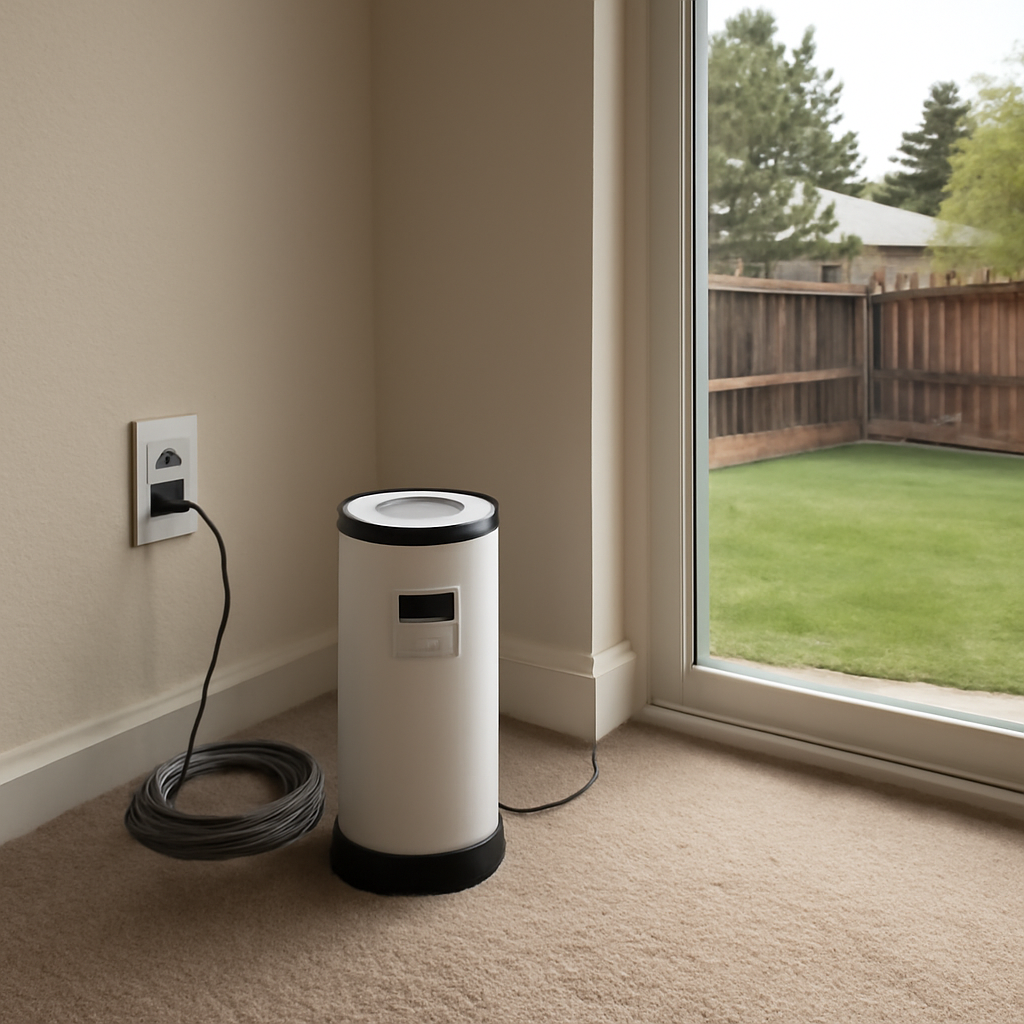
A professional test places a calibrated continuous radon monitor or passive device in the lowest livable level, usually a deep finished basement, under closed-house conditions. The tester documents placement and the closed-house window so the result holds up if it feeds a real-estate negotiation, which is common in Greenwood Village’s high-value market.
Closed-house conditions
For at least 12 hours before and during a short-term test, windows and exterior doors stay closed except for normal entry. This keeps a breezy day from artificially lowering the reading. If a test comes back at or above 4 pCi/L, the next step is mitigation, detailed in our guide to radon mitigation in Greenwood Village.
Continuous monitors versus passive kits
A continuous radon monitor logs hourly readings, so it can show whether a window was opened mid-test or whether levels spiked overnight, evidence that protects a buyer from a tampered result. Passive devices like charcoal canisters average exposure and mail to a lab at lower cost. For a Greenwood Village home sale, the continuous monitor’s tamper detection and hour-by-hour record make it the preferred tool, while a passive kit left for months gives a homeowner a representative annual average.
Radon testing cost in Greenwood Village
A professional short-term radon test in the Greenwood Village and south-metro market typically runs about $150 to $275, with the large floor plans common here sometimes pushing toward the upper end because more than one detector may be placed. A do-it-yourself kit costs roughly $15 to $40 plus lab fees, and CDPHE periodically offers discounted kits to Colorado residents. Bundled into a pre-purchase inspection, radon testing often adds just $100 to $175 instead of a separate trip charge.
For Greenwood Village’s larger homes, a tester may place multiple monitors to capture different lower-level zones, which can raise the fee modestly but gives a more complete picture of a sprawling finished basement. Bundling into the home inspection during a purchase remains the efficient path.
Weigh the cost against the protection. The EPA links thousands of lung-cancer deaths a year to radon, and Greenwood Village’s Zone 1 status puts local exposure among the highest in the state. A $200 test that catches a 7 pCi/L finished-basement reading lets a family install a roughly $1,500 to $2,500 mitigation system and cut exposure by 90 percent or more. Skipping the test leaves the risk invisible for as long as the family lives there.
Colorado regulations and disclosure
Colorado requires radon disclosure in residential real-estate transactions, and the Seller’s Property Disclosure asks sellers to report known radon results and any existing mitigation system. CDPHE runs the state radon program, references the 4 pCi/L EPA action level, and offers discounted kits to residents. Colorado does not license home inspectors, so for any test tied to a sale, confirm the tester follows recognized national measurement protocols rather than assuming a license guarantees competence.
Disclosure shapes negotiations both ways in Greenwood Village’s high-value market. A seller who has tested and mitigated can offer a clean post-mitigation result as reassurance, while a seller who has never tested leaves the buyer to discover the number during the contingency, often resulting in a mitigation credit. Buyers in Zone 1 Greenwood Village should not waive radon testing; the modest cost is small against the long-term health stakes of an untreated deep finished basement.
Neighborhoods and areas served
Radon turns up across Greenwood Village regardless of neighborhood: deep finished-basement custom homes in Greenwood Hills, The Preserve, Sundance Hills, and Cherry Hills Vista, and DTC-area condos and townhomes. Service typically extends to adjacent Centennial, Englewood, Cherry Hills Village, and Littleton, all within the same Zone 1 footprint where elevated readings are common.
Because the geology that drives radon does not stop at a neighborhood boundary, the Zone 1 designation applies uniformly across Greenwood Village. A newer luxury build and an established 1970s custom home face the same soil-gas source. Wherever the home sits, treating radon as a default test rather than an optional add-on reflects the reality that the entire city sits in the highest EPA risk zone. For the surrounding regional picture, see our guide to radon testing in Arapahoe County.
How to choose a Greenwood Village radon testing provider
Ask whether the provider uses a calibrated continuous radon monitor and follows EPA or AARST protocols. A good tester documents closed-house conditions, device placement, and test duration so the result stands up in a sale. For a large Greenwood Village home, ask whether the tester places multiple monitors to capture a sprawling lower level rather than relying on a single device.
For a purchase, ask the provider to place and retrieve the device themselves rather than handing you a kit, since a tester-administered continuous monitor carries far more weight in a negotiation. Confirm the monitor’s calibration is current. If a result comes back borderline, between 2 and 4 pCi/L, a competent provider explains the options, including a follow-up long-term test, rather than pushing an unnecessary mitigation sale.
For homeowners not in a transaction, a CDPHE discounted long-term kit is a low-cost way to get a representative annual average and a reasonable first step. If that kit comes back at or near the action level, a professional follow-up confirms the result with calibrated equipment before you commit to mitigation. Either path beats not testing, since every Greenwood Village home sits in Zone 1.
What affects your radon result in Greenwood Village
Two Greenwood Village homes a lot apart can read very differently, and understanding the variables helps an owner interpret a result rather than react to a single number. Foundation contact is the largest factor, and it is amplified here by the deep finished basements that define the city’s estate homes: a sprawling lower-level slab with multiple control joints, a sump pit, and a large below-grade wall area offers soil gas many pathways inward. Soil permeability beneath that slab matters too, since looser sub-slab material lets radon migrate toward a heated home’s suction more readily. And the uranium content of the soil itself varies parcel to parcel across Arapahoe County, even within a single neighborhood like Sundance Hills or Greenwood Hills.
Season and house operation push the reading further. A short-term test run in the depths of a Front Range winter, when the furnace cycles hard and the stack effect draws soil gas upward through a sealed home, will typically read higher than the same home tested in mild weather with more natural air exchange. That is why closed-house conditions and the test season belong in any report. In the large floor plans common here, a single detector in one corner of a sprawling lower level may not represent the whole basement, so a tester often places more than one monitor across the occupied zones to capture an accurate picture of where the family actually spends time.
A Greenwood Village radon testing scenario
A typical high-value transaction shows the process. A buyer goes under contract on a 1985 Sundance Hills custom home with a deep finished basement used as a home office and guest suite, and adds a radon test to the pre-purchase inspection knowing Greenwood Village sits in Zone 1. Because the lower level is large, the tester places two calibrated continuous monitors, one in the office and one in the guest suite, documents closed-house conditions, and runs a short-term test that fits the contingency window.
One monitor averages 5.1 pCi/L and the other 6.4 pCi/L, both above the 4 pCi/L action level, with hourly logs showing no mid-test window openings, the tamper-resistant record a negotiation needs. The two-zone result also tells the installer that the full slab will need adequate depressurization, useful design information for any mitigation that follows. The buyer raises the readings during the inspection objection period and asks the seller to install and verify a mitigation system before closing. The scenario underscores the local rule: in Zone 1 Greenwood Village, where deep finished basements are the most-used and most soil-contacted rooms, a radon test, often with multiple monitors across a large lower level, is the step that turns an invisible risk into a documented, fixable one before the substantial purchase closes.
References
- Radon risk and EPA zone maps — U.S. Environmental Protection Agency
- Colorado radon program and kits — Colorado Department of Public Health and Environment
- Radon and lung cancer — Centers for Disease Control and Prevention
Frequently asked questions
Is Greenwood Village in a high radon zone?
Yes. Greenwood Village sits in EPA Radon Zone 1, the highest-risk category. Every home, especially the large custom homes with deep finished basements common here, should be tested.
What radon level requires action in Greenwood Village?
The EPA action level is 4 pCi/L. At or above that reading, EPA and CDPHE recommend mitigation. Levels between 2 and 4 pCi/L are still worth considering for reduction.
How much does a radon test cost in Greenwood Village?
A professional short-term test typically runs $150 to $275, with large homes sometimes higher because multiple monitors may be placed. DIY kits cost about $15 to $40 plus lab fees, and CDPHE offers discounted kits.
Why do Greenwood Village finished basements matter for radon?
The large custom homes here often have deep finished lower levels used as bedrooms and offices. That puts occupied space in the most soil-contacted part of the house, where radon concentrates most.
Can two neighboring Greenwood Village homes have different radon levels?
Yes. Radon depends on soil uranium content, foundation cracks, and how the home is heated and sealed, so similar custom homes a lot apart can read very differently. A neighbor's clean test does not predict yours.
Every Greenwood Village home sits in EPA Zone 1, so radon testing is basic due diligence, not optional. To connect with a vetted local tester before your purchase deadline or this heating season, get in touch through our contact page.
Test your home for radon
Radon is invisible and odorless, so a test is the only way to know your level. A short-term kit gives a first reading in days; a digital monitor tracks it over time.
| Product | Why | Buy |
|---|---|---|
 AirChek Charcoal Radon Test Kit | Lab fee usually included; EPA short-term protocol. | Amazon — $21.95 |
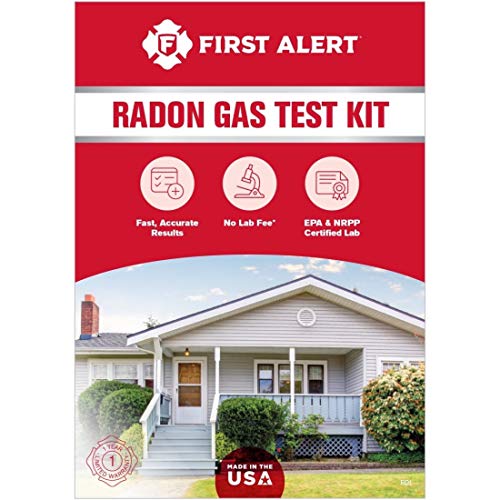 First Alert RD1 Radon Test Kit | Widely stocked; 48-hour charcoal test. | Amazon — $17.95 |
 Airthings Corentium Home | Digital monitor with a long-term average. | Amazon — $99.99 |