House Black Mold: What Homeowners Need to Know in 2026
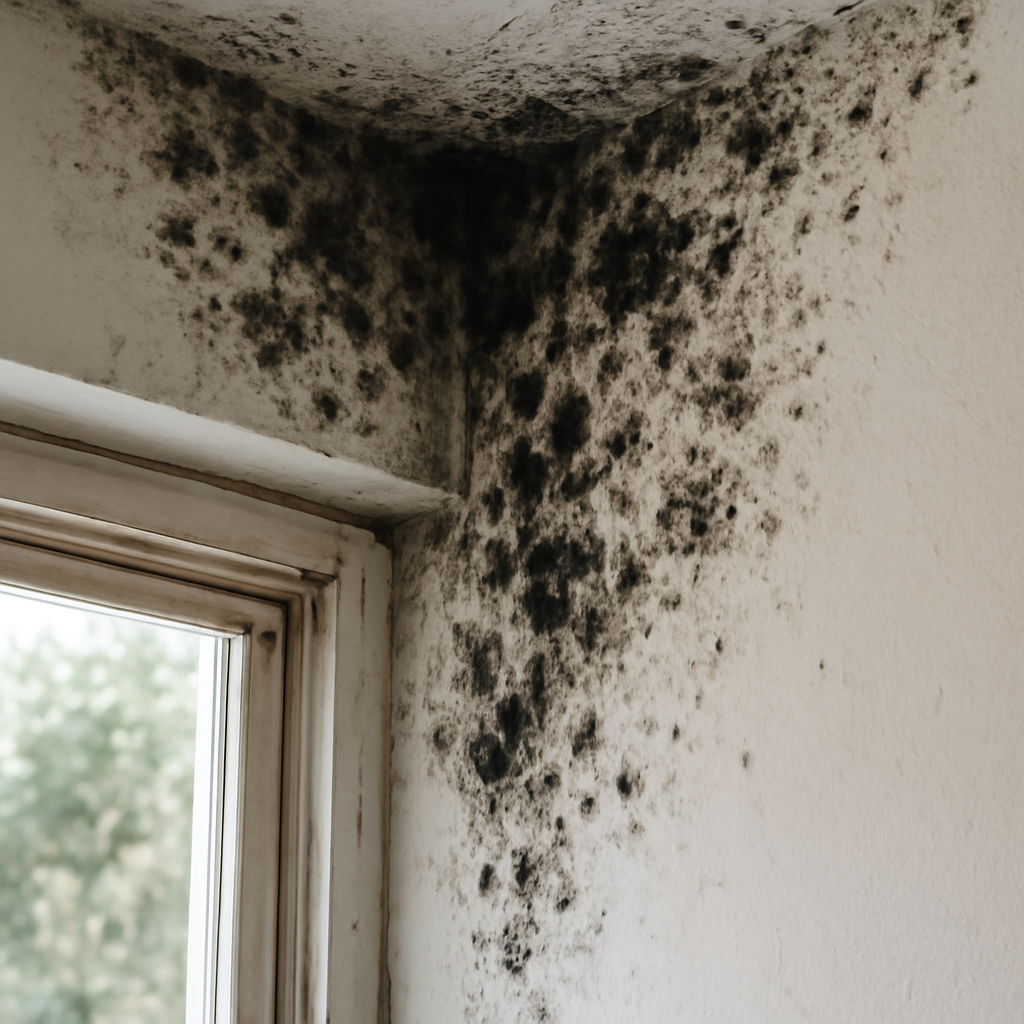
“House black mold” is the everyday phrase homeowners use for any dark-pigmented mold colony in a residence. It does not refer to a single species, and the response is not different from the response to any other visible indoor mold colony. This article summarizes EPA, CDC, NIEHS, and American Lung Association guidance and is intended as general information for homeowners. It is not medical advice. If you suspect mold is affecting your health, consult a physician — diagnosis of mold-related illness requires medical evaluation. The home-side question — how to assess, remediate, and prevent — is what we cover in depth.
Part of our Black Mold & Your Health guide — start there for the full picture →
Is this mold, asbestos, or water damage? Get a free instant screen
Upload a clear photo of the suspect area. You'll get an instant AI screening opinion and what to do next. This is screening guidance, not a professional determination.
Screening guidance only. AI can be wrong. Confirm asbestos, mold type, or lead with lab testing or a licensed professional before acting.
The direct answer for a homeowner who has found house black mold
Visible dark mold inside a home should be cleaned up regardless of species, the EPA’s threshold for homeowner DIY work is approximately ten square feet on non-porous surfaces, and the most important step is identifying and fixing the underlying water source. Skipping the source repair makes any remediation temporary. Skipping professional involvement on large or HVAC-involved colonies risks aerosolizing significant spore loads into the building.
That is the short version. The longer version covers where to look, how to assess scope, and how to make the remediation actually stick.
Where house black mold typically appears
Bathrooms
The combination of high humidity, frequent water exposure, and porous materials makes bathrooms the most common location. Look at caulk joints, grout lines, drywall behind toilets, the back side of vanity cabinets, and the ceiling near showers without adequate ventilation.
Basements
Below-grade rooms accumulate humidity and host plumbing penetrations through foundation walls. Mold on cinder block, rim joists, and stored materials is common. Front Range basements show seasonal patterns linked to spring snowmelt and shoulder-season humidity.
Kitchens
Under-sink cabinets, behind dishwashers, around refrigerator ice-maker supply lines, and at exterior wall penetrations. Kitchen mold is usually plumbing-driven.
Attics
Roof leaks, bathroom fans venting into the attic, and missing or compressed insulation creating condensation surfaces. Attic mold is harder to assess safely because of access and spore aerosolization.
Laundry areas
Washing machine supply lines, drain hoses, and dryer vents that leak humid air into the building cavity. Front-loading washers in particular accumulate mold around the door gasket if not maintained.
HVAC components
Air handler drain pans, evaporator coils, ductwork, and humidifier reservoirs. Mold in HVAC distributes spores throughout the conditioned space and warrants professional remediation.
How to assess the scope
Assessment starts with a careful visual inspection. Walk every room, look at every wall-floor and wall-ceiling junction, open every cabinet, and examine every penetration through finished surfaces. Photograph any suspect patches with a ruler in frame for scale. Note any musty odor — odor alone is not diagnostic, but persistent musty smell often signals hidden moisture and biological growth.
A moisture meter applied to porous substrates quantifies how wet the material currently is. Pin-type meters give point readings; pinless meters scan larger areas more quickly. Thermal imaging adds another layer for screening temperature anomalies that may indicate hidden moisture behind finished surfaces. For overviews of these tools in residential use, our home inspection tools pillar covers the broader category.
The ten-square-foot threshold and what it means
The EPA’s homeowner-DIY threshold of roughly ten square feet is a practical rule of thumb, not a hard scientific limit. It separates patches small enough that an informed homeowner with PPE can handle them from patches large enough that the spore load during disturbance warrants professional containment and engineering controls. Below the threshold, careful homeowner work with N-95 respirator, gloves, and eye protection is usually appropriate. Above it, professional remediation under IICRC S520 is the standard scope.
Two factors modify the threshold. First, porous-material involvement — drywall, ceiling tile, insulation, carpet — generally requires removal rather than surface cleaning, which expands the scope. Second, vulnerable occupants — children with asthma, elderly residents, immunocompromised individuals — lower the threshold for professional involvement.
How tools help homeowner assessment
A short list of homeowner tools improves the assessment phase substantially. A bright flashlight reveals patches and water staining that ambient lighting misses. A moisture meter — pin or pinless — quantifies how wet a substrate currently is, separating active moisture from cosmetic discoloration. A thermal camera screens for temperature anomalies that often indicate hidden moisture behind finished surfaces. A small data logger left in a room for a week documents indoor humidity over time, exposing patterns the homeowner had not noticed.
None of these tools is essential for an obvious visible patch in a single room. All of them become useful when the moisture pattern is not obvious or when previous repair work has covered earlier evidence. Professional inspectors typically arrive with the full kit and use whichever tools the situation requires.
The water source: the single most important diagnostic
Every visible mold colony has a water source. Source identification is what separates a one-time cleanup from a permanent solution. The common sources for house black mold are familiar across our cluster: plumbing leaks, roof intrusion, foundation seepage, condensation, chronic high humidity, and HVAC contamination.
Trace the source by working upward and outward from the visible patch. Ceiling mold has water arriving from above — roof, plumbing on a higher floor, HVAC overhead. Wall mold has water arriving from inside the wall — plumbing in the cavity, condensation on the back of the drywall, or external siding leaks. Floor mold has water arriving from below or from spilled liquid above. Our causes of black mold overview ranks the typical sources.
What homeowner cleanup looks like done right
For patches within the homeowner threshold, the EPA-aligned approach has the following sequence.
Prepare the area
Remove personal items from the immediate vicinity. Cover floor and adjacent surfaces with disposable plastic sheeting. Open a window or run a fan that exhausts to the outside — never recirculate spore-laden air through the rest of the home.
Wear PPE
N-95 respirator (not a surgical mask), nitrile or rubber gloves, and eye protection. Disposable coveralls for larger jobs. Long sleeves and pants.
Clean non-porous surfaces
Detergent and water are usually sufficient. Bleach solutions can be used on non-porous surfaces but offer no advantage on porous materials and may pose respiratory irritation risks at the concentrations sometimes recommended online.
Remove porous materials
Affected drywall, ceiling tile, insulation, and similar materials are typically cut out and replaced rather than cleaned in place. Bag removed material in heavy-duty contractor bags before transporting through the house.
Dry thoroughly
The cleaned area must dry completely before any repair work begins. Air movers, dehumidification, and time are the standard combination.
When professional remediation is warranted
Beyond the threshold described above, professional remediation under IICRC S520 includes containment with negative-air machines and HEPA filtration, controlled removal of contaminated materials, structural drying under monitored conditions, and post-remediation verification before reconstruction. Reputable remediators provide written documentation of each phase.
Our overview of mold inspection services and the broader mold inspection pillar cover how to evaluate contractors and what to expect from the process.
Prevention after cleanup
Cleaning visible mold without preventing the conditions that produced it is incomplete work. Indoor relative humidity below sixty percent — and below fifty percent in basements and crawl spaces where feasible. Plumbing leaks repaired promptly. Roof inspected annually. Bathroom fans verified to exhaust to the building exterior, not into the attic. HVAC condensate maintained on annual service. Front Range homes benefit from post-snowmelt basement checks and post-monsoon roof checks.
Seasonal timing for Front Range inspection
Front Range homes have a defined inspection calendar that maximizes the chance of catching mold-related issues. Late spring — May and June — is the best time to assess basements after snowmelt has driven seasonal moisture through foundation walls. Late summer, after the monsoon season, is the time to assess roofs, attics, and ceilings for storm-related water intrusion. Winter is when ice dam damage develops, so February through April assessments catch problems before spring thaw runs the same damaged areas with another moisture load.
The same calendar applies to scheduled maintenance. Bathroom fan checks happen in winter when humid indoor air is being exhausted continuously. HVAC condensate maintenance happens in spring before the cooling season starts. Plumbing checks make sense as part of any seasonal service. Combining these checks into one or two visits per year keeps the moisture management proactive rather than reactive.
Real estate transactions and house black mold
Properties with disclosed mold history should have a pre-purchase mold inspection layered on top of the standard home inspection. Buyers occasionally walk away from properties where conditional remediation would have been a proportionate response. Conversely, some homes with no disclosed history harbor hidden colonies that surface only on inspection.
Front Range transactions involving older homes with prior basement remediation, history of ice dam damage, or flood disclosure are particular candidates for layered inspection. A written assessment provides documentation that protects both buyer and seller during negotiation.
Documenting for insurance
Insurance coverage for mold-related claims varies widely. Sudden water incidents — burst pipe, appliance failure, storm damage — are more often covered than long-term humidity issues. Documentation matters. Date-stamped photographs of the affected area, written assessment from a qualified inspector, and itemized remediation invoices form the standard claim package. Discuss coverage with your insurer before starting work.
When to call a physician
Anyone with unexplained respiratory symptoms, persistent cough, worsening asthma, rash, eye irritation, or any concern that may relate to mold exposure should consult a physician. The home side and the medical side are independent questions and run on parallel tracks.
If you suspect mold is affecting your health, contact your healthcare provider. For home assessment and remediation, work through the mold inspection hub to understand the process before signing with any contractor.
References
- Mold Cleanup in Your Home — U.S. Environmental Protection Agency
- About Mold and Health — Centers for Disease Control and Prevention
- Mold Topic Overview — National Institute of Environmental Health Sciences
- Mold and Dampness — American Lung Association
Frequently asked questions
How dangerous is house black mold?
Indoor mold can cause respiratory symptoms in sensitized individuals and worsen asthma. The CDC and EPA recommend cleaning up any visible mold regardless of species. Specific health concerns belong with a physician.
Can I clean black mold myself?
Patches under approximately ten square feet on non-porous surfaces are usually within homeowner DIY range with proper PPE — N-95, gloves, eye protection. Larger patches, HVAC involvement, and porous materials beyond a small area warrant professional remediation.
How do I find hidden mold in my house?
Look for musty odor, water staining, peeling paint or wallpaper, and any prior moisture history. A professional inspection with moisture meter and thermal imaging surfaces patterns that are not visible to homeowner inspection alone.
Will my insurance cover mold remediation?
Coverage varies widely. Sudden water incidents are more often covered than long-term humidity issues. Discuss policy specifics with your insurer and document conditions with dated photographs and written assessment before starting work.
Front Range homeowners who want a connection to a vetted local inspector after finding visible mold can reach our team through our contact page.