How to Treat Mold From Water Damage: Timeline Guide
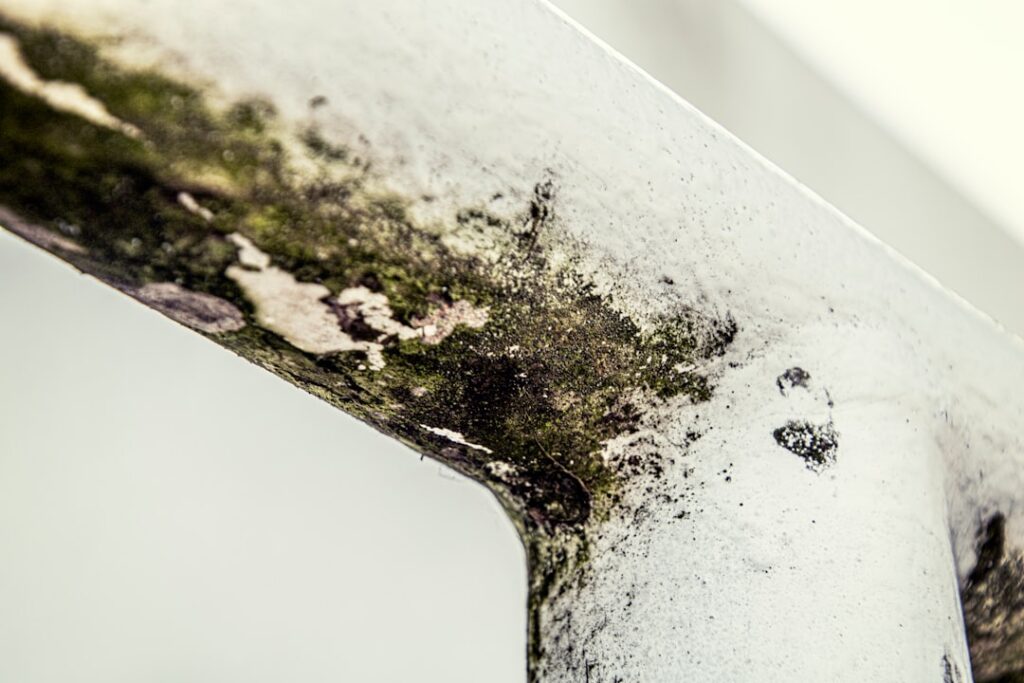
Mold from water damage is a timing problem more than a chemistry problem. The first seventy-two hours after a water event are the prevention window: if you remove the standing water, dry the affected materials, and restore relative humidity to normal in that window, mold growth is usually avoidable. Past seventy-two hours, the affected materials have probably crossed the threshold from drying problem to active remediation problem, and the project shifts from IICRC S500 (water damage restoration) into IICRC S520 (mold remediation) territory. Treating mold from water damage correctly means knowing where on that timeline you are and responding accordingly. This guide summarizes EPA, CDC, and IICRC guidance current as of 2026 and is not medical advice. Homeowners with respiratory symptoms should consult a physician.
Is this mold, asbestos, or water damage? Get a free instant screen
Upload a clear photo of the suspect area. You'll get an instant AI screening opinion and what to do next. This is screening guidance, not a professional determination.
Screening guidance only. AI can be wrong. Confirm asbestos, mold type, or lead with lab testing or a licensed professional before acting.
What Is the Water-Damage-to-Mold Timeline?
Mold spores are present in nearly every indoor environment. They settle on surfaces continuously and remain dormant until conditions support germination. Liquid water on an organic substrate (drywall paper, wood, carpet padding, dust on hard surfaces) creates those conditions. IICRC and EPA literature describe the first twenty-four to forty-eight hours after wetting as the highest-value drying window, with most species capable of visible growth within forty-eight to seventy-two hours under favorable temperature and humidity. By day five to seven, established colonies are typical on affected porous substrates.
That timeline is approximate and depends on temperature, substrate, contamination level of the water (clean potable supply versus dirty drain water), and ambient humidity. Warmer temperatures and higher humidity accelerate growth. Cleaner water on faster-drying substrates extends the prevention window. The practical implication for homeowners is to start drying immediately after any water event and to plan for active remediation if drying did not happen within the first three days.
What Does Treatment Look Like in the First 72 Hours?
If the water event is fresh, the work is drying rather than mold remediation. IICRC S500 covers water-damage restoration, and the standard sequence is extract standing water, remove contaminated materials that cannot be dried (saturated carpet padding, soaked drywall below saturated baseboards), set up commercial drying equipment, monitor moisture readings daily, and verify that affected substrates return to the dry zone before declaring the project finished.
Commercial drying typically combines several pieces of equipment: a wet/dry vacuum or truck-mount extractor for standing water, commercial dehumidifiers sized to the room volume, multiple axial air movers to push air across affected surfaces, and sometimes structural drying mats for under-slab or hardwood floor work. Rentals run $50 to $200 per day for dehumidifiers and $20 to $50 per day per air mover. A typical Front Range basement water event might need two dehumidifiers and six to ten air movers running continuously for three to five days.
How Do You Know You Are Past the Drying Window?
Several indicators tell you the project has shifted from drying to remediation. Visible mold growth on any affected substrate (even small patches) is the clearest signal. Musty MVOC odor in the affected zone is a secondary signal, though not all mold produces detectable odor. Moisture readings that stay elevated after three to five days of active drying despite proper equipment suggest a chronic source rather than a one-time event, and the chronic source has likely supported microbial growth.
Substrate condition gives further clues. Soft or spongy drywall, peeling paint, warped trim, discoloration that spreads after drying, or visible water staining that darkens rather than fades over time all suggest material damage that includes microbial component. At that point the project shifts to IICRC S520 mold remediation procedures rather than continuing as a pure S500 drying project.
What Are the IICRC S500 Versus S520 Differences?
IICRC S500 covers water damage restoration. It assumes the affected materials can return to pre-loss condition through extraction and drying. S500 work uses standard moisture meters, dehumidifiers, air movers, and (when needed) selective removal of materials that cannot be dried in place. It does not require respirators, full containment, or post-remediation lab sampling. Most fresh water events on residential properties get handled under S500 by water-damage restoration contractors.
IICRC S520 covers mold remediation. It assumes a microbial growth condition exists and that the project requires containment, PPE, source-moisture repair, biocide application or substrate removal, and post-remediation verification. S520 work requires respirators, full PPE, six-mil poly containment for projects over the small DIY tier, and PRV sampling by an accredited lab. A project that started under S500 and crossed the seventy-two-hour threshold typically converts to S520, often with the same contractor expanding the scope. The mold inspection and testing hub covers the differences in more depth.
How Should You Categorize the Water Source?
IICRC categorizes water damage by contamination level, and the category drives both the scope of mandatory material removal and the PPE level required. Category 1 is clean water from a sanitary source (broken supply line, overflowing sink without contaminants). Category 2 is gray water with significant contamination (washing machine discharge, dishwasher overflow). Category 3 is black water with grossly unsanitary content (sewage backup, river flooding, prolonged standing Category 1 or 2 water that has degraded). Materials soaked by Category 3 water generally must be removed and replaced regardless of drying potential.
The category also affects which mold genera are likely to colonize. Category 1 sources tend to produce Cladosporium and Penicillium growth on affected substrates. Category 3 sources can support a wider range including Stachybotrys on wet cellulose substrates and bacterial growth alongside mold. Treat any Category 3 event as a project requiring professional remediation from the start; DIY drying is rarely sufficient.
What PPE and Containment Apply for Water-Damage Mold?
For a project that has crossed into S520 territory with visible mold growth, the PPE and containment standards match other mold remediation work. Under ten square feet of visible growth: N95 disposable respirator, nitrile gloves, eye protection, basic apron. Ten to one hundred square feet: half-face P100 respirator with cartridges, full Tyvek-equivalent coverall, gloves taped at the wrist, disposable booties, six-mil poly containment with a zippered entry. Over one hundred square feet: certified remediator with negative-pressure equipment and full IICRC S520 procedures.
HVAC across the whole house should be off during any disturbance phase that aerosolizes spores. Return grilles in adjacent rooms get taped over with poly. Children, pregnant occupants, the elderly, and anyone immunocompromised should leave the home for the disturbance phases. For Category 3 source water, the PPE level rises further to include splash protection for any direct material handling. The room-by-room mold cleanup walkthrough covers per-room workflow.
Does Insurance Cover Mold From Water Damage?
Insurance coverage depends on the source of the water event and the policy language. A typical homeowners policy covers sudden and accidental water events (burst pipe, ice dam, accidental overflow) and the resulting mold remediation up to a sub-limit (often $5,000 to $10,000) for mold-specific coverage. Chronic leaks that were not addressed promptly are usually excluded, on the theory that the homeowner had time to mitigate and did not. Flood damage from rising surface water is excluded from standard homeowners policies and requires a separate NFIP or private flood policy.
Documentation matters for any claim. Photograph the source event, retain receipts for emergency mitigation work, and engage a restoration contractor who produces a written scope of work, daily logs, and a final report. Insurance adjusters routinely deny claims that lack documentation even when the underlying loss was covered. For Front Range homeowners, working with a contractor experienced in IICRC S500 and S520 documentation generally protects coverage better than working with a handyman or general contractor.
What Are the Most Common DIY Mistakes?
The most common mistake is waiting too long to start drying. Homeowners who notice a leak on Friday and plan to deal with it Monday often arrive at visible mold by Tuesday. Start drying immediately after the event, even if the equipment is borrowed or rented. The second common mistake is removing visible standing water but leaving wet structural materials (drywall paper backing, framing behind walls, subfloor under carpet). Substrate drying takes longer than surface drying and needs moisture-meter verification.
The third common mistake is declaring the project finished without verification. Moisture readings should return to the dry zone (typically under 16% on a wood-equivalent pinless meter) and stay there for two to three days under normal conditions before the project closes. Closing the project too early sets up a recurrence within weeks.
When Should You Call a Pro for Water-Damage Mold?
Call a professional water-damage restoration contractor for any event where the affected area exceeds the small DIY range, when the water source is Category 2 or 3, when drying equipment is needed beyond a single dehumidifier and a few fans, when the event is part of an insurance claim, or when the timeline has already crossed forty-eight hours without active drying. A contractor following IICRC S500 (and S520 if mold remediation is needed) produces the documentation and verification that protect the homeowner at resale and in insurance disputes.
Front Range Water-Damage Patterns Worth Knowing
Colorado Front Range homes show a few recurring water-damage profiles. Winter freeze-thaw cycles drive burst supply lines in unconditioned spaces (garages, crawlspaces, exterior walls of older homes). Ice damming on poorly insulated roofs drives upper-ceiling water intrusion in February and March. Summer monsoon storms in July and August drive basement infiltration through poorly graded perimeter walls and through window wells without proper covers. Spring snowmelt drives sump-pump capacity events in homes with marginal drainage systems.
Each pattern has a different prevention path. Burst-pipe prevention means insulating exposed plumbing and dripping faucets during deep cold snaps. Ice-dam prevention means attic insulation and ventilation improvements plus snow removal from problem roof sections. Monsoon prevention means exterior grading, gutter and downspout extensions, and window-well covers. Snowmelt prevention means a properly sized sump pump with a battery backup. All four prevention paths cost less than the typical mold remediation that follows a major water event.
Substrate-Specific Treatment Notes
Different substrates behave differently under water exposure. Drywall paper absorbs water quickly and supports rapid mold growth; saturated drywall below the wet line typically must be cut out and replaced rather than dried in place. Hardwood flooring can sometimes be dried with structural mat systems if treatment starts within the first day, but extended wetting causes cupping, crowning, and microbial growth in the subfloor that cannot be reversed without removal. Carpet padding cannot be reliably dried once saturated; it should be removed and replaced even when the carpet itself can be saved. Solid framing lumber can absorb significant water but releases it slowly during drying; moisture-meter monitoring across multiple days is essential before declaring framing dry.
References
- EPA Mold Cleanup in Your Home — U.S. Environmental Protection Agency
- CDC Dampness and Mold in Buildings — Centers for Disease Control and Prevention
- InterNACHI Mold Inspection Standard — InterNACHI
- OSHA Mold Control and Prevention — Occupational Safety and Health Administration
If you are dealing with a water event in the Denver area or wider Front Range, you can get in touch through our contact page for a connection to a vetted IICRC-certified restoration professional.