Mold in Your HVAC System: Scope, Cost, and Vetting
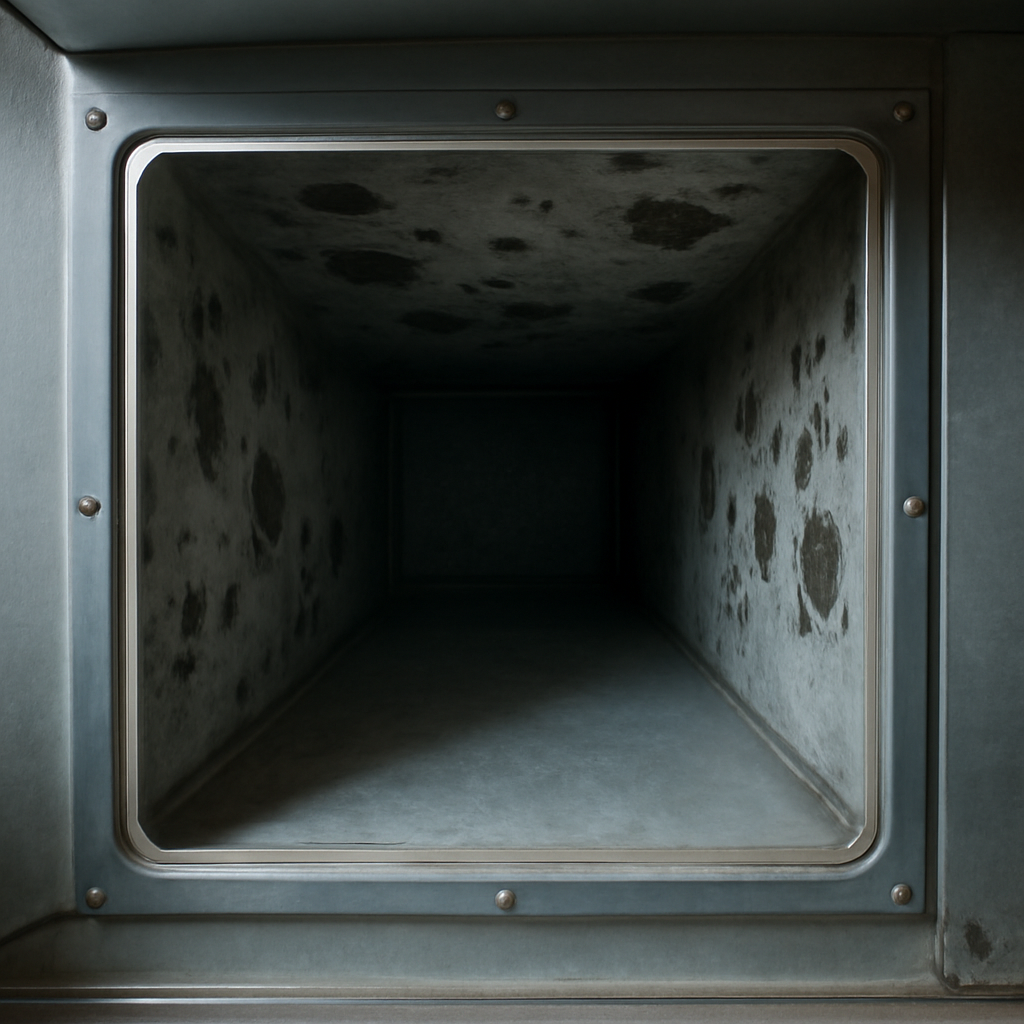
You searched “HVAC mold remediation near me” because something in the system smells wrong, not because you want a lecture on spore biology. This page cuts to the part that matters when you’re about to spend money: where mold actually lives inside a forced-air system, what a legitimate remediation scope includes, what it runs on the Front Range in 2026, and how to separate a real remediator from a duct-cleaning company selling a $499 fog job.
Is this mold, asbestos, or water damage? Get a free instant screen
Upload a clear photo of the suspect area. You'll get an instant AI screening opinion and what to do next. This is screening guidance, not a professional determination.
Screening guidance only. AI can be wrong. Confirm asbestos, mold type, or lead with lab testing or a licensed professional before acting.
Where mold actually grows in an HVAC system
Three spots account for nearly every case. The evaporator coil and condensate drain pan stay wet through the whole cooling season, so any dust that settles there becomes a growth surface. The blower and air-handler cabinet corrode and hold condensation behind insulated panels. And the return ductwork collects house dust that turns to food once basement humidity tracks into the metal or flex duct. Every time the blower cycles, a colony in any of these spots seeds the rest of the house through the supply registers. That is the whole reason HVAC mold is worth treating differently from a patch of mold on a bathroom wall.
Signs it’s more than dust
Black staining on the ceiling around a supply register is the most common visible cue. It can be plain dust streaking, but paired with condensation on the diffuser face it usually means biological material is riding the airflow. Two other tells: a stale, earthy odor that gets stronger the moment the blower kicks on, and allergy-type symptoms that ease when everyone leaves the house for a day or two. Symptom patterns are a medical question, not a diagnostic one — the NIEHS ties damp indoor environments to respiratory irritation and asthma flare-ups, so let a physician weigh in there. Physical evidence is more reliable: standing water in the secondary drain pan, rust on the coil access panel, or visible fuzz on flex duct seen through a register grille. If a bedroom smells musty within minutes of the AC starting in July, that is rarely coincidence. Our guide on how to detect hidden mold covers the moisture-meter and inspection steps that confirm it before you pay for removal.
What a real remediation scope includes
Remediation is closer to industrial hygiene than to a vacuum-and-go duct cleaning. A written estimate should itemize five things, and a proposal missing any of them is incomplete:
- Containment — the system is shut off and supply/return openings are sealed with poly sheeting so the work doesn’t aerosolize spores through the house.
- Source removal at the air handler — mechanical cleaning of the coil, blower, and pan with a no-rinse coil cleaner and a wet/dry vacuum capturing runoff. This is the step that actually matters.
- Duct cleaning method — named, not vague. Source-removal (negative air at the handler plus mechanical agitation at each register) is the National Air Duct Cleaners Association’s preferred approach. Rotary brushes work on rigid metal but tear flex duct; air-whip is gentler but weaker against adhered growth.
- Antimicrobial with product name and EPA registration number on the invoice. The EPA is explicit that biocide application is not remediation — it follows physical source removal and never replaces it.
- Post-remediation verification — before/after photos of coil, blower, and a duct section, ideally plus an air sample compared to an outdoor control by an accredited lab.
Some components can’t be cleaned at all. EPA guidance recognizes that porous, fiber-lined duct and saturated insulation cannot be reliably decontaminated — those get replaced, not brushed. Same for heavily contaminated flex duct, where cleaning damages the inner liner anyway.
What it costs on the Front Range in 2026
Denver, Boulder, and Colorado Springs pricing clusters into three tiers. Numbers vary by system size and severity, but the tiers hold:
| Scope | Typical range | What you actually get |
|---|---|---|
| Deodorizing “mold treatment” | $400–$700 | A fog pass. Not remediation. Growth returns. |
| Full single-system remediation | $900–$2,800 | Containment, coil/blower source removal, duct cleaning, verification |
| Heavy job with replacement | $4,500–$8,000+ | Coil, insulated panels, or flex-duct replacement added |
The gap between the first and second tier is where most homeowners get burned: a heavily advertised low price almost always buys the fog, not the source removal. Insurance rarely helps either. Most homeowner policies exclude mold unless it stems from a covered sudden event like a burst supply line, so read your declarations page before scheduling. For a fuller cost picture across inspection and removal, see what a mold inspection costs.
How to tell a remediator from an upsell
The top map results for “HVAC mold remediation near me” are proximity and ad placements, not quality rankings. Before you sign, confirm five things:
- The firm carries pollution-liability insurance. General liability usually excludes mold, so a general-liability-only contractor is uninsured for the exact work you’re buying.
- Technicians hold IICRC AMRT (Applied Microbial Remediation Technician) certification or equivalent.
- The proposal names the antimicrobial product and the duct method — no generic “we’ll sanitize it.”
- You get two recent references for HVAC-specific jobs, not bathroom or crawl-space work.
- Verification is independent where possible — a third-party lab reads the clearance sample, not the remediator’s own employee.
These are the same principles in our contractor vetting guide, applied to a specialty trade. Refine the search itself, too: “IICRC certified mold remediation” or the county name plus “indoor air quality contractor” surfaces specialists that plain “near me” buries.
What you can safely do yourself
EPA guidance sets a practical DIY ceiling at roughly 10 square feet of mold on hard surfaces. Inside an HVAC system, that translates to a short list: wipe a visible ring on the register face, swap a contaminated filter, and clean an accessible drain pan with mild detergent. Everything past the cabinet door — the coil interior, behind the blower, the duct trunk — needs HEPA containment and equipment most homeowners don’t own, and doing it wrong aerosolizes far more than you remove. If your local mold problem extends past the ductwork into a damp crawl space, our guide on crawl-space mold removal covers that adjacent scope.
Fix the moisture, or it comes back
Re-growth within six months almost always means a missed water source. The usual suspects: an undersized or clogged condensate drain, an oversized AC that short-cycles and never dehumidifies, a return-air leak pulling humid attic air, or a laundry load in a finished basement. The CDC and EPA both point to the same control — keep indoor relative humidity between 30% and 50%. A float switch on the drain, a re-routed secondary line, or a whole-house dehumidifier is often cheaper over five years than a second remediation. Remediation without source control is a short-lived purchase.
This page summarizes current EPA and CDC guidance and is not a substitute for an in-person assessment by a licensed contractor. Front Range homeowners can reach out through our contact page for a vetted local referral before signing an HVAC mold contract. Additional reference: EPA, Should You Have the Air Ducts in Your Home Cleaned?