Hiring for Crawl Space Mold Removal on the Front Range
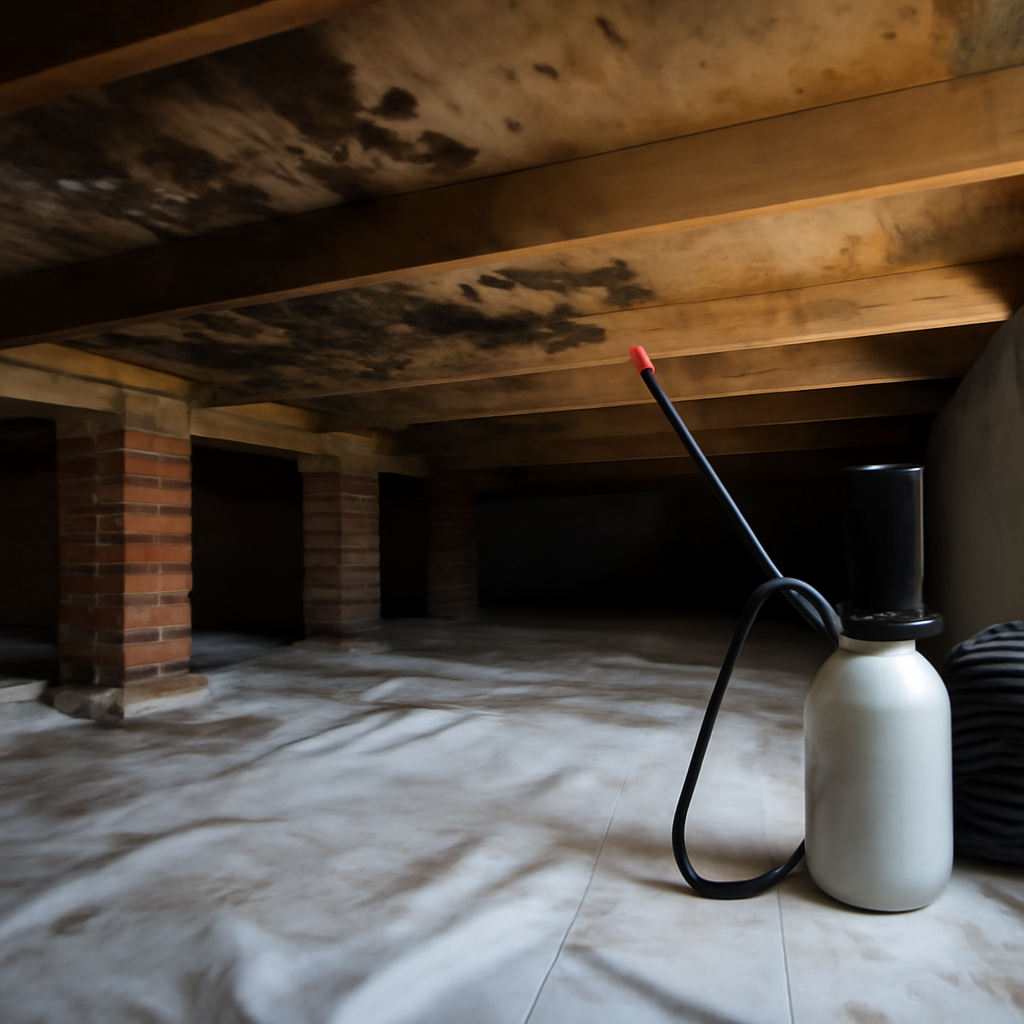
People who search for a crawl space mold remover are usually one step past the discovery: they have already smelled the musty air rising through floor registers, spotted white or gray fuzz on the joists with a flashlight, or had an inspector flag it during a sale. This page is about hiring that job out well — when a contractor is genuinely warranted, what a defensible scope looks like, what it should cost on the Colorado Front Range, and the specific things that separate a lasting fix from a repaint job that molds again in a year.
Part of our Crawl Space & Attic Guide guide — start there for the full picture →
Is this mold, asbestos, or water damage? Get a free instant screen
Upload a clear photo of the suspect area. You'll get an instant AI screening opinion and what to do next. This is screening guidance, not a professional determination.
Screening guidance only. AI can be wrong. Confirm asbestos, mold type, or lead with lab testing or a licensed professional before acting.
When the job actually needs a contractor
The EPA’s threshold is concrete and worth knowing before you call anyone: for mold covering less than about 10 contiguous square feet, a homeowner can usually clean it themselves; above that, the agency recommends bringing in a professional or someone experienced in mold cleanup, especially where the moisture came from sewage or contaminated water (EPA, Mold Cleanup in Your Home). Most crawl space growth that a homeowner notices is well past 10 square feet by the time it is visible, because the whole underside of the floor shares one humidity envelope. That is the practical reason crawl space mold tends to be a hired job rather than a weekend one.
There is also an access reality: you cannot scrub joists you cannot reach on your back in 24 inches of clearance, and disturbing heavy growth without containment pushes spores up into the living space through gaps around plumbing and duct penetrations. If the affected area is small, isolated, and reachable, our guide on cleaning mold on porous surfaces covers the DIY case honestly.
Why crawl space mold is its own problem
Most pre-2000 Front Range homes were built with vented crawl spaces — foundation vents sized under the old code ratio of roughly one square foot of vent per 150 square feet of floor area. The theory was that outdoor air would dry the framing. Building-science testing over the last two decades found the opposite in cooling season: warm, humid outdoor air enters the cool crawl space and condenses on cold pipes and framing, holding the space at sustained high humidity. Mold does not need standing water to grow — it needs surfaces staying damp and relative humidity that lingers high. The EPA advises keeping indoor humidity below 60 percent, ideally 30 to 50 percent (EPA, A Brief Guide to Mold, Moisture and Your Home). A vented crawl space in July often sits well above that.
So a real fix has three parts, in order: remove the visible growth, kill the moisture source, and hold the space dry long-term. A contractor who quotes only step one is selling a result with an expiration date.
What it costs on the Front Range
Remediation of the growth itself — containment, HEPA vacuuming, antimicrobial treatment of joists and subfloor, and haul-off of contaminated insulation and old sheeting — typically runs $2,000 to $6,000 for a single-family crawl space, driven mostly by square footage and clearance. Low crawls under 24 inches cost more because the work is slower and harder on the crew.
The moisture-control layer is the larger number and the one that prevents a repeat. A full encapsulation — a sealed reinforced liner up the walls, sealed vents, and a dedicated dehumidifier — commonly adds $6,000 to $15,000. A combined remediate-and-encapsulate project on a 1,000-square-foot Front Range crawl space frequently lands between $10,000 and $18,000. Treat any quote far below that for both scopes as a signal that something was left out; ask what.
| Scope element | Typical Front Range range |
|---|---|
| Remediation only (removal, HEPA, antimicrobial, haul-off) | $2,000–$6,000 |
| Encapsulation add-on (liner, sealed vents, dehumidifier) | $6,000–$15,000 |
| Dedicated crawl dehumidifier, installed | $1,200–$2,500 |
| Independent post-remediation verification | $400–$700 |
What a defensible scope includes
A serious proposal names the affected area in square feet, lists exactly what gets removed (insulation, old vapor barrier, organic debris), and states the cleaning protocol reference — look for IICRC S520, the recognized industry standard for mold remediation. It should specify containment and negative air pressure even though the crawl space feels already isolated; that is precisely where lazy crews skip it. It should describe the moisture correction and the new vapor barrier, and it should carve out a separate line for third-party verification before anything gets sealed. If the scope reads like a paragraph with a single price, push back.
Remediation versus encapsulation
Salespeople use the words interchangeably; they are not the same work. Remediation removes existing growth and decontaminates. Encapsulation seals the space against future moisture. You generally need both, in that sequence. Remediate without encapsulating and the humidity that caused the growth is unchanged, so regrowth in 12 to 24 months is common. Encapsulate without remediating and you have trapped contaminated material behind plastic — the odor and spore load stay, now hidden. If a contractor proposes a liner over visibly moldy framing with no removal step, ask directly what happens to the existing growth first.
Vapor barrier and moisture control specs
The cheapest job loosely lays 6-mil polyethylene over the dirt — the code minimum for a ground cover, and little more than a nod at moisture control. Encapsulation-grade work uses 12- to 20-mil reinforced polyethylene, seams overlapped and taped, mechanically fastened to the foundation wall, and sealed around piers and penetrations. A 20-mil sealed liner should last decades; a loose 6-mil sheet often tears within several years. Because the labor to install dwarfs the material cost, over-specifying the liner is usually the right call.
A sealed crawl space still needs active drying. The two paths are a dedicated dehumidifier (commonly 70 to 90 pints per day for 1,000 square feet) or conditioned supply air tied into the home’s HVAC. Colorado’s dry climate means some encapsulated crawls hold fine without active control, but most projects budget a dehumidifier as insurance. The Department of Energy’s insulation guidance is a useful vendor-neutral reference on the trade-offs (energy.gov, Insulation).
Vetting the contractor
Ask for the same credentials you would for any remediation hire — IICRC S520 firm certification, technicians credentialed in applied microbial remediation, general liability with pollution coverage, and workers’ comp. Crawl work adds two items: confined-space training and a respiratory-protection program. OSHA rules can classify a low-clearance crawl with restricted entry as a confined space, and rodent-contaminated crawls raise hantavirus precautions the CDC ties to specific cleanup steps (CDC, Hantavirus Prevention). A crew that shrugs at those questions is a crew cutting corners you cannot see. Get three quotes, and read our checklist for choosing a mold removal company before you sign.
Because crawl space work is hidden the moment the liner goes down, insist on independent verification first: a third-party assessor doing a visual pass, moisture readings on framing, and sampling before encapsulation. That $400-to-$700 report becomes part of the home’s record and matters at resale. If you want an inspector’s read before committing, start at our mold inspection hub.
Front Range patterns and insurance
Local geography shapes the moisture source. Foothill homes in Evergreen, Conifer, and parts of Boulder County are built into hillsides where bulk water intrusion drives the growth. Older Denver bungalows tend to have shallow vented crawls that condense during the summer monsoon. I-25 corridor developments often have unvented conditioned crawls that quietly fail when the original dehumidifier dies and no one notices until the smell returns.
On insurance, most Colorado homeowner policies treat crawl space mold like other interior mold: covered only when a sudden, accidental water event triggered it, and capped under a separate mold endorsement. A burst supply line often qualifies; years of vented-crawl humidity almost never does. If you file, document the cause of loss in writing before any demolition and attach an itemized S520-referenced estimate — adjusters routinely dispute mold scopes.
More Questions About Crawl Space Mold Removal
How long does professional crawl space mold removal take?
Professional crawl space mold removal typically takes one to three days for an average home on the Front Range or elsewhere. Small, light areas may take a day, while heavy growth or framing repairs extend the job.
When encapsulation or a vapor barrier upgrade follows, the full project can take one to two weeks, because the wood must dry before it is sealed in. A clear written schedule, including when the crawl will be confirmed dry, is a sign of a careful contractor.
Does homeowners insurance pay for crawl space mold removal?
Homeowners insurance usually pays for crawl space mold removal only when it stems from a sudden, covered event, such as a burst pipe, reported promptly. Mold caused by soil moisture, poor grading, irrigation or slow leaks is typically excluded.
Many policies cap mold coverage at a limited amount. Encapsulation, drainage and dehumidifiers are usually treated as improvements rather than covered repairs. Documenting the damage with photos and calling the insurer before work begins helps if there is a possible claim.
Can crawl space mold removal be combined with radon mitigation?
Yes, crawl space mold removal and encapsulation can often be combined with radon mitigation, and doing them together can save money. A sealed crawl space liner can double as the membrane for a sub-membrane depressurization radon system.
Coordination matters, because sealing vents can change radon levels. Testing radon before the work and again afterward shows whether a radon fan is needed. Homes with results at or above the EPA action level of 4 pCi/L should use a certified radon mitigation professional for the radon portion.
Is it safe to stay home during crawl space mold removal?
Yes, it is generally safe to stay home during crawl space mold removal when the contractor seals off the crawl from living areas and runs negative air machines with HEPA filtration. Most of the disturbance stays below the floor.
Interior access hatches should be taped closed, and HVAC equipment in the crawl may be shut down temporarily. People with asthma, allergies or immune conditions may choose to stay elsewhere during removal days after talking with a doctor. Noise from equipment is the most common complaint.
Frequently asked questions
At what point should I hire a pro instead of cleaning crawl space mold myself?
The EPA's rule of thumb is about 10 contiguous square feet: below that a capable homeowner can usually handle it, above that a professional is recommended. Most visible crawl space growth exceeds that by the time it is noticed, and the access and containment demands of a low crawl push it toward a hired job.
Do I really need encapsulation after remediation?
Usually yes. Removal clears existing growth but does not change the humidity that caused it, so regrowth within 12 to 24 months is common without a sealed liner, sealed vents, and moisture control. On Colorado's dry climate some encapsulated crawls hold without active dehumidification, but budgeting for one is the safer bet.
Can the foundation vents stay open?
Modern building science and current code both allow sealed, conditioned crawl spaces, which outperform vented designs in most climates including Colorado. Confirm with your local building department before sealing, since retrofit requirements vary by jurisdiction.
Should the company that seals the crawl space also verify the work?
No. Independent post-remediation verification before encapsulation is the standard, because the framing becomes hard to re-inspect once the liner is down. Pay a separate third-party assessor for the clearance step.
What should be done before the mold company arrives?
Before a crawl space mold company arrives, clearing a path to the access door, moving stored items away from the hatch, securing pets and noting any known leaks or past repairs helps. Photos of the crawl and any prior inspection reports speed up the assessment.
How soon should crawl space mold be removed?
Crawl space mold should be addressed within weeks rather than months, especially when wood feels soft or water is present. Mold is usually not an overnight emergency, but ongoing moisture can damage framing and spread odors into the home, so delays raise costs.
Does crawl space mold affect selling a home?
Yes, crawl space mold can affect a home sale because buyers' inspectors commonly check the crawl and many states require disclosure of known mold or moisture problems. Documented professional removal, a fixed moisture source and a transferable warranty reduce buyer concern.
Guidance here reflects EPA and CDC mold and moisture recommendations current as of 2026; consult a certified professional for testing and your physician for any health symptoms. If you want a vetted Front Range inspector or third-party assessor before signing a remediation contract, reach us through our contact page.
Mold removal & cleanup picks
For a small, contained patch (under ~10 sq ft) these EPA-friendly removers handle surface mold. Larger or recurring growth warrants a professional assessment first.
| Product | Why | Buy |
|---|---|---|
 RMR-86 Instant Mold Stain Remover | Fast-acting on stains; ventilate and wear PPE. | Amazon — $29.99 |
 Concrobium Mold Control | No-bleach formula that also helps prevent regrowth. | Amazon — $11.26 |
 Mold Armor Mold & Mildew Remover | Widely stocked bathroom/surface remover. | Amazon — $22.98 |