Crawl Space Mold Removal: A Homeowner Guide
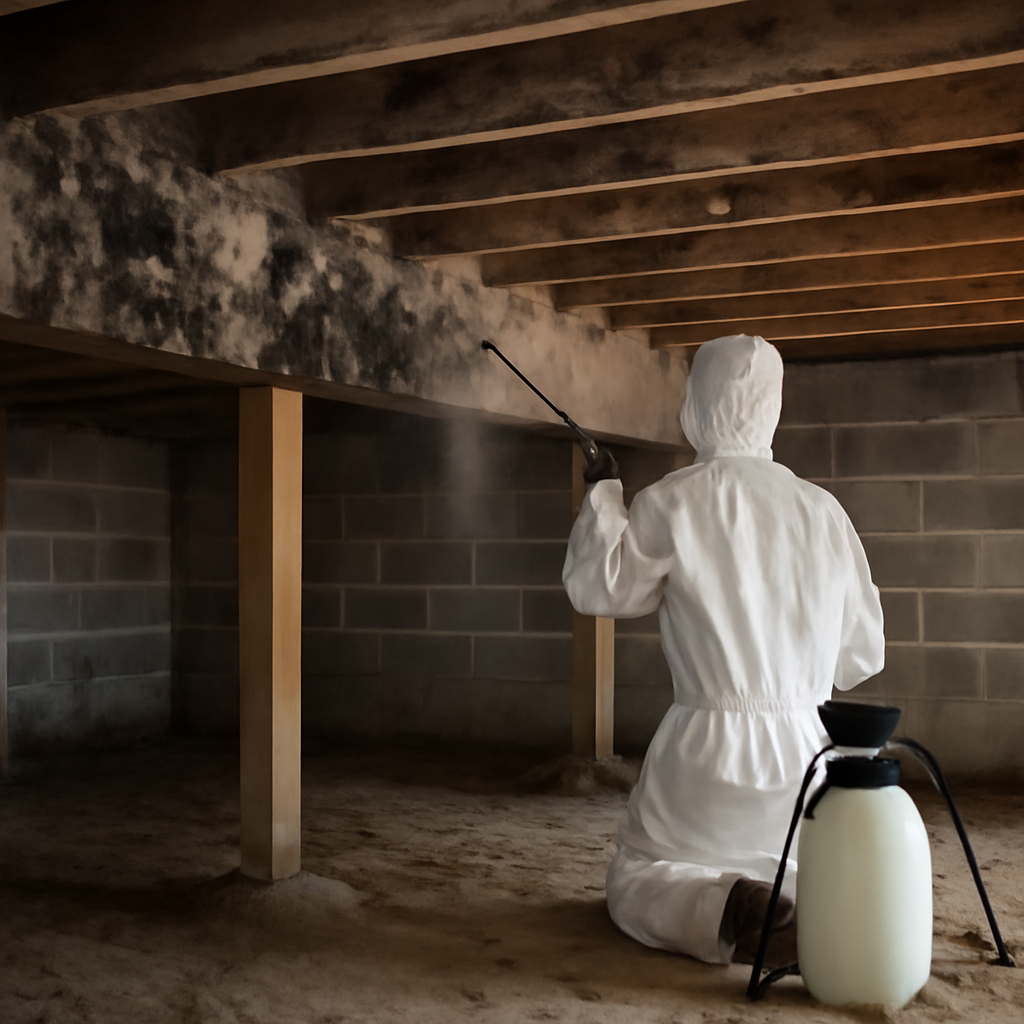
A musty smell drifting up through the floor is often the first clue that something is growing under the house. Crawl spaces stay dark, cool, and damp, which is exactly what mold needs to colonize joists, subfloor sheathing, and insulation. Effective crawl space mold removal is less about a single spray and more about correcting the moisture that fed the growth in the first place. This guide summarizes EPA and CDC guidance current as of 2026; consult your physician for symptoms and a certified professional for testing and remediation decisions in your own home.
Is this mold, asbestos, or water damage? Get a free instant screen
Upload a clear photo of the suspect area. You'll get an instant AI screening opinion and what to do next. This is screening guidance, not a professional determination.
Screening guidance only. AI can be wrong. Confirm asbestos, mold type, or lead with lab testing or a licensed professional before acting.
What does crawl space mold removal actually involve?
Removal means physically taking the mold off surfaces, not just killing it in place. Dead mold spores still trigger allergic reactions, so the goal is removal plus moisture control. A typical job has three parts: fix the water source, clean or remove the contaminated materials, and dry the space so it stays below the moisture threshold mold needs.
The EPA does not certify mold removers, and there is no federal license requirement. That means quality varies widely, and the homeowner carries responsibility for verifying that a contractor follows containment and drying standards.
Why crawl spaces grow mold in the first place
Moisture is the only variable a homeowner can truly control. Mold spores are already present in every house; they simply wait for water. In a crawl space, that water arrives in predictable ways.
Bare soil floors release ground moisture upward as vapor. Plumbing drips, condensation on cold ducts, and poor exterior grading all add to the load. Along the Front Range, spring snowmelt and summer monsoon storms can push water against foundations in El Paso and Douglas counties, and that water finds its way under the house.
Relative humidity above roughly 60 percent sustains growth. When a crawl space sits closed and unvented through a humid week, condensation forms on the coolest surfaces first, usually metal ducts and the underside of the subfloor.
Health reasons to take it seriously
The CDC notes that indoor dampness and mold are linked to upper respiratory symptoms, coughing, wheezing, and asthma aggravation in sensitive people. Air from a crawl space does not stay there. The stack effect pulls roughly 40 percent of a home’s air upward from below, carrying spores and the musty odor into living areas.
People with asthma, allergies, or weakened immune systems react most strongly. This is a cleanup-and-prevention issue, not a diagnosis tool; anyone with persistent symptoms should see a clinician.
How to assess the damage before cleaning
Put on an N95 respirator, gloves, and eye protection before entering. Look for discoloration on joists, fuzzy or stained insulation, and standing water or damp soil.
The EPA’s general guideline is a useful threshold: contaminated areas under about 10 square feet are often a reasonable do-it-yourself project, while anything larger, or any sewage involvement, calls for a professional. Crawl spaces frequently exceed that footprint once you account for the subfloor overhead.
Signs you should not DIY
Heavy structural staining, sagging insulation soaked through, a sewage backup, or visible mold across most of the subfloor all point to professional help. So does any situation where someone in the home has a serious respiratory condition.
Tools you will need
A worthwhile assessment needs more than a flashlight. A moisture meter confirms whether wood is actually wet, since a dark stain may be old and dry. A bright work light, a creeper or crawl pad, and a notepad to map findings all help. A relative-humidity gauge tells you whether the air itself sits in the danger zone above roughly 60 percent. Photographing each problem area before you start gives you a record to compare against after the work, and a baseline if a contractor’s quote later seems inflated relative to what you saw.
Crawl space mold versus other foundation types
Not every home has a vented crawl space, and the foundation type shapes the risk. A vented crawl space, common in older Front Range housing, draws outside air through wall vents, which can help in dry weather but pulls humid air in during a wet stretch. A sealed or encapsulated crawl space relies on a vapor barrier and conditioned air instead.
Slab-on-grade homes avoid the crawl space problem entirely but can wick ground moisture through the slab. Basements share many of the same moisture dynamics as crawl spaces but are usually easier to access and inspect. Knowing which type you have helps you judge whether vents, encapsulation, or grading is the right lever to pull.
Step-by-step removal for small, accessible areas
Start by stopping the water. There is no point cleaning a surface that will be re-wetted next week. Repair the leak, redirect downspouts, or correct grading first.
Remove and bag porous materials that are contaminated. Soaked fiberglass insulation and moldy cardboard cannot be cleaned reliably and should be discarded in sealed bags.
Scrub non-porous and semi-porous surfaces such as joists and subfloor with detergent and water, then dry thoroughly. The EPA specifically advises against routine bleach use; soap and water plus complete drying removes mold effectively, and bleach adds little on porous wood.
Run a dehumidifier or fans afterward until the wood reads dry on a moisture meter. Damp framing left behind simply restarts the cycle.
Work in short stretches and take breaks above ground for fresh air, since a crawl space concentrates both spores and exertion. Keep contaminated bags sealed and carry them out promptly rather than letting them sit, and avoid tracking debris through the living space on the way. A second person stationed outside the access hatch is a sensible safety measure in a tight or low crawl space.
Drying is the step people skip
Cleaning gets the attention, but drying is what makes the cleanup last. Wet wood that reads high on a moisture meter will grow mold again no matter how thoroughly it was scrubbed, because the food source and the water are both still present. Aim to bring framing moisture down to a level comparable to the dry wood elsewhere in the space, then confirm with the meter rather than by feel. In a humid week, that may mean running a dehumidifier for several days. Verifying dryness with a number, not a guess, is the difference between a fix that holds and one that fails by the next season.
What professional crawl space mold removal costs
Pricing depends on square footage, severity, and whether encapsulation follows. Industry estimates commonly place crawl space remediation in a broad range from a few hundred dollars for a small spot treatment to several thousand for a full cleanup with new vapor barrier and structural drying.
Encapsulation, where a heavy polyethylene liner seals the floor and walls, often adds the largest line item but addresses the root cause. Front Range homeowners comparing quotes should make sure each bid lists containment, disposal, drying, and post-work verification rather than a vague flat fee.
What goes into a fair quote
A credible bid spells out the steps rather than offering a single number. Look for line items covering containment to keep spores out of the living space, removal and bagged disposal of contaminated insulation, surface cleaning of joists and subfloor, structural drying with monitored moisture readings, and a written confirmation that the space passed a post-work check. Encapsulation, a new vapor barrier, and dehumidification are often quoted separately because they address prevention rather than the cleanup itself. Treat a vague flat fee with no breakdown as a reason to get a second opinion.
What happens if crawl space mold is ignored
Left alone, the colony does not stay put. It spreads across joists and subfloor sheathing, and over years the same moisture that feeds it can rot the wood it grows on, weakening the floor system above. Replacing structural framing costs far more than an early cleanup.
The air quality cost is immediate. Because the stack effect draws crawl space air upward, an ignored problem keeps seeding the living space with spores and odor. For a household member with asthma or allergies, that is a daily exposure rather than an abstract risk. Resale is affected too, since a home inspection will flag visible crawl space mold and give a buyer leverage to negotiate or walk.
Preventing mold from coming back
Prevention is moisture management. A continuous vapor barrier over the soil cuts ground moisture dramatically. Sealing vents and conditioning the space, or running a crawl-space dehumidifier, keeps relative humidity below the growth threshold.
Outside the house, extend downspouts away from the foundation and slope soil so water drains off. Insulating cold ducts reduces the condensation that often feeds duct-line mold. Our overview of building science behind preventing mold growth walks through the humidity targets in more detail.
Seasonal habits help too. After spring snowmelt and during the summer monsoon, check the crawl space for new dampness while the ground is wettest. A cheap humidity gauge left in the space lets you spot a problem before mold appears, since rising relative humidity is the early warning that precedes visible growth. Catching a humidity creep and running a dehumidifier for a week is far cheaper than a remediation bill.
The role of the vapor barrier
The vapor barrier is the single most effective prevention measure in a crawl space with a soil floor. A continuous sheet of heavy polyethylene laid over the soil and lapped up the walls cuts the steady stream of ground moisture that otherwise feeds everything above it. Gaps, tears, and seams left unsealed undermine the whole effort, which is why a careful installation matters more than the material’s thickness alone. In a fully encapsulated space, the barrier is sealed and paired with a dehumidifier or conditioned air, turning the crawl space into a controlled environment rather than a damp void under the house.
When to call a professional
Call a remediation contractor when the affected area is large, when materials are saturated, when there is sewage, or when a household member has a serious health condition. A qualified inspector can also confirm whether a stain is active mold or old, dried surface growth before you spend on remediation.
For the bigger picture on testing and inspection, the mold inspection and testing hub explains what a professional assessment includes, and our guide to what mold remediation involves covers containment standards in depth.
During a home purchase, a crawl space deserves particular attention because it is easy to overlook and expensive to fix after closing. A buyer’s inspector who notes musty odor, staining, or high humidity in the crawl space gives leverage to negotiate repairs before the sale, rather than discovering the problem as a new owner. Asking specifically about crawl space condition, vapor barrier presence, and moisture readings turns a hidden space into a known quantity.
References
- Mold Cleanup in Your Home — U.S. Environmental Protection Agency
- About Mold and Dampness — Centers for Disease Control and Prevention
- A Brief Guide to Mold, Moisture and Your Home — U.S. Environmental Protection Agency
- Mold Inspection FAQ — InterNACHI
If you are in the Denver metro or anywhere on the Front Range and want a vetted inspector to assess a damp crawl space before you commit to remediation, reach out through our contact page and we’ll connect you with a qualified local professional.
Mold removal & cleanup picks
For a small, contained patch (under ~10 sq ft) these EPA-friendly removers handle surface mold. Larger or recurring growth warrants a professional assessment first.
| Product | Why | Buy |
|---|---|---|
 RMR-86 Instant Mold Stain Remover RMR-86 Instant Mold Stain Remover | Fast-acting on stains; ventilate and wear PPE. | Amazon — $18.38 |
 Concrobium Mold Control Concrobium Mold Control | No-bleach formula that also helps prevent regrowth. | Amazon — $13.48 |
 Mold Armor Mold & Mildew Remover Mold Armor Mold & Mildew Remover | Widely stocked bathroom/surface remover. | Amazon — $22.98 |