Crawl Space Mold: What Homeowners Need to Know
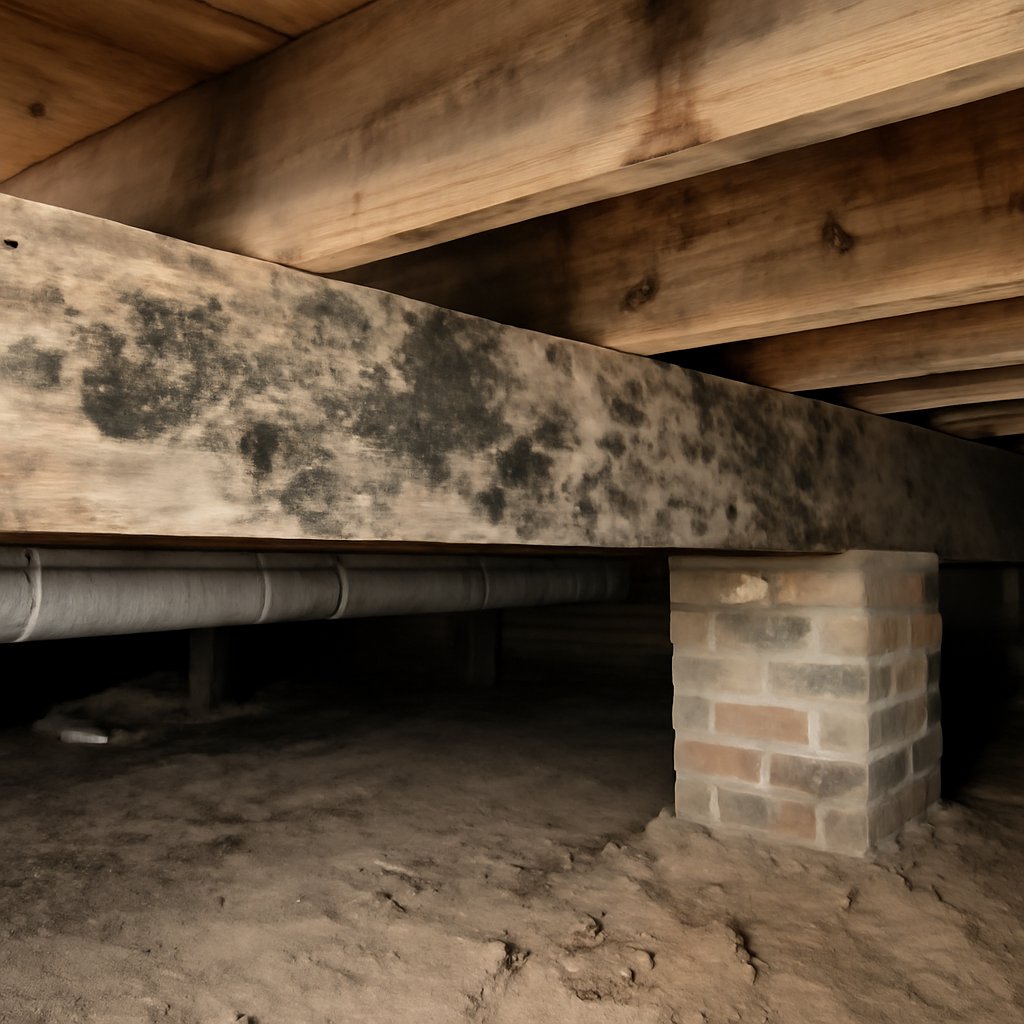
The crawl space is the part of a house homeowners think about least and that mold likes most. It is dark, often damp, and full of the organic material mold feeds on, from wood joists to paper-faced insulation. Crawl space mold can grow undetected for years while quietly degrading framing and sending spores and odors into the rooms above. This guide summarizes EPA and CDC guidance on mold and dampness current as of 2026 and is not a substitute for a certified mold professional or your physician for health concerns. The focus here is understanding the problem: what causes crawl space mold, how to recognize it, and why it matters for both your home and your health.
Is this mold, asbestos, or water damage? Get a free instant screen
Upload a clear photo of the suspect area. You'll get an instant AI screening opinion and what to do next. This is screening guidance, not a professional determination.
Screening guidance only. AI can be wrong. Confirm asbestos, mold type, or lead with lab testing or a licensed professional before acting.
What Causes Crawl Space Mold?
Mold needs three things to grow: moisture, a food source, and a tolerable temperature. A crawl space supplies all three readily. The wood framing, subfloor, and any organic insulation are abundant food. Temperatures stay moderate year-round. The missing variable is usually moisture, and crawl spaces have no shortage of ways to get wet.
The EPA is direct that controlling moisture is the key to controlling mold, because without water mold cannot establish. Common moisture sources in a crawl space include ground moisture wicking up through bare soil, foundation seepage after rain or snowmelt, plumbing leaks, condensation on cool surfaces, and humid outdoor air entering through open vents. Along the Front Range, spring snowmelt and summer monsoon storms can spike crawl space humidity even in an otherwise dry climate. A persistent damp smell often signals the problem before any visible growth, a topic our guide on a musty-smelling crawl space explores in detail.
Of these sources, ground moisture is the one homeowners most often overlook. Soil holds and releases water constantly, and a bare dirt crawl space floor acts like a slow, steady humidifier feeding the air above it. Even without a single visible leak, an uncovered earthen floor can push humidity high enough to sustain mold across the framing. This is why a sealed vapor barrier over the soil is so central to keeping a crawl space dry.
Condensation is the other quiet culprit. Crawl space surfaces run cooler than outdoor summer air, so when warm, humid air reaches them through open vents it condenses, leaving a film of moisture on joists, ductwork, and the underside of the subfloor. That film is all mold needs. The counterintuitive result is that ventilating a crawl space in humid weather can make it wetter, not drier, which is part of why sealed and conditioned crawl spaces have gained favor over the traditional vented approach.
What Does Crawl Space Mold Look Like?
Mold in a crawl space appears in several forms depending on the species and surface. It can look like black, green, gray, or white patches on joists, subfloor, and rim board. White, cottony, or fuzzy growth on wood is common and sometimes confused with efflorescence or simple staining.
Where to Look
Inspect the underside of the subfloor, the floor joists, the rim joist around the perimeter, and any paper-faced insulation. Mold often starts near moisture sources: under bathrooms and kitchens, near foundation cracks, and in poorly ventilated corners.
Mold Versus Look-Alikes
Not every white deposit is mold. Efflorescence is a crystalline mineral salt left by evaporating water on masonry, and it brushes off as powder. Mold is biological, often has a musty odor, and may smear. Because identification by eye is unreliable, the CDC notes that sampling species is rarely necessary for the decision to clean up; visible mold and a moisture problem are enough reason to act. Our broader mold inspection hub explains how professionals confirm and document growth.
Why Crawl Space Mold Matters
The consequences split into two categories, and both are worth taking seriously.
Structural: Mold and the moisture behind it degrade wood over time. Persistent dampness leads to wood rot, weakened joists, sagging floors, and compromised insulation. What begins as surface mold can signal conditions that will eventually cost far more to repair.
Health: Air from the crawl space rises into living spaces through the stack effect, carrying spores and musty odors with it. The CDC reports that exposure to damp, moldy environments can cause symptoms such as nasal congestion, throat irritation, coughing, and wheezing, and can be harder on people with asthma, allergies, or weakened immune systems. This is general guidance, not a diagnosis; anyone with persistent symptoms should consult a physician.
How Crawl Space Mold Is Assessed
A proper assessment looks beyond the visible growth to the moisture driving it. A certified inspector measures humidity and moisture content in the wood, checks the vapor barrier and ventilation, traces leaks, and evaluates grading and drainage around the foundation. Identifying the source is what separates a lasting fix from a temporary cleanup.
Inspectors also gauge the extent of the growth. A small area on a few joists is treated differently from widespread contamination across the subfloor. The EPA offers a general rule of thumb that smaller affected areas may be handled with careful cleanup while larger contamination warrants professional remediation. Knowing the scale guides the right response and the right budget.
Common Types of Mold Found in Crawl Spaces
Homeowners often want to know which mold they are dealing with, but the practical answer from the EPA and CDC is that identifying the exact species rarely changes what you should do. Visible mold plus a moisture problem is reason enough to clean up and fix the water, regardless of type. Still, a few patterns recur in crawl spaces and are worth recognizing.
Surface molds on wood: White, gray, or greenish growth that appears fuzzy or powdery on joists and subfloor. These are common where humidity is chronically high.
Darker staining molds: Black or dark green patches, which many people associate with the term black mold. The color alone does not confirm any particular species, and color is not a reliable measure of hazard.
White cottony growth: Often confused with efflorescence. True mold has a biological, sometimes musty character and may smear, while efflorescence is a crystalline mineral salt that brushes off as dry powder.
Because color and texture do not determine the response, costly species testing is usually unnecessary for a homeowner deciding whether to act. The decision rests on the presence of growth and moisture, not on a laboratory name for the organism.
How Crawl Space Mold Affects Indoor Air
The link between a hidden crawl space and the air in your bedrooms is the stack effect. As warm air escapes the top of the house, it draws replacement air upward from the lowest point, which in many homes is the crawl space. A significant fraction of the air circulating through living areas therefore originates below the floor. When that source is moldy, spores and the musty gases mold produces ride the airflow into occupied rooms.
This connection explains why a problem confined to the crawl space can produce symptoms upstairs. The CDC reports that damp, moldy indoor environments are associated with respiratory symptoms such as coughing, wheezing, and congestion, with stronger effects on people who have asthma or allergies. That guidance is general and not a diagnosis; anyone with persistent symptoms should consult a physician. The takeaway for homeowners is that crawl space mold is not an out-of-sight, out-of-mind issue. Cleaning the air the household breathes often starts with drying and remediating the space beneath the floor.
Preventing Crawl Space Mold
Prevention centers on keeping the space dry. A sealed vapor barrier over the soil blocks ground moisture, the largest contributor in many homes. Encapsulation, which fully seals the crawl space and conditions it, takes that further and is increasingly favored over open venting in many climates. A crawl space dehumidifier maintains low humidity once the space is sealed.
Outside the crawl space, directing gutter downspouts away from the foundation, grading soil to slope away from the house, and fixing plumbing leaks promptly all reduce the water that reaches the space. Mold in a crawl space is almost always a moisture story, so the homes that stay mold-free are the ones where moisture never gets a foothold. When growth is already present, address the water source first, then remediate, then maintain.
The Structural Toll of Long-Term Dampness
Mold is the visible symptom, but the moisture behind it does quieter, costlier damage to the home’s structure over time. Persistent dampness in a crawl space feeds wood-decay fungi that are distinct from surface mold and that actively break down the cellulose in joists, beams, and the subfloor. Where surface mold stains, decay fungi weaken, and the difference matters: a structurally compromised joist can lead to sagging floors and expensive repairs.
High humidity also degrades other components. Fiberglass insulation absorbs moisture, loses its insulating value, and can fall away from the subfloor. Metal fasteners and ductwork corrode. Stored items mildew and ruin. None of these happen overnight, which is part of the danger; a crawl space that is rarely inspected can deteriorate gradually until the floor above feels spongy or the repair bill is substantial.
This slow toll is why addressing crawl space moisture early pays off. Catching and correcting a damp crawl space before decay sets in costs far less than replacing rotted framing later. The mold a homeowner sees is best understood as an early warning that the same conditions are working on the wood out of sight.
How Crawl Space Mold Is Confirmed and Scoped
When a homeowner suspects mold, a professional assessment confirms the problem and, just as importantly, scopes it. The inspector looks beyond the visible growth to measure relative humidity and the moisture content of the wood, which reveals whether conditions still favor mold even where it is not yet visible. They check the vapor barrier, the ventilation, and the foundation for the moisture pathways feeding the growth.
Scoping the extent guides the response. A few square feet of surface mold on accessible joists is a different project from widespread contamination across the subfloor and into the insulation. The EPA offers a general rule of thumb that smaller affected areas can often be cleaned with care while larger contamination warrants professional remediation. Knowing the scale, and the moisture source driving it, lets a homeowner plan a fix that is neither an overreaction nor an underreaction. That same assessment also informs whether the problem is purely a maintenance issue or has begun to affect the structure, which shapes both the urgency and the budget.
Key Takeaways for Homeowners
Crawl space mold is, at its root, a moisture story. Mold needs moisture, a food source, and moderate temperatures, and a crawl space supplies the food and temperature freely, so controlling moisture is the lever that matters. Ground moisture through bare soil and condensation from humid air entering open vents are the two most overlooked sources, which is why sealing the ground and reconsidering venting are so central to control.
The growth appears as black, green, gray, or white patches on joists and subfloor, sometimes confused with the harmless mineral salt efflorescence. Identifying the exact species rarely changes the response; visible mold plus a moisture problem is reason enough to act. What matters more is recognizing both consequences: structural decay of the wood over time, and the spores and odors that rise into living spaces through the stack effect.
Prevention centers on keeping the space dry with a sealed vapor barrier or encapsulation, a dehumidifier holding humidity below about 60 percent, and exterior drainage that keeps water away from the foundation. When growth is already present, the order is fixed: address the moisture source, remediate the mold, then maintain dry conditions. For Front Range homeowners, catching a damp crawl space early is far cheaper than repairing rotted framing later.
References
- Mold Cleanup in Your Home — U.S. Environmental Protection Agency
- About Mold and Dampness — Centers for Disease Control and Prevention
- A Brief Guide to Mold, Moisture and Your Home — U.S. Environmental Protection Agency
- Crawlspace Moisture and Mold — International Association of Certified Home Inspectors
If you have spotted growth or smell dampness under your floor, connect with a vetted Front Range mold inspector through our contact page to find the moisture source before it spreads.