Crawl Space Mold Removal Companies Near Me: Vetting Guide
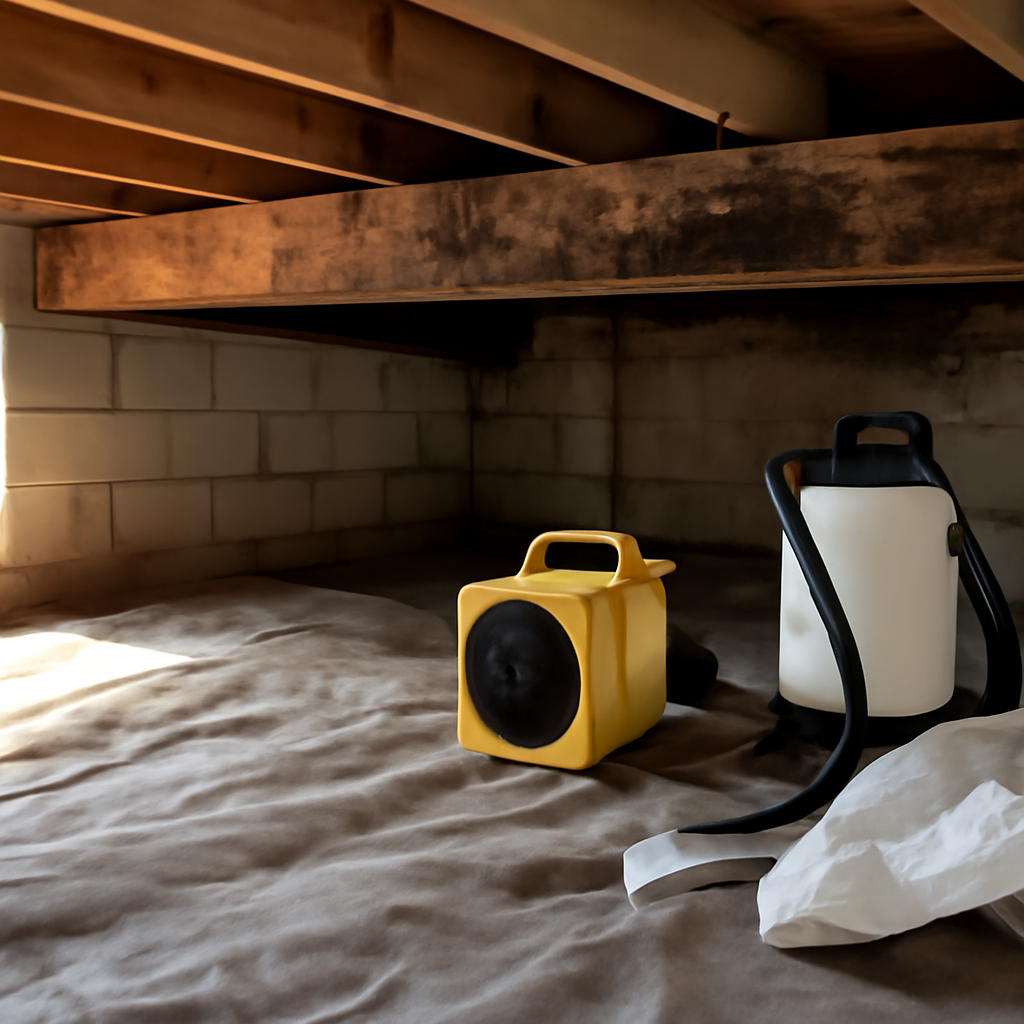
Searching for crawl space mold removal companies near me usually means a homeowner has already seen the problem: black-spotted joists, a sour basement smell, or moisture readings that came back high after a recent inspection. This guide focuses on company-level vetting — how to separate a credentialed remediation contractor from a general handyman with a respirator and a fogger. It summarizes EPA and CDC guidance current as of 2026 and refers homeowners to the InterNACHI directory for local discovery; consult a certified indoor environmental professional for testing decisions, and consult your physician if anyone in the household has unexplained respiratory symptoms.
Is this mold, asbestos, or water damage? Get a free instant screen
Upload a clear photo of the suspect area. You'll get an instant AI screening opinion and what to do next. This is screening guidance, not a professional determination.
Screening guidance only. AI can be wrong. Confirm asbestos, mold type, or lead with lab testing or a licensed professional before acting.
What “crawl space mold removal companies” actually do
A crawl space mold removal company is a specialized restoration contractor that performs mold remediation under a home — typically in a vented dirt or vapor-barriered space less than four feet tall. The work is physical, awkward, and respirator-required. Companies in this category handle source identification, containment, HEPA filtration, antimicrobial cleaning, removal of unsalvageable porous materials (insulation, wood with deep growth), and re-installation of a clean vapor barrier. Most also coordinate moisture-source repair, but very few perform the plumbing or grading fix themselves.
The distinction worth holding onto: remediation is not extermination. Mold spores are present in every home and every crawl space. The goal is to remove visible growth, lower spore counts to background-equivalent or below, and — most importantly — fix the moisture condition that caused the growth. A company that quotes mold removal without asking about moisture source is selling a temporary result. EPA guidance on mold cleanup makes this explicit.
Credentials that actually mean something
The single most useful credential for a crawl space mold removal company is IICRC AMRT — the Applied Microbial Remediation Technician certification from the Institute of Inspection, Cleaning and Restoration Certification. AMRT is course-based, requires hands-on protocol training, and is the de facto credential the insurance industry recognizes. A company that lists IICRC on the truck but cannot name a single AMRT-certified technician on the crew is showing you a company-level badge, not technician training.
Other useful signals include state contractor licensing where applicable, EPA Lead-Safe Renovator certification for pre-1978 homes, and InterNACHI Certified Mold Inspector status when the same company offers post-remediation verification. For broader context on local vs national service providers, see our mold inspection and testing hub, which lays out the inspection-versus-remediation distinction homeowners need before signing a bid.
Insurance and bonding
General liability insurance is the baseline; ask for the certificate naming you as the project address. Pollution liability is the credential that separates remediation specialists from general restoration: it covers contamination claims that standard GL policies exclude. A bonded company adds a layer of protection if the work is abandoned mid-job.
The vetting questions to ask on the first phone call
Most crawl space mold removal companies will quote a site visit before pricing. The phone call is the first filter. Five questions to ask before scheduling:
- Is your lead remediator IICRC AMRT certified, and how long have they held the credential?
- Do you carry pollution liability coverage in addition to general liability?
- Will you build a containment barrier between the crawl space and living area before work begins?
- Do you use a third-party indoor environmental professional for post-remediation verification, or do you self-clear?
- What is your written scope process — do you provide a line-item protocol document, or just a lump-sum bid?
A company that pushes back on these questions or insists on signing before the visit is selling speed, not quality. Front Range homeowners can cross-reference InterNACHI’s directory and the BBB to filter further.
Scope: what a real remediation includes
A defensible crawl space remediation scope contains six elements: containment, source-moisture identification, HEPA-filtered negative-air machines, physical removal of growth and unsalvageable materials, antimicrobial application on remaining structural surfaces, and post-remediation verification. Containment is the step homeowners most often see skipped — it requires polyethylene sheeting taped to floor joists and a negative-pressure fan to keep spore-laden air from migrating up into the home during work.
For deeper context on the contractor-type landscape, our mold remediation contractors overview walks through restoration generalists, dedicated remediators, and indoor environmental professionals — useful for understanding what each role does and does not cover.
Material removal vs cleaning
Porous materials with visible growth — fiberglass batts, cellulose insulation, wood with deep penetration past surface staining — generally cannot be cleaned to a safe endpoint and should be removed. Semi-porous and non-porous surfaces (structural framing, concrete piers, vapor barrier) can usually be HEPA-vacuumed and wiped with an EPA-registered antimicrobial. A bid that proposes only fogging or only spraying without physical removal is not a remediation; it is a cosmetic treatment.
Pricing ranges and red flags
Crawl space remediation pricing varies more than almost any mold scope because crawl spaces vary in size, accessibility, and moisture severity. Industry-reported ranges for 2026 fall in roughly these brackets: small isolated growth on a few joists at $1,500 to $3,500; whole-crawlspace remediation including insulation removal at $4,000 to $9,000; severe cases with structural moisture damage, dehumidification system install, and encapsulation at $10,000 to $25,000+. These are ranges, not quotes — a real number comes from a site visit.
Red flags in pricing: a fixed per-square-foot rate offered over the phone, a “lifetime warranty” with no warranty document attached, a discount for signing same-day, and any bid that omits moisture-source repair. The single most common downstream complaint after crawl space remediation is recurrence, and recurrence almost always traces to a moisture problem that was never identified or never addressed.
How to read a written estimate
A defensible written estimate includes: site description with photos, scope of work itemized by phase, materials list, containment specification, equipment list (number of HEPA negative air machines, dehumidifiers, etc.), labor hours estimate, post-remediation verification plan, warranty terms in writing, and exclusions called out explicitly. If the estimate is a single dollar figure with three bullet points, request a detailed protocol before paying any deposit.
Ask for the protocol to reference the IICRC S520 standard for professional mold remediation. S520 is the industry-recognized framework, and a company that references it in writing is signaling that the work will be done to a benchmark you can audit.
Post-remediation verification — the step most homeowners miss
Verification is the final check that the work achieved its goal. The remediation contractor should not also be the verifying party — that is a conflict of interest the industry has flagged for years. A third-party indoor environmental professional, mold inspector, or environmental hygienist performs visual inspection, surface sampling if indicated, and air sampling compared to outdoor and unaffected indoor baselines. EPA recommends this independent verification on any substantial remediation project.
A company that pushes back on independent verification or insists on “we’ll verify ourselves” is asking you to trust the same party that did the work. A clean post-remediation report is the document you’ll want for resale disclosure or future insurance claims.
How to use a “near me” search responsibly
“Crawl space mold removal companies near me” returns map-pack results weighted heavily by Google Business Profile signals — reviews, photos, response time — rather than credentialing. Use the map pack to assemble a candidate list, then filter by IICRC AMRT credentialing, written scope quality, and willingness to accept independent verification. The InterNACHI directory and the IICRC public certification lookup are the two cross-references worth running before scheduling a site visit.
For homeowners weighing local versus national franchise providers, the trade-offs in coverage, billing, and crew consistency are covered in detail at our pillar overview.
Common crawl-space moisture-source patterns the Front Range
Crawl spaces along the Colorado Front Range show several recurring moisture-source patterns that drive recurrence after remediation. Understanding the patterns helps homeowners ask the right questions during the source-identification phase of any bid.
The first pattern is plumbing-related: drain line condensation in summer, supply line leaks at compression fittings, and washer-line slow drips that accumulate over months. Inspectors find these by checking under-fixture areas and tracing visible water staining backward to the source. A remediation that does not document plumbing inspection findings is leaving a recurrence-source category unchecked.
The second pattern is grading and exterior drainage. Front Range homes on clay-heavy soils experience seasonal soil movement that can crack foundation perimeter waterproofing and create new water-entry paths. Spring snowmelt produces predictable wet seasons; mid-summer thunderstorms produce acute wet events. Companies that ignore grading assessment during a crawl-space remediation are addressing the symptom and leaving the cause.
The third pattern is vapor intrusion from bare soil. Older Front Range homes often have crawl spaces with dirt floors and inadequate or missing vapor barriers. Soil moisture migrates upward through evaporation, and if the crawl space is not encapsulated, the moisture condenses on framing as ambient temperatures cool. Spring is the peak risk window. Tier 3 encapsulation addresses this pattern; lower tiers leave it unresolved.
The fourth pattern is HVAC-driven condensation. Crawl spaces with supply duct runs but inadequate insulation produce localized condensation on duct exteriors during humid weather. The drip pattern shows on subfloor below the duct. Fix is duct insulation upgrade plus dehumidification, not just mold removal.
Warranty terms worth reading carefully
Warranty language varies more across crawl space remediation companies than almost any other home-service category. Three warranty-language patterns to evaluate before signing.
“Lifetime warranty” language without a written warranty document is functionally meaningless. The lifetime warranty term has no consumer-protection definition; in the restoration industry it is most often a marketing phrase rather than a binding commitment. Ask for the document, read the exclusions, and verify whether the warranty is transferable on resale.
“Warranty void if moisture source returns” is the most common substantive clause and is the language to focus on. The clause is reasonable from the contractor’s perspective — they cannot warranty against a moisture problem they did not cause — but it puts the burden on the homeowner to maintain plumbing integrity, grading, and ventilation. Make sure the moisture-source documentation in the original scope is clear, so future disputes about whether a new moisture source caused recurrence have an evidence baseline.
“Warranty requires annual professional inspection” clauses tie the warranty to ongoing service relationships. Some contractors structure the warranty as renewable annually, with inspection fees due each year. The structure is not inherently bad — annual inspections do catch problems early — but the homeowner should understand whether they are signing a multi-year service relationship rather than a one-time remediation.
When to call a professional vs DIY
Visible growth under 10 square feet, isolated to a non-porous surface, with a clearly identified and resolved moisture source, can sometimes be addressed by a careful homeowner following EPA’s mold cleanup guidance. Beyond that threshold — or anywhere there is a structural moisture problem, HVAC contamination, or any household member with asthma, immune suppression, or chronic respiratory disease — the work should go to a credentialed remediation company. Crawl spaces in particular are confined-space hazards that benefit from professional equipment and training.
OSHA’s confined-space framework classifies many residential crawl spaces as permit-required confined spaces for professional work, which is why credentialed crews use entry protocols, atmospheric monitoring, and two-person teams. A homeowner attempting DIY work in a crawl space is operating outside the regulatory framework that protects professional crews from the same hazards.
References
- EPA Mold Cleanup in Your Home — U.S. Environmental Protection Agency
- CDC Mold Cleanup and Remediation — Centers for Disease Control and Prevention
- InterNACHI Mold Inspection Standards — International Association of Certified Home Inspectors
- OSHA Mold Worker Safety Guidance — Occupational Safety and Health Administration
- American Lung Association: Mold and Dampness — American Lung Association
Front Range homeowners in Denver, Douglas, Jefferson, or El Paso counties looking to compare credentialed crawl-space remediation bids can connect with a vetted local inspector through our contact page for an independent assessment before signing.
Mold removal & cleanup picks
For a small, contained patch (under ~10 sq ft) these EPA-friendly removers handle surface mold. Larger or recurring growth warrants a professional assessment first.
| Product | Why | Buy |
|---|---|---|
 RMR-86 Instant Mold Stain Remover RMR-86 Instant Mold Stain Remover | Fast-acting on stains; ventilate and wear PPE. | Amazon — $25.99 |
 Concrobium Mold Control Concrobium Mold Control | No-bleach formula that also helps prevent regrowth. | Amazon — $13.48 |
 Mold Armor Mold & Mildew Remover Mold Armor Mold & Mildew Remover | Widely stocked bathroom/surface remover. | Amazon — $22.98 |