Commercial Mold Remover: What Homeowners Should Know

“Commercial mold remover” is the label on the heavy-duty bottles that promise faster, stronger results than the supermarket spray. Some are genuinely effective tools; others are ordinary chemistry in industrial packaging. Knowing which is which — and when a stronger product helps versus when it just adds fumes — saves money and avoids spreading the problem. This guide summarizes EPA and CDC guidance current as of 2026 and is educational only; it is not medical advice, and large or recurring mold problems warrant a certified professional. Here is a practical look at commercial mold removers and where they actually fit.
Part of our Mold Removal & Remediation guide — start there for the full picture →
Is this mold, asbestos, or water damage? Get a free instant screen
Upload a clear photo of the suspect area. You'll get an instant AI screening opinion and what to do next. This is screening guidance, not a professional determination.
Screening guidance only. AI can be wrong. Confirm asbestos, mold type, or lead with lab testing or a licensed professional before acting.
What is a commercial mold remover?
The term covers concentrated or professional-grade cleaning products marketed for mold and mildew, including those used by janitorial crews, restoration contractors, and facility maintenance teams. They typically come in larger volumes, higher concentrations, or with EPA registration as antimicrobial pesticides. Common active ingredients include sodium hypochlorite (bleach), quaternary ammonium compounds (“quats”), hydrogen peroxide, and sometimes sodium hydroxide for tough surface staining.
The important reframing comes from the EPA: the objective of mold work is to remove the mold and fix the moisture, not to sterilize a surface. Dead spores can still trigger allergic reactions, so a product that “kills” mold but leaves the residue behind has not finished the job. A commercial remover is a cleaning aid, not a substitute for physically removing growth and correcting the water source.
Commercial-grade versus consumer products
The line between a “commercial” remover and a consumer one is fuzzier than the packaging suggests. Genuinely commercial products tend to differ in a few measurable ways: higher active-ingredient concentration, larger package sizes meant for repeated professional use, EPA registration as antimicrobial pesticides with documented contact times, and sometimes a residual film designed to resist regrowth. These features can matter on a large surface job where dilution economy and predictable performance count.
Many products marketed as commercial, though, are ordinary chemistry in industrial-looking bottles. A quaternary-ammonium cleaner sold to facility managers may share its active ingredient with a supermarket bathroom spray; the difference is concentration, volume, and price rather than a fundamentally stronger formula. Homeowners pay a premium for the professional label without always getting a meaningfully different result, especially on the small jobs a household actually faces.
The useful question is not “is this commercial-grade” but “does this product’s chemistry and concentration fit my surface and job size.” On a small non-porous patch, a modest consumer cleaner plus scrubbing often equals a commercial remover. On a large non-porous surface, a concentrated commercial product can be more economical per square foot. And on any porous material, neither category reaches embedded growth, so the commercial label buys nothing the consumer product lacks. Reading the active ingredient and the contact time tells you more than the marketing tier does.
How commercial mold removers work
Most commercial removers do two things: they lift visible staining and they reduce the viable surface organisms. On hard, non-porous surfaces — tile, grout, sealed concrete, fiberglass — they can be effective at both cleaning and brightening. The visual improvement is often what sells the product, since bleaching agents remove the dark pigment even where they do not reach the root growth.
Bleach-based removers
Chlorine-based products dominate the category. They work well on non-porous surfaces but have the well-documented limitation that on porous materials like drywall and wood, the water carries the active ingredient only so far while growth continues beneath. Our detailed look at black mold and bleach explains why a brighter surface does not always mean a solved problem.
Peroxide and quat-based removers
Hydrogen peroxide products and quaternary ammonium cleaners are popular professional alternatives, often chosen for lower fumes or because they leave a residual antimicrobial film. They still face the same porous-material limit: nothing topical fixes mold that has rooted into soaked drywall, which generally has to be cut out.
Safety: using stronger products responsibly
Commercial-grade chemistry demands more respect than household spray. The EPA and CDC consistently advise gloves, eye protection, and an N95 respirator for mold cleanup, and adequate ventilation when using any chemical cleaner. Two specific hazards deserve emphasis:
- Never mix bleach and ammonia — including bleach with quat-based cleaners — because the combination produces toxic chloramine gas.
- Ventilate the work area and take breaks; concentrated products produce stronger fumes than diluted ones.
Stronger is not automatically better. A more concentrated product on a porous surface still will not reach embedded growth, and it raises the inhalation and skin-contact risk. For most surface mold, the EPA’s plain advice — detergent and water, plus physical scrubbing — does the essential work, with a commercial remover reserved for stubborn staining on hard surfaces.
Surface compatibility: matching remover to material
One reason homeowners get poor results is using the right product on the wrong surface. A commercial remover that excels on glazed tile can streak or etch a different material, and a product that brightens grout may do nothing useful on raw wood. A quick mental map helps:
- Glazed tile, glass, sealed stone, fiberglass: non-porous and forgiving; most commercial removers, including bleach-based ones, clean these well.
- Grout and unsealed masonry: semi-porous; cleaners reach the surface but staining can persist in the pores, and growth may return if moisture continues.
- Painted drywall: depends on the paint; glossy enamel behaves more like a non-porous surface, while flat latex absorbs and holds mold.
- Bare drywall paper, raw wood, carpet, ceiling tile, insulation: porous; no topical remover reaches embedded growth, and these usually require removal.
The porous-versus-non-porous line is the single most useful distinction in the entire category. A commercial remover is a finishing tool for non-porous and semi-porous surfaces; on porous materials, the honest answer is removal, not a stronger spray. Matching product to material avoids both wasted chemistry and damaged finishes, and it keeps expectations realistic about what a bottle can accomplish.
Cost and value of commercial removers
Commercial-grade removers cost more per bottle than supermarket cleaners, and the premium is sometimes justified and sometimes not. Concentrated products that dilute into many gallons of working solution can be economical for a larger surface job. EPA-registered antimicrobials with documented contact times offer predictability that bargain cleaners may not. But a substantial share of the price difference reflects packaging, fragrance, and marketing rather than fundamentally different chemistry — many premium sprays share active ingredients with cheaper ones.
The better way to think about value is total cost of the job, not the price of one bottle. On a small non-porous surface, an inexpensive cleaner plus good scrubbing often matches a premium remover. On a porous problem, no remover at any price substitutes for removing the material, so the cheapest path is to stop buying sprays and budget for the demolition and rebuild instead. And across every scenario, the dehumidifier or leak repair that prevents recurrence delivers far more value than any remover, because it stops the problem from regenerating. Homeowners comparing surface-specific options can review our breakdown of mold removers for walls to match spend to the actual surface they are treating.
When a commercial remover is the wrong tool
There are situations where reaching for a more powerful bottle actively works against you. If mold has penetrated drywall, carpet, ceiling tile, or insulation, no surface product will fix it; those materials usually need removal. If the affected area exceeds roughly 10 square feet, the EPA guidance points toward professional remediation with containment rather than a homeowner with a spray bottle. And if mold keeps returning after cleaning, the real issue is an unaddressed moisture source — a leak, condensation, or high humidity — that no remover can solve.
The recurrence trap is the most common one. Homeowners spray, the stain fades, and it comes back in weeks because the underlying water problem is still feeding it. Our guide to choosing a mold remover for walls covers the porous-surface decisions in more depth, and the broader mold inspection and testing hub explains how to find the moisture source that products alone cannot address.
Do commercial removers prevent mold from returning?
Some commercial products advertise a residual or “long-lasting” effect, claiming to keep treated surfaces mold-free after application. It is worth being clear about what that can and cannot do. A residual antimicrobial film may slow surface re-colonization on a clean, dry surface, which has modest value as a finishing touch. But no residual coating overcomes an active moisture source. If a surface keeps getting wet, mold returns regardless of any film left behind, because the water is what drives growth.
This is the crucial distinction between treating a symptom and preventing the problem. The EPA’s prevention guidance centers on moisture control — keeping indoor relative humidity between 30 and 50 percent, fixing leaks, and ensuring ventilation — not on residual chemical barriers. A homeowner who relies on a “mold-preventing” spray while ignoring a leaking pipe or a condensation problem will be disappointed, often within weeks.
The honest framing is that a commercial remover with a residual claim is a minor supplement to moisture control, not a substitute for it. Spend the effort on the dehumidifier, the exhaust fan, and the leak repair, and the question of whether a spray “prevents” mold becomes largely moot — a dry surface does not grow mold no matter what was or was not applied to it. Treating the residual claim as the primary prevention strategy inverts the priorities and leaves the real cause in place.
Choosing and using a commercial mold remover well
If a commercial product is the right call — typically for tough surface mold on hard, non-porous materials — a few habits make it work:
- Match the product to the surface. Reserve bleach-based removers for non-porous surfaces; use detergent and removal for porous ones.
- Read the EPA registration. Products registered as antimicrobials list approved uses and contact times; follow them.
- Fix the water first. Clean only after the leak, condensation, or humidity source is identified and corrected.
- Protect yourself. Gloves, eye protection, an N95 respirator, and ventilation are not optional with concentrated chemistry.
For Front Range homes, the recurring culprits are basement seepage, swamp-cooler humidity, and condensation on cold surfaces in winter. A commercial remover may handle the visible result, but durable success comes from controlling that moisture — keeping indoor humidity in the 30 to 50 percent range and fixing leaks promptly. Treat the bottle as one step in a larger process, not the whole solution. The homeowners who get the most from a commercial remover are those who use it for what it does well — cleaning stubborn surface mold on hard, non-porous materials — while spending their real effort on the moisture controls that decide whether the mold returns at all.
Safe handling and storage of commercial removers
Concentrated mold removers deserve the same respect as any industrial chemical, and a few habits prevent the most common accidents. Store products in their original, labeled containers so the active ingredient and first-aid instructions stay with the product — decanting bleach into an unmarked bottle is how dangerous mix-ups happen. Keep them out of reach of children and pets, away from heat, and separated from incompatible chemicals; bleach and ammonia-based cleaners should never share a shelf where a spill could combine them.
During use, ventilate aggressively. Open windows, run an exhaust fan, and take breaks in fresh air, because concentrated products off-gas more than diluted ones. Wear an N95 respirator, chemical-resistant gloves, and eye protection, and keep the area clear of other people while you work. If a product contacts skin or eyes, follow the label’s first-aid guidance and rinse thoroughly. OSHA’s worker-protection guidance for mold work reflects these same principles, and they apply just as well to a homeowner using professional-grade chemistry in a confined bathroom or basement.
Disposal matters too. Rinse empty containers per the label, and never pour large quantities of concentrated biocide down a drain that feeds a septic system, where it can disrupt the bacteria the system relies on. Bagging moldy debris separately and removing it promptly keeps the cleanup contained. These steps are unglamorous, but they are the difference between a safe job and a trip to urgent care or a damaged finish.
References
- Mold Cleanup in Your Home — U.S. EPA
- A Brief Guide to Mold, Moisture, and Your Home — U.S. EPA
- About Mold and Cleanup — CDC
- Mold Hazards and Controls — OSHA
Frequently asked questions
Is a commercial mold remover better than household cleaner?
Not always. On hard, non-porous surfaces a commercial remover can clean tough staining well, but on porous materials like drywall it cannot reach embedded growth. The EPA notes detergent and physical removal do the essential work; stronger chemistry mainly helps with surface stains.
Can I mix commercial mold removers for a stronger effect?
No. Never combine bleach with ammonia or quaternary ammonium cleaners — the mix releases toxic chloramine gas. Use one product at a time, ventilate the area, and wear gloves, eye protection, and an N95 respirator.
Why does mold keep coming back after I use a remover?
Because the moisture source is still active. No surface product fixes a leak, condensation, or high humidity. Identify and correct the water problem and keep indoor humidity between 30 and 50 percent to stop recurrence.
When should I stop using removers and call a professional?
When the affected area exceeds about 10 square feet, mold has entered the HVAC system, sewage or flooding was involved, or an occupant has asthma or a weakened immune system. These situations call for professional containment and removal.
If a commercial remover keeps losing the battle in your Front Range home, the moisture source is the real target — you can connect with a vetted local inspector through our contact page to find it.
Mold removal & cleanup picks
For a small, contained patch (under ~10 sq ft) these EPA-friendly removers handle surface mold. Larger or recurring growth warrants a professional assessment first.
| Product | Why | Buy |
|---|---|---|
 RMR-86 Instant Mold Stain Remover | Fast-acting on stains; ventilate and wear PPE. | Amazon — $29.99 |
 Concrobium Mold Control | No-bleach formula that also helps prevent regrowth. | Amazon — $11.26 |
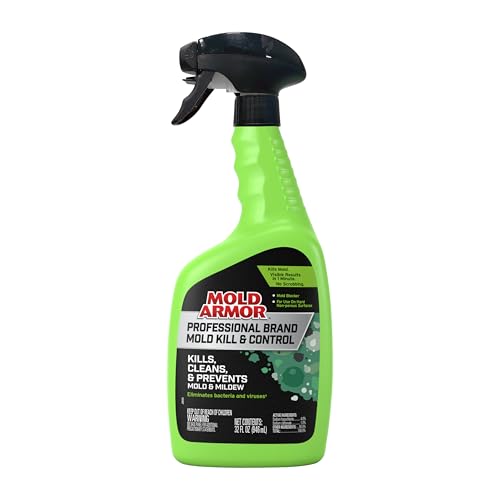 Mold Armor Mold & Mildew Remover | Widely stocked bathroom/surface remover. | Amazon — $22.98 |