Best Mold Remover: A Plain-Language Buyer Guide
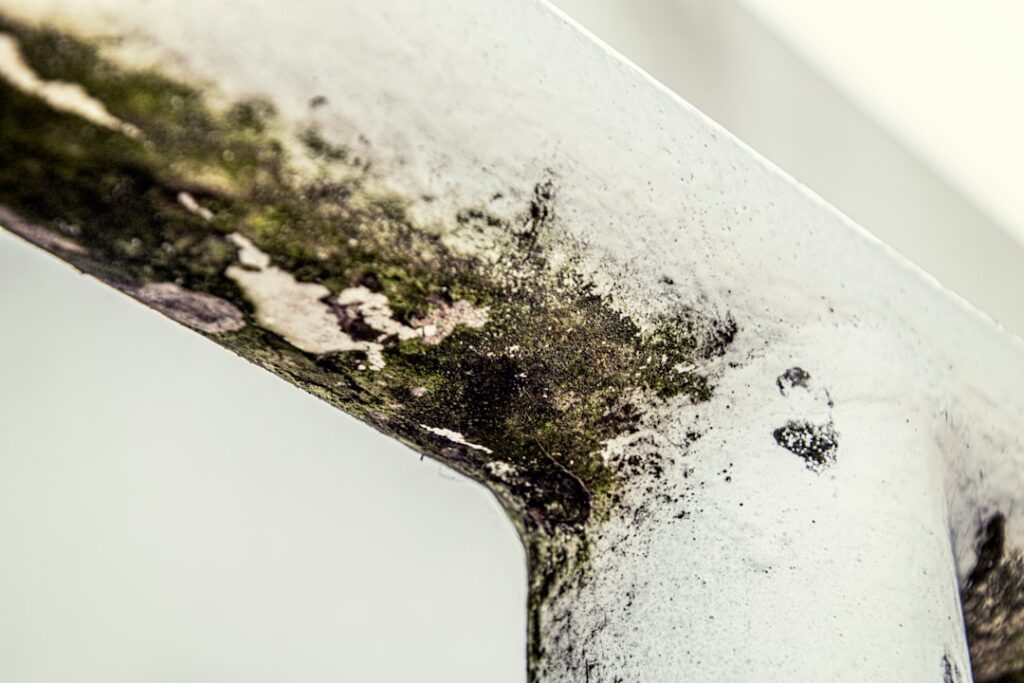
Picking the best mold remover is simpler once the job is defined. Most household mold shows up on bathroom tile, tubs, caulk and grout, and for that work a bleach-based spray with a stated kill claim on hard, non-porous surfaces is the strongest all-round choice. The alternatives earn their place on specific surfaces: a bleach-free registered spray for people who avoid chlorine, a product with a stated prevention routine, a spray that names porous materials like wood and concrete, a stain lifter, a gel for caulk and gaskets, and a foam for routine bathroom upkeep. No product replaces the first step, which is finding and fixing the moisture. Below is the single best overall pick, six alternatives and a guide to using them safely.
Part of our Mold Removal & Remediation guide — start there for the full picture →
As an Amazon Associate we earn from qualifying purchases.
How we compared: we compared 15 current Amazon listings for mold and mildew sprays, gels, foams and stain removers on what each listing actually states: whether it claims to kill mold, remove stains or prevent regrowth, the surfaces it names, whether it states EPA registration or its active chemistry, and the directions it gives. Several listings are multipacks or size variants of one formula, so the 15 listings cover 11 distinct products. We did not lab-test these products or use them hands-on. Prices and availability change often, so check the current listing before buying.
Is this mold, asbestos, or water damage? Get a free instant screen
Upload a clear photo of the suspect area. You'll get an instant AI screening opinion and what to do next. This is screening guidance, not a professional determination.
Screening guidance only. AI can be wrong. Confirm asbestos, mold type, or lead with lab testing or a licensed professional before acting.
Quick picks: the best mold removers by job
| Pick | Best for | Type | Key detail |
|---|---|---|---|
| Clorox Plus Tilex | Best overall: bathroom tile, tubs, sinks | Bleach spray | Kill claim plus stain removal; names indoor and outdoor surfaces |
| Moldex Mold Killer 5010 | Bleach-free kill on hard surfaces | Disinfectant cleaner spray | Only listing that is both bleach-free and claims to kill mold |
| Mold Armor FG593AM | Kill plus a stated prevention routine | Ready-to-use spray | 10-minute dwell; reapply every 7 days to inhibit regrowth |
| Concrobium Mold Control | Wood, concrete and other porous materials | Bleach-free spray | States EPA registration; names wood, concrete and fabric |
| 30 SECONDS Pro | Lifting stains on porous and outdoor surfaces | Scrub-free stain spray | Names drywall, brick, concrete and siding |
| ACTIVE Mold Stain Gel | Caulk, grout and washer gaskets | 7 oz gel | Stays put for a stated 5-hour dwell |
| Scrubbing Bubbles Foaming Bleach | Routine bathroom cleaning | Foaming bleach cleaner | Only foam; names fiberglass, quartz and Corian |
The best overall pick and six alternatives
1. Clorox Plus Tilex Mold and Mildew Remover — Best Mold Remover Overall

Bleach-based spray claiming to kill 99.9% of mold and mildew and remove stains on hard, non-porous surfaces.
Check price on Amazon| Specification | Details |
|---|---|
| Format | 32 fl oz spray bottle (also sold as a three-pack) |
| Chemistry | Uses Clorox bleach per the listing |
| Claim | Kills 99.9% of mold and mildew; removes stains on hard, non-porous surfaces without scrubbing |
| Surfaces named | Shower walls, tubs, tile, sinks, counters; outdoor cement pools, glazed pool tile, vinyl or plastic patio furniture |
| Stated caution | Avoid prolonged contact with metal and old porcelain |
| Registration number | not stated in listing |
Clorox Plus Tilex — 32 oz bleach spray, kills 99.9% of mold/mildew per listing, stain removal, hard non-porous, indoor and outdoor
One of Three Products With a Kill Claim, and the Only One Naming Outdoor Surfaces
Four of the 15 listings use the word “kill” for mold, and they cover just three products: Mold Armor, Moldex’s mold killer and Tilex (sold as a single bottle and a three-pack). Tilex is the only one of the three that names outdoor surfaces as well as indoor ones, and it pairs its kill claim with stain removal and a no-scrub direction. For the most common household job, black spotting on shower tile, tub surrounds and sink edges, that combination covers both the growth and the marks in one product.
That is why it is the best overall choice, with an honest boundary. The listing ties its stain claim to hard, non-porous surfaces, and the two Tilex listings are the only ones on the shelf that warn against prolonged contact with metal and old porcelain. It is not the product for drywall, unsealed wood, fabric or bare grout that has absorbed staining.
It is also bleach, and bleach rules apply. The EPA says never to mix chlorine bleach with cleaners that contain ammonia because toxic fumes can result, and to ventilate and exhaust air outdoors when using biocides. In a small bathroom, run the exhaust fan, open a window and keep other cleaners out of the room until the surface is rinsed.
Pros
- Kill and stain-removal claims in one spray
- Names indoor and outdoor surfaces
- No-scrub direction for tile and tubs
- Widely sold, including a three-pack
Cons
- Hard, non-porous surfaces only
- Bleach fumes; strict no-ammonia rule
- Warns against prolonged contact with metal and old porcelain
2. Moldex Mold Killer 5010 — Best Bleach-Free Mold Killer for Hard Surfaces

EPA-registered, bleach-free disinfectant cleaner that claims to kill mold on hard, non-porous surfaces.
Check price on Amazon$8.97 as of Oct 10, 2026 8:27 pm GMT+0000 — prices change; see Amazon for current price.| Specification | Details |
|---|---|
| Format | 32 fl oz ready-to-use trigger spray |
| Claim | Kills mold and helps control mold and mildew on hard, non-porous surfaces; disinfects and deodorizes |
| Registration | Listing states an EPA-registered formula |
| Chemistry notes | Bleach-free, non-acid cleaner with a fresh scent |
| Prevention | Helps inhibit mold and mildew growth when used per label |
| Model | 5010; household, commercial and industrial use named |
Moldex 5010 — 32 oz, EPA-registered per listing, bleach-free, kills mold on hard non-porous surfaces, disinfects, inhibits regrowth
The Only Listing That Is Both Bleach-Free and Claims to Kill Mold
Two of the 15 listings describe themselves as bleach-free: Moldex 5010 and Concrobium. Of those two, only Moldex uses the word “kill.” Concrobium’s claim is to eliminate and help prevent mold. That makes Moldex the pick for anyone who wants a registered mold killer without chlorine, for example to avoid bleach fumes in a small bathroom or to avoid lightening colored grout and fixtures.
It is also one of only two listings on the shelf that state EPA registration, and the listing adds disinfecting and deodorizing claims for treated hard surfaces.
Like Tilex, its claims are limited to hard, non-porous surfaces. Five of the 15 listings draw that line, and it is the right one: the EPA notes that porous materials may need to be discarded if they become moldy, because mold can fill their internal spaces. The listing does not make a stain-removal claim, so dark marks on grout may remain after treatment.
Pros
- Only bleach-free listing with a kill claim
- States EPA registration
- Disinfects and deodorizes per the listing
Cons
- Hard, non-porous surfaces only
- No stain-removal claim
- Active ingredient not stated in listing
3. Mold Armor FG593AM — Best for Killing Mold and Keeping It Away
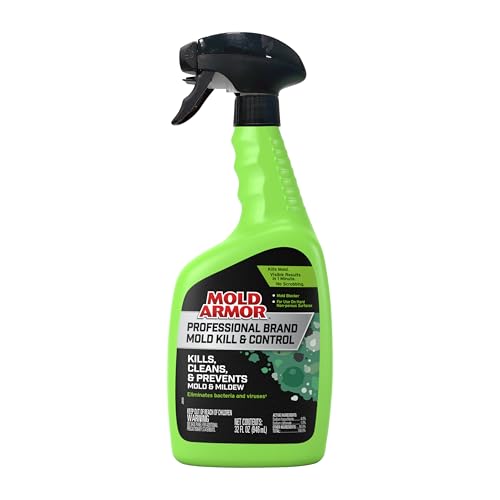
Hard-surface mold and mildew spray with a 10-minute dwell and a stated every-7-days routine to inhibit regrowth.
Check price on Amazon$22.98 as of Oct 10, 2026 8:27 pm GMT+0000 — prices change; see Amazon for current price.| Specification | Details |
|---|---|
| Format | 32 fl oz ready-to-use spray |
| Claim | Kills, cleans and helps prevent mold and mildew on hard, non-porous surfaces; also bacteria and viruses |
| Directions | Apply, wait 10 minutes, rinse or wipe within 15 minutes; test a hidden area first |
| Prevention routine | Wet surface, air dry and repeat every 7 days |
| Surfaces named | Laminate, linoleum, sealed grout, stainless steel, plastic, shower stalls |
| Organism named | Effective against Aspergillus niger per the listing |
Mold Armor FG593AM — 32 oz, kill/clean/prevent on hard non-porous surfaces, 10-min dwell, repeat every 7 days, names sealed grout
The Only Listing With a Stated Re-Application Schedule and a Named Test Organism
Three of the 15 listings make a prevention claim. Mold Armor is the only one that tells buyers how to do it: wet the surface, let it air dry and repeat every seven days. It is also the only listing that names a specific organism (Aspergillus niger), the only one of the 15 that tells buyers to test on an inconspicuous area first, and one of just two listings that state a numeric dwell time.
Those specifics make it the most usable listing for a recurring problem, such as a basement bathroom or laundry area where a shower stall or plastic surface keeps spotting. It names sealed grout rather than grout in general, which is an honest distinction: unsealed grout is porous. The listing also says to pre-clean heavily soiled surfaces and rinse food-contact surfaces with drinking water.
A weekly prevention routine works only alongside moisture control. The EPA notes that for bathroom mold that keeps reappearing, more ventilation (a fan or open window) and more frequent cleaning usually keep it to a minimum. The listing does not state its active ingredient or an EPA registration.
Pros
- Only listing with a stated weekly prevention routine
- Clear 10-minute dwell and rinse window
- Names sealed grout, laminate and linoleum
- Advises a spot test first
Cons
- Hard, non-porous surfaces only
- Active ingredient not stated in listing
- Registration not stated in listing
4. Concrobium Mold Control 25326CAL — Best for Wood, Concrete and Porous Materials

Bleach-free, odorless EPA-registered spray that names wood, concrete, drywall and fabric and leaves a protective film.
Check price on Amazon$12.81 as of Oct 10, 2026 8:27 pm GMT+0000 — prices change; see Amazon for current price.| Specification | Details |
|---|---|
| Format | 32 fl oz trigger spray |
| Claim | Eliminates existing mold and leaves an invisible barrier to help prevent future growth |
| Registration | Listing states EPA registration for mold control when used as directed |
| Chemistry notes | No bleach, ammonia or VOCs per the listing; odorless |
| Surfaces named | Drywall, wood, tile, grout, concrete, fabric; vehicles, decks and patios |
| Stain removal | not stated in listing |
Concrobium 25326CAL — 32 oz, EPA-registered per listing, bleach/ammonia/VOC-free, names wood, concrete and fabric, prevention film
The Only EPA-Registered Listing That Names Porous Materials
Two listings on this shelf state EPA registration. Moldex limits itself to hard, non-porous surfaces; Concrobium is the only registered listing that names porous and semi-porous materials such as wood, concrete, drywall and fabric. That makes it the fallback for the places Tilex and Moldex do not cover: a stained floor joist, a basement slab, the back of a wood cabinet or a closet wall.
Bleach-free and odorless, it is also the gentlest of the kill-or-control options for finished wood and painted surfaces. The prevention film is the point: clean the surface first, then apply as a protective coat. For wood specifically, see our guide to black mold on wood.
Keep expectations realistic on porous materials. The EPA says mold can grow into the empty spaces and crevices of porous materials, which makes complete removal difficult or impossible, and that some absorbent items such as ceiling tiles and carpet may have to be thrown away. The listing makes no stain-removal claim, so discoloration in wood grain may stay.
Pros
- Only registered listing naming wood, concrete and fabric
- Bleach-, ammonia- and VOC-free per the listing
- Odorless; suits living spaces
Cons
- No stain-removal claim
- Active ingredient not stated in listing
- Cannot rescue soaked porous materials
5. 30 SECONDS Pro 30SPRO — Best Stain Lifter for Porous and Outdoor Surfaces
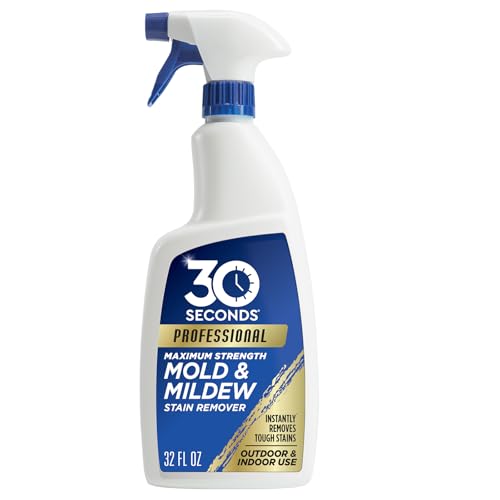
Scrub-free mold and mildew stain spray naming drywall, wood, brick, concrete, siding and decks.
Check price on Amazon$16.49 as of Oct 10, 2026 8:27 pm GMT+0000 — prices change; see Amazon for current price.| Specification | Details |
|---|---|
| Format | 32 fl oz ready-to-use spray (also a two-pack) |
| Claim | Lifts black mold and mildew stains on contact; apply, watch, rinse where needed |
| Strength | Described as 2x stronger than the brand’s standard outdoor cleaner |
| Surfaces named | Siding, fences, decks, concrete floors, brick walls, drywall, wood, tile and grout |
| Active ingredient | not stated in listing |
| Kill or registration claim | not stated in listing |
30 SECONDS 30SPRO — 32 oz scrub-free stain spray, indoor/outdoor, names drywall/brick/concrete/siding, ingredient not stated
The Widest Named Surface List Among the Stain Removers That Also Name Tile and Grout
Eight of the 15 listings put “stain” in the title. Seven listings name drywall, and seven name brick. The two 30 SECONDS listings are the only ones that name drywall, brick, concrete, siding and decks and also bathroom tile and grout, so a single bottle covers a stained deck, a brick planter wall and a grout line. The RMR-86 listings come close but do not name tile or grout.
Use it as the cosmetic second step. It makes no kill claim, and the EPA’s guidance is explicit that killing mold is not enough anyway: dead mold may still cause allergic reactions, so it has to be removed. Clean, dry, then lift the stain that remains.
The listing does not state its active ingredient. Treat it as a strong cleaner: ventilate, wear gloves and goggles, and never combine it with other products on the same surface. A stain that comes back within weeks is a moisture signal, not a product failure.
Pros
- Widest surface list among stain removers naming tile
- Scrub-free; easy on soft surfaces
- Works indoors and outdoors per the listing
Cons
- No kill or registration claim
- Active ingredient not stated in listing
- Rinse step adds water to porous materials
6. ACTIVE Mold Stain Remover Gel — Best for Caulk, Grout and Washer Gaskets

7 oz gel for mold stains on washer gaskets, fridge seals, caulk and grout; stated dwell of at least five hours.
Check price on Amazon$19.95 as of Oct 10, 2026 8:27 pm GMT+0000 — prices change; see Amazon for current price.| Specification | Details |
|---|---|
| Format | 7 fl oz concentrated gel |
| Claim | Whitens and removes mold and mildew stains, discoloration and buildup |
| Directions | Shake, apply an even layer, leave at least 5 hours, wipe and rinse; repeat for stubborn stains |
| Surfaces named | Front-loader gaskets, refrigerator seals, caulk, grout, tub, tile and shower walls |
| Scent | Described as gentle odor |
| Ingredients | not stated in listing |
ACTIVE stain gel — 7 oz, 5-hour dwell, gaskets/seals/caulk/grout, stays on vertical lines, ingredients not stated
The Only Listing Naming Appliance Seals, With the Longest Stated Dwell Time
ACTIVE is the only one of the 15 listings that names front-loader washer gaskets and refrigerator door seals, and the only gel on this shelf. Its stated dwell time of at least five hours is by far the longest on the shelf; the only other numeric dwell is Mold Armor’s ten minutes. That long contact time is the whole idea: caulk beads and rubber folds trap staining that a quick spray cannot reach, and a gel that stays on a vertical line keeps working.
It is a stain remover, not a mold killer, and the listing does not state its ingredients. Black spots deep inside silicone caulk may not lift at all if the staining is in or behind the bead; in that case the fix is cutting out and replacing the caulk once the area is dry. Our guide to mold remover gel covers gel technique in more detail.
Pros
- Only listing naming washer gaskets and fridge seals
- Gel stays on vertical caulk and grout lines
- Small bottle described as lasting up to a year
Cons
- Five-hour minimum dwell
- Ingredients not stated in listing
- Stain removal only; no kill claim
7. Scrubbing Bubbles Foaming Bleach 70809 — Best for Routine Bathroom Upkeep

Clinging bleach foam that removes mold and mildew stains and soap scum across a long list of bathroom surfaces.
Check price on Amazon$3.97 as of Oct 10, 2026 8:27 pm GMT+0000 — prices change; see Amazon for current price.| Specification | Details |
|---|---|
| Format | 32 oz foaming trigger spray |
| Chemistry | Bleach-based foam per the product name |
| Claim | Eliminates mold and mildew stains and removes soap scum |
| Surfaces named | Tubs, showers, fiberglass, vinyl, glass, porcelain, laminate, Corian, sealed granite, quartz, chrome, stainless |
| Packaging | Bottle made with 30% recycled content (excluding dye, trigger and label) |
| Kill claim | not stated in listing |
Scrubbing Bubbles 70809 — 32 oz foaming bleach cleaner, mold/mildew stain and soap scum removal, long bathroom-surface list
The Only Foam, With the Longest List of Bathroom Materials
Scrubbing Bubbles is the only foaming formula among the 15 listings, and the only one that names fiberglass, quartz, Corian and sealed granite. That long list matches a modern bathroom, where a fiberglass tub surround, a quartz vanity and chrome fixtures sit side by side. A foam that clings to vertical surfaces is suited to weekly cleaning that keeps light mildew from becoming a stain.
The listing claims to remove mold and mildew stains, not to kill mold, so it fills the maintenance role between deeper treatments with pick 1 or pick 2. It is still a bleach product: keep it away from ammonia-based glass and toilet cleaners, ventilate and rinse. For the bathroom-wide approach, see our guide to bathroom mildew.
Pros
- Only foaming formula; clings to vertical surfaces
- Names fiberglass, quartz, Corian and sealed granite
- Also removes soap scum
Cons
- No kill claim stated
- Bleach fumes; no mixing with ammonia cleaners
- Bathroom surfaces only
Removing beats killing: what the EPA actually recommends
Most mold remover labels emphasize killing. The EPA’s guidance emphasizes removal and moisture control. Its basic cleanup steps are to fix leaks and water problems, dry everything completely, and scrub mold off hard surfaces with detergent and water. It says the use of a biocide such as chlorine bleach is not recommended as a routine practice, because it is usually not possible or desirable to sterilize an area and the background spores left behind will not grow once the moisture problem is solved. It adds that dead mold is still allergenic, so killing it is not enough; it must be removed.
That does not make commercial removers useless. They save scrubbing, lift stains that detergent leaves behind and, in the case of registered products, add a residual or prevention claim. It does mean the order matters: water first, physical removal second, product third. Our guide to how to clean black mold walks through that order step by step.
How to choose a mold remover
Start with the surface
Five of the 15 listings limit their mold claims to hard, non-porous surfaces. That is the right category for tile, glass, fiberglass, sealed stone and plastic. For wood, concrete and fabric, choose a product whose listing names those materials, and accept that heavily affected porous materials may need replacing rather than cleaning.
Decide whether you need kill, stain removal or both
Only three products here use the word kill, while eight listings put “stain” in the title. If the surface is already clean but marked, a stain remover is enough. If growth is active on tile, a kill-claim product plus scrubbing does more.
Check for EPA registration and active chemistry
Two listings state EPA registration. Products that claim to kill or control mold should carry a registration number on the container; read it and follow its directions. Where a listing does not state its active ingredient, assume it is strong and never combine it with another product.
Bleach or bleach-free
Bleach lightens stains on hard surfaces but produces fumes, can damage some metals and finishes, and adds water to porous materials. The CDC says that if bleach is used, the mix should be no more than 1 cup of household laundry bleach per gallon of water, and that bleach must never be mixed with ammonia or other cleaners because it produces a poisonous gas. Our guide to bleach solution for mold covers ratios, and vinegar for mold covers the common household alternative and its limits.
Using any mold remover safely
- Size the job. The EPA says most people can handle an area under about 10 square feet. Larger areas, sewage or flood water, or a possibly contaminated HVAC system call for an experienced professional.
- Wear the basics. An N-95 respirator, long gloves and goggles without vent holes, per the EPA. For bleach or strong cleaners, choose gloves of natural rubber, neoprene, nitrile, polyurethane or PVC.
- Ventilate. Open windows and doors, as the CDC advises, and exhaust air outdoors when using disinfectants or biocides, as the EPA advises.
- One product at a time. Rinse and dry between products. Never mix bleach with ammonia.
- Do not paint over it. The EPA says to clean and dry surfaces before painting because paint over mold is likely to peel.
Front Range homes: why mold keeps coming back
Colorado’s Front Range climate is dry, so most indoor mold here is tied to a specific water source rather than outdoor humidity. Bathrooms without a working exhaust fan, basements with foundation seepage after spring storms, laundry areas with slow leaks, window frames with winter condensation and roof leaks after hail are the usual sources in Denver-area and Colorado Springs homes. The CDC recommends keeping indoor humidity no higher than 50 percent and cleaning up and drying within 24 to 48 hours after flooding; in a dry climate, a room that cannot meet those numbers usually has a leak worth finding.
When to skip the store and call a professional
A mold remover is a tool for small, visible, surface-level problems. Call for help when growth covers more than about 10 square feet, when there is a musty odor with no visible mold, when the HVAC system may be involved, when mold keeps returning after cleaning, or when anyone in the home has asthma, allergies or a weakened immune system. The CDC does not recommend routine mold testing, since the response is the same whatever the type: remove it and fix the moisture. What a professional inspection adds is finding the hidden water. Learn more on our mold inspection page.
References
- A Brief Guide to Mold, Moisture and Your Home — U.S. Environmental Protection Agency
- Mold Cleanup in Your Home — U.S. Environmental Protection Agency
- What Are the Basic Mold Cleanup Steps? — U.S. Environmental Protection Agency
- Mold Remediation Guide: Investigating, Evaluating and Remediating Moisture and Mold Problems — U.S. Environmental Protection Agency
- Mold: What to Know — Centers for Disease Control and Prevention
Frequently asked questions
What is the best mold remover overall?
For the most common job, mold on bathroom tile, tubs and sinks, a bleach-based spray that claims to kill mold and remove stains on hard, non-porous surfaces is the strongest all-round choice. Bleach-free registered sprays, gels and stain removers are better fits for specific surfaces. Fixing the moisture source matters more than the product.
Do mold removers kill mold or just remove stains?
It depends on the label. Some listings claim to kill mold on hard, non-porous surfaces, while many popular products only claim to remove stains. The EPA notes that dead mold can still cause allergic reactions, so physical removal is needed either way.
Is bleach the best mold remover?
Bleach works on hard, non-porous surfaces and lightens stains, but the EPA does not recommend biocides such as bleach as a routine cleanup practice. It adds water to porous materials and produces fumes. Never mix bleach with ammonia or other cleaners, and ventilate the room.
Can a mold remover fix mold on drywall or carpet?
Usually not completely. The EPA says porous materials such as ceiling tiles and carpet may have to be thrown away if they become moldy, because mold can fill their internal spaces. Light surface growth on painted drywall may clean up, but soaked materials generally need replacement.
How much mold can a homeowner remove safely?
The EPA says most people can handle an area smaller than about 10 square feet themselves, using an N-95 respirator, gloves and goggles. Larger areas, sewage or flood water, or HVAC contamination call for an experienced professional.
Wondering where the moisture behind recurring mold is coming from in a Front Range home? Get in touch here to connect with a vetted local inspector.
Mold removal & cleanup picks
For a small, contained patch (under ~10 sq ft) these EPA-friendly removers handle surface mold. Larger or recurring growth warrants a professional assessment first.
| Product | Why | Buy |
|---|---|---|
 RMR-86 Instant Mold Stain Remover RMR-86 Instant Mold Stain Remover | Fast-acting on stains; ventilate and wear PPE. | Amazon |
 Concrobium Mold Control Concrobium Mold Control | No-bleach formula that also helps prevent regrowth. | Amazon — $12.81 |
 Mold Armor Mold & Mildew Remover Mold Armor Mold & Mildew Remover | Widely stocked bathroom/surface remover. | Amazon — $22.98 |