Water Black Mold: What Homeowners Need to Know
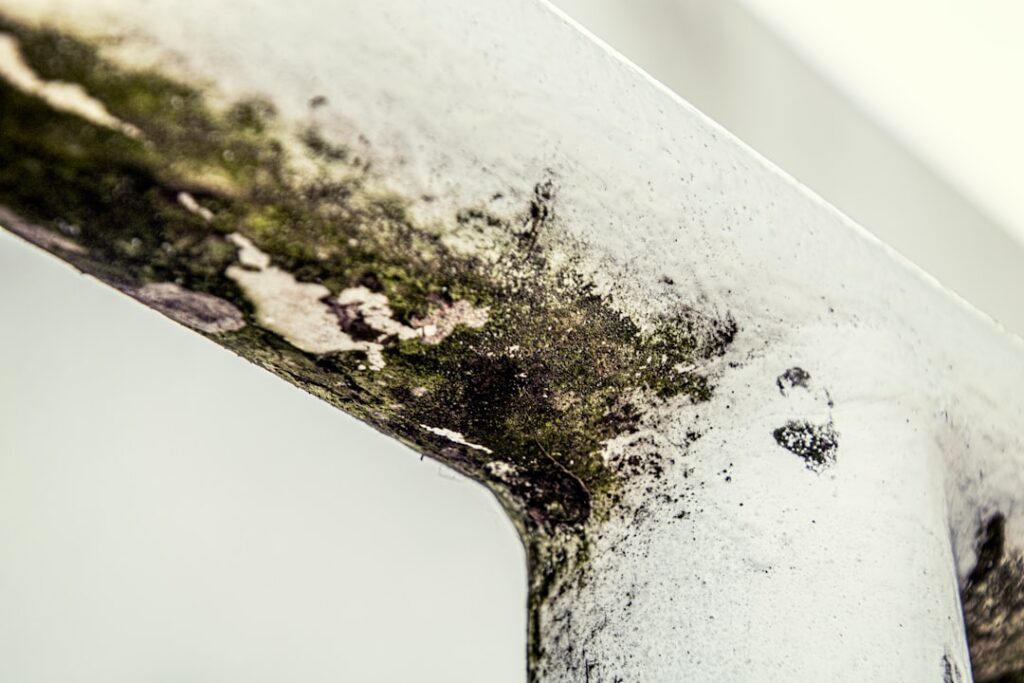
Dark mold that appears after a leak, a flood, or chronic dampness alarms homeowners, and the term “water black mold” gets used loosely to describe almost any dark stain on a wet surface. The connection between standing water and dark fungal growth is real, but the science is more specific than the popular fear suggests. This guide summarizes EPA, CDC, and NIH guidance current as of 2026 — it is educational only, and you should consult your physician about symptoms and a certified professional for testing and removal decisions.
Part of our Black Mold & Your Health guide — start there for the full picture →
Is this mold, asbestos, or water damage? Get a free instant screen
Upload a clear photo of the suspect area. You'll get an instant AI screening opinion and what to do next. This is screening guidance, not a professional determination.
Screening guidance only. AI can be wrong. Confirm asbestos, mold type, or lead with lab testing or a licensed professional before acting.
What Water Black Mold Actually Means
“Water black mold” generally refers to dark-colored mold that grows on materials kept wet by a water source: a roof leak, a burst pipe, a flooded basement, or persistent condensation. The dark species most people picture is Stachybotrys chartarum, sometimes called toxic black mold, which favors materials high in cellulose — drywall, ceiling tile, cardboard, and wood — that have stayed wet for days or longer.
Many dark molds are not Stachybotrys, though. Species of Cladosporium, Aspergillus, and Alternaria can also appear black, green-black, or brown. Color alone cannot identify a mold or its health risk, which the CDC states plainly. What unites them is the requirement for moisture. Without a water source, none of these molds can establish or spread indoors.
How Water Triggers Black Mold Growth
Mold spores are present nearly everywhere, indoors and out. They become a problem only when they land on a damp surface that supplies nutrients. Stachybotrys in particular needs prolonged wetting; it tends to colonize materials that have been continuously moist for at least a week, which is why it is associated with serious leaks rather than a single brief spill.
The EPA emphasizes that the moisture timeline matters. Materials dried within 24 to 48 hours rarely support significant mold. The longer water sits, the more likely slower-growing dark molds will outcompete the early, lighter colonizers. Front Range homes see this pattern after spring snowmelt floods basements or when ice dams force water behind fascia and into wall cavities, leaving framing wet for days unnoticed.
The nutrient source matters as much as the water. Cellulose-rich building materials are ideal food, which is why drywall paper, cardboard storage boxes, and wood framing host dark mold so readily. Inorganic materials like concrete and metal do not feed mold directly, but dust and organic film on their surfaces can. This is why a flooded basement with stored cardboard and paper-faced drywall develops dark mold quickly, while a bare concrete crawl space may resist it longer despite similar dampness.
Temperature plays a supporting role. Most indoor molds grow across a wide range of household temperatures, so a heated home offers comfortable conditions year-round. The practical takeaway is that of the three requirements — spores, nutrients, and moisture — moisture is the only one a homeowner can reliably remove. Controlling water is the entire game.
Is Water Black Mold Dangerous?
This is where careful framing matters. Stachybotrys can produce mycotoxins under certain conditions, and that capacity fueled decades of public concern. However, the CDC and the Institute of Medicine have found that the popular claims linking black mold to severe systemic illnesses such as memory loss or pulmonary hemorrhage are not supported by strong scientific evidence.
What the science does support is more measured: damp indoor environments and mold exposure are associated with respiratory symptoms, worsening asthma, nasal congestion, and irritation, especially in sensitive individuals. The CDC’s position is that any mold growing indoors should be removed regardless of type, because the health concern stems from dampness and exposure broadly, not from one dramatic species. Homeowners can review the realistic picture in guidance on whether black mold can be removed effectively.
How Dark Mold Compares to Other Colors
Mold appears in nearly every color — green, white, orange, pink, gray, brown, and black — and homeowners often assume darker means more dangerous. The science does not support that shortcut. Color comes from pigments tied to a mold’s species and life stage, not its health risk. A vivid green Penicillium colony and a black Stachybotrys colony can both warrant removal, and neither color reliably predicts toxicity.
What does change with color, sometimes, is the likely conditions. Stachybotrys, the dark mold tied to sustained water damage, signals that materials have been wet a long time. Lighter, faster-growing molds may indicate a more recent or intermittent moisture event. But these are tendencies, not rules, and the CDC’s guidance to remove indoor mold regardless of color holds across the spectrum. The fixation on “black mold” specifically has more to do with public alarm than with a meaningful difference in how the cleanup is handled.
Where Water Black Mold Shows Up
Dark water-driven mold concentrates wherever moisture lingers. Common locations include the back of drywall under a leaking window, the underside of a roof deck with a slow leak, the bottom plate of a wall after a slab or foundation seepage event, and ceiling tile beneath a second-floor bathroom.
Because the growth often hides inside wall and ceiling cavities, the visible stain may be only a fraction of the actual colony. A musty, earthy odor frequently signals hidden growth even when surfaces look clean. Moisture meters and infrared imaging help locate the wet materials feeding it, which is why a structured assessment usually precedes any meaningful cleanup.
Black Mold Versus Mildew on Wet Surfaces
Homeowners often conflate black mold with mildew. Mildew is a surface growth, usually powdery and gray or white, that wipes away relatively easily from tile, grout, and shower walls. The dark, slimy or fuzzy growth associated with sustained water damage penetrates porous materials and cannot simply be wiped off.
The practical difference shapes the response. Surface mildew on a non-porous bathroom surface is a cleaning task. Dark mold embedded in saturated drywall is a removal task, because the porous material has absorbed both moisture and fungal structures throughout its thickness. Understanding that distinction prevents the common mistake of repainting over a problem that will bleed back through.
What to Do When You Find Water Black Mold
The first action is always to stop the water. Remediation cannot succeed while the source keeps feeding the colony. Shut off a leaking supply line, tarp a roof leak, or run extraction and dehumidification after a flood. The EPA’s 24-to-48-hour drying window is the target for any newly wetted material.
For small areas under roughly 10 square feet on hard surfaces, careful homeowner cleanup with detergent, gloves, and a mask can suffice. Larger areas, saturated drywall, or HVAC involvement call for professionals who can contain the work zone and remove porous materials safely. Detailed steps for tackling a wall yourself appear in guidance on getting rid of black mold in a house, while the broader mold inspection hub covers testing options.
Preventing Water-Driven Black Mold
Prevention centers on moisture control. Keep indoor relative humidity between 30 and 50 percent, repair leaks the day they appear, and ensure bathrooms, kitchens, and laundry areas vent moisture outdoors. After any water event, dry materials fast and discard porous items that cannot be dried within two days.
In Colorado homes, attention to basement and crawl-space moisture pays off, since finished below-grade spaces trap humidity and hide leaks. Proper foundation grading, functioning sump pumps, and seasonal gutter maintenance keep water from reaching the materials black mold needs.
Routine habits help as much as one-time fixes. Checking under sinks for slow drips, inspecting around water heaters and washing machines, watching for staining on ceilings below bathrooms, and responding immediately to any water event all interrupt the timeline before mold establishes. A small leak caught in a day is a cleanup; the same leak ignored for a month becomes a remediation. The cheapest mold control is fast response to water.
Health Symptoms Linked to Damp, Moldy Homes
The established health effects of mold exposure are respiratory and allergic rather than the dramatic systemic illnesses popular media once attached to black mold. The CDC and NIEHS describe nasal congestion, throat irritation, coughing, wheezing, eye irritation, and skin irritation in exposed individuals. People with asthma may experience attacks, and those with allergies or compromised immune systems can react more strongly.
Sensitivity varies widely. Two people in the same home can have very different responses to the same exposure. Because symptoms overlap with colds, allergies, and other conditions, mold cannot be diagnosed from symptoms alone, and a physician should evaluate persistent or severe complaints. The reasonable position is to take dampness and visible mold seriously, remove it, and consult a doctor about health concerns rather than self-diagnosing a mold illness.
When to Call a Professional
Call a professional when dark mold covers a large area, when it returns after cleaning, when it grows inside HVAC systems, or when occupants experience respiratory symptoms. The CDC recommends that people with asthma, allergies, or weakened immune systems avoid contact with mold and stay out of the affected area during cleanup.
Professionals also bring testing capability when documentation matters — for an insurance claim, a real estate transaction, or a tenant dispute. While testing is not required to justify removing visible mold, it can clarify hidden contamination and confirm a successful cleanup.
The Cleanup Process for Water-Driven Mold
Once the water is stopped, the cleanup follows a predictable arc. The affected area is assessed and contained so spores do not spread during removal. Porous materials saturated with dark mold — drywall, insulation, carpet padding — are cut out and bagged, because cleaning cannot reach growth woven through them. Salvageable hard surfaces and structurally sound framing are cleaned with detergent and HEPA-vacuumed rather than merely sprayed.
Drying is the step homeowners most often underestimate. After a flood or major leak, framing and substrate can hold moisture for days, and closing a wall before it dries simply relocates the problem out of sight. Crews run dehumidifiers and air movers while monitoring moisture readings, and only rebuild once materials return to a normal baseline. On larger jobs, an independent assessor confirms the area is clean and dry before reconstruction.
For genuinely small surface patches on hard materials, this same logic applies in miniature: stop the water, protect yourself, clean the surface, and dry it fully. The difference between a do-it-yourself patch and a professional job is scale and the presence of saturated porous materials, not the underlying principles.
Insurance and Water Black Mold
Whether insurance helps depends on how the water arrived. Many homeowner policies cover mold that results from a sudden, covered event such as a burst pipe, but exclude mold caused by gradual leaks, deferred maintenance, or flooding without separate flood coverage. Because water black mold so often follows slow, hidden leaks, coverage disputes are common, and policy caps may limit any payout.
Homeowners strengthen a claim by documenting everything: photos of the water source and the mold, the date the problem was discovered, moisture readings, and itemized contractor invoices. Contacting the insurer early and reviewing policy language clarifies what is covered before committing to a remediation plan. The cause of the water is usually the deciding factor in whether the cleanup is reimbursed.
A useful rule of thumb separates the two scenarios. Sudden and accidental damage — a pipe that bursts overnight, a supply hose that fails while you are away — tends to be covered, subject to caps. Long-term and preventable damage — a drip under a sink ignored for months, a known roof leak left unrepaired — tends to be excluded. Acting quickly on any water intrusion not only limits mold but also keeps a claim on the favorable side of that line.
Reading the Age of a Water-Mold Problem
Dark mold tied to water carries clues about how long the trouble has been brewing, and reading them helps a homeowner gauge urgency. Fresh growth on a recently wetted surface tends to be lighter and more superficial, wiping partly away. Established Stachybotrys on long-saturated drywall is darker, slimier, and bonded into the material, signaling weeks or months of contact rather than days.
Surrounding evidence fills in the timeline. Tide lines and staining that step outward in rings suggest repeated wetting and drying cycles, while a single uniform stain points to one sustained event. Warped trim, swollen baseboards, and a softened drywall surface indicate the material absorbed water over an extended period. None of these signs replaces instrument readings, but together they tell an inspector whether the water arrived recently and can be dried, or has lingered long enough that porous materials must come out. That distinction shapes both the scope of the work and, often, whether an insurer treats the loss as sudden or gradual.
References
- About Mold and Your Health — Centers for Disease Control and Prevention
- Mold and Health — U.S. Environmental Protection Agency
- Mold and Health Effects — National Institute of Environmental Health Sciences
- Mold and Your Health — Colorado Department of Public Health and Environment
Frequently asked questions
Is all black mold the toxic kind?
No. Many dark molds are species like Cladosporium or Aspergillus, not Stachybotrys. Color cannot identify a mold or its toxicity. The CDC advises removing any indoor mold regardless of type because the concern comes from dampness and exposure generally.
How long does water need to sit before black mold grows?
Most molds can begin within 24 to 48 hours on wet materials. Stachybotrys, the dark mold tied to serious water damage, usually needs materials to stay continuously wet for about a week or more before it establishes.
Can I just paint over water black mold?
No. Painting over mold on porous material traps the growth and the moisture beneath the surface, and the stain typically bleeds back through. The material must be cleaned to a sound condition or removed, and the water source corrected.
Does a musty smell mean hidden black mold?
A persistent musty, earthy odor often indicates mold growing inside wall or ceiling cavities even when nothing is visible. Locating it usually requires moisture meters or infrared imaging during a professional assessment.
Front Range homeowners dealing with water damage and suspected mold can get in touch through our contact page for a connection to a qualified local inspector.