How Long Does Black Mold Take to Grow? A Clear Guide
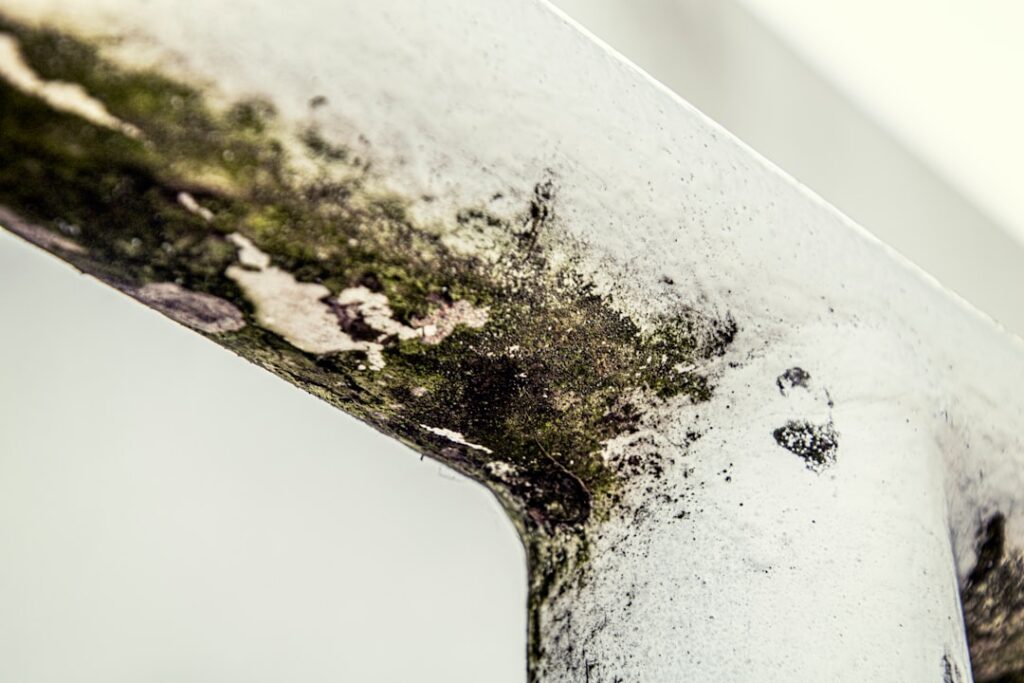
After a burst pipe, an overflowing tub, or a slow roof leak, the clock starts ticking on more than just water damage. The most pressing question for many homeowners is how long does black mold take to grow, because that window determines whether quick drying can prevent a problem or whether colonization has already begun. This guide summarizes EPA and CDC guidance current as of 2026 and is educational only; consult a physician about symptoms and a certified professional for testing or remediation decisions.
The short answer surprises people: mold can begin growing within 24 to 48 hours of materials getting and staying wet, under the right conditions. That speed is why water-damage response is measured in hours, not days, and why a same-week dry-out often makes the difference between a wipe-down and a tear-out.
Is this mold, asbestos, or water damage? Get a free instant screen
Upload a clear photo of the suspect area. You'll get an instant AI screening opinion and what to do next. This is screening guidance, not a professional determination.
Screening guidance only. AI can be wrong. Confirm asbestos, mold type, or lead with lab testing or a licensed professional before acting.
How long does black mold take to grow after water exposure?
Under favorable conditions, mold spores that are already present in nearly every indoor environment can germinate and begin forming visible colonies in roughly 24 to 48 hours, according to widely cited industry and EPA-aligned guidance. Black mold specifically, meaning Stachybotrys chartarum, tends to be slower to establish than fast-growing genera like Penicillium and Aspergillus. Stachybotrys usually needs sustained wetness over a longer period, often a week or more of continuously saturated cellulose material, before it dominates a surface.
So the timeline has two layers. General mold can appear within a couple of days. The slimy black Stachybotrys that homeowners fear most typically requires prolonged saturation, which is why it shows up after chronic, unaddressed leaks rather than a single quickly-dried spill. The practical lesson is the same either way: dry wet materials fast.
What conditions speed up or slow down mold growth?
Four factors govern how quickly mold develops: moisture, temperature, food source, and time. Moisture is the master switch. Mold needs damp materials or relative humidity above roughly 60 percent. The EPA recommends keeping indoor humidity between 30 and 50 percent to discourage growth.
Temperature matters next. Most household molds thrive between about 60 and 80 degrees Fahrenheit, which describes the interior of nearly every occupied home. Food source is the third lever: cellulose-rich materials such as drywall paper, wood, cardboard, carpet backing, and insulation feed mold readily, while glass, metal, and sealed tile offer little. Time is the multiplier. The longer a wet, warm, cellulose surface sits, the more advanced the colony.
Front Range homes have a regional wrinkle. Colorado’s generally dry climate slows outdoor and surface mold, but basements, crawl spaces, and below-grade rooms can trap humidity and stay cool and damp long after a leak, creating exactly the sustained-moisture conditions black mold needs. Understanding how moisture moves through a structure is central to any mold inspection.
How fast does mold spread once it starts?
Once a colony establishes, it expands by producing new spores that settle on adjacent damp surfaces and germinate. Visible spread across a wall can happen within days to a couple of weeks if moisture persists. Disturbing active growth, by wiping it dry or tearing out material without containment, can launch large numbers of spores into the air, which is why uncontrolled DIY cleanup of big areas can worsen the situation.
The spread is not limited to what you can see. Mold travels behind drywall, under flooring, and inside wall cavities where moisture lingers and light never reaches. A small surface stain can hide a much larger colony in the framing behind it. If growth keeps returning after cleaning, the moisture source is still feeding it, and our guide on basement mold and when it is dangerous covers how to judge severity.
How do you stop mold before it takes hold?
Speed is the entire strategy. The EPA advises drying wet or damp materials within 24 to 48 hours to prevent mold growth. After a leak or flood, the priority order is: stop the water source, remove standing water, increase airflow with fans, run a dehumidifier, and pull up or open wet materials so they can dry on all sides.
Some materials cannot be saved. Saturated drywall, soaked carpet padding, and wet insulation often hold moisture too long and should be removed rather than dried in place. Hard, non-porous surfaces usually dry and clean successfully. Moisture meters help confirm that framing and subfloor have actually returned to a dry baseline rather than feeling dry only on the surface.
When the dry-out window has passed
If more than two days have gone by since materials got wet, assume some growth has begun and inspect carefully. Small patches on hard surfaces can be cleaned by a homeowner with proper protection. The EPA’s roughly 10-square-foot threshold marks where professional remediation becomes the safer call, especially when growth is hidden, recurring, or tied to sewage or long-term leaks.
Reading a moisture meter after a leak
Surface dryness fools people. A wall can feel dry to the touch while framing and the back of drywall stay saturated, which is exactly the condition mold needs. A moisture meter gives an objective reading, and the practical method is to establish a baseline by measuring a known-dry section of the same material, then compare the affected area against it. Wood framing that has returned to roughly the same reading as undamaged wood elsewhere has dried; a persistently elevated reading means moisture is still trapped. Inspectors often combine meter readings with thermal imaging, since damp areas read cooler due to evaporative cooling, to map how far the wetness extends before deciding whether material can be saved.
How temperature and season change the timeline in Colorado
Colorado’s dry air helps surfaces evaporate quickly, but below-grade spaces complicate the picture. A basement that stays cool and poorly ventilated can hold moisture in framing and drywall far longer than the open, sunlit upper floors of the same house, extending the window in which mold establishes. Winter adds another wrinkle: cold exterior walls cause warm indoor air to condense, wetting surfaces repeatedly even without a single dramatic leak. That slow, recurring dampness is precisely the sustained-moisture condition Stachybotrys prefers, which is why chronic black mold often appears in finished basements rather than after a one-time spill upstairs.
When should you call a professional?
Call a remediation professional when growth covers more than about 10 square feet, when it keeps coming back, when it involves HVAC systems, or when contaminated water such as sewage was involved. Professionals contain the work area, use negative air pressure to keep spores from spreading, and remove unsalvageable materials safely. They also identify the moisture source so the problem does not simply regrow.
For homeowners along the Front Range dealing with a recent leak, acting within the first 48 hours is the highest-value step you can take. Drying fast and thoroughly often eliminates the need for remediation entirely, turning a potential tear-out into routine cleanup.
Common scenarios and their timelines
Different water events carry different risk windows. A clean-water supply-line leak caught and dried within a day rarely produces mold, because the materials never stay wet long enough. A slow, hidden leak under a sink that drips for weeks almost guarantees growth, since the cabinet base and adjacent drywall stay continuously damp. A basement flood from snowmelt or a sump-pump failure soaks porous materials deeply, and unless those materials are removed or thoroughly dried within the first day or two, mold follows.
Roof leaks are especially deceptive. Water can travel along framing far from the entry point and wet insulation and drywall that show no visible stain for weeks, by which time growth is well established in the hidden area. The lesson across all these cases is consistency: the determining factor is not the type of leak but how many hours the materials stay wet. Stopping the water and drying everything within the 24-to-48-hour window is what separates a minor cleanup from a remediation project, regardless of how the water arrived.
References
- Mold Cleanup in Your Home — U.S. Environmental Protection Agency
- A Brief Guide to Mold, Moisture and Your Home — U.S. Environmental Protection Agency
- About Mold and Health — Centers for Disease Control and Prevention
- Mold and Indoor Air Quality — National Institute of Environmental Health Sciences
If a recent leak or flood has you worried about mold along the Front Range, reach out through our contact page to connect with a vetted local inspector who can assess drying and growth.