Black Mold Sink: What Homeowners Need to Know
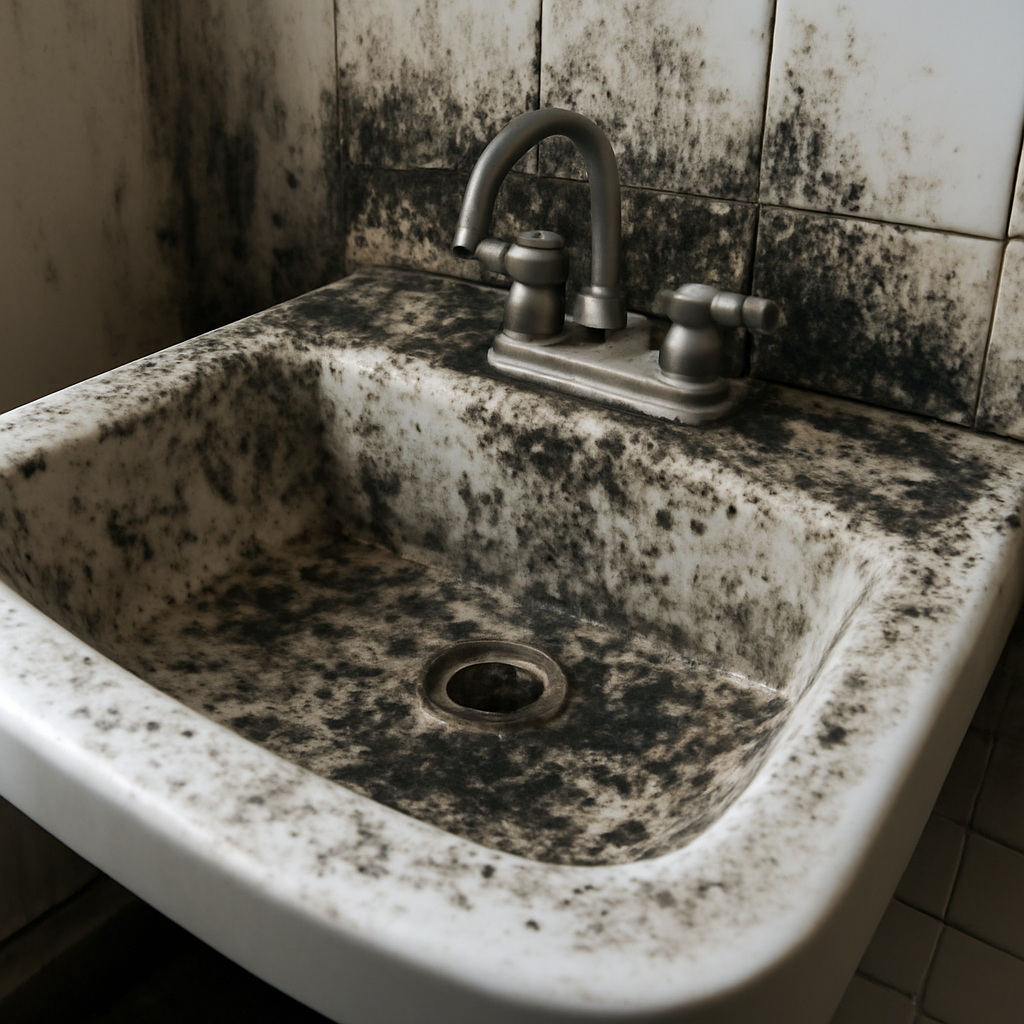
Black growth creeping along a sink’s edges, under the rim, or around the drain is one of the most common mold complaints homeowners raise. A black mold sink problem usually looks worse than it is, because sinks stay wet and collect the soap film and residue that microbes feed on. Knowing what the growth is and how to handle it keeps a minor nuisance from turning into a bigger headache. This guide summarizes EPA and CDC guidance current as of 2026 for educational purposes; consult a certified professional for testing and your physician for any health questions.
Part of our Black Mold & Your Health guide — start there for the full picture →
Is this mold, asbestos, or water damage? Get a free instant screen
Upload a clear photo of the suspect area. You'll get an instant AI screening opinion and what to do next. This is screening guidance, not a professional determination.
Screening guidance only. AI can be wrong. Confirm asbestos, mold type, or lead with lab testing or a licensed professional before acting.
What is the black mold on your sink?
The dark coating on a sink is typically a biofilm, a slimy community of mold and bacteria held together by soap scum, toothpaste, skin oils, and food residue. Some of it is true mold; some is bacteria such as Serratia that can look pink or black. To the eye it all reads as black mold, and that is fine, because the cleanup is the same regardless of which microbe dominates.
The CDC points out that mold color does not reliably indicate the species or its health risk, so the dramatic “black mold” label should not drive panic. A sink colony is contained, frequently rinsed by running water, and easy to remove. What it tells you is that the surface stays wet and dirty enough to support growth.
Where black mold shows up on a sink
Sinks offer several reliable growth spots. The drain and the underside of the stopper stay perpetually damp and dark. Caulk and the seam where the sink meets the countertop hold moisture and trap residue. The overflow hole, that small opening near the top of many basins, is a hidden reservoir that grows mold out of sight.
Faucet bases and the gap behind a wall-mounted faucet also collect water. In kitchens, the area around the drain basket and garbage disposal accumulates food residue that feeds growth quickly. Each of these spots shares the same recipe: standing moisture plus organic food. Our guide to black mold in a sink drain goes deeper on the drain-specific side of the problem.
Kitchen sinks versus bathroom sinks
The growth looks the same in both rooms, but the food supply differs and so does the cleanup focus. A bathroom sink feeds on soap film, toothpaste, shaving cream, skin oils, and the cosmetics rinsed down each day. Its trouble spots are the stopper, the caulk seam at the counter, and the overflow hole near the rim. A kitchen sink runs on grease, food particles, and starches, and its problem areas cluster around the drain basket, the rubber splash guard of a garbage disposal, and the seam where the sink meets the countertop.
That difference changes the maintenance. In a bathroom, clearing hair from the stopper and keeping the caulk dry matters most. In a kitchen, keeping grease out of the drain and scrubbing the disposal’s splash guard, the rubber flaps that stay damp and collect food on their underside, does more than anything else. Both rooms share the same underlying recipe of standing moisture plus organic food, but directing effort at the spot that actually fouls saves repeated scrubbing.
Is a black mold sink dangerous?
For most healthy people, a sink colony poses limited risk because it stays contained and gets rinsed regularly. The CDC associates mold exposure with nasal congestion, throat irritation, coughing, and wheezing, with stronger effects for those who have asthma, allergies, or weakened immune systems. A clean sink is not a meaningful exposure source.
The concern grows only when mold spreads to surrounding cabinetry, persists despite cleaning, or accompanies a musty smell that suggests hidden moisture. At that point the sink is a symptom of a larger problem rather than the problem itself. The dramatic “black mold” label often drives more alarm than a contained sink colony warrants; what the growth really signals is a surface that stays wet and dirty enough to feed microbes, which is a cleaning matter for most households. Anyone with persistent symptoms they connect to the home should raise them with a physician, since a doctor addresses health while cleaning addresses the fixture.
How to clean black mold from a sink
Cleanup is quick and inexpensive. Wear gloves, ventilate the room, and avoid splashing the slime toward your face.
Surfaces and seams
Scrub the basin, drain opening, and faucet base with hot water and dish detergent using a stiff brush or old toothbrush. Pay attention to the caulk line and the seam at the countertop, where growth hides. A baking-soda paste lifts stains from caulk.
Drain, overflow, and stopper
Remove and scrub the stopper. Flush the drain with hot water, then a baking-soda-and-vinegar treatment, letting it fizz several minutes before rinsing. Clean the overflow hole with a small bottle brush; it is the spot most people skip. The EPA does not recommend bleach as a routine mold cleaner for household surfaces, and mixing bleach with other cleaners is hazardous, so detergent and the baking-soda method are the safer baseline.
Stained or failing caulk
If mold has grown into old caulk and will not scrub out, the lasting fix is to remove the caulk, dry the area completely, and reapply fresh mold-resistant caulk. Surface scrubbing of moldy caulk rarely holds.
Why caulk and grout are the hardest to win
Of all the spots on a sink, the caulk line and any adjacent grout are the most stubborn, and understanding why saves a lot of futile scrubbing. Mold does not just sit on aged caulk; it roots into the porous, slightly degraded surface of the silicone or the cement-based grout. Once it has penetrated, surface cleaning lifts the loose growth but leaves the embedded portion behind, which is why a scrubbed caulk line often looks clean for a week and then darkens again.
The durable fix for failed caulk is replacement, not cleaning. Cut out the old bead with a utility knife or a caulk-removal tool, clean and fully dry the joint, and apply fresh mold-resistant caulk rated for kitchens and baths. Letting the joint dry completely before recaulking is the step most people rush, and trapped moisture under new caulk simply restarts the problem. Grout responds better to cleaning than caulk does, but heavily colonized grout may need regrouting and then sealing, since a sealed grout line resists moisture and growth far longer than bare, porous grout. Matching the response to the material, scrub what is salvageable, replace what is colonized, prevents the repeated disappointment of growth that keeps returning to the same seam.
Why it keeps coming back
Sink mold returns because cleaning removes the colony but not the conditions. As long as the surface stays wet and residue keeps accumulating, new growth establishes within days. That is normal and is not a sign of failure.
The durable solution is routine maintenance: wipe the basin and faucet base dry after heavy use, flush the drain weekly with hot water, and clean the overflow and stopper periodically. Keeping the surface clean and dry breaks the cycle without any special product. This mirrors the EPA’s universal mold principle: control the moisture and food, and growth cannot sustain itself.
The overflow hole most people never clean
Many bathroom basins have a small opening near the top rim called the overflow, designed to drain water before it spills over the edge. Behind it runs an internal channel that connects to the drain, and that channel stays permanently damp, dark, and out of sight, which makes it one of the most reliable black-mold reservoirs in the whole sink. Homeowners scrub the basin and stopper for years without ever touching it, then wonder why a musty smell persists.
Cleaning it is simple once you know it exists. A small bottle brush or pipe brush fed into the overflow hole scrubs the channel walls, and a baking-soda-and-vinegar flush poured into the overflow lifts the loosened slime. A persistent odor that lingers after the visible basin is spotless is usually the overflow announcing itself. Adding this spot to the regular cleaning rotation closes a gap that otherwise lets a colony rebuild quietly between cleanings.
When the sink points to a hidden problem
Sometimes a sink that constantly grows mold or smells musty signals trouble beyond residue. A slow supply or drain leak inside the vanity keeps the cabinet base damp and can grow mold on the wood and the wall behind it. Condensation on cold pipes does the same in humid conditions.
Warning signs that the moisture source is larger include a soft or stained cabinet floor, a musty odor that spreads beyond the sink, growth on the back wall of the cabinet, and mold that returns within a day of thorough cleaning. When growth has moved into building materials, the situation shifts from cleaning to remediation. Our broader mold inspection and testing hub explains how hidden moisture drives recurring growth.
Preventing sink mold long term
Prevention comes down to dryness and airflow. Fix dripping faucets and slow drains promptly. Keep the cabinet under the sink uncluttered so air can circulate, and check periodically for the early dampness that precedes mold. In bathrooms, running an exhaust fan during and after showers lowers the ambient humidity that helps sink mold thrive.
A bead of fresh, mold-resistant caulk at vulnerable seams and a habit of wiping surfaces dry handle most cases. These small steps cost little and spare you the repeated scrubbing that comes with letting growth re-establish. Storing only what you need under the sink, and pulling items forward to check for dampness now and then, keeps the early signs of a problem visible rather than hidden behind clutter.
Reading the vanity for early leak signs
The cabinet under a sink is where a minor fixture issue turns into a building problem, so a periodic look inside is worth the minute it takes. Open the doors and check the floor of the cabinet for dark staining, a soft or swollen spot, or a faint musty smell. Run a hand along the supply lines and the underside of the drain assembly after running water; a slow weep often shows as a bead or a damp ring rather than an obvious drip.
Watch the back wall of the cabinet too, since condensation on cold pipes and slow leaks both tend to wet that surface first. Keeping the space under the sink uncluttered helps in two ways: air circulates so surfaces dry, and an early drip is visible instead of hidden behind stored bottles. When the cabinet floor is dry and clean, recurring growth is almost always just surface biofilm that maintenance will handle. When the wood is damp, stained, or soft, the sink has become a symptom of a leak feeding mold into building materials, and that is the point where cleaning gives way to finding and fixing the moisture source.
When to call a professional
A sink itself rarely needs a mold professional; cleaning is a homeowner task. Call a plumber if you find a leak under the sink or if drainage stays slow after cleaning. Call a mold or remediation professional if growth has spread from the sink into the cabinet, the wall, or the subfloor, especially if the area exceeds roughly 10 square feet or household members report breathing symptoms a doctor connects to the home.
When mold has moved beyond the fixture into the structure, a moisture source needs to be diagnosed and corrected, and porous materials may need removal. Our guide to choosing a mold remediation company covers what to look for if it reaches that point.
References
- Mold Cleanup in Your Home — U.S. Environmental Protection Agency
- About Mold and Your Health — Centers for Disease Control and Prevention
- Mold Cleanup Guidelines — Centers for Disease Control and Prevention
Frequently asked questions
Is the black mold on my sink dangerous?
For most healthy people a contained sink colony poses limited risk because it gets rinsed regularly. People with asthma, allergies, or weakened immune systems may be more sensitive. The bigger concern is mold spreading to cabinetry or signaling a hidden leak.
What is the black slime around my sink drain?
It is usually a biofilm of mold and bacteria bound together with soap scum and residue. The exact species cannot be identified by sight, but cleaning is the same regardless, so the black-mold label should not cause panic.
Why does black mold keep returning to my sink?
Cleaning removes the colony but not the wet, residue-rich conditions that feed it. Regular maintenance, wiping surfaces dry, flushing the drain, and cleaning the overflow and stopper, keeps growth from re-establishing.
Should I use bleach on sink mold?
The EPA does not recommend bleach as a routine mold cleaner, and mixing it with other cleaners is hazardous. Hot water with detergent and a baking-soda-and-vinegar drain flush handle sink mold safely.
If mold keeps returning around a sink in your Front Range home and you suspect a hidden leak, get in touch through our contact page to connect with a vetted local inspector.
Mold removal & cleanup picks
For a small, contained patch (under ~10 sq ft) these EPA-friendly removers handle surface mold. Larger or recurring growth warrants a professional assessment first.
| Product | Why | Buy |
|---|---|---|
 RMR-86 Instant Mold Stain Remover RMR-86 Instant Mold Stain Remover | Fast-acting on stains; ventilate and wear PPE. | Amazon — $29.99 |
 Concrobium Mold Control Concrobium Mold Control | No-bleach formula that also helps prevent regrowth. | Amazon — $34.27 |
 Mold Armor Mold & Mildew Remover Mold Armor Mold & Mildew Remover | Widely stocked bathroom/surface remover. | Amazon — $22.98 |