Types of Bread Mold: Colors, Names and Safety Tips
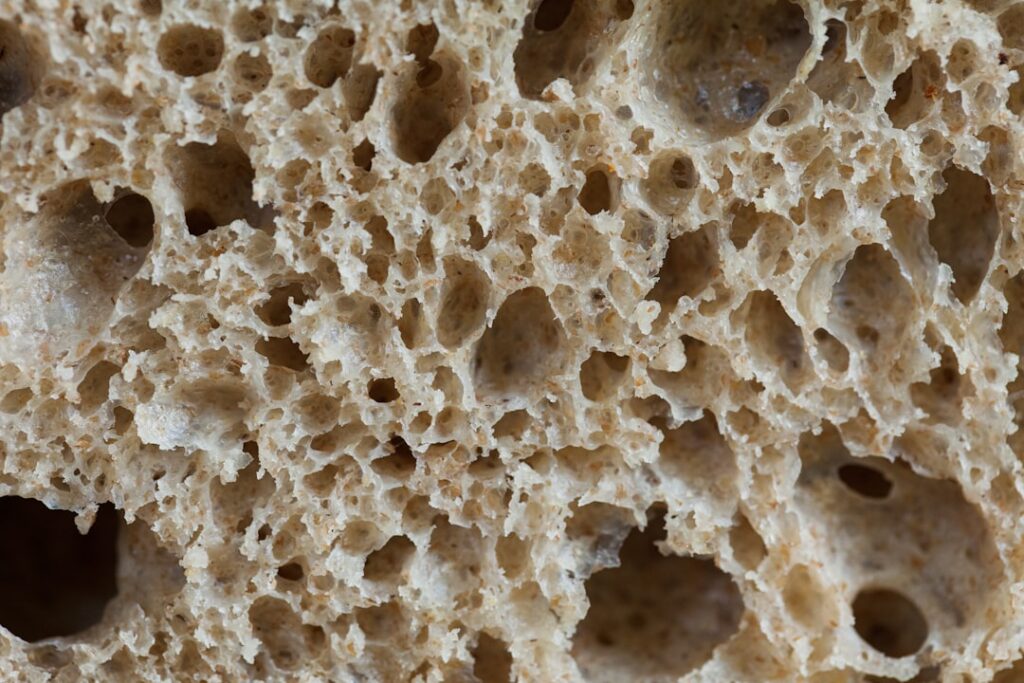
Bread is one of the first places most people meet mold up close. A loaf that looked fine on Monday has fuzzy white patches by Thursday, or blue-green spots, or a black speckled mat. Those colors are not random. Several groups of fungi are especially good at colonizing bread, and each tends to look a little different as it grows. This guide walks through the common types of bread mold, what each usually looks like, why food-safety advice generally says to discard the whole loaf rather than cutting around a spot, why sniffing moldy bread is a bad idea, how to store bread so it lasts longer, and how the molds on a kitchen counter relate to the molds an inspector might find in a damp home.
Part of our Types of Mold guide — start there for the full picture →
Is this mold, asbestos, or water damage? Get a free instant screen
Upload a clear photo of the suspect area. You'll get an instant AI screening opinion and what to do next. This is screening guidance, not a professional determination.
Screening guidance only. AI can be wrong. Confirm asbestos, mold type, or lead with lab testing or a licensed professional before acting.
Why Bread Molds So Easily
Mold needs moisture, food, a tolerable temperature and time. Bread supplies nearly all of it. It is moist, soft and rich in starch and sugars, and it is usually stored at room temperature. Commercial bread may contain preservatives that slow mold, while homemade and bakery bread often has none, which is one reason a fresh artisan loaf can mold in a few days.
Mold spores are everywhere. The EPA’s introductory mold course explains that molds reproduce by producing microscopic spores, that spores float through the air and settle in dust, and that they will not grow unless moisture is present. A slice of bread is a ready-made damp surface. Spores land on it from the air, from hands, from the bread bag or from crumbs left in a bread box, and when conditions are right they germinate. Our guide on what mold needs to grow covers the same principle as it applies to walls, carpets and attics.
What you see on a moldy slice is only part of the organism. Molds grow as networks of thin threads called hyphae, which spread through the food. The fuzzy, colored spots on the surface are mostly the spore-producing structures. By the time a spot is visible, threads have usually spread farther into the bread than the eye can see.
The Common Types of Bread Mold
Many different fungi can grow on bread, and the exact mix depends on the type of bread, the preservatives used, the storage temperature and humidity, and which spores happen to land on it. The groups below are the ones most commonly described on bread. Visual identification is only a rough guide: color changes as a colony ages, several molds can grow on the same slice, and naming a species with confidence requires laboratory work.
Rhizopus stolonifer: “black bread mold”
Rhizopus stolonifer is the classic bread mold of biology textbooks and is often simply called black bread mold. It typically starts as white, cottony fluff that spreads fast across the surface, then develops tiny black dots on upright stalks. Those dots are spore cases, and they give older colonies their salt-and-pepper or fully black look. Rhizopus grows quickly in warm, humid conditions and can spread from slice to slice through the bag. Our dedicated guide to black bread mold looks at this species in more detail.
Penicillium: blue-green spots
Penicillium is the familiar blue-green or green mold with a powdery or velvety texture and, often, a white outer ring. It is one of the most common molds on bread, especially bread kept in cooler conditions, because many Penicillium species grow well at lower temperatures. The genus is huge and includes species used to make certain cheeses and the species group associated with penicillin, along with many that spoil food. Our guide to Penicillium mold covers the genus in more depth.
Aspergillus: yellow-green, black or brown
Aspergillus species produce powdery colonies that may be yellow-green, green, brown or black depending on the species. Aspergillus niger, for example, forms black powdery heads. Aspergillus is common on grains and starchy foods, and some species are known to be able to produce mycotoxins under certain conditions. You cannot tell from appearance whether a particular colony is producing toxins, which is one more reason not to eat around moldy spots. For more, see our Aspergillus guide.
Mucor: grey or white fuzz
Mucor is a close relative of Rhizopus and looks similar at first: fast-growing, fluffy, white to grey threads. It tends to stay greyer and less sharply black-dotted than Rhizopus, and the two are often confused on bread. Both belong to a group of fast-growing molds that thrive on moist, sugary foods.
Cladosporium: olive-green to black
Cladosporium is one of the most common molds in outdoor air and also shows up on food. On bread it usually forms small, dark olive-green to black spots that grow more slowly than Rhizopus. It can grow at relatively cool temperatures, so it sometimes appears on bread stored in the refrigerator. Our Cladosporium mold guide explains why it is so frequently found indoors.
Neurospora: pink, red or orange
Neurospora is sometimes called red or pink bread mold. It forms loose, fluffy pink to orange growth and is known for spreading quickly in warm conditions. It has historically been a problem in bakeries and is also a well-known laboratory organism. Not all pink or orange growth on bread is Neurospora, though; some yeasts and bacteria produce pink or orange colors as well.
Fusarium: white, pink or reddish
Fusarium species are best known as plant and grain pathogens, and their colonies can be white, pinkish, purple or reddish. Fusarium contamination is more often a concern in grain before it ever becomes flour, but Fusarium-type growth can appear on bread too. Some Fusarium species are known for producing mycotoxins in grain crops.
Is it mold, or just flour?
Not every white patch on bread is mold. Many crusty and artisan loaves are dusted with flour or rice flour before baking, and some rolls carry a fine white coating that can look suspicious under kitchen lights. A few quick checks help tell them apart:
- Pattern: flour dusting is usually even across the crust, while mold appears as distinct round spots that grow larger day by day.
- Texture: mold is raised and fuzzy or cottony, often with a darker center; flour lies flat and powdery.
- Timing: a coating present on the day of purchase is almost certainly flour, while new spots that appear after a few days in the bag are almost certainly mold.
- Location: mold often starts on cut faces, the bottom crust or where slices touch the bag, places that stay moister.
If you are still unsure, treat it as mold. Bread is inexpensive compared with the cost of guessing wrong.
Bread Mold Identification Table
The table below summarizes how the common bread molds typically look. Treat it as a field guide, not a diagnosis: appearance varies, and lab analysis is the only reliable way to name a species. For a broader look at how color relates to mold type, see our guide to mold colors.
| Mold | Typical appearance | Common colors | Notes |
|---|---|---|---|
| Rhizopus stolonifer | Fast-spreading cottony fluff with tiny dots on stalks | White at first, then speckled to black | Classic “black bread mold”; thrives in warm, humid storage |
| Penicillium | Powdery or velvety round spots, often with a white edge | Blue-green, green, white margin | Very common on bread; many species tolerate cool temperatures |
| Aspergillus | Powdery colonies | Yellow-green, green, brown or black | Common on grains; some species can produce mycotoxins |
| Mucor | Loose, hairy, fast-growing fuzz | White to grey | Easily confused with early Rhizopus |
| Cladosporium | Small, compact dark spots | Olive-green, brown, black | Can grow at cooler temperatures, including in the fridge |
| Neurospora | Loose, fluffy, spreading growth | Pink, salmon, orange | Sometimes called red bread mold; spreads quickly when warm |
| Fusarium | Cottony growth | White, pink, purple or reddish | Mainly a grain contaminant; some species produce mycotoxins |
Green is the most common color people report, and many green spots on bread are Penicillium or Aspergillus. Our green mold guide covers what that color can and cannot tell you.
Why You Should Throw Out the Whole Loaf
It is tempting to tear off the moldy corner and eat the rest. General food-safety guidance in the United States advises against doing that with soft, moist foods like bread, and the biology explains why.
The visible spot is not the whole mold
As described above, the colored fuzz is mainly the spore-producing part of the mold. The thread-like hyphae that feed the colony grow into the food and are usually invisible. On a firm, dense food, those threads have a harder time spreading far. On bread, which is soft, airy and porous, they can travel well beyond the visible spot, and spores can spread across neighboring slices in the same bag.
Porous foods are hard to “cut around”
Food-safety guidance commonly draws a line between hard foods, where cutting well around a small spot may be acceptable, and soft or porous foods, which are generally recommended for disposal when moldy. Bread falls in the soft and porous group. Because recommendations are updated over time and vary by food, check current federal food-safety resources for specific foods; the general rule for bread, though, is to discard it.
When in doubt, throw it out
The CDC’s guidance on keeping food safe after an emergency advises throwing out food that is discolored, moldy or smells bad, and sums up the approach with a simple phrase: “When in doubt, throw it out!” That page is written for disasters and power outages, but the principle applies in any kitchen. The CDC also notes there that unsafe food can make you sick even if it looks and smells normal.
A sensible approach when you find mold on bread:
- Discard the whole loaf, including slices that look clean.
- Close the bag before you move it, so fewer spores scatter.
- Check other foods stored nearby, such as rolls, tortillas or pastries in the same bread box.
- Clean the bread box or drawer with hot soapy water and dry it fully before reuse.
The CDC’s food-safety prevention guidance recommends washing utensils, cutting boards and countertops with hot, soapy water. That is a good habit for any surface or knife that touched the moldy bread. If your boards seem to grow spots of their own, see our guide on mold on cutting boards.
Is Moldy Bread Dangerous?
Most people who accidentally eat a bite of moldy bread will not notice any effects. That said, reactions vary, and some molds that grow on grains are known to be able to produce mycotoxins, which is part of why food-safety guidance favors discarding moldy bread instead of eating around it.
Don’t sniff moldy bread
A common reflex is to bring a suspicious slice up to your nose to check it. That is not a good idea. Disturbing a mature colony releases spores, and holding it to your face means you breathe them in directly. The CDC notes that for some people mold can cause a stuffy nose, sore throat, coughing or wheezing, burning eyes or skin rash, and that people with asthma or mold allergies may have severe reactions. The EPA’s introductory course also notes that the musty smell associated with mold comes from compounds called microbial volatile organic compounds (mVOCs), and that their health effects are largely unknown. Seeing mold is enough to decide; there is no need to smell it.
Who should be more careful
The CDC notes that people with weakened immune systems and people with chronic lung disease may get infections in their lungs from mold. Anyone in those groups, and anyone with a mold allergy or asthma, has more reason to avoid handling moldy food closely. If someone develops symptoms after eating or handling moldy bread, such as vomiting, stomach pain, signs of an allergic reaction or difficulty breathing, contacting a doctor is the right step. This article is general information, not medical advice.
How to Store Bread to Slow Mold Growth
You cannot keep spores off bread entirely, but you can make conditions less friendly to them.
- Keep it cool and dry. Store bread away from heat sources such as the stove, dishwasher vent or a sunny windowsill.
- Avoid trapping moisture. Let freshly baked bread cool completely before bagging it; warm bread sweats inside a bag and creates condensation.
- Use the freezer for longer storage. Freezing stops mold growth. Slicing before freezing makes it easy to take out only what you need.
- Refrigerate with care. The fridge slows mold but can make bread go stale faster, and some molds such as Cladosporium and certain Penicillium species tolerate cold.
- Buy or bake what you will use. Preservative-free bread often molds within a few days at room temperature.
- Keep the bread box clean. Crumbs and old slices carry spores into each new loaf. Wipe it out regularly and let it dry.
- Handle with clean hands and utensils. Less contamination on the surface means fewer spores ready to grow.
Along the Colorado Front Range, dry air tends to make bread go stale before it molds, but warm kitchens, humidifiers and sealed plastic bags can still create the damp microclimate that molds need.
Bread Mold and the Mold in Your Home
The molds on bread are not a separate, exotic group. Several of the same genera are among the most common molds found indoors. The CDC lists Cladosporium, Penicillium and Aspergillus as the most common indoor molds, and all three also turn up on bread. Rhizopus and Mucor are also found in indoor environments, especially on very damp materials.
That overlap is useful to understand. A loaf on the counter is a small demonstration of what happens on a damp wall, a wet carpet pad or a leaky cabinet floor: spores that are always present in the air land on a moist, organic surface and start growing. The EPA’s introductory mold course notes that mold can grow on virtually any organic substance and that most buildings are full of organic materials mold can use as food, including paper, cloth and wood. Drywall paper behaves much like bread in this sense, and porous building materials, like porous foods, are hard to clean once mold has grown into them.
If you see bread molding unusually fast, especially across several loaves, it may simply be a warm, humid spot in the kitchen. But persistent musty odors, mold on other foods and surfaces, or condensation on windows can point to a moisture problem in the house. Our guide to types of mold in homes explains which genera are found most often indoors and where they grow, and our mold types hub collects species-by-species guides.
Can a petri dish or test kit tell you which mold you have?
Many people first see “types of mold in a petri dish” in a school experiment: leave a slice of bread or an agar plate out, and colonies of different colors appear. Settle-plate and culture kits for homes work on a similar idea. They can show that spores are present, but because spores are always in indoor air, a few colonies on a plate do not by themselves mean the home has a problem. The CDC does not recommend routine mold testing in homes and advises that, whatever type of mold is present, it should be removed and the moisture problem fixed. If you want to understand what a mold test kit can and cannot tell you, or how inspectors approach suspected hidden mold, our mold inspection section is a good place to start.
Identifying mold on walls versus bread
Color clues work much the same way on walls as on bread: blue-green often suggests Penicillium or Aspergillus, olive-green to black often suggests Cladosporium, and so on. The same limits apply, too. Color alone cannot confirm a genus, and many different molds look alike. The CDC’s guidance is that you do not need to know the type of mold to act; visible mold indoors should be cleaned up and its moisture source fixed.
Key Takeaways
- The most common types of bread mold include Rhizopus stolonifer, Penicillium, Aspergillus, Mucor, Cladosporium, Neurospora and Fusarium.
- Color and texture give rough clues, but identification by eye is never certain.
- Bread is soft and porous, so mold threads can reach well beyond the visible spot; discard the whole loaf.
- Do not sniff moldy bread; it puts spores right at your nose.
- Cool, dry storage and freezing are the best ways to slow mold.
- Several bread molds are the same genera found growing on damp building materials indoors.
References
- Keep Food Safe After a Disaster or Emergency — Centers for Disease Control and Prevention
- Preventing Food Poisoning — Centers for Disease Control and Prevention
- About Mold — Centers for Disease Control and Prevention
- Mold Course Chapter 1: Introduction to Molds — U.S. Environmental Protection Agency
Frequently asked questions
What are the most common types of bread mold?
Commonly described bread molds include Rhizopus stolonifer (black bread mold), Penicillium (blue-green), Aspergillus (yellow-green to black), Mucor (grey fuzz), Cladosporium (olive-green to black), Neurospora (pink to orange) and Fusarium (white to reddish). Lab analysis is needed to identify a species with certainty.
Can you cut the mold off bread and eat the rest?
General food-safety guidance advises against it. Bread is soft and porous, so mold threads can spread well beyond the visible spot and spores can reach other slices. Discard the whole loaf; when in doubt, throw it out.
Is black bread mold dangerous?
Many people who eat a small amount notice no effects, but reactions vary, and people with mold allergies, asthma or weakened immune systems are more vulnerable. Do not eat or sniff moldy bread, and contact a doctor if symptoms develop.
Why does my bread mold so fast?
Warm, humid storage, bagging bread while still warm, preservative-free recipes and spores in an unclean bread box all speed mold growth. Store bread cool and dry, freeze what you will not use within a few days, and clean the bread box regularly.
Are bread molds the same as mold in houses?
Several are. CDC lists Cladosporium, Penicillium and Aspergillus as the most common indoor molds, and all three also grow on bread. They grow wherever spores land on damp organic material, whether that is a loaf or wet drywall.
Food molding unusually fast or a musty smell that will not clear? Send us a message to have a Front Range inspector look for hidden moisture in your home.