Mold Testing in Broomfield County, Colorado
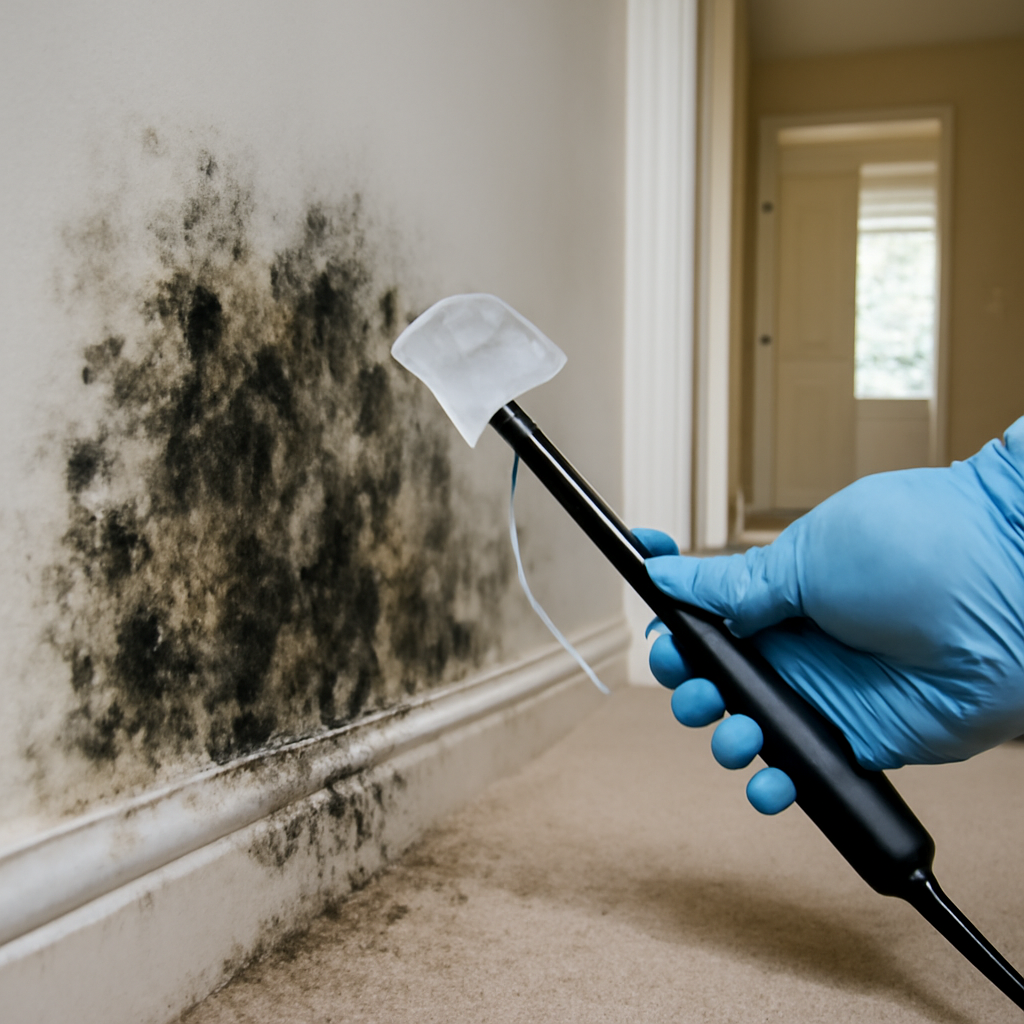
Mold testing broomfield county homeowners look for usually follows a visible problem: a dark patch on a finished basement wall in Anthem, a musty smell after a freeze-thaw spring, or a buyer’s request for lab proof during a McKay Landing sale. Broomfield is unusual — the consolidated City and County of Broomfield, Colorado’s smallest county by area, essentially one planned community along the US-36 turnpike. Its newer, tight-envelope homes and dry Front Range climate shape what mold testing finds here. This page is a county-level hub: it explains what testing measures, how it differs from inspection, what results mean, local costs, and links to our city pages. This summary reflects EPA and CDC guidance current as of 2026; consult a certified professional for testing decisions and your physician for any health symptoms.
Part of our Mold Testing & Inspection guide — start there for the full picture →
Is this mold, asbestos, or water damage? Get a free instant screen
Upload a clear photo of the suspect area. You'll get an instant AI screening opinion and what to do next. This is screening guidance, not a professional determination.
Screening guidance only. AI can be wrong. Confirm asbestos, mold type, or lead with lab testing or a licensed professional before acting.
Mold testing in Broomfield County: what to know
Mold testing collects samples — air, surface, or bulk material — and sends them to an accredited lab to identify mold types and estimate concentrations. It answers a different question than a mold inspection, which is a visual and moisture-based assessment. In Broomfield, testing is most useful after an inspection has found a problem, to document the species present, confirm whether an indoor count is elevated against the outdoor baseline, or verify that a remediation actually worked.
Broomfield’s tight modern housing and dry air make the outdoor comparison sample especially important. Because ambient humidity stays low along the Front Range, an elevated indoor air count usually points to a specific indoor moisture source rather than a regional condition. A lab result showing water-loving species clustered in a finished Anthem basement, well above the outdoor reading, tells a clearer story than a single number ever could.
For how spore counts and species work in general, our mold inspection and testing hub covers the science. This page focuses on the county and how testing fits a Broomfield home. For city-level detail, see our mold testing in Broomfield page.
Why Broomfield County homes need mold testing
Tight envelopes create hidden-mold scenarios testing is built to resolve. Across Broomfield’s 1990s-to-2010s neighborhoods — Anthem, McKay Landing, The Broadlands, Interlocken — sealed construction and finished basements hide moisture and growth where a visual check cannot reach. When an inspection finds a musty smell but no obvious source, air sampling can confirm whether spore levels are genuinely elevated and worth opening a finished wall to investigate.
Health concerns drive many test requests. CDC notes that mold exposure can trigger respiratory symptoms in sensitive people, and a household with asthma or allergy sufferers in a Broomfield home, where families spend long hours in finished lower levels, often wants lab data to gauge what is in the air. Testing does not diagnose illness, but it gives a physician and a homeowner objective information about the indoor environment.
Real-estate transactions are the third driver. In a market of newer homes that still change hands often, buyers and sellers use lab testing to settle disputes during the contingency period. A documented test result in The Broadlands or near Interlocken can confirm whether a flagged basement is a real problem or a cosmetic stain, and that evidence shapes the negotiation.
What a Broomfield County mold test covers
Testing follows the inspection. A qualified provider first locates the suspect area and the likely moisture source, then chooses sampling that answers a specific question rather than collecting samples at random.
Air sampling and the outdoor baseline
Air samples capture airborne spores on a cassette for lab counting. The key is the paired outdoor sample: in Broomfield’s dry air, the outdoor baseline is typically low, so an indoor reading well above it points to an active indoor source. A finished-basement sample compared against the yard reading is the standard way to judge whether an Anthem lower level has a real problem.
Surface and post-remediation sampling
Surface samples — tape lifts or swabs — confirm whether a stain on basement drywall is actually mold and identify the species. After remediation, a clearance test verifies the work returned indoor counts to a normal range. In a finished McKay Landing basement where growth was hidden behind drywall, that post-remediation confirmation gives a homeowner real closure.
Mold testing cost in Broomfield County
Mold testing in the Broomfield market typically runs about $300 to $600 for a visit with two to three lab-analyzed samples, depending on how many areas are sampled and the lab turnaround. A single surface sample to confirm a stain sits at the lower end; a multi-room air-sampling project in a larger Anthem home with several finished areas runs higher because each sample carries its own lab fee.
Many homeowners bundle testing with an inspection so one visit covers both the moisture investigation and the lab sampling, which avoids a second trip charge. Against the cost of unnecessary demolition of a finished basement or, worse, missed hidden growth, targeted testing usually pays for itself by directing the work to where it is actually needed.
Broomfield County regulations and disclosure
Colorado does not license mold testers or set a mandatory residential mold standard, so the credibility of a result rests on method and lab accreditation. Look for a provider who uses an accredited laboratory and follows a documented sampling protocol, including the paired outdoor sample that makes an indoor count meaningful in this dry climate.
For transactions, Colorado’s Seller’s Property Disclosure asks sellers to report known mold and water history. Because Broomfield is a single consolidated city-county, disclosure and permitting records run through one municipal authority, but the test itself still rests on method. A lab-backed result, with sampling locations and outdoor comparison documented, carries more weight in a Broomfield negotiation than a verbal opinion.
Communities and areas served across Broomfield County
Because Broomfield is essentially one city, testing needs are consistent across its neighborhoods. Anthem, McKay Landing, The Broadlands, Broomfield Heights, and the Interlocken area share the same finished-basement, tight-envelope profile where hidden-mold questions most often arise; our mold testing in Broomfield page has the city-level detail.
Broomfield’s land was assembled from Adams, Boulder, Jefferson, and Weld counties, so its neighbors include Westminster, Superior, Louisville, Northglenn, and Lafayette, and coverage extends to those adjacent communities. Across the area, the EPA Radon Zone 1 status means many homeowners pair a mold test with radon testing, since both are below-grade air-quality concerns assessed in the same basement space. See our county sibling page on mold inspection in Broomfield County for the visual-assessment side.
When testing is worth it across Broomfield County
Testing is not always necessary. When an inspection clearly finds the moisture source and visible growth in an Anthem basement, the next step is usually fixing the water and remediating, not paying for a lab count that confirms what is already visible. Testing earns its cost in the harder cases: a persistent musty smell with no visible source, a health concern that calls for objective air data, a transaction dispute, or a post-remediation clearance check.
The dry Broomfield climate sharpens that logic. Because the outdoor baseline is low most of the year, an indoor air sample that comes back elevated is a strong signal worth acting on. The same test in a humid climate would be muddied by a high outdoor count, so the local environment actually makes air testing more decisive here than it would be elsewhere.
Timing matters too. A test taken during a humid stretch or while a basement bathroom sees heavy use can reveal a moisture issue that a dry-spell test would miss. Conversely, a test that still shows elevated counts during the dry season points to a standing moisture source independent of seasonal swings, which helps separate a chronic problem from a transient one in a tight-envelope home.
How to read a Broomfield County mold test report
A good report lists each sample location, the species identified, the spore count for air samples, and the paired outdoor baseline. The single most useful line is the indoor-to-outdoor comparison: an indoor count near or below the outdoor reading is generally reassuring, while a count many times higher, especially of water-indicating species, signals an active indoor source that needs attention.
Species identity adds context. Common outdoor molds appearing indoors at low levels are usually background; water-loving species concentrated in one finished room point to a specific wet area. A provider should explain what the numbers mean for your particular Broomfield home rather than handing over a raw lab sheet, and should tie the result back to the moisture source the inspection identified so the fix addresses the cause, not just the count.
How to choose a Broomfield County mold testing provider
Choose a provider who inspects before sampling, uses an accredited lab, and always pairs an outdoor baseline with indoor air samples. Ask how they will interpret the results in plain language and whether they offer post-remediation clearance testing. A tester who explains why a particular sample is or is not needed in your finished-basement Broomfield home is more trustworthy than one who sells a fixed package regardless of the situation.
For a purchase, coordinating testing with a full inspection gives one coherent report covering both the moisture conditions and the lab data. That combined picture is especially valuable on Broomfield’s tight-envelope homes, where hidden growth behind finished drywall is exactly the scenario lab sampling is meant to resolve before a deadline.
Testing the finished basement in a tight-envelope Broomfield home
The finished basement is where most Broomfield mold testing is aimed, and the home’s tight modern envelope shapes how that testing should be read. Because these homes exchange relatively little air with the outdoors, a localized moisture source in the lower level can raise spore counts in that enclosed space without much dilution, so an air sample taken in a finished Anthem basement is a sensitive indicator of a problem behind the finishes. Paired against the low outdoor baseline that Broomfield’s dry air provides, an elevated basement reading is a strong, actionable signal.
Placement of the sample matters in a finished space. A tester collects the basement air sample in the occupied area — the family room or bedroom, where people actually breathe — rather than tucked beside the mechanical room, so the result reflects exposure rather than proximity to a sump or a condensate line. When a surface stain is present on basement drywall, a tape lift confirms whether it is mold or a harmless efflorescence or paint defect, which is a common question in newer homes where homeowners are quick to suspect the worst behind a finished wall.
Post-remediation clearance testing closes the loop in these homes. Because a finished Broomfield basement is usually rebuilt with new drywall and carpet after remediation, a clearance air sample before the space is refinished confirms the work returned counts to a normal range, so the homeowner is not sealing a lingering problem behind fresh finishes. That verification is worth the modest extra cost precisely because the tight envelope and heavy occupancy of a Broomfield basement give any remaining growth an outsized effect on the air the family breathes.
References
- Mold testing or sampling guidance — U.S. Environmental Protection Agency
- Mold and your health — Centers for Disease Control and Prevention
- Colorado mold guidance for residents — Colorado Department of Public Health and Environment
Frequently asked questions
Is mold testing the same as a mold inspection in Broomfield County?
No. An inspection is a visual and moisture assessment; testing collects air or surface samples for a lab. Testing usually follows an inspection to confirm species and whether indoor counts are elevated.
Why does the outdoor baseline sample matter here?
Broomfield's dry Front Range air keeps outdoor spore counts low, so an indoor reading well above the outdoor baseline clearly points to an indoor moisture source. The comparison makes air testing more decisive locally.
How much does mold testing cost in Broomfield County?
A visit with two to three lab-analyzed samples typically runs $300 to $600. Single surface samples cost less; multi-room air projects in larger homes cost more, since each sample carries a lab fee.
Which areas does mold testing cover?
Broomfield is essentially one city, so coverage spans neighborhoods like Anthem, McKay Landing, The Broadlands, and Interlocken, plus adjacent Westminster, Superior, Louisville, and Lafayette.
If a finished Broomfield basement smells musty or a sale hinges on lab proof, targeted mold testing settles the question. To connect with a vetted local provider who samples the right way, get in touch through our contact page.