Asbestos Testing in Broomfield County, Colorado
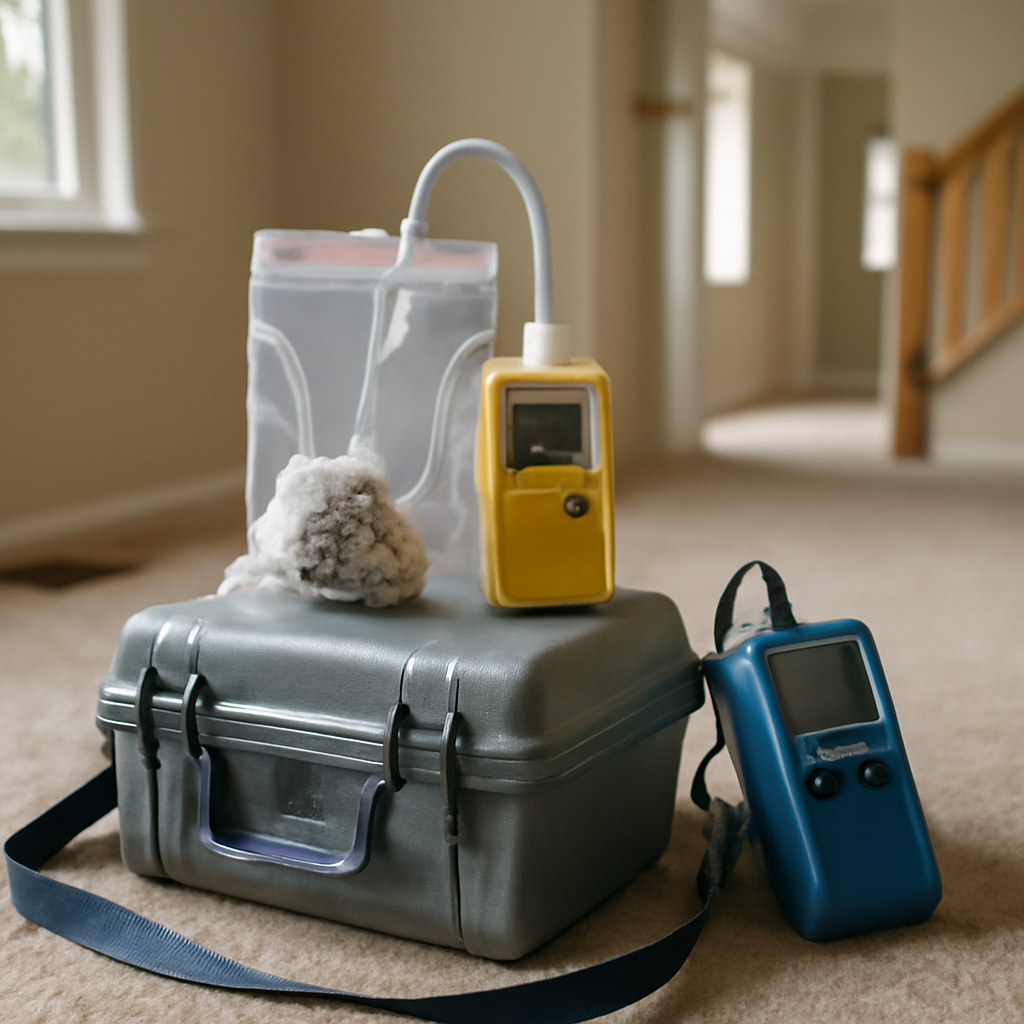
Asbestos testing broomfield county homeowners need is less common than in older Colorado markets, but it still matters for specific homes and projects. Broomfield is the consolidated City and County of Broomfield, Colorado’s smallest county by area, a planned tech-corridor community along the US-36 turnpike. Its housing is predominantly 1990s-to-2010s construction with minimal pre-1978 stock, so widespread asbestos is far less likely than in a historic city — but pockets of older homes, remodeled materials, and the occasional pre-ban structure mean testing has its place. This page is a county-level hub: it covers when testing is warranted, how it works, what results mean, local costs, and links to our city pages. This summary reflects EPA, CDC, and OSHA guidance current as of 2026; consult a certified professional before disturbing any suspect material.
Part of our Asbestos in the Home guide — start there for the full picture →
Is this mold, asbestos, or water damage? Get a free instant screen
Upload a clear photo of the suspect area. You'll get an instant AI screening opinion and what to do next. This is screening guidance, not a professional determination.
Screening guidance only. AI can be wrong. Confirm asbestos, mold type, or lead with lab testing or a licensed professional before acting.
Asbestos testing in Broomfield County: what to know
Asbestos testing is the laboratory analysis of a small sample of a suspect building material to determine whether it contains asbestos fibers and at what concentration. It matters because asbestos is only dangerous when disturbed: intact material is generally stable, but cutting, sanding, or demolishing it during a renovation releases microscopic fibers that, when inhaled, are linked by the EPA and CDC to lung disease and mesothelioma. Testing tells you, before you start work, whether a material is safe to disturb.
Broomfield’s newer housing changes the odds. Because most of the community was built after asbestos was phased out of common residential products, a typical Anthem or McKay Landing home is unlikely to contain asbestos-bearing materials. The concern narrows to the relatively few older homes that predate the build-out, to imported or specialty materials, and to commercial and mixed-use structures in the Interlocken area that may have used asbestos products during their era of construction.
For how asbestos was used and the pre-1978 risk picture, our asbestos and lead hazard guide covers the background. This page focuses on the county. For city-level detail, see our asbestos testing in Broomfield page.
Why some Broomfield County homes need asbestos testing
Construction era is the deciding factor. Asbestos was widely used in residential materials through the 1970s and phased out of most products afterward, so the pre-1978 share of housing is what drives asbestos risk. Broomfield’s predominantly 1990s-to-2010s stock means that share is small, and most homeowners here will never encounter asbestos — but the homes and outbuildings that predate the planned build-out are the exceptions where testing earns its place.
Specialty and imported materials are a quieter source. Even in newer construction, certain imported tiles, gaskets, and specialty products have occasionally contained asbestos, and a renovation that uncovers an unusual or unidentifiable material is a reason to test rather than assume. A homeowner who finds old floor tile or pipe wrap beneath a later finish in an older Broomfield property should treat it as suspect until a lab says otherwise.
Commercial and mixed-use buildings raise the question more often. The Interlocken business park and Broomfield’s older commercial corridors include structures whose construction era and materials differ from the residential subdivisions. A tenant improvement or demolition in one of these buildings is the scenario where Broomfield asbestos testing is most likely to be genuinely necessary, since OSHA treats workplace disturbance of asbestos as a regulated hazard.
What a Broomfield County asbestos test covers
Testing means careful sampling followed by accredited lab analysis, and the method is built around not releasing fibers during collection.
Sampling the right materials
A trained sampler identifies and collects small pieces of suspect materials — a chip of old floor tile and its mastic, a section of pipe wrap, a plug of textured ceiling, a piece of older siding — wetting them to suppress dust and sealing each in a labeled container. In a Broomfield home, the sampler focuses on the few materials likely to predate the home or to have been imported, rather than the modern materials that dominate newer construction.
Lab analysis and the result
An accredited lab examines each sample, typically by polarized light microscopy, and reports whether asbestos is present and its percentage. A result above the regulatory threshold means the material must be handled as asbestos-containing during any disturbance. The report guides whether a homeowner can proceed, must hire licensed abatement, or can safely leave intact material undisturbed.
Asbestos testing cost in Broomfield County
Asbestos testing in the Broomfield market typically runs about $250 to $600 for a visit with several lab-analyzed samples, depending on how many materials are sampled and the lab turnaround. Because most Broomfield homes are newer, many projects need only a sample or two to clear a specific suspect material, which keeps the cost toward the lower end; a larger commercial or older-property assessment with multiple materials runs higher.
Against the cost of an improper disturbance — emergency cleanup, exposure, and the abatement that becomes necessary anyway — targeted testing is inexpensive insurance even when the odds of a positive are low. For the rare Broomfield home or building where asbestos is plausible, the few hundred dollars spent confirming a material is what lets a project proceed safely and legally.
Broomfield County regulations and disclosure
Colorado regulates asbestos through the state health department, and projects that disturb more than a threshold quantity of asbestos-containing material must be performed by state-certified abatement contractors, with notification required for larger jobs. That makes testing the gateway step: you cannot know whether a project triggers these rules until the material is analyzed, even in a newer-housing county.
For transactions, Colorado’s Seller’s Property Disclosure asks about known asbestos. Because Broomfield permits through a single consolidated city-county authority, building records are typically easy to check, which can help establish a home’s construction era and narrow whether testing is even warranted. Where a suspect material exists, sampling by a qualified professional and an accredited lab is what makes the result defensible.
Communities and areas served across Broomfield County
Asbestos relevance tracks building age, which is mostly low across Broomfield’s residential neighborhoods. Anthem, McKay Landing, The Broadlands, and Broomfield Heights are predominantly newer and unlikely to need testing; the exceptions are older scattered homes and any property with unusual remodeled materials. Our asbestos testing in Broomfield page covers the city detail.
The Interlocken business park and Broomfield’s older commercial corridors are where testing is most often genuinely needed, given their varied construction. Broomfield’s land came from Adams, Boulder, Jefferson, and Weld counties, so neighbors include Westminster, Superior, Louisville, and Lafayette, some with older housing where asbestos is more common. Many homeowners pair asbestos testing with our lead testing in Broomfield County when an older property is involved, since both hazards share the pre-1978 era.
When asbestos testing is and is not needed in Broomfield County
For most Broomfield homeowners, the honest answer is that asbestos testing is probably unnecessary. A home built in the 1990s, 2000s, or 2010s — which describes the large majority of the community — was constructed after asbestos had been removed from common residential products, so a routine remodel of an Anthem or McKay Landing home rarely encounters asbestos-containing material. Spending on a test where no plausible source exists adds cost without adding information.
The cases that do warrant testing are specific and worth recognizing. An older home that predates the planned build-out, a property where a renovation uncovers floor tile, pipe wrap, or textured ceiling beneath later finishes, an unusual imported material, or a commercial or mixed-use structure in the Interlocken area all justify a sample before disturbance. In these situations, the small cost of a test is far cheaper than an uncontrolled fiber release.
The practical rule is to match testing to the home’s actual age and materials rather than apply a blanket policy. A qualified provider can often tell a Broomfield homeowner over the phone, from the build year and the material in question, whether testing is warranted at all — which is itself a service that saves money. When a suspect material genuinely exists, testing turns the uncertainty into a clear, documented plan.
How to choose a Broomfield County asbestos testing provider
Choose a provider who will first assess whether testing is even warranted given the home’s age, then sample safely — wetting materials and sealing them properly — and use an accredited laboratory. A provider who tells a 2005-built Anthem homeowner that testing is likely unnecessary, and who focuses sampling on genuinely suspect materials in the rare older property, is acting in your interest rather than selling unneeded samples.
For the older homes and commercial spaces where asbestos is plausible, testing before any demolition remains the rule. A qualified tester who understands which materials and which Broomfield structures warrant concern, and who connects you with certified abatement when a result comes back positive, protects both the household and the project timeline.
Interlocken and Broomfield’s commercial building stock
While Broomfield’s homes are mostly too new to harbor asbestos, its commercial and mixed-use building stock is where the question genuinely arises. The Interlocken business park and the older commercial corridors along US-36 include office, retail, and light-industrial structures whose construction eras and material palettes differ from the residential subdivisions. Commercial buildings of certain vintages used asbestos in sprayed-on fireproofing, floor and ceiling systems, roofing, and mechanical insulation, so a tenant improvement, remodel, or demolition in one of these spaces is a realistic scenario for asbestos testing.
Workplace rules add weight to commercial testing. OSHA treats the disturbance of asbestos-containing material in a workplace as a regulated hazard with specific requirements, and Colorado’s certification and notification rules for larger abatement projects apply to commercial work. A business planning a build-out in an Interlocken-area building should treat pre-project testing as a compliance step, not an optional one, because discovering asbestos after demolition has begun creates both an exposure event and a regulatory problem that early sampling would have prevented.
The contrast with Broomfield’s housing is the useful takeaway. A homeowner in a 2005-built Anthem home and a business renovating an older commercial space face very different odds: the former is unlikely to encounter asbestos at all, while the latter should plan for it. Matching the testing decision to the building type and era — rather than applying a single policy to everything in the county — is what keeps spending sensible while still catching the genuine asbestos risk where it actually lives in Broomfield.
Reading a building’s age before testing in Broomfield
Because Broomfield permits through a single consolidated city-county authority, establishing a building’s construction era is unusually straightforward, and that record is the first tool in deciding whether asbestos testing is warranted. A confirmed mid-1990s-or-later residential build date is strong evidence that common asbestos-containing materials were not used, which can spare a homeowner the cost of testing a material that the era makes implausible. The records turn an uncertain question into a documented answer.
Where the build date or a specific material does raise a question, that is when sampling earns its place. An older home that predates the planned build-out, a renovation that uncovers floor tile or pipe wrap of unknown age beneath later finishes, or an imported specialty material all warrant a sample before disturbance regardless of the overall newness of the neighborhood. A qualified provider uses the building record and a visual review to focus testing on the genuinely suspect materials, which keeps the assessment both thorough and proportionate to the real risk in a Broomfield property.
References
- Asbestos in homes and buildings — U.S. Environmental Protection Agency
- Asbestos and your health — Centers for Disease Control and Prevention
- Colorado asbestos regulations and certification — Colorado Department of Public Health and Environment
Frequently asked questions
Do Broomfield County homes usually need asbestos testing?
Usually not. Most of Broomfield is 1990s-to-2010s construction built after asbestos left common residential products. Testing is warranted mainly for the few older homes, unusual remodeled materials, or commercial structures.
When should I test a Broomfield property for asbestos?
When a home predates the planned build-out, when a renovation uncovers old floor tile, pipe wrap, or textured ceiling, or for commercial and mixed-use buildings in areas like Interlocken before disturbance.
How much does asbestos testing cost in Broomfield County?
A visit with several lab-analyzed samples typically runs $250 to $600. Because many Broomfield projects need only a sample or two, costs often sit toward the lower end; larger assessments cost more.
What happens if a sample comes back positive?
Colorado requires state-certified abatement contractors to handle disturbance above a threshold quantity. The test report tells you which materials trigger that rule before any work begins.
For the rare Broomfield home or building where asbestos is plausible, testing tells you which materials are safe to disturb. To connect with a qualified local asbestos testing provider, get in touch through our contact page.