Indoor air-quality monitors
An indoor air-quality monitor is for homeowners, renters and parents who want to see what is happening in the air they breathe: smoke drifting in from a wildfire, particles from cooking, stuffiness from a closed bedroom, or chemical off-gassing from new furniture and paint. The short answer: choose a monitor by the sensors it carries, with PM2.5 for smoke and dust, a true NDIR CO2 sensor for ventilation, and VOC, humidity and temperature as useful extras. This page explains what each reading means, where consumer sensors fall short, and how a monitor fits a Colorado home. The product buttons below go to Amazon, where you can check the live price and current availability.
What indoor air-quality monitors measure
Most home monitors combine several sensors in one housing. The common readings are:
- PM2.5 (fine particulate matter). Particles 2.5 micrometers and smaller, from wildfire smoke, cooking, candles, wood stoves and outdoor pollution. The EPA notes that fine particles can reach deep into the lungs, which is why PM2.5 is the headline reading on most monitors. Many devices also report PM1 and PM10.
- CO2 (carbon dioxide). Exhaled by people and pets, CO2 builds up in rooms with too little fresh air. It works as a practical proxy for ventilation: a bedroom that climbs steadily overnight is a room that is not exchanging air.
- VOCs (volatile organic compounds). Gases released by paints, cleaners, adhesives, air fresheners, new flooring and furniture. The EPA reports that indoor levels of many VOCs are consistently higher than outdoor levels.
- Humidity and temperature. Relative humidity matters for comfort, static, dust mites and mold. The EPA recommends keeping indoor humidity below 60 percent, ideally around 30 to 50 percent.
- Extras on some models. Radon, carbon monoxide, formaldehyde, nitrogen dioxide or air pressure appear on certain units. These add-ons vary a lot in quality, so check exactly which sensor is inside.
An air-quality monitor does not detect mold directly. High humidity can point to conditions that favor mold growth, but spores are not measured by consumer particle sensors. For that question, the guide to an air quality monitor for mold covers what these devices can and cannot show.
Sensor types and their limits
The number on the screen is only as good as the sensor behind it, and consumer monitors use a mix of sensor technologies.
- Laser particle counters are standard for PM2.5. A small fan pulls air past a laser, and the device estimates particle mass from scattered light. They are good at showing trends and spikes, but absolute readings can drift and can read high in very humid air, when water droplets get counted as particles.
- NDIR CO2 sensors (non-dispersive infrared) measure CO2 directly by how much infrared light the gas absorbs. This is the sensor type to look for if ventilation is the goal.
- Estimated CO2 (eCO2) is a different thing. Some low-cost monitors calculate an "equivalent CO2" figure from a VOC sensor rather than measuring CO2. eCO2 can move in the same direction as real CO2, but it reacts to cooking, cleaning products and perfume, so it is not a reliable ventilation measurement. Product listings that say "eCO2" or do not name an NDIR sensor deserve a second look.
- Metal-oxide VOC sensors respond to a broad mix of gases and usually report a relative index or a total VOC (TVOC) estimate. They cannot tell one chemical from another, and two brands can show very different numbers in the same room. Treat VOC readings as "higher or lower than usual," not as a concentration of a specific compound. The VOC test guide explains when lab sampling is needed to identify specific chemicals.
None of these sensors replace a dedicated safety alarm. A monitor that shows CO is not a substitute for a listed carbon monoxide alarm on every level of the home.
What to look for when choosing
- The right sensors for the question. Smoke and dust need PM2.5. Stuffy rooms and home offices need NDIR CO2. New construction or renovation calls for a VOC sensor.
- Calibration approach. Many NDIR sensors self-calibrate by assuming they see fresh-air levels at some point each week. That works in ventilated rooms but can drift in a space that never airs out. Look for a manual calibration option or clear guidance in the manual.
- App and data logging. Trend history is where a monitor earns its keep. Being able to see that CO2 climbs every night after 11 p.m., or that PM2.5 jumps every time the oven is used, turns readings into action.
- A readable display. A screen or color indicator lets everyone in the household see the reading without opening an app.
- Power and placement. Plug-in units suit a fixed spot; battery units can move between rooms. Place the monitor at breathing height, away from windows, vents and the kitchen stove, unless cooking emissions are what you want to track.
- Indoor or outdoor rating. Some particle monitors are built for outdoor mounting and feed public maps; others are for indoor use only.
Using a monitor in Colorado: smoke days and dry winters
Front Range homes see two seasonal patterns that make a monitor especially useful. In summer and fall, wildfire smoke from fires in Colorado and neighboring states can raise PM2.5 for days at a time. An indoor PM2.5 reading shows whether closing windows, running the HVAC fan with a good filter, or using a portable air cleaner is actually keeping smoke out. The EPA's wildfire guidance recommends creating a clean room and using filtration during smoke events, and a monitor confirms whether that room is working. Pairing an indoor unit with an outdoor sensor makes the comparison even clearer.
In winter, the opposite problem shows up. Cold, dry outdoor air means indoor humidity can fall well below 30 percent, which brings static, dry skin and cracked wood. At the same time, tightly closed homes can build up CO2 in bedrooms. A monitor with humidity and NDIR CO2 helps balance humidifier use against ventilation, without pushing humidity so high that windows condense and mold becomes a risk.
Radon monitors are a separate category
Radon is a colorless, odorless radioactive gas, and much of Colorado has elevated radon potential. A few air-quality monitors include a radon sensor, but most do not, and a PM2.5 or VOC monitor tells you nothing about radon. Continuous radon monitors use a different detection method and need several days of data before readings settle. Homeowners whose main concern is radon should look at dedicated radon detectors, or at a combination monitor that explicitly lists radon among its sensors.
| Reading | Common sensor | What it helps with | Key limitation |
|---|---|---|---|
| PM2.5 | Laser particle counter | Wildfire smoke, cooking, dust, wood stoves | Trends are reliable; absolute values can drift and read high in humid air |
| CO2 | NDIR sensor | Ventilation in bedrooms, offices, classrooms | Needs calibration; eCO2 estimates are not the same thing |
| VOCs | Metal-oxide sensor | Off-gassing, cleaning products, renovation | Relative index only; cannot identify specific chemicals |
| Humidity and temperature | Digital RH/temperature sensor | Comfort, dry winters, condensation and mold risk | Does not detect mold itself |
| Radon | Dedicated radon chamber | Long-term radon trends | Only on some models; needs days of data |
Our picks in this category
The PurpleAir Flex is a laser-based particle monitor from the brand behind the widely used public PurpleAir map, a good fit for tracking smoke and comparing indoor and outdoor PM2.5.
The Govee Smart Air Quality Monitor is an app-connected unit focused on particulate readings alongside temperature and humidity, suited to everyday smoke and dust tracking.
The AirGradient ONE is an indoor monitor known for its open-source approach, combining PM2.5, NDIR CO2, VOC and humidity readings with online data logging.
The Amazon Smart Air Quality Monitor works with Alexa and reports particulates, VOCs, humidity and temperature; its CO reading is not a substitute for a listed CO alarm.
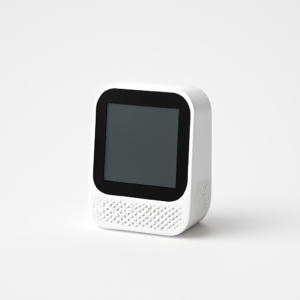
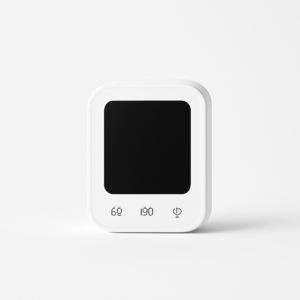
The Temtop M10 IAQ Monitor is a compact, portable monitor with a built-in display for particles and VOC-type readings; confirm the exact sensor list on the listing before buying.
The Airthings View Plus is a combination monitor that adds radon to particulate, CO2, VOC and humidity readings, useful for homes that want one device for both concerns.
Related guides
For a broader comparison, start with the best indoor air quality monitor guide and the air quality monitor for home buyer's guide. Readers focused on ventilation can see the CO2 monitor for home guide and the best CO2 monitor guide, and those tracking chemical off-gassing can read the VOC monitor guide.
App-connected models are covered in the smart air quality monitor guide, and outdoor smoke tracking in the outdoor air quality monitor guide and the PurpleAir monitor guide. Specific brands have their own pages, including the Temtop air quality monitor guide.
For combined devices, see the radon and air quality monitor guide, and for a wider view of testing options, the home indoor air quality testing guide.
References
- EPA: Indoor Particulate Matter
- EPA: Volatile Organic Compounds' Impact on Indoor Air Quality
- EPA: Wildfires and Indoor Air Quality
Frequently asked questions
What should an indoor air quality monitor measure?
At minimum, look for PM2.5 for smoke and dust and a true NDIR CO2 sensor for ventilation. VOC, humidity and temperature readings are useful additions. Some models also include radon, carbon monoxide or formaldehyde, but those extras vary in quality, so check which sensor is inside.
Are consumer VOC readings accurate?
Consumer VOC sensors are best treated as relative. They respond to a broad mix of gases and report an index or total VOC estimate, so they show when levels are higher or lower than usual but cannot identify specific chemicals. Two brands may show different numbers in the same room. Lab sampling is needed to identify particular compounds.
What is the difference between CO2 and eCO2 on a monitor?
A CO2 reading from an NDIR sensor measures carbon dioxide directly by infrared absorption. eCO2, or equivalent CO2, is an estimate calculated from a VOC sensor and can be thrown off by cooking, cleaning products and perfume. For checking ventilation, an NDIR CO2 sensor is the more reliable choice.
Can an air quality monitor detect mold?
Not directly. Consumer particle sensors do not identify mold spores. A monitor can show high humidity, which creates conditions where mold can grow, and a persistent musty smell or visible growth is a better sign of a mold problem. The EPA recommends keeping indoor humidity below 60 percent, ideally about 30 to 50 percent.
Do air quality monitors help during wildfire smoke?
Yes. An indoor PM2.5 reading shows whether closed windows, HVAC filtration or a portable air cleaner is keeping smoke out. The EPA recommends setting up a clean room with filtration during smoke events, and a monitor confirms whether particle levels in that room are actually lower.
6 products



Guides on indoor air-quality monitors
- Best Hygrometers (2026): 7 Indoor Humidity Monitors Compared
- VOC Test: How to Test Indoor Air for VOCs and Formaldehyde
- Indoor CO2 Monitor: How to Read Ventilation at Home
- Best Air Quality Monitors: A 2026 Buyer’s Guide
- Home Indoor Air Quality Testing: What to Know
- Indoor Air Quality Monitoring Services Explained
Gear picks you can trust
Tied to our guides
Each product maps to a topic we cover in depth — radon, mold, lead, moisture, electrical and thermal inspection — so you know what the tool is for before you buy.
Short list on purpose
No endless catalog. We list the kinds of kits and meters we’d point a homeowner or new inspector to, not every model on the market.
No extra cost
Buttons open Amazon, where you check the live price and buy. As an Amazon Associate we earn from qualifying purchases, at no cost to you.
Frequently asked
- Do you sell these products?
- No. We’re a guide-first site — every button takes you to Amazon to complete the purchase there.
- Why don’t you show prices?
- Amazon prices change constantly, so we send you to the live listing rather than show a number that may be out of date.
- Is a DIY kit a substitute for a professional inspection?
- For screening, often yes. For real-estate transactions, remediation clearance or anything health-critical, use a certified professional — our guides explain when.