Exterior Radon Fan: Placement, Weather and Upkeep
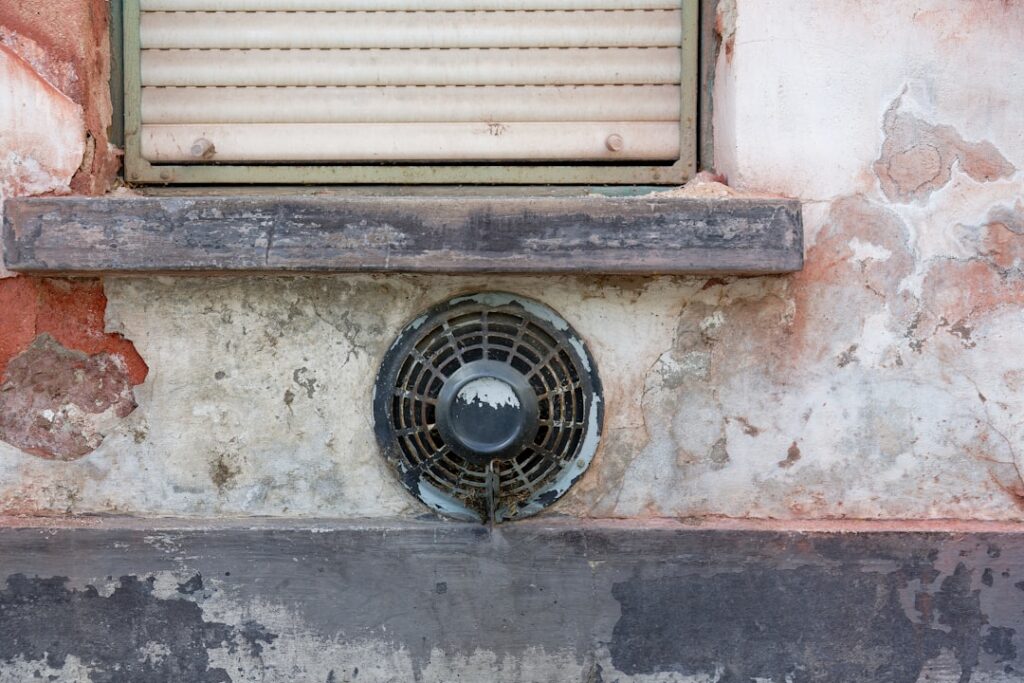
Many radon mitigation systems on the Colorado Front Range end at a small cylindrical fan bolted to the outside of the house, with a white pipe running from the foundation up past the eaves. That unit is an exterior radon fan, and its location is a deliberate design choice, not an afterthought. This guide compares outside mounting with attic and garage placement, explains what EPA says about where fans may go and where the exhaust must discharge, and walks through noise, appearance, weather, Colorado freeze-up concerns, covers, lifespan and monitoring. It summarizes EPA and CDC guidance current as of 2026. A certified radon mitigation professional should design, install and repair any system, and health questions belong with a physician.
Part of our Radon Mitigation Systems guide — start there for the full picture →
What an Exterior Radon Fan Does
Radon is a radioactive gas that comes from the natural breakdown of uranium in soil and rock. CDC describes how it can get into homes through small cracks or holes and build up in the air, and states that radon is the second leading cause of lung cancer deaths in the United States after cigarette smoke. CDC also notes that EPA recommends fixing a home if radon levels are 4 picocuries per liter (pCi/L) or higher, and that there is no known safe level, so lower is always the goal.
The fan is the engine of an active soil suction system. EPA’s Consumer’s Guide to Radon Reduction describes active subslab suction as a system in which a radon vent fan connected to suction pipes draws the radon gas from below the home and releases it into the outdoor air while simultaneously creating a negative pressure, or vacuum, beneath the slab. That vacuum is what keeps soil gas from leaking up into the basement or crawlspace. The guide to the sub-slab radon mitigation system covers the suction side in detail; this page focuses on the fan itself when it lives outdoors.
An exterior installation usually looks like this: a suction pipe goes through the slab inside the basement, turns horizontally, exits through the rim joist or foundation wall, and connects to a fan mounted on the siding a few feet above grade. From the fan, the discharge pipe rises vertically along the wall and ends above the roof edge. EPA’s Citizen’s Guide to Radon notes that the typical mitigation system usually has only one pipe penetration through the basement floor and that the pipe may also be installed on the outside of the house. For an overview of how every piece connects, see the guide to the radon exhaust system.
Why EPA Wants the Fan Outside the Living Space
EPA’s checklist for reviewing a contractor’s work is direct on this point. The Consumer’s Guide states: “The exhaust fan must not be located in or below a livable area. For instance, it should be installed in unconditioned space.” Elsewhere it lists common fan locations as “unconditioned home and garage spaces, including attics and the exterior of the home.” For outdoor fans it adds: “If installing an exhaust fan outside, the contractor must install a fan that meets local building codes for exterior use.”
EPA states the rule without spelling out the engineering behind it, but the reasoning commonly given by mitigators is straightforward. Everything on the suction side of the fan is under negative pressure, so a small leak there pulls room air into the pipe rather than pushing radon out. Everything on the discharge side of the fan is under positive pressure, so a cracked joint, loose coupling or leaking fan housing there can push concentrated soil gas out of the pipe. If that pressurized section ran through a bedroom closet or finished basement, a leak would release radon directly into the space the system is supposed to protect. Placing the fan in an attic, a garage or outdoors keeps the pressurized section away from occupied rooms.
Of those options, the exterior wall is the one where any discharge-side leak goes straight to open air. That is a major reason exterior mounting is so common on basement homes: it meets EPA’s location rule with no pressurized pipe inside the building envelope at all. Garage and attic installations can also meet the rule when done well, but they rely on the garage or attic being unconditioned and not part of the living area, and an attic leak still releases gas into a space connected to the house.
Interior, attic, garage and exterior placement compared
The table below summarizes the trade-offs. These are general patterns, not rules; site conditions, local codes and the mitigator’s experience decide the final layout.
| Fan placement | Pros | Cons |
|---|---|---|
| Exterior wall (outside the house) | Discharge-side leaks vent to open air; no roof penetration for the pipe; fan is easy to reach for replacement; often quicker to install | Visible from the yard or street; exposed to sun, wind, snow and hail; colder pipe in winter means more condensation and possible icing; can be noisier near patios or bedroom windows |
| Attic (unconditioned) | Hidden from view; pipe stays warmer inside the house, which can reduce freezing; discharge exits through the roof | Interior pipe chase through living floors; roof penetration to flash and maintain; attic heat and cramped access make service harder; a leak releases gas into an attic connected to the home |
| Attached garage (unconditioned) | Sheltered from weather; easier access than an attic; pipe can rise through the garage ceiling and roof | Garage must not be a living area; pipe needs protection from vehicles; still needs a roof or wall exit that meets discharge rules |
| Basement or other living space | None that EPA accepts | Conflicts with EPA’s statement that the fan must not be in or below a livable area |
The guide to a radon fan in the basement goes deeper on why an indoor basement fan is a red flag for buyers and inspectors.
Pros and Cons of Mounting the Fan Outdoors
Noise
A correctly sized fan running normally makes a steady low hum and a soft rush of air at the discharge. Outdoors, that sound is usually less noticeable than an attic fan resonating through ceiling joists, because there is no framing to carry vibration into the house. The exception is placement: a fan mounted just outside a bedroom window, next to a patio, or under a deck can be more audible than the same fan in a garage. Rubber couplings on each side of the fan, a solid mounting bracket that does not rattle against siding, and pipe straps with a little isolation all help. A fan that grinds, squeals or rattles is often signaling bearing wear or water in the housing, which brings up replacement, covered below.
Appearance
This is the most common complaint. A white pipe running up a front or side elevation is hard to miss, and some HOAs in Colorado subdivisions have rules about exterior equipment. Installers often route exterior systems on the least visible side of the house, paint the pipe to match the siding (using paint suitable for PVC), or enclose the fan and pipe in a housing. When aesthetics drive the decision, interior routing through a garage is the usual alternative, at a higher cost and with more penetrations. The guide to radon mitigation systems cost explains how routing choices affect the price.
Weather exposure
Front Range weather puts outdoor equipment through a lot: strong sun at altitude, hail, wind, rapid temperature swings and occasional heavy snow. Fans sold for exterior use are generally built with sealed housings and rated for outdoor mounting, which is why EPA requires an exterior fan to meet local building codes for exterior use. Electrical work matters just as much. EPA states that electrical connections of all active radon reduction systems must be installed according to local electrical codes. In practice that usually means an outdoor-rated disconnect near the fan, weatherproof fittings and no extension cords. An exterior fan plugged into a garage outlet through a loose cord is a sign of an amateur or shortcut installation.
UV exposure on the pipe
Standard PVC pipe can become chalky and more brittle after years of direct sunlight, and high-altitude sun is intense. Many installers paint exterior runs or use pipe intended for outdoor exposure to slow that degradation. Homeowners can watch for chalky white residue, fine surface cracks, faded or brittle couplings, and straps that have pulled loose. None of these are emergencies on their own, but a crack on the discharge side of the fan is exactly the kind of leak EPA’s placement rule is designed to keep outdoors, so it should be repaired rather than ignored.
Colorado Winters: Condensation and Freezing
Soil gas drawn from beneath a slab is usually warmer and more humid than winter air on the Front Range. As that gas moves up an exterior pipe that is sitting in freezing temperatures, moisture can condense on the inside walls of the pipe. In most cases the condensate drips back down the vertical riser, through the fan and toward the suction point, which is why horizontal runs are typically sloped back toward the slab. In very cold stretches, some of that moisture can freeze, particularly near the top of the stack and at the discharge, and ice can narrow the opening.
How often this becomes a real problem varies widely. Fan size, pipe diameter, the amount of moisture in the soil gas, sun exposure on that wall and the length of the cold snap all play a role, and many exterior systems run through Colorado winters without trouble. Some installers in cold climates prefer larger-diameter discharge pipe, insulated exterior runs, or interior routing on homes where they expect heavy condensation. There is no single rule, and practices differ between contractors, so it is worth asking how a specific installer handles freeze risk.
Signs that winter is affecting the system include:
- A manometer reading that changes noticeably during a cold snap and recovers when it warms up.
- Gurgling, dripping or sloshing sounds in the pipe or fan.
- Visible ice at the top of the stack or a cap that looks partially closed.
- Water leaking from fan couplings or the fan housing.
- Icicles forming at joints along the exterior pipe.
The safe response is to call the installer. Hammering on a frozen pipe, applying heat tape that is not designed for the job, or using an open flame on PVC can crack the pipe or damage the fan. Never switch the fan off to “let it thaw” without professional advice. EPA’s Consumer’s Guide is emphatic that the fan should never be turned off and must run continuously for the system to work correctly.
Covers, Housings and Discharge Location Rules
Fan covers and enclosures
Decorative fan covers and full-height pipe enclosures exist to make an exterior system less visible and to shade the fan and pipe from direct sun and hail. A good enclosure leaves room for air around the fan, does not trap water at the base, can be removed for service without cutting pipe, and does not hide the system labels. A cover is not a substitute for a fan rated for outdoor use; it is an appearance and protection layer on top of one.
What EPA says about the discharge
The discharge location is the detail EPA spells out most specifically. The Consumer’s Guide, in its section on checking a contractor’s work, states: “The exhaust pipes of soil suction systems must vent above the surface of the roof and 10 feet or more above the ground, and must be at least 10 feet away from windows, doors or other openings that could allow radon to reenter the home, if the exhaust pipes do not vent at least 2 feet above these openings.”
For an exterior fan, that means the pipe does not end at the fan, and it does not end at the gutter line. The discharge pipe must keep going until it clears the roof surface, and it must also respect the distance rules for windows, doors and other openings such as a neighboring dormer window or an operable skylight. A stack that stops just under the eave, points sideways at a deck, or ends beside a second-story window does not match EPA’s wording. State rules and industry installation standards can add further requirements, so the installer should be able to explain how the system meets local rules as well as EPA’s guidance.
Labels and the warning device
EPA states that radon reduction systems must be clearly labeled to avoid accidental changes that could disrupt the system. It also states that a warning device must be installed to alert the occupant if an active system stops working properly, and lists examples: a liquid gauge, a sound alarm, a light indicator, and a dial or needle display gauge. EPA adds that the warning device must be placed where it can be seen or heard easily. On many exterior installations the gauge sits on the interior pipe in the basement, where it is easy to check, while the fan is outdoors.
Fan Lifespan, Replacement and Monitoring
How long exterior fans last
EPA’s Consumer’s Guide states that fans may last for five years or more, that manufacturer warranties tend not to exceed five years, and that fans may then need to be repaired or replaced. In practice, many fans outlast their warranty, and some fail earlier. Exterior units face more weather but are easier to reach. Signs a fan is near the end of its life include new bearing noise, vibration that was not there before, a drop in the manometer reading that does not recover with warmer weather, and a fan that is warm and silent. Fan types and sizing are covered in the guide to radon fans.
Choosing a replacement
Searches for “best radon fan” or “radon replacement fans” usually lead to model comparisons, but the best fan for a house is the one matched to its sub-slab conditions. A tight clay soil under the slab may need a higher-suction fan; loose gravel may move plenty of air with a lower-power unit. A mitigator replacing a failed exterior fan should confirm the replacement is rated for outdoor use, check that the original sizing still makes sense, and re-check the manometer after startup. Typical price ranges are in the guide to radon fan replacement cost, and the installation steps are outlined in the guide to radon fan installation.
Positive pressure fans are a different approach. EPA describes house or room pressurization as using a fan to blow air into the basement or living area, while calling active subslab suction the most common and usually the most reliable method.
Monitoring an exterior fan
Because the fan is outside, it is easy to forget. EPA advises owners of fan-powered systems to look at the warning device, usually a manometer, on a regular basis to make sure the system is working correctly, and to call a contractor if the monitor shows that the system is not working properly. A U-tube manometer shows the pressure difference between the pipe and the room; uneven liquid levels indicate suction, and a level that changes from the original reading signals that something has changed. The guide to the manometer gauge explains how to read one.
A simple routine works well:
- Check the manometer monthly and mark the normal reading with tape or a marker.
- Walk past the fan a few times a year and listen for new noises.
- After a hard freeze, look up at the top of the stack for ice.
- Each spring, look over the pipe for UV cracking, loose straps and leaking joints.
Testing still matters
A running fan and a healthy gauge reading do not prove radon levels are low. EPA’s Consumer’s Guide recommends a post-mitigation test within 30 days of installation, but no sooner than 24 hours after the system is operating with the fan on, and advises retesting at least every two years. A fan replacement is also a sensible time to retest. Results can be compared with the action levels in the radon levels chart, and the guide to radon levels in the basement explains why the lowest lived-in level is the usual test location.
Buyer and Owner Checklist for an Exterior Radon Fan
A standard home inspection may note that a radon system exists, but evaluating its performance is usually a separate service. Buyers touring a Colorado home with an exterior fan, and owners who inherited one, can check the following without tools:
- Location: the fan is outside or in unconditioned space, not inside the basement or another living area.
- Discharge: the pipe extends above the roof surface rather than stopping at the eave, and is not ending beside a window or door.
- Fan rating: the fan appears to be an outdoor-rated unit, with no makeshift plastic bag or bucket “cover.”
- Electrical: there is an outdoor-rated disconnect or connection, not an extension cord.
- Gauge: a manometer or other warning device is present and showing suction.
- Labels: the system is labeled with installer information and an installation date.
- Pipe condition: no cracks, separated joints, sagging horizontal runs or obvious UV damage.
For buyers, a current radon test during the inspection period is the clearest answer. The radon testing guide covers test types and timing, and the radon mitigation hub collects related guides on systems, costs and repairs.
When to call a professional
Call a qualified radon mitigation contractor when the manometer reading drops or levels out, the fan stops or becomes noisy, the exterior pipe cracks or separates, ice repeatedly blocks the discharge, or a retest comes back at or above the action level. CDC advises contacting the state radon office for help finding a qualified or state-certified radon contractor, and notes that lowering high radon levels requires technical knowledge and special skills.
References
- U.S. EPA. Consumer’s Guide to Radon Reduction: How to Fix Your Home (PDF, 2016)
- U.S. EPA. A Citizen’s Guide to Radon (PDF, 2016)
- CDC. About Radon
Frequently asked questions
Why are radon fans mounted outside the house?
EPA's Consumer's Guide states the exhaust fan must not be located in or below a livable area and should be in unconditioned space. Mounting the fan outdoors keeps the pressurized discharge section of pipe outside the home, so a leak there vents to open air.
Where should an exterior radon fan discharge?
EPA says soil suction exhaust pipes must vent above the surface of the roof and 10 feet or more above the ground, and at least 10 feet from windows, doors or other openings unless the pipe vents at least 2 feet above them. A pipe that stops at the eave does not match that wording.
Can an exterior radon fan freeze in a Colorado winter?
It can happen. Moist soil gas condenses in cold exterior pipe and ice may form near the top of the stack during long cold snaps. Pipe slope, pipe size and routing all affect the risk. Call the installer rather than turning the fan off or heating the pipe.
How long does an exterior radon fan last?
EPA notes that fans may last five years or more and that manufacturer warranties tend not to exceed five years. Many run longer. New noise, vibration or a manometer reading that drops and stays down are common signs a replacement is due.
Does an exterior fan need a cover?
A fan rated for exterior use does not require a cover to work, but a well-designed enclosure can improve appearance and shade the fan and pipe. It should not trap water, block the discharge, or hide the system labels.
Not sure whether the fan on the side of a house you are buying is installed correctly? Send us photos of the fan, pipe and gauge and we will help you sort out what to ask the seller.
Radon mitigation fans & parts
If a sub-slab depressurization system is the fix, the inline fan is the heart of it. Match the fan to your soil and pipe diameter — or have a certified installer size it.
| Product | Why | Buy |
|---|---|---|
 RadonAway RP145 Inline Fan RadonAway RP145 Inline Fan | Common 4-in. SSD workhorse fan. | Amazon — $152.00 |
 Fantech Rn2 Radon Fan Fantech Rn2 Radon Fan | Quiet operation; energy-efficient. | Amazon — $153.89 |
 Radon U-Tube Manometer Radon U-Tube Manometer | Confirms the system is pulling suction. | Amazon — $8.95 |