Radon Fan Cost: What Homeowners Need to Know
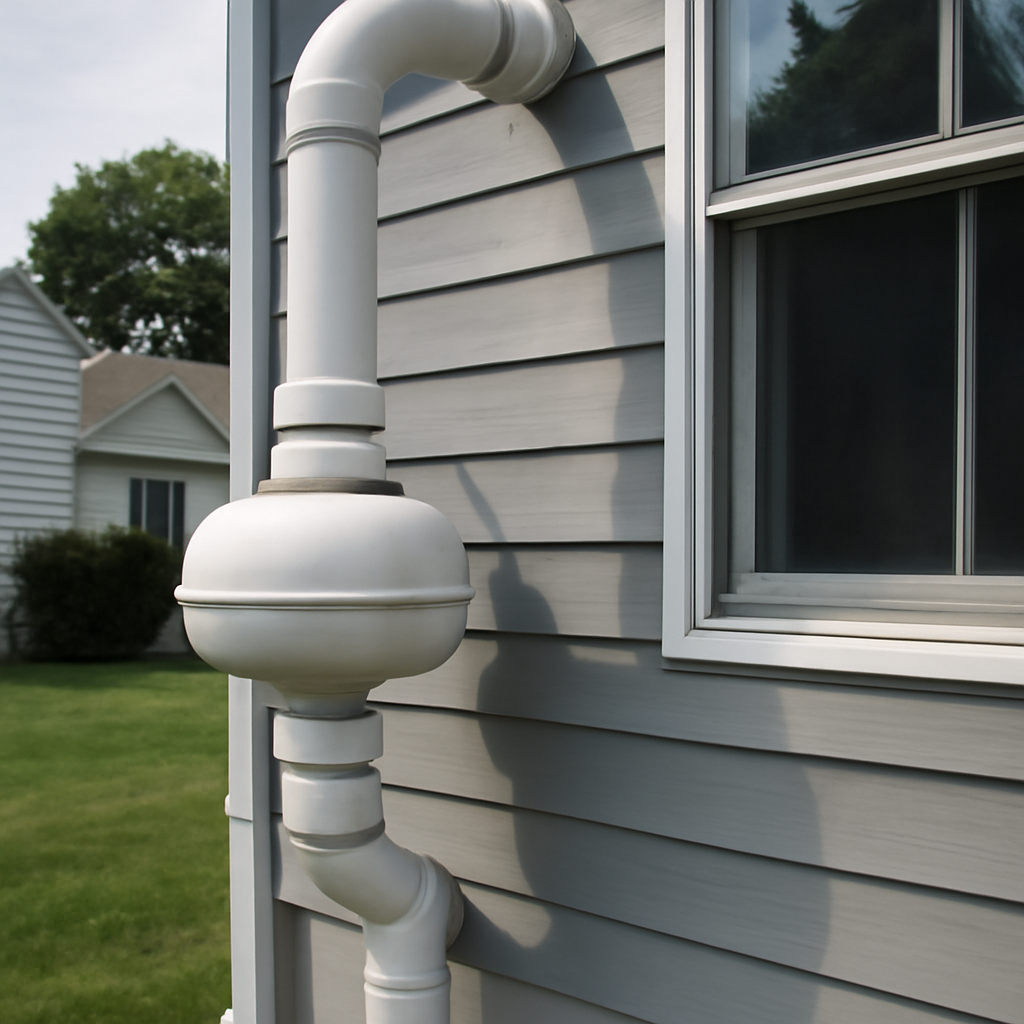
Once a home tests above the EPA action level of 4 picocuries per liter, the conversation turns to mitigation, and the radon fan cost is usually the first number homeowners want to pin down. The fan itself is a relatively modest expense, typically $150 to $400 for the unit, but it is only one piece of a complete mitigation system. This guide summarizes EPA and Colorado Department of Public Health and Environment guidance current as of 2026. It is educational only and does not diagnose any condition; testing and mitigation decisions belong with a certified radon professional.
How much does a radon fan cost?
The radon fan as a standalone component generally costs between $150 and $400, depending on its size, power, and noise rating. Higher-suction and quieter models sit toward the top of that range, while basic units sit near the bottom. That figure covers the fan unit alone, not installation or the rest of the system. A complete professionally installed radon mitigation system, which includes the fan, vent piping, electrical work, sealing, and labor, more commonly runs from roughly $800 to $2,500, with most Colorado installations falling in the middle of that range.
The distinction between the fan price and the full system cost trips up many homeowners. Shopping for a fan online and seeing a low price can create the impression that mitigation is cheap, but the labor, piping, and proper installation account for the bulk of a professional job. Separating the fan price from the installed-system price is the key to setting a realistic budget.
What drives the fan’s price?
Several factors determine where a particular fan falls in the price range.
Suction and airflow rating
Fans are rated by the suction (static pressure) and airflow they produce. A home with tight, low-permeability soil beneath the slab needs a higher-suction fan, which costs more, while a home over loose gravel may work with a lower-power model. Matching the fan to the home’s conditions is a job for a professional, since an undersized fan fails to lower radon and an oversized one wastes energy and adds noise. The diagnostic step of measuring the home’s suction needs is part of what a contractor brings to the job, and it justifies relying on a professional rather than guessing.
Noise level
Quieter fans generally cost more to buy. A fan running continuously near living space can be a nuisance if it hums or vibrates, so many homeowners pay extra for a low-noise model. The trade-off between price and quiet operation is a real one, and many homeowners decide a slightly higher fan cost is worth avoiding a constant hum near living space.
Brand and durability
Established radon-fan brands command higher prices but often come with longer warranties and proven reliability over years of continuous operation. A durable fan from a reputable maker can outlast a cheaper one and prove the better value over the system’s life.
Fan-only versus full system installation
Some homeowners with an existing passive radon-ready system, common in newer Colorado construction, only need a fan added to activate it. In that case the cost is much lower, often just the fan plus a few hundred dollars of labor and electrical work, because the vent pipe is already in place. Activating a passive system is the least expensive path to mitigation, and it is worth checking whether a newer home already has the pipe stubbed in before assuming a full retrofit is required.
For a home with no existing system, the full installation is required: drilling a suction point through the slab or tying into a sump pit, running vent pipe up and out above the roof, installing the fan outside occupied space, wiring it to a dedicated circuit, adding a monitoring manometer, and sealing foundation cracks and openings. That comprehensive work is where most of the cost lives, since the labor and materials for a full retrofit far exceed the price of the fan itself.
What are the ongoing costs?
Beyond the upfront price, a radon fan carries small ongoing costs. The fan runs continuously and draws modest electricity, comparable to a low-wattage household appliance, typically adding a few dollars a month to an electric bill. Over a year that is a minor expense relative to the health benefit of keeping radon below the action level, and most homeowners barely notice it on their utility statement.
Fans also have a finite service life and eventually need replacement, often after a number of years of nonstop operation. Budgeting for an eventual fan replacement, again in the $150 to $400 range plus modest labor, keeps the system functioning over the long term and prevents a lapse in protection when the original fan finally wears out. The manometer gauge makes it easy to spot a failing fan, since the pressure reading changes when suction drops. Homeowners should glance at it periodically and arrange replacement when readings indicate the fan is weakening. Catching a failing fan early, before it stops entirely, keeps radon protection continuous and avoids the surprise of an elevated reading at the next test.
How do you choose the right fan for the cost?
Spending more does not automatically buy a better outcome, and spending too little can leave radon levels above the action level. The goal is matching the fan to the home, which is a job best handled by a certified radon professional rather than guessed at from an online listing. The contractor evaluates the soil conditions beneath the slab and the home’s foundation type to determine the suction and airflow the system needs to perform.
Matching fan to home
A home over tight, low-permeability clay needs a higher-suction fan because the soil resists airflow, while a home over loose, permeable gravel may achieve the target with a lower-power, less expensive model that moves air easily. Installing an undersized fan wastes the entire investment because radon stays high despite the expense, while an oversized fan costs more upfront, uses more electricity, and can be noisier than necessary for no added benefit. The right-sized fan is the one that reliably holds the home below the EPA action level of 4 picocuries per liter at the lowest reasonable cost and noise. The selection criteria, including durability and warranty, are surveyed in the best radon fan buyer’s guide.
This is why a low online price for a fan can be misleading. A homeowner who buys the cheapest fan without knowing the home’s suction requirements may end up with a system that does not work, forcing a second purchase and another installation. Letting a professional specify the fan, even if the homeowner buys it themselves, prevents that expensive mistake and the wasted cost of a second attempt.
How does fan cost fit the total mitigation budget?
Keeping the fan cost in perspective helps homeowners budget realistically. The fan is one line item in a system that also includes vent piping, drilling and sealing, electrical work, a monitoring manometer, and labor. On a typical Front Range installation in the $800 to $2,500 range, the fan represents a relatively small share of the total, with labor and materials accounting for most of it.
That breakdown explains why two quotes can differ substantially even when both specify similar fans. The variation usually reflects differences in labor, the complexity of the pipe routing, and the amount of sealing and drilling required, rather than the fan price. Comparing quotes line by line, and understanding which portion is the fan, helps a homeowner judge whether a quote is fair and spot any that seem unusually high or suspiciously low. The full anatomy of a system’s price is broken down in the guide on the cost of a radon mitigation system.
For homes with a passive radon-ready system already in place, the math changes dramatically. Activating that system requires only adding and wiring a fan, so the fan cost plus a few hundred dollars of labor is the whole expense. Colorado homeowners with newer construction should check whether their home already has a passive vent pipe, since it makes mitigation far cheaper than a full retrofit. A pipe rising through an interior chase or labeled at the roof is a common sign that a passive system is present and waiting to be activated.
Is the cost worth it?
Set against the health risk, the cost of a radon fan and mitigation system is widely considered money well spent. Radon is the leading cause of lung cancer among nonsmokers according to public-health agencies, and Colorado’s high-radon geology makes elevated levels common across the Front Range. A system that reliably holds radon below 4 pCi/L addresses a documented long-term health hazard for a one-time cost plus minor upkeep, which is a favorable trade for most households.
During a home sale, mitigation cost is often a negotiating point, with sellers sometimes funding a system after a buyer’s test comes back high. Either way, a professionally installed system that brings radon below the EPA action level protects the household for years. Homeowners weighing the expense should view the fan cost as one line in a larger investment that the broader Colorado radon testing guide places in full context. The fan is affordable; the protection it provides is the real value.
What about DIY fan replacement?
Some homeowners with an existing system consider replacing a worn-out fan themselves to save on labor. Whether this is advisable depends on comfort with electrical work and the system’s configuration. A fan replacement involves disconnecting the old fan, matching the new one to the existing pipe size and suction requirement, and reconnecting it to the dedicated electrical circuit, often at attic or exterior-wall height.
The risk in a do-it-yourself replacement is mismatching the fan. If the new fan does not match the original’s suction capacity, the system may no longer hold radon below the action level, and the homeowner would not know without retesting. For that reason, even a homeowner who handles the physical swap should match the replacement fan to the original specification and retest the home afterward to confirm performance. When in doubt, having the professional who installed the system handle the replacement avoids the guesswork.
Retesting after any fan change is the single non-negotiable step. The whole point of the system is to keep radon below 4 picocuries per liter, and the only way to confirm a new fan is doing that job is a fresh measurement. Skipping the retest leaves the homeowner trusting an unverified system, which defeats the purpose of mitigation in the first place.
Why the investment makes sense in Colorado
For Front Range homeowners specifically, the fan and the system it powers address a risk that is unusually common locally. Colorado’s geology produces elevated radon in a large share of homes, and the gas is identified by public-health agencies as the leading cause of lung cancer among nonsmokers. Against that backdrop, the modest cost of a fan and a mitigation system buys protection from a documented, serious health hazard.
The ongoing cost is small enough that it rarely factors into the decision. A few dollars a month in electricity and an eventual fan replacement every several years are minor compared with the one-time installation cost and the long-term health benefit of reduced radon. Viewed over the years a household lives in a home, the cost per year of keeping radon below the action level is low, which is why mitigation is widely regarded as worthwhile across the Front Range. The fan cost is simply the entry point to that long-term protection.
References
- Consumer’s Guide to Radon Reduction — U.S. Environmental Protection Agency
- Radon Mitigation and Costs in Colorado — Colorado Department of Public Health and Environment
- Radon and Lung Cancer Risk — Centers for Disease Control and Prevention
Front Range homeowners considering radon mitigation can reach out through our contact page to be connected with a vetted local professional for testing and system pricing.
Radon mitigation fans & parts
If a sub-slab depressurization system is the fix, the inline fan is the heart of it. Match the fan to your soil and pipe diameter — or have a certified installer size it.
| Product | Why | Buy |
|---|---|---|
 RadonAway RP145 Inline Fan RadonAway RP145 Inline Fan | Common 4-in. SSD workhorse fan. | Amazon — $152.00 |
 Fantech Rn2 Radon Fan Fantech Rn2 Radon Fan | Quiet operation; energy-efficient. | Amazon — $148.29 |
 Radon U-Tube Manometer Radon U-Tube Manometer | Confirms the system is pulling suction. | Amazon — $10.99 |