Radon Fans: Sizing, Placement, Lifespan and Failure Signs
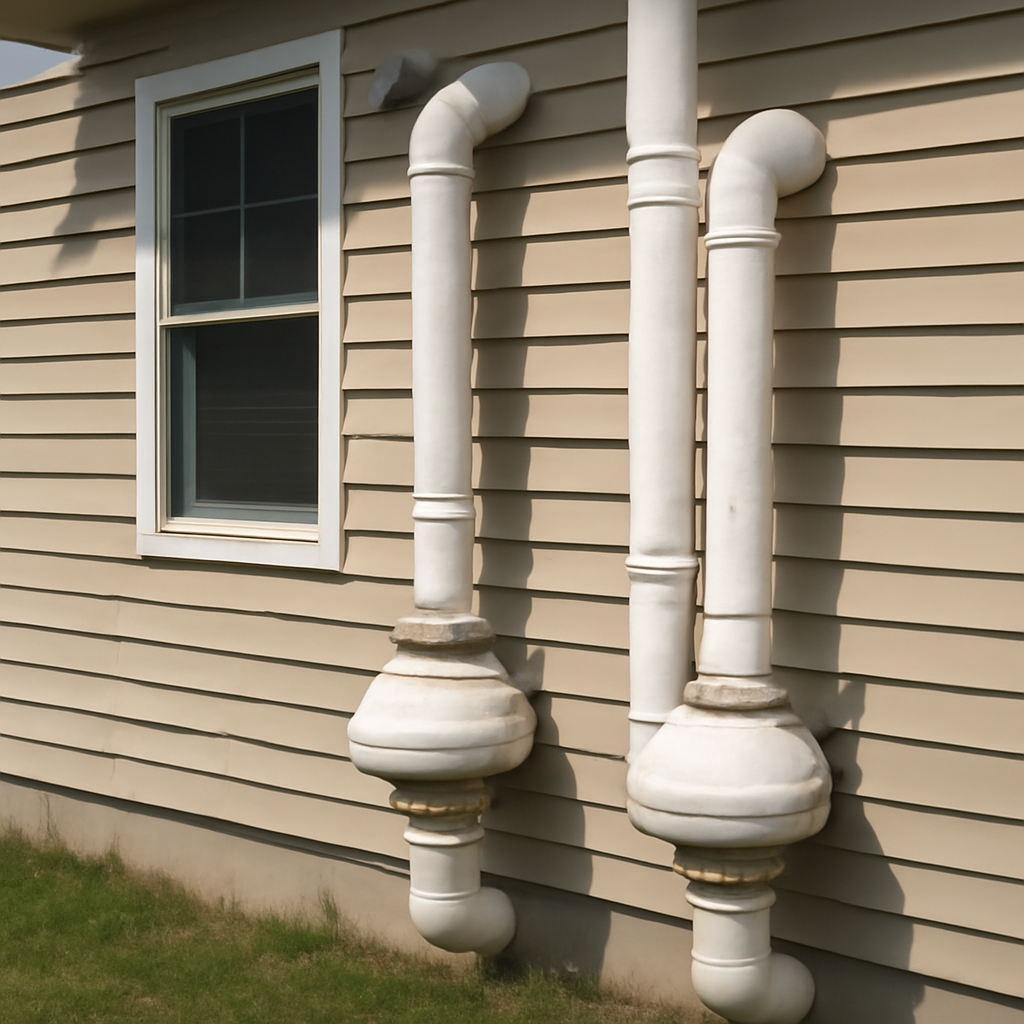
Radon fans are the part of a mitigation system that does the actual work. The pipe, the sealed suction pit and the caulked slab cracks all matter, but without a fan pulling steadily on the soil under the house, most systems in existing homes would not hold radon down. This guide explains what these fans are, how installers choose between low-suction and high-suction models, where the fan is allowed to sit and why, how long fans tend to last, what failure looks like on the manometer, and what Front Range winters do to exterior runs. It summarizes EPA and CDC guidance current as of 2026 for general education. It is not medical advice, and fan selection and installation decisions belong with a certified radon professional who has tested and inspected the actual house.
Part of our Radon Mitigation Systems guide — start there for the full picture →
What Radon Fans Do in a Mitigation System
Most systems installed in existing Colorado homes use active soil depressurization. A hole is cored through the basement slab, a small pit is dug out beneath it, and a sealed PVC pipe runs from that pit up and out of the house. The fan sits inline on that pipe. EPA’s Consumer’s Guide to Radon Reduction describes the job plainly: a radon vent fan connected to the suction pipes draws radon from below the home and releases it into the outdoor air, while at the same time creating a negative pressure, or vacuum, beneath the slab. That second effect is the important one. Once the soil under the slab is at lower pressure than the basement, soil gas tends to flow toward the pipe rather than up through cracks, floor drains and the gap at the edge of the slab.
CDC’s radon prevention page describes the same arrangement as the most used method: a vent pipe system and fan that pulls radon from beneath the house and vents it outside. CDC adds that sealing foundation cracks and other openings makes this kind of system more effective and cost-efficient, and that similar systems can be installed in houses with crawl spaces. In a crawlspace, the fan usually pulls from beneath a sealed plastic membrane rather than beneath concrete.
Radon fans differ from the bathroom or kitchen exhaust fans most homeowners know. They are inline centrifugal fans built for continuous duty, typically with sealed housings so that the soil gas they move cannot leak out of the fan body. They run 24 hours a day, every day. EPA’s guide is emphatic on that point: the fan should never be turned off, because it must run continuously for the system to work. A radon fan that only runs some of the time behaves like a system that does not work some of the time.
For background on the broader system and how the fan fits into it, the radon mitigation hub and the guide to a sub-slab radon mitigation system walk through the full design, and the main radon testing guide covers how to measure the problem in the first place.
How Radon Fans Are Sized: Suction Versus Airflow
Fan selection is a diagnostic decision, not a catalogue decision. EPA notes that a contractor usually decides on a design from visual inspection, from diagnostic tests or from experience. In practice, the two characteristics that drive fan choice are how much suction (static pressure) the fan can produce and how much air it can move at that suction.
Tight soils and high-suction fans
When the material under the slab is dense, such as clay or compacted fill with little gravel, air does not move easily through it. Pulling a useful vacuum across the whole slab then takes a fan that can generate strong suction, even though the volume of air it moves may be modest. Installers often call these high-suction or high-vacuum models. Many Front Range neighborhoods sit on clay-rich soils, so high-suction fans are commonly discussed in this region, but soil varies lot by lot and even within a single footprint.
Loose soils, gravel and high-airflow fans
When the slab sits on a gravel bed or on porous soil, air moves easily, and the challenge is volume rather than vacuum. A fan with high airflow at lower suction can extend the pressure field across a large slab. Choosing a high-suction fan for a very open sub-slab may simply move air without much benefit, while choosing a high-airflow fan for tight clay may fail to reach the far corners of the basement.
How the installer decides
Mitigators often perform a pressure field extension test: they apply suction at a trial hole and measure pressure at small test holes elsewhere in the slab. The readings show how far the vacuum reaches and help determine fan size, how many suction points are needed and where they should go. Some installers start with a mid-range fan and step up or down based on the results. Exact model choice, wattage and pipe size depend on that diagnostic work, which is why a quote that names a fan before anyone has looked at the slab deserves a follow-up question. The guide to radon fan installation covers this process in more detail.
Other features of the house shape the decision as well. A basement with a sump pit tied into perimeter drain tile can sometimes use that pit as the suction point if it is properly sealed; the guide to a radon sump pump cover explains what a sealed lid involves. Houses with combined basement and crawlspace areas may need more than one suction point and a fan sized for the combined load.
Where Radon Fans Are Placed and Why
Placement is one of the clearest rules in EPA’s contractor checklist. The Consumer’s Guide states that the exhaust fan must not be located in or below a livable area and should be installed in unconditioned space. It lists common fan locations as unconditioned home and garage spaces, including attics, and the exterior of the home. If a fan is installed outside, EPA says the contractor must use a fan that meets local building codes for exterior use, and electrical connections must follow local electrical codes.
The reasoning is about leaks. Everything downstream of the fan is under positive pressure: the fan is pushing radon-laden soil gas up the pipe. If a joint on that pressurized section cracks, or the fan housing seal fails, soil gas can escape at that point. With the fan in an attic, garage or outside wall, a leak discharges outside the living space. With the fan in a basement or closet, the same leak would push radon into the rooms the system is meant to protect. That is why a radon fan in a basement is generally treated as a defect; the guide on a radon fan in a basement covers why, and what correction usually involves.
EPA also lists discharge requirements for the pipe itself. The exhaust must vent above the surface of the roof and at least 10 feet above the ground, and at least 10 feet away from windows, doors or other openings that could let radon back in, unless it vents at least 2 feet above those openings. Placement of the fan and placement of the discharge go together: a fan on an exterior wall usually means a pipe running up the side of the house and above the eave.
Inside an attic, the installer typically mounts the fan with rubber couplings on the vertical pipe and continues the pipe through the roof. In a garage, the pipe often passes through the garage ceiling into the attic or out through a wall. Each route has tradeoffs in appearance, noise transfer and freeze exposure, discussed below.
Lifespan, Warranty and Replacement
EPA’s guidance on fan life is cautious. The Consumer’s Guide says fans may last for five years or more, that manufacturer warranties tend not to exceed five years, and that fans may then need to be repaired or replaced. Installers and homeowners commonly report fans running 5 to 10 years, and some well beyond that, but life depends on the model, operating load, moisture in the airstream, temperature extremes and how the fan was mounted. A fan pulling against very tight soil works harder than one moving air through gravel.
EPA also notes that the cost to replace a fan varies with labor and materials and suggests asking qualified mitigators for estimates before work begins. Replacement is often simpler than the original install because the pipe, suction point and discharge are already in place. The main variables are fan access (a tight attic adds labor), whether the new fan is the same size and model, and whether the installer recommends a different size after rechecking system performance. The guides on radon fan replacement cost and radon fan cost break down the typical line items, and radon mitigation systems cost covers the original installation.
A fan replacement is a good point to confirm the system still works as designed. Swapping in a different model changes the suction the system produces, so a short-term radon test afterward is reasonable, and the manometer reading should be noted on the new baseline.
Monitoring Radon Fans With a Manometer
EPA requires a warning device on active systems so homeowners can tell when the system stops working. Its examples include a liquid gauge, a sound alarm, a light indicator and a dial or needle gauge, and the device must be placed where it can be easily seen or heard. In most Colorado homes the warning device is a U-tube manometer mounted on the vent pipe in the basement. EPA’s maintenance advice is to look at the warning device, usually a manometer, on a regular basis, and to call a contractor if it shows the system is not working properly.
A U-tube manometer shows the pressure difference between the pipe and the room. When the fan is running, the liquid in the two legs sits at different heights. When the fan stops, the liquid levels even out. Many installers mark the starting reading at commissioning, which makes later changes easy to spot. The guide on the manometer gauge explains how to read one and what normal variation looks like.
A few practical habits help:
- Note the reading at installation, write it on the pipe or in the house file, and compare monthly.
- Expect small seasonal changes. Soil moisture, frost and water table shifts can change sub-slab resistance and nudge the reading.
- Treat a sudden large change, or a level reading, as a prompt to check the fan rather than as a curiosity.
- Remember that a manometer shows suction, not radon. A system can show suction and still underperform if a new crack or opening has formed, which is why periodic retesting still matters.
Noise, Vibration and Running Cost
A properly installed radon fan in an attic or on an exterior wall is usually quiet from inside the house, but it is not silent. Common complaints include a low hum transmitted through framing, whistling at undersized pipe or tight bends, and rattling from a pipe that is not secured. Rubber couplings at the fan, solid strapping on the pipe, and keeping the fan off rigid contact with joists or sheathing all reduce transmitted vibration. A change in sound over time, such as grinding, rattling or a rising whine, often points to bearing wear.
Running cost is modest but ongoing. EPA’s guide says systems that use fans are more effective in reducing radon but will slightly increase the electric bill, and that some systems lose some heated or cooled air, which can raise utility costs depending on climate, system type and how the home is built. Fan wattage varies by model; high-suction fans generally draw more power than low-suction ones. To estimate a specific fan’s annual electricity use, multiply its rated wattage by 8,760 hours and divide by 1,000 to get kilowatt-hours, then apply the local utility rate. That arithmetic is a rough guide only; actual draw depends on operating conditions.
Failure Signs and What to Do About Them
Most fan problems show up in one of three ways: the manometer changes, the sound changes, or a radon test comes back higher than expected. The table below pairs common symptoms with likely causes and a sensible first step. It is general guidance, and a qualified mitigator should diagnose anything beyond a tripped breaker.
| Symptom | Likely cause | Action |
|---|---|---|
| Manometer liquid levels are even | Fan not running: tripped breaker, switched off, failed motor or wiring fault | Check the breaker and any service switch near the fan; if power is present and the fan is silent, call a mitigator |
| Reading much lower than the installation mark | Fan wearing out, a disconnected or cracked pipe joint, or an obstruction such as ice or debris | Inspect visible pipe joints and the discharge; have the fan and pipe checked; retest radon |
| Reading much higher than the installation mark | Restricted airflow: blocked discharge, water pooled in the pipe, or a sub-slab change | Check the discharge for ice or nests; ask the installer about pipe slope and condensation drainage |
| Grinding, rattling or rising whine | Bearing wear, loose mounting or a pipe vibrating against framing | Have the fan inspected; plan for replacement if bearings are failing |
| Water dripping or gurgling in the pipe | Condensation from warm, moist soil gas meeting cold pipe | Confirm pipe slopes back toward the suction point; consider insulation of exposed runs per installer advice |
| Radon test above the action level with normal suction | New foundation openings, house changes, or a pressure field that never reached part of the slab | Seal visible openings, retest, and have the mitigator re-diagnose |
Any time the fan has been off for more than a short period, or a part has been replaced, a follow-up radon test is a reasonable way to confirm performance. The guide on radon levels in a basement explains how to interpret results from the lowest lived-in level.
Colorado Winter Considerations for Exterior Fans
Front Range winters bring sustained cold snaps, wide day-night temperature swings and occasional heavy snow. Those conditions affect radon fans in a few predictable ways, though the details depend on the installation and should be confirmed with the installer.
Condensation. Soil gas coming up from under a slab is typically warmer and more humid than winter outdoor air. As it travels through a cold exterior or attic pipe, moisture can condense on the inside walls. Pipes are normally sloped so this water drains back down toward the suction point rather than pooling at the fan. A run with a sag, a poorly pitched horizontal section, or a fan mounted at a low point can collect water, which adds noise and may shorten fan life.
Freezing. In long cold stretches, frost can build up at the discharge or inside exposed pipe, especially on north-facing exterior runs. Partial blockage raises the manometer reading and lowers airflow. Some installers insulate or box in exterior runs, route pipe through the garage and attic instead of up an outside wall, or choose fittings that reduce ice formation at the outlet. These are judgment calls that vary by house.
Snow and access. Exterior fans near the ground can be buried by drifting snow or struck by shoveled snow. Keeping the area around the fan and the discharge clear, and checking the manometer after a storm, catches most problems early.
Seasonal readings. Frozen or saturated soil can change sub-slab airflow, so the manometer may read somewhat differently in January than in July. A modest seasonal shift is common; a sharp change is worth a call.
Retesting After Installation and Over Time
Testing confirms what the manometer cannot. EPA says a post-mitigation test should be done within 30 days of installation, but no sooner than 24 hours after the system is running with the fan on. It recommends an independent follow-up measurement to avoid any conflict of interest, using a two- to seven-day test with windows and doors closed for 12 hours before and during the test, except for normal entry and exit. EPA also says it is a good idea to retest at least every two years to be sure levels remain low.
CDC’s radon page gives matching advice: after installing a radon reduction system, test again to make sure it is working, consider retesting every two years, and retest after any remodeling. Remodeling matters for fan-based systems because finishing a basement, adding a bathroom or cutting new floor penetrations can open new radon entry points or change the pressure field. EPA’s Citizen’s Guide adds that levels below 4 pCi/L still pose a risk and in many cases may be reduced, and CDC notes that EPA also recommends action between 2 and 4 pCi/L. The guide to radon testing cost compares the options for follow-up tests.
A sensible maintenance rhythm for a fan-based system looks like this: glance at the manometer monthly, retest every two years or after any significant change to the lower level, and plan for a fan replacement somewhere past the warranty period when the readings or the sound begin to change.
Questions to Ask Before a Fan Is Installed or Replaced
- What diagnostic testing will set the fan size, and will the results be shared?
- Where will the fan go, and how does that location keep any leak outside the living space?
- Is the fan rated for exterior use if it will be mounted outside, and is the wiring to local code?
- How is the pipe sloped to drain condensation, and what is the plan for freeze-prone runs?
- What warning device will be installed, and what reading should it show at commissioning?
- Who performs the post-mitigation test, and is an independent test encouraged?
- What warranty covers the fan and the labor, and for how long?
Clear answers separate a designed system from one that simply has a fan on it.
References
- Consumer’s Guide to Radon Reduction: How to Fix Your Home (PDF) — U.S. Environmental Protection Agency
- A Citizen’s Guide to Radon (PDF) — U.S. Environmental Protection Agency
- Reducing Radon Levels in Your Home — Centers for Disease Control and Prevention
Frequently asked questions
How long do radon fans last?
EPA says fans may last five years or more and that manufacturer warranties tend not to exceed five years. Many fans run longer, often quoted at 5 to 10 years, but life depends on the model, soil conditions, moisture and temperature extremes.
Can a radon fan be installed in the basement?
EPA's contractor checklist says the exhaust fan must not be located in or below a livable area and should be in unconditioned space such as an attic, garage or the exterior. A fan in a basement could push radon into living space if a pressurized joint leaked.
How can a homeowner tell if the radon fan stopped working?
Check the warning device, usually a U-tube manometer on the vent pipe. If the liquid levels are even, the fan is likely not running. Check the breaker, then call a mitigator if the fan is still off. A radon retest confirms performance.
Should a radon fan ever be turned off?
No. EPA says the fan should never be turned off because it must run continuously for the system to work. Turning it off allows radon to return toward pre-mitigation levels.
Do cold Colorado winters affect radon fans?
They can. Condensation in cold pipe and frost at the discharge may raise the manometer reading or reduce airflow, especially on exterior runs. Proper pipe slope and installer-recommended freeze measures help, and checking the gauge after cold snaps catches problems early.
Gauge reading looks off, or the fan has started to sound different? Send us a note about the system and we can help work out whether it needs a retest, a repair or a replacement fan.
Test your home for radon
Radon is invisible and odorless, so a test is the only way to know your level. A short-term kit gives a first reading in days; a digital monitor tracks it over time.
| Product | Why | Buy |
|---|---|---|
 AirChek Charcoal Radon Test Kit AirChek Charcoal Radon Test Kit | Lab fee usually included; EPA short-term protocol. | Amazon — $21.95 |
 First Alert RD1 Radon Test Kit First Alert RD1 Radon Test Kit | Widely stocked; 48-hour charcoal test. | Amazon — $16.98 |
 Airthings Corentium Home Airthings Corentium Home | Digital monitor with a long-term average. | Amazon — $142.99 |