What Are Signs of Radon in Your House: Plain-Language Guide
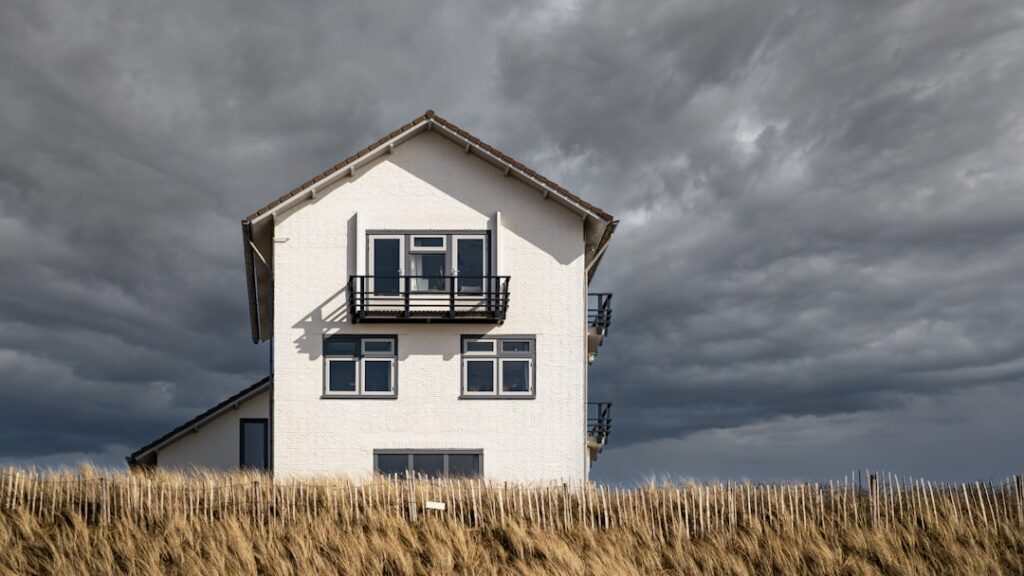
Despite the popular search term “what are signs of radon in your house,” radon exposure does not cause acute toxic symptoms in the body, and radon itself produces no visible or sensory signs in the home. There is no detectable sign or symptom of radon exposure that an individual can feel or observe. The only known health effect of radon exposure is increased long-term lung cancer risk, manifesting 5-25+ years after sustained elevated exposure. EPA and the Surgeon General estimate radon causes approximately 21,000 lung cancer deaths per year in the United States — the second leading cause of lung cancer after smoking. Any respiratory symptom, persistent cough, or lung-related concern should be evaluated by a physician immediately — symptoms are NOT caused by recent radon exposure and require independent medical evaluation. This guide reframes the question: the house-condition indicators that suggest elevated radon risk and warrant testing.
Part of our Radon Levels guide — start there for the full picture →
What are signs of radon in your house: the honest answer
Radon is invisible, colorless, odorless, and tasteless. It produces no surface residue, no condensation pattern, no discoloration, no characteristic stain, no temperature change, and no detectable sound. There is no “DIY visual check” for radon. There is no radon-detecting strip you can buy. There are no radon-sensitive paints, indicator powders, or color-changing materials available to consumers that work. The only way to detect radon is with a calibrated radon detector or test kit.
Radon also produces no symptoms in the people who live with it. EPA, CDC, the National Cancer Institute, and the World Health Organization are aligned on this: radon exposure causes no acute headache, nausea, fatigue, respiratory irritation, or other sensory effect. The damage radon causes is at the cellular level in lung tissue, accumulates silently over years, and manifests — when it manifests at all — as lung cancer with a 5-25+ year latency from sustained exposure.
The actionable reframe of “what are signs of radon” is “what house conditions correlate with elevated radon risk?” Those conditions are observable, and they tell you whether testing should be a priority.
House-condition signs that radon risk is elevated
Specific features of the home and its setting correlate with higher radon entry. None of these features confirm radon presence — only testing does that — but they identify homes where elevated radon is statistically more likely.
Geographic location in an EPA radon zone
EPA classifies U.S. counties into three radon zones based on aggregate testing data and geological models. Zone 1 (predicted average indoor concentrations above 4.0 pCi/L) covers most of the Colorado Front Range — Denver, Adams, Arapahoe, Boulder, Broomfield, Douglas, Elbert, Jefferson, El Paso counties are all Zone 1. Zone 2 (2.0-4.0 pCi/L predicted average) covers most of the rest of Colorado. Front Range residents start with a strong baseline reason to test, regardless of any home-specific factor.
Presence of a basement
Basements provide the largest soil-contact surface area and sit closest to the radon source. Homes with full or partial basements consistently test higher than slab-on-grade or crawlspace-only homes in the same neighborhood. The basement-to-soil interface is the primary radon entry pathway.
Foundation type and condition
Poured concrete foundations test lowest on average. Block (CMU) foundations test higher because of mortared-joint permeability. Crawlspaces with exposed soil or degraded vapor barriers test high. Slab-on-grade homes test lowest when slabs are intact, but visible slab cracks, expansion-joint gaps, and utility penetrations create entry pathways even in newer homes.
Visible foundation cracks and gaps
Cracks in basement floors, gaps where the floor meets the foundation wall, unsealed sump pump covers, unsealed floor drains, gaps around plumbing or electrical penetrations through the slab, and gaps in crawlspace vapor barriers all provide direct soil-gas entry paths. These are visible inspection items even though radon itself is not visible.
Age of construction
Pre-1990 Front Range homes typically lack passive radon-resistant construction features (sub-slab membranes, sealed sump covers, capped passive vent stubs). Post-2000 homes built under newer Colorado building codes often include those features and test lower on average — though not always. A newer home can still test high.
Tight building envelope
Energy-efficient homes with airtight construction can paradoxically show higher indoor radon concentrations because reduced air infiltration reduces dilution. A 2010 Front Range home with tight envelope may show concentrations equal to or higher than a 1970 leaky home with identical soil conditions.
HVAC and exhaust dynamics
Bath fans, kitchen range hoods, clothes dryers, fireplace flues, and unbalanced HVAC systems can pull soil gas — including radon — into the living space by creating negative pressure. Winter operation of forced-air furnaces typically produces the highest radon concentrations because of stack-effect dynamics. The broader [radon testing in Colorado pillar](https://inspectandtest.net/radon-testing/) covers seasonal variation in detail.
Signs that are NOT radon (common misattributions)
Several conditions are sometimes attributed to radon online but actually have different causes. Recognizing the distinctions helps homeowners pursue the right next step instead of misdirecting troubleshooting effort.
Musty smell or visible mold
Musty smell and visible mold growth signal moisture and biological activity. They are independent of radon. Mold testing and moisture diagnosis address these — radon testing does not.
Discolored stains on walls or floors
Stains reflect water intrusion, mineral deposits, or surface contamination. Radon produces no surface deposits or stains.
Cold spots or temperature variations
Temperature variations reflect insulation gaps, HVAC distribution issues, or air-leak patterns. They have no relationship to radon levels (though tight envelope effects can correlate, the temperature itself is not the radon signal).
Sulfurous or “rotten egg” odor
That odor signals natural gas leaks (mercaptan additive) or hydrogen sulfide. Both warrant immediate utility company or qualified technician response. Neither is radon.
Household members feeling unwell
Indoor-air-quality complaints — headaches, fatigue, eye irritation, throat irritation — have multiple possible causes: carbon monoxide (test with a dedicated CO detector immediately), VOCs, mold, dust mites, allergens, elevated CO2 from poor ventilation. Radon does not cause acute symptoms and should not be the first suspect for “we feel sick at home.”
What to do instead: test, do not search for signs
The single useful action for any homeowner asking “what are signs of radon in your house” is to test. Testing is inexpensive, widely available, and definitive. There is no substitute for measurement.
Short-term test options
Charcoal canister kits ($15-$30 at hardware stores) deploy for 2-7 days, then ship to the lab. Mail-in test kits including lab analysis ($25-$60) work the same way. Professional NRPP-certified short-term tests ($150-$300 in the Denver metro) use continuous radon monitors with chain-of-custody protocols suitable for real-estate transactions.
Long-term test options
Alpha-track and electret detectors deployed for at least 90 days produce a more accurate picture of average annual exposure. EPA recommends long-term testing when feasible. Long-term kits typically run $25-$50 including lab analysis.
Action thresholds
EPA’s action level is 4.0 pCi/L. At or above this concentration, mitigation is recommended. Between 2.0 and 4.0 pCi/L, EPA suggests considering mitigation. Front Range basements commonly test above 4.0 pCi/L; some neighborhoods show median concentrations of 6-10 pCi/L. The [how do you test for radon guide](https://inspectandtest.net/guides/how-do-you-test-for-radon/) walks through testing methodology in detail.
If household members have respiratory symptoms
Schedule a physician evaluation. Symptoms have many possible causes that require independent medical workup — imaging, pulmonary function testing, lab work, clinical examination. A home radon test does not diagnose anything. The home test provides a household environmental data point that may be useful context for the physician but is not a substitute for medical assessment.
Soil geology that drives Front Range radon risk
The Colorado Front Range geology is unusually radon-productive. The Rocky Mountain orogeny — the geological event that uplifted the Front Range starting about 70 million years ago — exposed and concentrated uranium-bearing rocks at and near the surface across much of the eastern slope. Granite, sandstone, shale, and weathered residual soils across the region carry above-average uranium concentrations relative to U.S. national medians.
Uranium-238 decays through a long chain of radioactive intermediates, eventually producing radon-222 — the radon isotope responsible for residential exposure concerns. Because radon is a noble gas, it migrates through soil pores and rock fractures more easily than the solid decay-chain elements above it. The migration pathway leads upward toward the surface, and where homes sit over uranium-rich soils, radon enters through foundation joints, slab cracks, sump openings, and utility penetrations.
EPA’s Radon Zone classification — Zone 1 for predicted average residential concentrations above 4.0 pCi/L — captures this geological pattern in policy terms. The Front Range’s Zone 1 designation is not arbitrary; it reflects decades of CDPHE testing data showing elevated home radon in a large fraction of tested properties across Denver, Adams, Arapahoe, Boulder, Broomfield, Douglas, Elbert, Jefferson, and El Paso counties.
How testing reveals what no visible sign can show
The whole point of radon testing is to provide the information that the senses cannot. A calibrated detector measures concentration directly in picocuries per liter, the standard regulatory unit. The measurement is objective, lab-verified, and comparable across homes and across time. No visual inspection, smell test, or symptom check can substitute for that measurement.
For homeowners who want the most information from a single deployment, professional NRPP-certified continuous radon monitors record hour-by-hour concentration data over the 2-7 day test period. The hourly record reveals patterns — a basement that spikes overnight as the furnace cycles, a slab home with concentrations that climb during storm fronts, a sealed-envelope home that shows steady-state elevation regardless of HVAC operation. Those patterns inform the mitigation design and help the mitigation contractor specify fan size and pipe routing.
Passive integrated detectors — charcoal canisters, alpha-track, electret — produce a single average value over the deployment period. They are less informative about dynamics but adequate for the threshold question of “is mitigation needed.” Both methods produce results that compare against EPA’s 4.0 pCi/L action level.
Real-estate transaction context
Radon testing during real-estate transactions is standard practice in Colorado and most Front Range markets. The seller, buyer, or inspector arranges a 2-7 day short-term test using a continuous radon monitor under closed-house conditions. The test follows EPA’s Home Buyer’s and Seller’s Guide protocols. Results are typically available within a few days and inform the purchase agreement’s radon contingency.
If results show concentrations at or above 4.0 pCi/L, the buyer typically requests one of three outcomes: seller installation of a mitigation system before closing, seller credit for the buyer to install after closing, or some combination negotiated as part of the inspection-resolution process. Front Range mitigation typically runs $1,200-$2,500, which is a small fraction of typical home sale prices but a real line item to negotiate. Buyers inheriting an existing mitigation system should review the radon system inspection guide for post-mitigation verification expectations. The [free radon test Colorado guide](https://inspectandtest.net/guides/free-radon-test-colorado/) covers transaction testing in detail.
When to call a professional
Call a physician for any respiratory symptom in any household member. Call an NRPP-certified radon measurement professional for a calibrated short-term or long-term test if you have never tested, if it has been more than two years since the last test, or before any real-estate transaction. Call an NRPP-certified mitigation professional if test results show concentrations at or above 4.0 pCi/L. Call a measurement professional for post-mitigation verification 12 months after system installation.
References
- Health Risk of Radon — U.S. Environmental Protection Agency
- A Citizen’s Guide to Radon — U.S. Environmental Protection Agency
- Radon and Lung Health — American Lung Association
- Radon Public Health Overview — Centers for Disease Control and Prevention
- Colorado Radon Program — Colorado Department of Public Health and Environment
Frequently asked questions
Are there any visible signs of radon in a house?
No. Radon is invisible, colorless, odorless, and tasteless. It produces no surface residue, discoloration, smell, or temperature change. The only way to detect radon is with a calibrated radon detector or test kit. Any product marketed as a visual or sensory radon detector is not credible.
What house features increase radon risk?
Location in EPA Radon Zone 1, basement presence, block-foundation construction, visible foundation cracks or unsealed penetrations, pre-1990 build dates, energy-efficient tight envelopes, and HVAC pressure dynamics drawing soil gas into the living space all elevate risk. The Front Range has elevated baseline risk.
Does a musty smell mean radon?
No. Musty smell signals moisture and mold activity, independent of radon. Mold testing and moisture diagnosis address musty smells; radon testing does not. They are separate household assessments worth pursuing in parallel if both concerns exist.
Can I feel sick from radon exposure?
No. EPA and CDC confirm radon exposure produces no acute symptoms. Headaches, fatigue, nausea, or respiratory irritation should be investigated as carbon monoxide, VOCs, mold, or other indoor-air-quality issues — and persistent symptoms warrant physician evaluation.
Front Range homeowners ready to test their home for radon can reach out through our contact page to connect with a vetted NRPP-certified measurement professional.
Test your home for radon
Radon is invisible and odorless, so a test is the only way to know your level. A short-term kit gives a first reading in days; a digital monitor tracks it over time.
| Product | Why | Buy |
|---|---|---|
 AirChek Charcoal Radon Test Kit AirChek Charcoal Radon Test Kit | Lab fee usually included; EPA short-term protocol. | Amazon — $21.95 |
 First Alert RD1 Radon Test Kit First Alert RD1 Radon Test Kit | Widely stocked; 48-hour charcoal test. | Amazon — $16.98 |
 Airthings Corentium Home Airthings Corentium Home | Digital monitor with a long-term average. | Amazon — $147.14 |