Signs of Radon Poisoning: Homeowner Guide

Important clarification: despite the popular search term “signs of radon poisoning,” there are NO signs of radon exposure that an individual can detect. Radon does not produce acute toxic effects. There is no physical sign, no behavioral change, no household indicator, no visual cue that reveals elevated radon. The only known health effect is increased long-term lung cancer risk, which manifests as a clinical diagnosis 5 to 25 or more years after sustained exposure. The U.S. Surgeon General’s Health Advisory on Radon, EPA, CDC, and the American Lung Association are consistent: radon is a silent, long-latency carcinogen detectable only by testing. This guide explains what people are actually looking for when they search “signs of radon poisoning,” why none of the listed signs are real, and what the actual indicators of radon risk are. This summary reflects EPA, Surgeon General, and CDC guidance current as of 2026 — consult your physician for any lung-related concern.
Part of our Radon Levels guide — start there for the full picture →
Why “signs” is the wrong word for radon
In medical and forensic terminology, “signs” are objective findings that an observer can identify — visible symptoms, measurable abnormalities, detectable patterns. Pneumonia produces auscultatory signs that a physician can hear with a stethoscope. Anemia produces signs in lab work. Hypertension produces signs in blood pressure measurement. Each of these signs gives a clinician something to detect and respond to.
Radon exposure produces no such signs. The exposure does not alter any measurable bodily parameter that routine medical exams can identify. It does not produce visible changes in the home. It does not affect pets in ways that act as indicators. It does not produce odors, color changes, or detectable atmospheric phenomena. The exposure is invisible to every form of perception except the specific radioactivity measurement that defines radon testing itself.
This is why “signs of radon poisoning” is a search term that returns no medically valid signs. The premise of the search assumes detectable indicators that simply do not exist for radon.
What people are usually looking for
Search-volume analysis suggests homeowners typing “signs of radon poisoning” are generally seeking one of three things: a list of physical symptoms they can compare against (which does not exist — see the symptoms-of-radon-poisoning explainer), a household visual indicator they can look for (which does not exist), or environmental cues that might tip them off to elevated radon (which also do not exist in any reliable form). Each of these searches reflects a hope that radon, like other indoor air hazards, produces some kind of perceptible signal. It does not.
The right framing — the framing that EPA, the Surgeon General, and CDC consistently use — is that radon is detectable only by testing. The test is the sign. The test result is the indicator. Nothing about the home, the household, or the occupants’ health provides any reliable signal in the absence of a radon test.
Common misattributions and why they are wrong
Several patterns get misattributed online as “signs of radon poisoning.” Each misattribution should be replaced with appropriate medical or environmental thinking.
Persistent cough or respiratory symptoms
Persistent cough is not a sign of radon exposure. Common causes include viral infection, allergies, asthma, gastroesophageal reflux, post-nasal drip, and in some cases more serious conditions. See a physician for evaluation. The home’s radon test result, if you have one, is not relevant to the cough evaluation.
Fatigue, headache, or general malaise
These are not signs of radon exposure. Common causes include sleep disorders, depression, anemia, thyroid disease, dehydration, and many other medical conditions. None are caused by radon. If symptoms are persistent, see a physician for evaluation.
Lung infection or pneumonia
Recurrent lung infections are not signs of radon exposure. They warrant medical evaluation for underlying causes that may include immune deficiency, structural lung abnormality, or environmental exposures other than radon.
Pet illness
Pets do not show signs of radon exposure that homeowners can use as an indicator. Some long-running narratives suggest that pet cancers in particular rooms of a home indicate radon, but this is not supported by veterinary or environmental health research. Pet cancers have many causes and do not act as reliable bioindicators of indoor radon.
Mold or moisture visible in the home
Visible mold or moisture indicates a moisture problem, not radon. These conditions can co-occur with elevated radon because both relate to the building envelope and foundation, but mold visibility does not indicate radon presence. Mold concerns warrant separate mold inspection, and radon concerns warrant separate radon testing.
Basement smells or unusual odors
Radon is odorless. Any smell in a basement comes from something other than radon — typically mold, sewer gas, stored chemicals, or pest activity. None of these odors indicate radon, and the absence of odor does not indicate the absence of radon. Both elevated and low radon levels are odorless.
The actual indicators of radon risk
While there are no signs of radon exposure detectable by individuals, there are real indicators of radon risk that prompt testing recommendations. These are environmental and geographic, not symptomatic.
- Geographic location. Colorado is in EPA Radon Zone 1, the highest-risk zone. The geology produces elevated indoor radon in approximately 50 percent of Front Range homes.
- Foundation type. Basement and slab-on-grade foundations have more soil-gas contact than crawlspace or pier-and-beam foundations. Homes with basements warrant testing.
- Building age and construction details. Older homes with unsealed sump pits, cracked slabs, or open earth floor sections have more soil-gas entry pathways.
- Energy-efficient construction. Modern tight-envelope homes can concentrate radon because lower air exchange rates reduce dilution. This is counterintuitive but documented.
- Past test results from neighboring properties. Some Colorado counties publish aggregate radon data showing high-risk zip codes. Neighboring elevated results suggest geological conditions that may extend to nearby properties.
None of these indicators are signs of radon exposure in the medical sense. They are reasons to test the home for radon. Testing is the only operative indicator. Homeowners considering the broader radon testing pillar overview should treat these as testing prompts, not as diagnostic signs.
What testing actually shows
A radon test measures the radioactivity concentration in the indoor air, expressed as picocuries per liter (pCi/L). EPA’s action threshold is 4 pCi/L. Levels at or above this threshold warrant mitigation. Levels between 2 and 4 pCi/L are in the consider-mitigation range. Levels below 2 pCi/L are generally considered acceptable, though some sources advocate mitigation at any detectable concentration.
Short-term tests run 48 hours to 7 days using activated-charcoal canisters or continuous monitors. Long-term tests run 90 days to a year using alpha-track detectors. The long-term test produces an annual-average estimate that is the gold standard for residential testing. Costs run $15 to $30 for DIY short-term kits, $25 to $50 for DIY long-term kits, and $135 to $200 for professional short-term tests with continuous monitors.
If testing reveals elevated radon
An elevated radon test result is not a medical emergency. It is a prompt to install a mitigation system within a reasonable timeframe — typically a few weeks to a few months depending on schedule. Mitigation is performed by an NRPP-certified mitigator using sub-slab depressurization (SSD) or related methods. Indoor concentrations drop to post-mitigation levels within 24 to 48 hours of fan startup. Post-mitigation testing confirms the system is effective.
Mitigation reduces ongoing exposure and reduces the rate at which the household accumulates radon-related cumulative dose. It does not reverse damage already accumulated, but it does prevent additional damage. The mitigation cost is typically $1,200 to $2,500 in Colorado for a typical single-family home.
If you have respiratory symptoms regardless of radon
If you have persistent cough, shortness of breath, chest pain, hemoptysis, or unexplained weight loss, see a physician for evaluation. These symptoms warrant medical assessment regardless of radon testing status. Do not delay medical care while waiting for radon test results. Do not assume that radon is the cause of any specific symptom. The physician evaluates the symptom on its own merits and pursues appropriate diagnostic workup.
Smokers and former smokers with significant smoking history should ask their physician about low-dose CT lung cancer screening eligibility under U.S. Preventive Services Task Force guidelines. This is a clinical conversation that runs in parallel to any radon-related home testing.
What public-health authorities want homeowners to remember
The unified message from EPA, the Surgeon General, CDC, and the American Lung Association: radon is real, important, and undetectable except by testing. Test your home. Mitigate if elevated. See a physician for any persistent respiratory symptom regardless of radon status. Do not look for signs that do not exist. Do not delay testing because no symptoms have appeared. Do not delay mitigation because the elevated reading does not “feel” like an emergency. The prevention framework is the framework that public-health science supports.
How the “signs” framing causes real harm
The “look for signs” mental model produces several specific bad outcomes that the prevention framing avoids. First, it delays testing in homes that turn out to have elevated radon — because the homeowner is waiting for signs that will never appear. Second, it produces unnecessary worry in homes that do not have elevated radon — because the homeowner attributes unrelated symptoms to radon and seeks reassurance from sources that cannot provide it. Third, it delays appropriate medical evaluation for respiratory symptoms — because the homeowner is focused on home testing when the symptoms warrant a physician visit. Fourth, it diverts attention from the genuinely useful testing-and-mitigation framework. Each of these is avoided by accepting that radon is a testing-and-mitigation issue, not a sign-recognition issue.
Combined household indicator: radon plus other priorities
Pre-1978 homes warrant assessment for multiple hazards including lead-based paint, asbestos in older materials, and radon. None of these produce reliable signs detectable by individuals. Each requires its own specific testing methodology. A combined household-safety inspection covering all three is increasingly common in Front Range real-estate transactions and pre-renovation due diligence. Homeowners purchasing pre-1978 housing should plan for radon testing as part of a broader environmental-hazard assessment rather than a one-off concern. The aggregate cost of radon plus lead plus asbestos baseline assessment typically runs $500 to $1,500 depending on the scope and the property’s age.
Updating from older guidance
Some older online sources still publish “symptom lists” for radon that include cough, shortness of breath, fatigue, and similar findings. These lists were never medically valid and have been explicitly rejected by current EPA, CDC, and Surgeon General guidance. Homeowners encountering such lists should treat them as outdated content that does not reflect current public-health understanding. The contemporary message from every authoritative source is consistent: radon has no symptoms, no signs, and no detectable indicators except the test result itself. Updating your mental model to match this evidence-based framing is the most useful response to the “signs of radon poisoning” search query.
More Questions About Radon Poisoning
Is radon poisoning the same as radiation sickness?
No, household radon exposure does not cause radiation sickness. Acute radiation sickness comes from very large doses received over a short time, such as in a nuclear accident, and produces rapid symptoms. Radon in homes delivers small doses to the lungs over years, which raises long-term lung cancer risk without causing acute illness. That difference is why the phrase radon poisoning is misleading, and why the response is a radon test rather than waiting for symptoms.
Is radon like carbon monoxide poisoning?
Radon and carbon monoxide are both invisible, odorless gases, but they harm people in very different ways. Carbon monoxide causes acute poisoning within minutes to hours, with headaches, dizziness, confusion and nausea, and it can be fatal quickly. Radon causes no immediate symptoms and raises lung cancer risk over years of exposure. Homes need working CO alarms near sleeping areas and a separate radon test. Symptoms like headaches or dizziness at home point toward checking for carbon monoxide, not radon.
Can people with asthma or COPD be affected by radon?
Radon is not known to trigger asthma attacks or COPD flare-ups, because it does not irritate the airways the way smoke, dust or mold can. People with chronic lung disease, however, may already have smoking-related risk, and radon adds to long-term lung cancer risk. Anyone with breathing problems should follow their doctor’s guidance about triggers and test their home for radon separately. Worsening respiratory symptoms always deserve medical evaluation rather than assumptions about the cause.
Is it safe to stay home while radon mitigation is installed?
Yes, it is generally safe to stay home while a radon mitigation system is installed. Installation typically takes one day for a standard home and involves drilling a suction hole in the slab or laying a crawl space membrane, running pipe and wiring the fan. Drilling concrete creates dust and noise, so installers usually contain the work area. Radon levels do not spike dangerously during installation, and the system starts lowering levels once the fan is running.
References
- EPA radon health risk overview — U.S. Environmental Protection Agency
- American Lung Association radon resource — American Lung Association
- CDC radon background information — Centers for Disease Control and Prevention
- CDPHE radon program guidance — Colorado Department of Public Health and Environment
Frequently asked questions
What are the signs of radon poisoning?
There are no signs of radon poisoning. Radon exposure does not produce detectable signs or symptoms. The only known health effect is increased long-term lung cancer risk, which manifests as a clinical diagnosis 5 to 25 or more years after sustained exposure.
How can I tell if my home has elevated radon?
Only by testing. There are no visual, olfactory, or behavioral indicators of elevated indoor radon. A short-term test or long-term test using EPA-approved methods is the only reliable indicator.
Do pets show signs of radon exposure?
No. Pets do not act as reliable bioindicators of indoor radon. Pet cancers have many causes and do not signal elevated radon. Online narratives suggesting pets indicate radon are not supported by veterinary or environmental research.
What should I do if I have respiratory symptoms?
See a physician for evaluation. The symptoms are not caused by radon regardless of indoor concentration. Address the symptoms appropriately and separately from radon-related home concerns. Both can be addressed in parallel.
Can you get free radon test kits?
Many state radon programs and some county health departments offer free or discounted radon test kits, especially during National Radon Action Month in January. Availability varies by state and year, so check the state radon program or local health department before buying a kit.
How long after mitigation is the radon risk lower?
Radon levels usually drop within a day of a mitigation system starting, and the future added lung cancer risk starts falling as exposure falls. A follow-up test confirms the new level. Past exposure is not erased, but each year at a lower level adds less risk.
Should smokers test for radon even more urgently?
Yes, smokers and households with a smoker should prioritize radon testing, because smoking and radon together raise lung cancer risk far more than either alone. Testing, mitigating high results and quitting smoking are the strongest steps a household can take to lower that combined risk.
Front Range homeowners ready to test or mitigate their home can reach out through our contact page for a referral to NRPP-certified professionals.
Test your home for radon
Radon is invisible and odorless, so a test is the only way to know your level. A short-term kit gives a first reading in days; a digital monitor tracks it over time.
| Product | Why | Buy |
|---|---|---|
 AirChek Charcoal Radon Test Kit | Lab fee usually included; EPA short-term protocol. | Amazon — $21.95 |
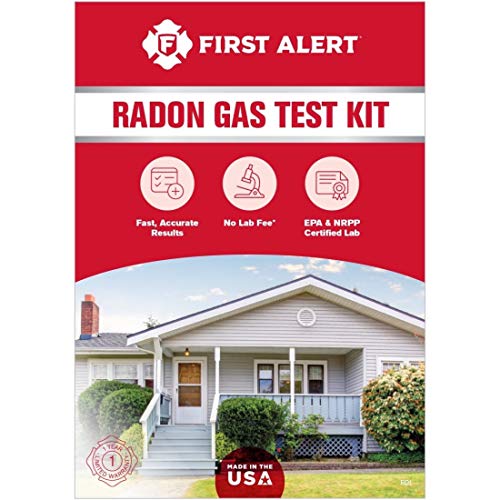 First Alert RD1 Radon Test Kit | Widely stocked; 48-hour charcoal test. | Amazon — $17.95 |
 Airthings Corentium Home | Digital monitor with a long-term average. | Amazon — $99.99 |