What Does Radon Poisoning Feel Like: Honest Answer
What does radon poisoning feel like is one of the most-searched questions about radon, and the honest answer is unfortunately the least satisfying one. Despite the popular framing, radon exposure does not cause acute toxic symptoms. There is no detectable feeling, sensation, or physical sign that an individual can identify when they are being exposed to radon gas. The only documented health effect of radon exposure is increased long-term lung cancer risk, manifesting 5 to 25 or more years after sustained elevated exposure. EPA and the U.S. Surgeon General estimate radon causes approximately 21,000 lung cancer deaths per year in the United States — the second leading cause of lung cancer after smoking. Any respiratory symptom, persistent cough, or lung-related concern should be evaluated by a physician immediately — symptoms are not caused by recent radon exposure and require independent medical evaluation. This guide summarizes EPA, Surgeon General, and CDC guidance current as of 2026 and is informational only.
Part of our Radon Levels guide — start there for the full picture →
The honest answer: radon poisoning has no acute feeling
Radon is a colorless, odorless, tasteless radioactive noble gas formed from the natural decay of uranium and radium in soil and rock. As an inert noble gas it does not react chemically with body tissues. When inhaled, radon gas itself is largely exhaled within seconds. What causes harm is the radioactive decay daughters — polonium-218 and polonium-214 — which attach to dust and aerosols in the air, deposit on lung tissue, and emit alpha particles that damage cellular DNA over years and decades of repeated exposure.
This decay-product damage accumulates silently. The body has no nerve receptors for radon gas, no chemoreceptors that detect its presence, and no acute inflammatory response to typical residential exposure levels. EPA’s Citizen’s Guide to Radon states explicitly: “Radon is a cancer-causing radioactive gas. You cannot see, smell, or taste radon, but it may be a problem in your home.” The Surgeon General’s Health Advisory makes the same point: radon’s only documented effect is long-term lung cancer risk.
Why the search persists
The question “what does radon poisoning feel like” persists for understandable reasons. Carbon monoxide poisoning has acute symptoms — headache, dizziness, nausea — that announce themselves. Lead exposure has measurable blood levels and (at very high concentrations) abdominal pain or neurological symptoms. Mold exposure causes allergic and respiratory symptoms in sensitive individuals. By analogy, consumers expect radon to have its own symptom pattern. It does not.
Any respiratory symptom the searcher is currently experiencing — cough, shortness of breath, chest tightness, fatigue — is not caused by radon at any residential exposure level. These symptoms have many possible causes (viral infection, asthma exacerbation, allergic response, cardiac issue, the early presentation of cancer) and each warrants medical evaluation. A physician should be consulted immediately for any persistent respiratory symptom, full stop. Radon is not the answer to “what is causing this feeling right now.”
What radon actually does over time
The long-term lung cancer risk that radon causes is dose-response. The higher the radon concentration in air the person breathes, and the more hours per day they spend breathing it, and the more years that exposure continues, the higher the lifetime risk of lung cancer. EPA estimates that for a never-smoker exposed to 4 picocuries per liter (the EPA action level) for 70 years (a lifetime), the excess lung cancer risk is approximately 7 in 1,000. For a smoker at the same exposure level, the excess risk rises to 62 in 1,000 because smoking and radon interact synergistically.
The cancer that radon causes is biologically identical to lung cancer from any other cause. It presents with the same symptoms — persistent cough, blood in sputum, chest pain, weight loss, recurrent pneumonia — and follows the same diagnostic and treatment pathways. These symptoms appear 5 to 25 years after sustained elevated exposure, not in the hours or days after a single exposure. The American Lung Association radon guidance at lung.org documents the dose-response curve and the lung-cancer connection in detail.
What homeowners should actually do
Since there is no feeling that announces radon exposure, the only way to know radon is present in a home is to test the air. EPA recommends every home below the third floor be tested for radon. Test kits are inexpensive (free in some Colorado counties through CDPHE-supported programs, $15 to $30 retail) and require only 48 hours to 90 days of exposure depending on the kit type. Short-term kits (charcoal or electret) give a snapshot; long-term kits (alpha-track) give a more representative average. For background on which test type fits which situation, see the radon testing pillar guide.
If a test shows radon at or above 4 picocuries per liter, EPA recommends mitigation. The standard residential mitigation system is sub-slab depressurization (SSD), which uses a fan and vent pipe to draw radon-laden soil gas from beneath the foundation slab and exhaust it above the roofline. Front Range mitigation systems typically cost $1,200 to $2,500 installed and reduce indoor radon by 80 to 99 percent. For perspective on the broader symptom-framing question, see the symptoms of radon gas poisoning framing guide.
When to consult a physician for respiratory symptoms
The bright line for medical consultation is any persistent respiratory symptom — cough, shortness of breath, chest tightness, recurrent respiratory infections, blood in sputum, unintended weight loss — lasting more than two to three weeks, or any acute symptom that interferes with daily function. The physician’s evaluation will rule in or out a range of causes: infection, asthma, COPD, cardiac issues, occupational exposures, and (if indicated) cancer. The physician does not need to know whether the home has been tested for radon; symptoms are evaluated on their own merit.
If a physician’s workup leads to a cancer diagnosis, and the patient lives in a pre-tested home with elevated radon, the radon exposure may be a contributing risk factor. It would not be the only factor (genetics, smoking history, occupational exposures all contribute). And it would not change the cancer treatment, which proceeds based on tumor staging and pathology rather than presumed cause.
The physics of radon’s silent harm
Understanding why radon causes no acute symptoms requires understanding the physics involved. Radon-222 is the most common isotope of radon found in homes. It has a half-life of 3.8 days, meaning a given radon atom has about a 50 percent chance of decaying within four days of being inhaled. When the radon atom decays, it emits an alpha particle and becomes polonium-218. The alpha particle has high energy (roughly 5.5 million electron-volts) but very short range — only about 50 to 70 micrometers in tissue. The energy is deposited locally to cells near the decay event, damaging DNA but not producing any systemic effect.
This is why radon does not affect the body in ways noticeable as symptoms. The body has no detection mechanism for low-rate alpha decay. There is no acute inflammation, no fever, no fatigue, no respiratory distress at typical residential exposure. The damage happens at the cellular level over years and only manifests when accumulated mutations in lung epithelial cells lead to malignant transformation. By the time cancer appears, the original exposure happened years to decades earlier.
What other countries do about radon
The international consensus on radon mirrors the EPA position. The World Health Organization’s WHO Handbook on Indoor Radon recommends an action level of 100 becquerels per cubic meter, equivalent to about 2.7 pCi/L — slightly lower than EPA’s 4 pCi/L threshold. Canada’s national action level is 200 becquerels per cubic meter (5.4 pCi/L). The European Union’s Council Directive 2013/59/Euratom recommends 300 becquerels per cubic meter (8.1 pCi/L) as the upper bound, with member states free to adopt lower thresholds. All these international thresholds are based on the same long-term lung cancer risk model; none predicts acute symptoms.
The framing across health authorities is uniform: radon has no acute symptoms, only long-term lung cancer risk, and testing-plus-mitigation is the only meaningful intervention. The consistency across jurisdictions and decades of public-health communication reinforces the answer to the original question. Radon poisoning does not feel like anything because the body cannot feel it.
Why the radon-symptom search matters anyway
Even though radon has no acute feeling, the popularity of this search drives a useful public-health outcome: homeowners curious enough to search for symptoms often follow up by testing their homes. EPA encourages this curiosity-to-testing pathway because home testing is the only meaningful intervention available. Testing is cheap and easy. If a kit shows 4 pCi/L or higher, mitigation is straightforward and effective. The Front Range has elevated radon prevalence due to the underlying geology of granite-rich foothills and uranium-bearing rock formations, and EPA Zone 1 status applies to most Colorado counties.
Approximately 40 to 50 percent of Front Range homes test above the 4 pCi/L action level — significantly higher than the U.S. national average of around 6 percent. This is one of the reasons radon testing is part of standard pre-purchase due diligence on Colorado real estate transactions.
Misconceptions about radon and acute illness
Several persistent misconceptions about radon and acute illness deserve direct correction. First, some sources online suggest radon causes flu-like symptoms (fatigue, headache, body aches). This is incorrect. Radon does not cause flu-like symptoms at any residential exposure level. Any flu-like symptom has other causes (viral infection, allergic response, dehydration, stress) and should be evaluated independently. Second, some sources claim radon causes nosebleeds or sinus problems. Again incorrect. Radon does not interact with mucous membranes in any way that would cause these symptoms.
Third, some sources connect radon to general “indoor air quality” symptom patterns that include headache, eye irritation, throat irritation, and concentration problems. These symptoms are real and often caused by indoor air pollutants, but radon is not among the causative agents. The actual causes typically include volatile organic compounds (VOCs) from carpets, furniture, paints, and cleaning products; biological contaminants such as dust mites, pet dander, and mold spores; combustion byproducts from cooking and heating; and ventilation deficiencies that allow CO2 buildup. None of these are radon. Investigating indoor air quality symptoms should focus on these actual causes rather than radon.
Pediatric considerations
Children spend proportionally more time at home than adults and have higher respiratory rates per body weight, meaning they accumulate radon exposure faster than adults living in the same home. However, children also do not develop acute symptoms from radon at residential levels — the body has no detection mechanism regardless of age. Children with respiratory symptoms have the same range of causes as adults: viral infection (very common), bacterial infection, asthma, allergic rhinitis. Pediatricians should evaluate persistent respiratory symptoms in children with the same diagnostic care as adults, without attributing symptoms to radon.
What does matter for children specifically is the long-term cumulative exposure. A child living from birth to age 18 in a home at 8 pCi/L accumulates substantial cumulative exposure during the developmental years when lung tissue is most sensitive to radiation damage. Mitigating to 1 pCi/L during those years has measurable lifetime risk reduction. This is why pediatricians and public-health authorities recommend radon testing for any home with young children, regardless of the absence of any symptom signal. The testing decision is forward-looking risk management, not symptom investigation.
References
- EPA Citizen’s Guide to Radon — U.S. Environmental Protection Agency
- American Lung Association radon health information — American Lung Association
- CDC radon exposure and lung cancer guidance — Centers for Disease Control and Prevention
- NIH lung cancer and radon risk overview — National Institutes of Health
Frequently asked questions
Can you feel radon poisoning?
No. Radon is a colorless, odorless, tasteless noble gas with no acute symptoms at any residential exposure level. The body has no sensory mechanism to detect radon. Any respiratory symptom you are currently experiencing has other causes and requires evaluation by a physician.
How long does it take for radon exposure to cause symptoms?
There are no acute symptoms of radon exposure. The only documented health effect is increased long-term lung cancer risk, which typically appears 5 to 25 or more years after sustained elevated exposure. Lung cancer presents with cough, blood in sputum, chest pain, or weight loss.
What should I do if I am worried about radon?
Test the home with an EPA-approved short-term or long-term radon test kit. If the result is at or above 4 pCi/L, install a sub-slab depressurization mitigation system. Symptoms you are currently feeling are not caused by recent radon exposure and should be evaluated by a physician.
How does radon cause harm if I cannot feel it?
Radon decay products (polonium-218 and polonium-214) deposit on lung tissue and emit alpha particles that damage cellular DNA. This damage accumulates silently over years and decades, raising lifetime lung cancer risk. The body has no inflammatory or sensory response to typical residential exposure.
Front Range homeowners ready to test their homes for radon and connect with a vetted local NRPP-certified mitigator can reach out through our contact page.
Test your home for radon
Radon is invisible and odorless, so a test is the only way to know your level. A short-term kit gives a first reading in days; a digital monitor tracks it over time.
| Product | Why | Buy |
|---|---|---|
 AirChek Charcoal Radon Test Kit | Lab fee usually included; EPA short-term protocol. | Amazon |
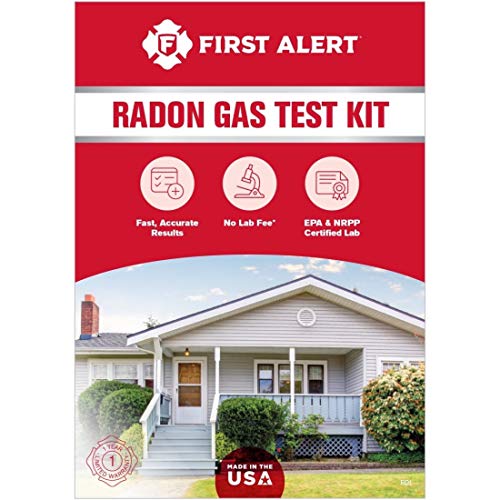 First Alert RD1 Radon Test Kit | Widely stocked; 48-hour charcoal test. | Amazon — $17.95 |
 Airthings Corentium Home | Digital monitor with a long-term average. | Amazon — $142.99 |