Radon Poisoning Symptoms in Humans: EPA Answer

The search phrase “radon poisoning symptoms in humans” returns a lot of frightening lists in the popular health press — headaches, chest pain, fatigue, shortness of breath. The U.S. Surgeon General and EPA are clear that none of those symptoms are caused by radon. Radon is an odorless, colorless, tasteless radioactive gas that produces no acute, immediate, or short-term symptoms in humans. The real and very serious risk is lung cancer after long-term exposure with a 5- to 25-year latency. This guide explains what the actual evidence says, why the symptom-list framing misleads, and what homeowners should do instead. This guide summarizes EPA, Surgeon General, CDC, and peer-reviewed lung-health guidance current as of 2026 and is informational only — consult a physician for any respiratory symptoms because radon is not the cause.
Part of our Radon Levels guide — start there for the full picture →
The Direct Answer From EPA and the Surgeon General
Radon causes no acute symptoms in humans. There are no immediate signs of “radon poisoning.” A person walking into a high-radon basement does not feel anything — not nausea, not headache, not chest tightness, not shortness of breath. The U.S. Surgeon General has issued formal advisories naming radon as the second-leading cause of lung cancer after smoking, responsible for roughly 21,000 deaths per year in the U.S., but only after long-term exposure with a 5- to 25-year latency period. Anyone with current acute respiratory symptoms should consult a physician immediately — those symptoms are not caused by radon and may indicate a treatable condition that requires medical attention.
Why the Symptom-List Framing Misleads
Popular health content frequently lists headache, chest pain, persistent cough, hoarseness, wheezing, fatigue, and shortness of breath as “radon poisoning symptoms.” Those symptoms are real and serious — but they are caused by other things: respiratory infections, asthma, cardiovascular disease, anxiety disorders, or in worst case lung cancer itself once it has developed. None of them are produced by radon exposure in the short term. The list misleads because it transfers symptoms of advanced lung cancer back onto radon as if radon caused them directly, when radon’s role is contributing to the cancer over decades, not producing symptoms day-to-day.
What Radon Actually Is
Radon is a naturally occurring radioactive gas formed by the decay of uranium-238 found in soil and rock. The decay chain runs uranium-238 to radium-226 to radon-222, which is the form that diffuses into homes. Radon is alpha-emitting, meaning its radioactive decay produces alpha particles. Alpha particles cannot penetrate skin from outside the body, but inhaled radon decay products that lodge in lung tissue irradiate the surrounding cells directly, causing DNA damage that accumulates over years.
The Damage Mechanism Is Slow and Cumulative
Radon does not poison cells in any acute biochemical sense — it is not a chemical toxin. The mechanism is ionizing radiation damaging lung tissue at the cellular level. Each radioactive decay event in the lung produces a small amount of damage. The body repairs most of it. Over years and decades, accumulated damage in lung-cell DNA increases the probability of cancer-causing mutations. The dose-response relationship is approximately linear at residential exposure levels — twice the radon concentration over twice the time produces roughly twice the cancer risk.
The Long Latency Window
Lung cancer attributable to radon exposure typically appears 5 to 25 years after exposure begins, with the median closer to 15 to 20 years. A homeowner who spent ten years in a high-radon basement and tests positive for lung cancer twenty years later cannot point to a specific day or week when symptoms started, because the cancer developed slowly out of accumulated cellular damage. The latency is part of why radon is so dangerous as a public-health hazard — the harm is invisible until far too late to undo.
What Symptoms Actually Indicate When Present
If a person living in a home with elevated radon develops persistent cough, hoarseness, chest pain, shortness of breath, fatigue, weight loss, or coughing up blood, those symptoms warrant immediate physician evaluation. The cause is rarely “current radon exposure” — but it may be lung cancer that has developed from past long-term exposure, or it may be entirely unrelated to radon and reflect another condition. Either way, the appropriate response is medical evaluation, not online symptom searches. Consult a physician.
Smoker and Radon Combine Multiplicatively
The interaction between smoking and radon exposure is multiplicative, not additive. A smoker exposed to elevated radon is not at “smoking risk plus radon risk” — they are at smoking risk multiplied by radon risk. EPA estimates that the lung-cancer risk from radon at 4 pCi/L is roughly seven times higher in lifetime smokers than in never-smokers. The combination is part of why radon mitigation matters most urgently in households where any current or former smoker lives, and why the EPA recommends radon testing in every home regardless of smoking status.
What to Do Instead of Searching for Symptoms
The constructive response to concern about radon is not to search for symptoms — there are none in the short term — but to test the home. A short-term mail-in radon test kit costs 15 to 30 dollars, runs for 2 to 7 days, and produces a number in picocuries per liter. If the result is at or above 4 pCi/L, EPA recommends a confirmatory long-term test or a follow-up short-term test, then professional mitigation if confirmed. The Colorado free radon test kit program covers the test-kit landscape in detail.
The EPA Action Level of 4 pCi/L
The EPA action level for residential radon is 4 picocuries per liter of air. The action level is not a safety threshold — it is the level at which EPA recommends mitigation because the lifetime lung-cancer risk becomes substantial. EPA also recommends that homeowners consider mitigation between 2 and 4 pCi/L because no safe level exists. The World Health Organization recommends a stricter reference level of 2.7 pCi/L. Colorado’s CDPHE follows EPA’s 4 pCi/L action level for state radon programs.
Why Colorado Front Range Tests Run High
Colorado’s Front Range sits over uranium-bearing granite and shale, which slowly releases radon-222 into the soil. The gas diffuses upward through cracks and openings in foundations, accumulating in basements and lower floors. EPA classifies most Front Range counties as Zone 1 — the highest-risk classification — meaning more than half of homes tested in those counties exceed the 4 pCi/L action level. Boulder, Larimer, Denver, Jefferson, Adams, and Douglas counties all fall in Zone 1. The broader Front Range radon testing guide walks through how this geological reality shapes practical homeowner decisions.
Mitigation: What Actually Works
The standard residential radon mitigation system is sub-slab depressurization, or SSD. A licensed mitigation contractor drills through the basement slab or foundation, installs a sealed riser pipe with a fan, and vents radon-laden air from beneath the slab up through the roofline. A properly installed SSD system typically reduces indoor radon by 80 to 99 percent. Costs in Front Range Colorado run 1,000 to 2,500 dollars for a typical single-family home. Sub-membrane depressurization is the equivalent system for homes over crawlspaces. Passive vent stacks built into newer homes can sometimes be activated by adding a fan.
Choosing a Mitigation Contractor
Look for NRPP (National Radon Proficiency Program) or NRSB (National Radon Safety Board) certification for the mitigation contractor. In Colorado, CDPHE maintains lists of certified mitigation contractors. Ask for guaranteed post-mitigation radon levels — a competent contractor will guarantee under 4 pCi/L, often under 2 pCi/L. Ask whether the proposed system uses an exterior wall-mounted fan or interior attic-mounted fan, with the exterior configuration being more common in colder climates. The radon mitigation options guide walks through SSD, SMD, and passive systems in detail.
Post-Mitigation Testing
After a mitigation system is installed, the homeowner should retest with a short-term kit to confirm the system is working. EPA recommends retesting between 24 hours and 30 days after activation, with 30 days being more reliable. Subsequent retesting every two years is the recommended schedule for ongoing assurance. Mitigation fans typically last 5 to 10 years and should be replaced when they begin to fail. A small system manometer mounted on the riser pipe shows whether the fan is producing the expected pressure differential.
Why the “Symptoms” Frame Persists in Search
The persistence of “radon poisoning symptoms” as a search query reflects how the human brain processes health risks. People want to know how a hazard manifests in the body — what to watch for, what to feel. Radon does not cooperate with that framing because its harm is invisible and delayed. Better public-health education would replace symptom searches with testing recommendations, but the framing gap is likely to persist. The right response to any radon-related concern is testing, not symptom monitoring.
How Radon Decay Products Cause Lung Damage
The biological damage from radon comes mostly from its short-lived decay products — polonium-218 and polonium-214 — which are also alpha emitters. When radon gas is inhaled, the gas itself is mostly exhaled, but the decay products attach to airborne dust particles, get trapped in lung tissue, and continue emitting alpha radiation directly into nearby cells. Alpha particles travel only millimeters in tissue, but at the cellular level they deliver a high local dose. This is why measuring radon concentration in air is the practical metric even though the actual carcinogen is the decay-product mixture.
What the Epidemiology Shows
The BEIR VI report from the National Academies, plus subsequent residential radon case-control studies pooled by Krewski et al. and Darby et al., established the dose-response curve for residential radon exposure and lung cancer. The relative risk increases linearly with radon concentration, roughly 16 percent per 100 Bq/m3 (equivalent to roughly 6 percent per pCi/L). At sustained 4 pCi/L exposure across a lifetime, the lung-cancer risk increase is meaningful and measurable in population data. Below 1 pCi/L, the individual-level effect is too small to detect against background variation.
Indoor vs Outdoor Radon Levels
Outdoor radon averages around 0.4 pCi/L in the U.S. — the natural background. Indoor radon in U.S. homes averages around 1.3 pCi/L, but the distribution is highly skewed with some homes in radon-prone areas regularly testing above 10 pCi/L. The reason indoor radon is higher than outdoor is simple: a sealed building accumulates whatever radon enters from the soil, while outdoor radon disperses freely into the atmosphere. EPA’s 4 pCi/L action level is the trigger for mitigation, not a safety threshold — every reduction below the action level lowers cumulative risk.
What This Means for Households Today
The practical takeaway from the absence of acute symptoms is straightforward: do not wait for symptoms before acting. Test the home, mitigate if results exceed the action level, and retest periodically to confirm the system continues working. A household that treats radon testing as routine maintenance every two years has effectively removed it as a long-term risk factor, regardless of whether anyone in the household ever felt anything unusual along the way.
References
- EPA Health Risk of Radon — U.S. Environmental Protection Agency
- CDC Radon Information — Centers for Disease Control and Prevention
- American Lung Association Radon Resource — American Lung Association
- CDPHE Colorado Radon Program — Colorado Department of Public Health and Environment
- BEIR VI Health Effects of Exposure to Indoor Radon — National Academies Press
Frequently asked questions
What are the symptoms of radon poisoning in humans?
Radon causes no acute symptoms in humans, per the U.S. Surgeon General and EPA. The real risk is lung cancer after long-term exposure with a 5- to 25-year latency. Anyone with current acute respiratory symptoms should consult a physician — those symptoms are not caused by radon.
How long does it take for radon to affect a person?
Lung cancer attributable to radon typically appears 5 to 25 years after exposure begins, with median closer to 15 to 20 years. The damage mechanism is ionizing radiation accumulating in lung tissue at the cellular level, producing cancer-causing mutations over years and decades.
How can I find out if my home has radon?
Test the home. A short-term mail-in radon test kit costs 15 to 30 dollars, runs 2 to 7 days, and produces a result in picocuries per liter. If the result is at or above 4 pCi/L, EPA recommends professional mitigation, typically a sub-slab depressurization system.
Does smoking increase the radon lung-cancer risk?
Yes, multiplicatively. EPA estimates that radon lung-cancer risk at 4 pCi/L is roughly seven times higher in lifetime smokers than never-smokers. The combined effect of smoking plus radon is multiplied, not added, which is why mitigation matters most in households where any current or former smoker lives.
Test your home for radon
Radon is invisible and odorless, so a test is the only way to know your level. A short-term kit gives a first reading in days; a digital monitor tracks it over time.
| Product | Why | Buy |
|---|---|---|
 AirChek Charcoal Radon Test Kit | Lab fee usually included; EPA short-term protocol. | Amazon — $21.95 |
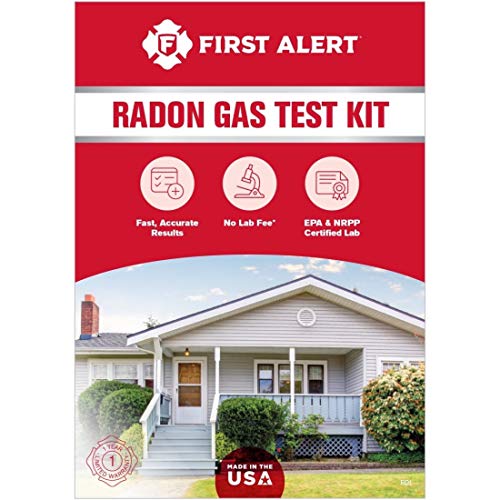 First Alert RD1 Radon Test Kit | Widely stocked; 48-hour charcoal test. | Amazon — $17.95 |
 Airthings Corentium Home | Digital monitor with a long-term average. | Amazon — $142.99 |