Radon Symptom: Why the Singular Has No Clinical Answer

Searches for “radon symptom” — singular — surface frequently because a homeowner has one specific complaint (a cough, a headache, fatigue) and wants to know whether radon could be the cause. The honest answer is that radon does not produce any specific symptom. There is no diagnostic complaint that points to radon exposure. EPA, CDC, and the U.S. Surgeon General have all stated that radon causes no acute or recognizable symptoms at any concentration. The only known health effect is increased long-term lung cancer risk manifesting 5 to 25 or more years after sustained elevated exposure, and EPA attributes approximately 21,000 lung cancer deaths annually in the United States to radon. This guide explains why the singular framing has no useful answer, what conditions actually produce common respiratory complaints, and why a physician visit is the right response to any persistent symptom. Material summarizes EPA, CDC, and Surgeon General guidance current as of 2026; consult your physician for any health concerns.
Part of our Radon Levels guide — start there for the full picture →
Why “radon symptom” returns no clinical answer
The phrase “radon symptom” assumes a one-to-one relationship between radon exposure and an identifiable complaint. That relationship does not exist. Radon is a noble gas; chemically it does not react with body tissues. Its decay products (polonium-218, polonium-214) emit alpha radiation that damages DNA in lung cells, but the damage is microscopic and cumulative. There is no biological mechanism by which radon would produce a recognizable acute symptom — no nerve receptor that responds to it, no immediate tissue inflammation, no chemical-irritant reaction.
The only outcome with epidemiological evidence is lung cancer, and lung cancer is not a “symptom” in the singular complaint sense the search phrase implies. Lung cancer is a disease that develops over years and produces symptoms only in advanced stages. The cough, chest pain, or shortness of breath of late-stage lung cancer is also not radon-specific — those symptoms appear in lung cancers caused by smoking, asbestos, occupational dusts, or genetic factors. None of them point to radon as a unique cause. The radon symptons clarification guide covers the same misframing from the misspelled-query angle.
What common respiratory complaints actually mean
Persistent cough is the most common complaint people associate with environmental exposures. Causes include viral upper-respiratory infections, post-nasal drip, asthma, gastroesophageal reflux disease (GERD), chronic bronchitis from smoking, allergies, ACE inhibitor medication side effects, and dozens of other conditions. Any cough lasting more than three weeks warrants a physician visit for evaluation. Radon is not on the differential diagnosis for an isolated cough.
Fatigue has so many causes that the list is too long to enumerate — anemia, thyroid dysfunction, sleep apnea, depression, viral infections, medication side effects, dehydration, vitamin deficiencies, autoimmune conditions. Fatigue without other localizing symptoms is a workup for the primary care physician, not a reason to test the home for radon. Headaches similarly have hundreds of causes; tension, dehydration, sleep disruption, medication effects, eye strain, sinus issues, and migraine are far more common than any environmental exposure.
Why symptom lists associating these complaints with radon persist
Online articles list fatigue, cough, headache, chest tightness, and shortness of breath as “symptoms of radon” because the lists generate search traffic. They are not derived from clinical evidence. EPA explicitly states in its Citizen’s Guide to Radon that radon causes no acute symptoms. The American Lung Association, National Cancer Institute, and CDC all describe radon as asymptomatic during exposure. The lists circulating in lower-quality web content do not match the position of any health authority.
This matters because acting on the lists wastes time. A homeowner with a cough who reads a list of radon symptoms might delay a physician visit while waiting for a radon test result. The cough is the urgent issue and requires clinical evaluation; the radon level is a separate question answered by a separate process. The two should run in parallel, not sequentially with the radon test as a gatekeeper to the medical visit. The Front Range radon testing plain-language guide covers the home-side action that produces useful information regardless of symptom status.
EPA’s actual position, in plain language
EPA states: radon is a colorless, odorless gas. It cannot be detected by sight, smell, or taste. There are no acute symptoms of radon exposure. The only health effect of long-term radon exposure is an increased risk of lung cancer. Radon is the second leading cause of lung cancer in the United States, after smoking, and the leading cause among never-smokers. EPA recommends every home be tested for radon.
That statement is comprehensive. It tells homeowners that they cannot detect radon by feel, that no current symptom indicates radon exposure, and that the only action with useful diagnostic value is testing the home. The action is independent of any individual symptom complaint.
The latency model, briefly
Radon-induced lung cancer has a latency period of 5 to 25 or more years between the start of sustained elevated exposure and clinical diagnosis. The mechanism is cumulative DNA damage from alpha radiation in lung cells, with eventual development of cancerous cells that escape normal repair. Most cases manifest at the upper end of the latency window. Sustained elevated exposure means years of living in a home with concentrations above the EPA action level of 4 pCi/L, not transient or occasional exposure.
The latency window means that asking “what is my radon symptom” in the present tense has no useful answer. If radon is going to cause harm, the mechanism is operating now invisibly and the harm appears years from now. The way to interrupt that mechanism is to mitigate the home, not to interpret current sensations as radon-related.
Lung cancer screening: where the present-tense question does have an answer
For high-risk patients, the U.S. Preventive Services Task Force (USPSTF) recommends annual lung cancer screening with low-dose CT scanning. The current eligibility criteria are: ages 50 to 80, 20-pack-year smoking history (current smoker or quit within the past 15 years). Radon exposure history is not part of the USPSTF eligibility criteria, but it is a clinically relevant exposure that physicians may consider when discussing screening with non-smoking patients who have known elevated home radon.
Screening is the closest medical equivalent to “checking for radon effects” in a specific patient. It looks for early lung cancers before they produce symptoms. It is not radon-specific, but it captures the disease radon is most likely to have caused. Talk to a physician about whether screening makes sense for your situation.
Why the “radon vs CO” comparison helps clarify the framing
Carbon monoxide is the closest analog to radon in indoor air quality discussions — both are colorless, odorless gases that can accumulate in homes. The difference is that CO produces immediate clinical symptoms (headache, dizziness, nausea, confusion, loss of consciousness) within hours of moderate to high exposure, while radon produces no acute symptoms at any concentration. CO can kill within hours. Radon does not kill anyone within hours — its harm is delayed by decades.
The practical implication: home CO monitors detect ongoing exposure events in real time and trigger alarms that produce immediate occupant action (evacuate, ventilate, call emergency services). Home radon monitors record long-term average concentrations that inform mitigation decisions over months and years. The two instruments answer different questions about different hazards. Treating radon like CO (looking for symptoms, expecting alarms, assuming acute effects) misframes the radon question.
How residential radon levels typically distribute
EPA estimates that approximately 1 in 15 U.S. homes has radon levels above the 4 pCi/L action level. In Front Range Colorado, the rate is higher — closer to 50% of homes test above 4 pCi/L on initial measurement, reflecting the region’s uranium-bearing geology. Levels above 20 pCi/L are uncommon but not rare in high-risk geographies. Levels above 100 pCi/L are rare and warrant immediate mitigation and re-measurement.
The distribution within a single home varies by floor level. Lowest occupiable levels (basements, slab-on-grade ground floors, crawlspaces) typically show the highest concentrations. Upper floors typically show 30 to 70% of the lowest-level concentration as soil gas mixes with outdoor air during diffusion through the building. EPA recommends testing the lowest occupiable level, which is where the highest concentrations are most likely to appear.
What to do about the home
Test the home. EPA recommends every home be tested regardless of age, foundation type, or geography. Free test kits are available from CDPHE for Colorado residents. Hardware-store charcoal canisters run $15 to $30. NRPP-certified continuous monitor placements by a professional run $125 to $200. Place the test in the lowest occupiable level, follow EPA closed-house conditions, and wait for results.
If results exceed 4 pCi/L, mitigate. Sub-slab depressurization is the standard residential mitigation method and reduces concentrations by 80% to 99% in most installations. Front Range pricing runs $1,500 to $3,500. Re-test after mitigation to confirm performance, and re-test every two years afterward.
What “radon symptom” searches tell us about public radon literacy
The persistence of “radon symptom” searches reflects a public misunderstanding about how radon causes harm. People reason by analogy: if a substance is dangerous, there should be a way to detect its effect on the body. With most toxic exposures, that analogy works — lead has neurological symptoms, mercury has neurological symptoms, carbon monoxide has acute symptoms. Radon does not fit the pattern because its harm is delayed by decades and operates through DNA damage that produces no current sensation.
Improving radon literacy means correcting the underlying analogy. Radon is more like cigarette smoke than like carbon monoxide — both are inhalational carcinogens producing delayed cancer rather than acute illness. The right action for cigarette smoke is quitting; the right action for radon is testing and mitigation. Neither has a present-tense “symptom” that the person can use as a diagnostic indicator.
How residential testing patterns vary across Colorado
CDPHE data shows uneven radon testing rates across Colorado counties despite uniformly high-risk geology. Denver, Boulder, and Jefferson counties have testing rates above 50% of housing stock; some rural Front Range counties have testing rates below 20%. The disparity reflects awareness, real-estate transaction frequency, and outreach effectiveness rather than actual risk distribution.
Free test kits are available from CDPHE for any Colorado resident regardless of county. The state’s outreach program targets counties with low testing rates through public health partnerships, library distributions, and real-estate industry coordination. Homeowners outside the metro corridor benefit from the same testing access and mitigation infrastructure, though service technician travel may add to mitigation costs in remote areas.
When to call a professional
For any persistent symptom — cough, chest pain, shortness of breath, fatigue, headaches, coughing blood — see a physician. The clinical workup is the answer to what is actually happening. For radon measurement and mitigation, work with NRPP- or NRSB-certified professionals. CDPHE maintains the Colorado certified-professional roster. The two tracks are independent and should run in parallel.
References
- EPA Citizen’s Guide to Radon — Environmental Protection Agency
- CDC radon health effects and prevention guidance — Centers for Disease Control and Prevention
- CDPHE Colorado radon program — Colorado Department of Public Health and Environment
- American Lung Association radon and lung cancer — American Lung Association
Frequently asked questions
Is there one specific symptom that points to radon exposure?
No. EPA, CDC, and the Surgeon General agree that radon causes no acute symptoms at any concentration. There is no singular complaint that indicates radon exposure. Any persistent symptom warrants a physician visit, not a radon search.
Could my cough be a radon symptom?
Radon does not cause acute cough. If a radon-induced lung cancer eventually develops, late-stage cough can occur, but that is years after sustained exposure and after disease progression. Any persistent cough needs physician evaluation immediately.
How would I know if radon is hurting me right now?
You cannot know through sensation. The damage from radon exposure is invisible and cumulative. The action that produces useful information is testing the home and mitigating if levels are elevated. There is no diagnostic test for radon-specific tissue damage in a living patient.
Should I test my home for radon if I have respiratory symptoms?
Yes, but as a parallel track to the medical workup, not a gatekeeper. See a physician for the symptoms while testing the home for radon. The two questions are independent and need separate processes.
Front Range homeowners can reach out through our contact page for a referral to an NRPP-certified radon professional for measurement and, if needed, mitigation by an independent contractor.
Test your home for radon
Radon is invisible and odorless, so a test is the only way to know your level. A short-term kit gives a first reading in days; a digital monitor tracks it over time.
| Product | Why | Buy |
|---|---|---|
 AirChek Charcoal Radon Test Kit | Lab fee usually included; EPA short-term protocol. | Amazon — $21.95 |
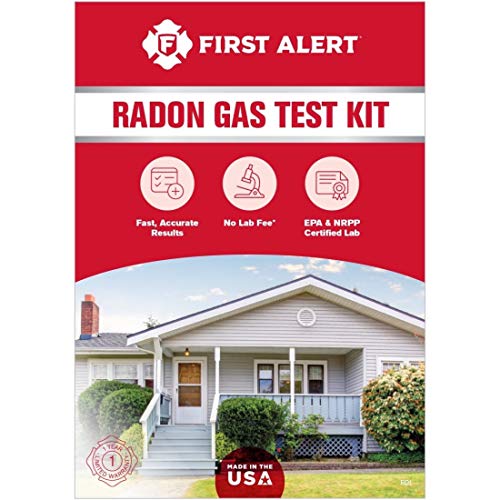 First Alert RD1 Radon Test Kit | Widely stocked; 48-hour charcoal test. | Amazon — $16.98 |
 Airthings Corentium Home | Digital monitor with a long-term average. | Amazon — $142.99 |