Symptoms Radon Poisoning: What Homeowners Need to Know

Despite the popular search term “symptoms radon poisoning,” radon does not produce poisoning in the medical sense. Radon exposure does not cause acute toxic symptoms. There is no detectable sign or symptom of radon exposure that an individual can feel or observe. The only known health effect of radon exposure is increased long-term lung cancer risk, manifesting 5-25+ years after sustained elevated exposure. EPA and the Surgeon General estimate radon causes approximately 21,000 lung cancer deaths per year in the United States — the second leading cause of lung cancer after smoking. Any respiratory symptom, persistent cough, or lung-related concern should be evaluated by a physician immediately — symptoms are NOT caused by recent radon exposure and require independent medical evaluation. This guide explains why “radon poisoning” is a misnomer and what the real risk model looks like.
Part of our Radon Levels guide — start there for the full picture →
Symptoms radon poisoning: why the term is a misnomer
“Radon poisoning” sounds like a real medical condition, but it is not a clinical diagnosis recognized by any health authority. EPA, the National Cancer Institute, the Centers for Disease Control and Prevention, the American Lung Association, and the World Health Organization do not list “radon poisoning” as a disease entity. The medical term for radon’s health effect is “radon-induced lung cancer,” and the only effect documented in human epidemiology is increased lung cancer risk over years of cumulative exposure.
The word “poisoning” implies acute toxic action — a substance entering the body, causing chemical or biological damage that produces symptoms a person feels and clinicians diagnose. That model applies to carbon monoxide (which binds hemoglobin and starves tissue of oxygen, producing headache and confusion within hours), to lead (which interferes with multiple enzyme systems and produces neurological and developmental symptoms), and to a long list of other toxic substances. Radon does not work that way.
Radon is a noble gas with no chemical reactivity. It does not bind enzymes, does not accumulate in fatty tissue, does not poison organs, does not produce a measurable blood toxicity, and does not cause symptoms a physician can identify in a clinical workup. The damage is purely radiological — alpha particles from radon and its progeny depositing ionizing energy in lung-cell DNA over years, occasionally producing a mutation that decades later may initiate cancer.
The real risk model: lung cancer, not poisoning
Radon’s risk model is dose-response and probabilistic. EPA’s BEIR VI report and subsequent updates estimate lung cancer risk per unit of cumulative exposure (typically measured in working-level months, WLM, or in pCi/L-years of residential exposure). The model is anchored in large cohort studies of uranium miners — who experienced very high exposures over years — extrapolated to residential exposure ranges using pooled case-control studies of indoor-air radon and lung cancer.
The output of the model is a probability of developing lung cancer over a lifetime, given a specified average home concentration. For a non-smoker living in a 4.0 pCi/L home (EPA’s action level) over many years, lifetime lung cancer risk increases by an amount that translates to roughly 7-8 additional lung cancer deaths per 1,000 people. For a smoker at the same exposure, the increase is dramatically higher because of multiplicative interaction with smoking — roughly 60+ additional deaths per 1,000.
That is the entire risk picture: a long-term, probabilistic increase in lung cancer mortality. There are no acute health endpoints in the model. No symptoms, no biomarkers, no treatable acute condition. The mitigation strategy is to reduce the home concentration, which reduces the cumulative dose, which reduces the lifetime probability — but does not “treat” anything that is already happening to current occupants in the way a poisoning treatment would.
What “radon poisoning” search results often get wrong
Lower-quality web content sometimes lists symptoms attributed to “radon poisoning” — persistent cough, shortness of breath, chest pain, wheezing, hoarseness, weight loss, fatigue. Those symptoms are real medical concerns that warrant immediate physician evaluation, but they are not symptoms of radon exposure. They are symptoms of lung disease (including but not limited to lung cancer), respiratory infection, asthma, COPD, cardiac issues, and many other conditions.
When lung cancer does develop in a radon-exposed individual, the symptoms at diagnosis are the symptoms of lung cancer — not of radon. A persistent cough in a 65-year-old non-smoker who lived in a 6 pCi/L home for 30 years might be early lung cancer, or it might be GERD, or asthma, or post-nasal drip, or any number of other causes. The home test does not diagnose the cough. The physician does, using imaging, pulmonary function tests, and clinical examination.
This is why physician redirect is the correct response to any respiratory symptom. The home radon test answers a separate, independent question: how much radon does this household breathe over years? That answer is worth knowing — it informs mitigation decisions and reduces long-term risk — but it is not a substitute for medical workup. The [radon testing in Colorado pillar](https://inspectandtest.net/radon-testing/) covers the testing-and-mitigation path in detail.
What radon does in the body, mechanically
Understanding the mechanism clarifies why no acute symptoms exist. Radon is inhaled and partially exhaled — most inhaled radon never settles, because as a noble gas it doesn’t bind to anything. What matters more is radon’s short-lived progeny: polonium-218 and polonium-214. These solid-particle decay products attach to dust and aerosol particles in indoor air, and when inhaled they deposit in airway tissue.
Once deposited, the progeny continue decaying, each emitting alpha particles. Alpha particles travel only a few cells through tissue but deposit very large amounts of ionizing energy in that small volume. The energy can break DNA strands. In most cells, the damage is repaired correctly or the cell dies. In a small subset, mutation occurs and the cell survives carrying the mutation. Over years of repeated exposure, the probability rises that one mutation will accumulate in a critical gene and initiate cancer.
The whole process is asymptomatic. There is no inflammatory response, no irritation, no detectable change. The mutations either happen or they don’t, and they show up — when they show up — as cancer 5 to 25 years later. The body has no way to know it is being exposed and no warning system that would alert the person.
What to do instead of searching for poisoning symptoms
Two separate actions, neither replacing the other.
Test the home
Charcoal canister kits ($15-$30 at hardware stores), mail-in test kits ($25-$60), or professional NRPP-certified short-term tests ($150-$300) all produce reliable measurements of home radon concentration. EPA’s action level is 4.0 pCi/L. Front Range basements commonly test above this. The [how do you test for radon guide](https://inspectandtest.net/guides/how-do-you-test-for-radon/) walks through methodology in detail.
See a physician for any symptom
If anyone in the household has persistent cough, shortness of breath, chest pain, hemoptysis, unexplained weight loss, hoarseness, or recurrent respiratory infections, schedule a physician evaluation immediately. Bring smoking history, occupational exposures, family lung cancer history, and any known home radon test results. The physician does the diagnostic workup; the home test is a separate household data point.
Mitigate if results are elevated
If short-term testing shows concentrations at or above 4.0 pCi/L, EPA recommends a confirmatory long-term test or a follow-up short-term test, then installation of an active soil depressurization (ASD) mitigation system if elevated levels are confirmed. Front Range mitigation typically runs $1,200-$2,500 for a standard single-family installation. The how to vent radon gas from basement guide walks through the basement-to-roof pipe routing that makes ASD effective.
The latency-from-exposure-to-disease window
Understanding the 5-25+ year latency from sustained radon exposure to clinical lung cancer diagnosis helps clarify why no acute symptom model exists. The biological sequence runs through cellular DNA damage, mutation accumulation across multiple cell divisions, eventual transformation of a single damaged cell into a cancerous lineage, and clonal expansion of that lineage into a clinically detectable tumor.
Each step in the sequence takes time. DNA damage from alpha-particle hits occurs in real-time during exposure, but most damage is repaired correctly or kills the affected cell — both biologically harmless outcomes. The rare cell that survives carrying a mutation may divide for years or decades before a second, third, or fourth mutation accumulates in critical genes that drive cancerous transformation. Even after transformation, clonal expansion to a tumor visible on imaging takes additional time.
The result is that someone exposed at age 35 to elevated radon may not develop diagnosable lung cancer until age 60 or 70 — if at all. The probability of developing the cancer at all depends on cumulative dose, smoking history, genetic background, and chance. Most radon-exposed individuals do not develop lung cancer; the population-level statistic of 21,000 annual U.S. deaths reflects a small fraction of the total exposed population accumulating risk over decades.
Comparing radon to carbon monoxide: two invisible-gas concerns
Homeowners often group radon and carbon monoxide together as “invisible gas threats,” which is fair as a category but misleading on response. Carbon monoxide produces acute symptoms within hours of significant exposure — headache, dizziness, nausea, confusion — and is a near-term emergency requiring immediate ventilation, evacuation, or utility-company response. Radon produces no acute symptoms and is a long-term cumulative concern requiring testing and mitigation over a different timescale.
Standard battery-operated CO detectors at $20-$50 produce results in seconds and warn during exposure events. Radon testing produces results over 2-7 days (short-term) or 90+ days (long-term) and addresses cumulative concentration averages, not real-time spikes. The two detectors are not interchangeable, and both are worth installing or deploying in any Front Range home.
If household members are experiencing acute symptoms — headache, dizziness, fatigue, nausea, especially when multiple people are affected simultaneously — CO is the first suspect, not radon. Test with a CO detector immediately. Schedule physician evaluation if symptoms persist after CO is ruled out. Schedule radon testing separately as a long-term household-environmental measurement.
Lung cancer screening and the radon-exposed homeowner
Homeowners with significant cumulative radon exposure — multi-decade residence in homes testing above EPA’s action level — may benefit from lung cancer screening discussions with their physician. The U.S. Preventive Services Task Force recommends annual low-dose CT screening for adults aged 50-80 with a 20+ pack-year smoking history. Radon exposure is not currently a standalone screening criterion in USPSTF guidelines, but it is a documented risk factor that physicians weigh when discussing screening decisions with at-risk patients.
Bring known radon history to the physician discussion: prior test results, current home concentration, mitigation status, and estimated years of exposure. This information does not change USPSTF eligibility on its own but informs shared decision-making about screening, smoking cessation, and follow-up. The broader [radon testing in Colorado pillar](https://inspectandtest.net/radon-testing/) covers the link between exposure history and medical follow-up in additional detail.
When to call a professional
Call a physician for any respiratory symptom in any household member. Call an NRPP-certified radon measurement professional for a calibrated test if you have never tested, if it has been more than two years since the last test, or before any real-estate transaction. Call an NRPP-certified mitigation professional if test results show concentrations at or above 4.0 pCi/L. Call your physician to discuss lung cancer screening if you have significant cumulative radon exposure history combined with smoking history. These are independent paths — all worth pursuing, none substitutes for the others.
References
- Health Risk of Radon — U.S. Environmental Protection Agency
- A Citizen’s Guide to Radon — U.S. Environmental Protection Agency
- Radon and Lung Cancer Risk — American Lung Association
- Radon Public Health Overview — Centers for Disease Control and Prevention
- Radon Health Information — National Institutes of Health
Frequently asked questions
Is radon poisoning a real medical condition?
No. 'Radon poisoning' is not a recognized clinical diagnosis. The only documented health effect of radon exposure is increased long-term lung cancer risk over years of cumulative exposure. Radon does not cause acute symptoms or poisoning in the medical sense.
What symptoms does radon cause in people?
None. EPA, CDC, and the National Cancer Institute confirm that radon exposure causes no acute or detectable symptoms. The damage is silent and cellular, manifesting only as lung cancer with a 5-25+ year latency from sustained exposure.
If someone has a persistent cough, could radon be the cause?
A current cough cannot be attributed to current radon exposure. Causes include allergies, asthma, GERD, respiratory infections, mold sensitivity, smoking, and other lung disease. Any persistent cough warrants physician evaluation, not a home radon test as the first step.
What is the EPA action level for radon?
4.0 pCi/L. At or above this concentration, EPA recommends installing an active soil depressurization (ASD) mitigation system. Front Range mitigation typically runs $1,200-$2,500 for a standard single-family home in the Denver metro area.
Front Range homeowners ready to schedule a radon test or discuss mitigation can reach out through our contact page to connect with a vetted NRPP-certified professional.
Test your home for radon
Radon is invisible and odorless, so a test is the only way to know your level. A short-term kit gives a first reading in days; a digital monitor tracks it over time.
| Product | Why | Buy |
|---|---|---|
 AirChek Charcoal Radon Test Kit | Lab fee usually included; EPA short-term protocol. | Amazon |
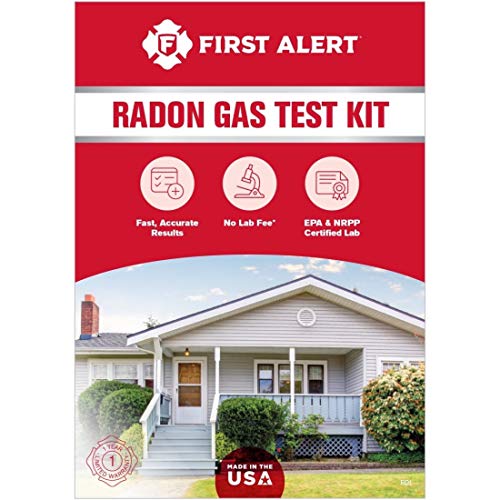 First Alert RD1 Radon Test Kit | Widely stocked; 48-hour charcoal test. | Amazon — $17.95 |
 Airthings Corentium Home | Digital monitor with a long-term average. | Amazon — $142.99 |