What Are the Symptoms of Radon Gas Poisoning: Plain Guide

Despite the popular search term “what are the symptoms of radon gas poisoning,” radon gas does not cause acute poisoning. There is no detectable sign or symptom of radon exposure that an individual can feel or observe. The only known health effect of radon exposure is increased long-term lung cancer risk, manifesting 5-25+ years after sustained elevated exposure. EPA and the Surgeon General estimate radon causes approximately 21,000 lung cancer deaths per year in the United States — the second leading cause of lung cancer after smoking. Any respiratory symptom, persistent cough, or lung-related concern should be evaluated by a physician immediately — symptoms are NOT caused by recent radon exposure and require independent medical evaluation. This guide explains why the term “radon gas poisoning” is medically inaccurate and what the actual risk model looks like.
Part of our Radon Levels guide — start there for the full picture →
What are the symptoms of radon gas poisoning: the medical answer
There are none. EPA, the Centers for Disease Control and Prevention, the National Cancer Institute, the American Lung Association, the National Institutes of Health, and the World Health Organization all confirm the same finding: radon exposure produces no acute symptoms, no recognizable clinical syndrome, and no detectable change a person can feel or observe.
“Radon gas poisoning” is not a clinical diagnosis. The term appears widely in consumer search behavior because people reasonably assume that any harmful gas must cause some sensory effect — irritation, odor, taste, headache, fatigue — the way carbon monoxide, natural gas leaks, hydrogen sulfide, or chlorine fumes do. Radon is genuinely different. As a noble gas with no chemical reactivity, it does not interact with biological tissue chemically. Its harm comes from ionizing radiation released during radioactive decay, and the damage is at the DNA level in lung-cell linings.
The harm is real and well-documented. Approximately 21,000 lung cancer deaths per year in the U.S. are attributable to radon exposure, making it the second leading cause of lung cancer after smoking and the leading cause among never-smokers. But the harm is not acute. The latency from sustained exposure to clinical diagnosis is 5 to 25 years or more.
Why people search for “radon gas poisoning symptoms”
The search behavior is rational. A homeowner who has heard radon is dangerous, has tested or considered testing, and is feeling generally unwell — or worrying about a family member’s cough or fatigue — naturally searches for symptoms that might confirm or rule out radon as a cause. Search engines return results that include some lower-quality pages incorrectly listing respiratory or general health complaints as “radon poisoning symptoms.”
The pattern persists because the underlying instinct is correct in many domains. For carbon monoxide, learning the symptoms (headache, dizziness, nausea, confusion) helps people recognize exposure and respond. For mold, learning the symptoms (allergic responses, respiratory irritation in sensitive individuals) helps people connect indoor environment to health complaints. For radon, however, the symptom-learning approach does not work because the symptoms do not exist. The only effective response is to test the home with a calibrated detector and mitigate if levels are elevated.
What radon does mechanically — and why no symptoms exist
Radon gas is inhaled and largely exhaled — most inhaled radon never settles, because as a chemically inert noble gas it does not bind to anything in the airway. The harm comes from radon’s short-lived progeny: polonium-218 and polonium-214. These are solid particles that attach to dust, aerosol particles, and water droplets in indoor air. When inhaled, they deposit in the bronchial airway lining.
Once deposited, the polonium isotopes continue decaying, each emitting alpha particles. Alpha particles travel only a few cells through tissue — they cannot penetrate skin from outside the body and stop in air after a few centimeters — but inside the lung they deposit large amounts of ionizing energy in a small volume. The energy can break DNA strands or produce mutations in surviving cells.
In most exposed cells, the damage is repaired correctly or the cell dies (which is biologically harmless — the body replaces lost cells routinely). In a small fraction of cells, mutation occurs and the cell survives carrying the mutation. Over years of cumulative exposure, the probability rises that a mutation accumulates in a critical tumor-suppressor gene or oncogene and initiates a cancer.
The entire process is silent. There is no inflammatory response because the damage is not seen as an infection or injury. There is no immune activation because no foreign chemical is present. There is no irritation because alpha particles deposit energy in a volume too small to produce macroscopic tissue effects. The body has no sensory system tuned to detect ionizing radiation at the doses radon produces, and the cellular damage is invisible to consciousness.
Symptoms commonly misattributed to radon
The following symptoms are sometimes attributed to “radon poisoning” online but actually require independent medical evaluation because they have many possible causes — none of which can be diagnosed by a home radon test.
Persistent cough
A cough lasting more than three weeks warrants physician evaluation. Possible causes include allergies, post-nasal drip, asthma, GERD, respiratory infections, bronchitis, mold sensitivity, smoking, environmental pollutants, ACE-inhibitor medications, and a long list of other conditions. Radon does not cause current cough.
Shortness of breath
New-onset shortness of breath is a serious symptom requiring prompt medical assessment. Possible causes include anemia, cardiac issues, pulmonary embolism, asthma, COPD, pneumonia, and many others. Radon does not cause acute dyspnea.
Chest pain
Any chest pain warrants immediate medical attention, especially with shortness of breath, sweating, nausea, or radiation to arm or jaw. Cardiac and pulmonary causes must be ruled out. Radon does not cause chest pain.
Hemoptysis (coughing up blood)
This is a red-flag symptom requiring immediate physician evaluation. Causes range from bronchitis to lung cancer to pulmonary embolism. Radon does not cause acute hemoptysis, but radon-attributable lung cancer can produce it as a late symptom.
Fatigue and weight loss
Constitutional symptoms have many possible causes and warrant medical workup. They are not attributable to current radon exposure.
What the right response actually looks like
The correct response to “what are the symptoms of radon gas poisoning” requires two separate parallel actions, neither replacing the other.
Test the home for radon
Short-term charcoal canister kits ($15-$30 at hardware stores), mail-in test kits ($25-$60), or professional NRPP-certified short-term tests ($150-$300) measure home radon concentration in pCi/L. EPA’s action level is 4.0 pCi/L. Front Range basements commonly test above this. The [how do you test for radon guide](https://inspectandtest.net/guides/how-do-you-test-for-radon/) walks through the methodology in detail.
See a physician for any symptom
Schedule a physician evaluation for any respiratory symptom in any household member. Bring smoking history, occupational exposures, family lung cancer history, and any known home radon test results. The physician does the diagnostic workup — imaging, pulmonary function testing, lab work, clinical examination. The home test is independent context, not a diagnostic substitute.
Mitigate if home results are elevated
If radon results are at or above 4.0 pCi/L (and confirmed by a follow-up test), install an active soil depressurization (ASD) system through an NRPP-certified mitigation contractor. Standard Front Range single-family installations run $1,200-$2,500. The [radon testing in Colorado pillar](https://inspectandtest.net/radon-testing/) covers mitigation in detail.
The Front Range context
Colorado’s Front Range sits in EPA Radon Zone 1, the highest-priority radon zone. Denver, Boulder, Douglas, Jefferson, Adams, Arapahoe, El Paso, and Broomfield counties are all Zone 1. The underlying geology — uplifted granite, sandstone, and shale formations from the Rocky Mountain orogeny — contains naturally elevated uranium that decays to radon. The radon migrates upward through soil and enters homes through foundation joints, slab cracks, sump openings, and utility penetrations. CDPHE testing data shows median home radon levels exceeding EPA’s action level in many Front Range counties.
The right framing for a Front Range homeowner is not “do I have symptoms that suggest radon poisoning?” — that question has no medically useful answer. The right framing is “what is the radon concentration in my home, and what should I do about it?” Testing answers the first question. The result tier (below 2.0, between 2.0 and 4.0, at or above 4.0 pCi/L) determines the action.
How the radon risk model compares to other household risks
Putting radon’s risk in context helps homeowners decide how much priority to give it. EPA’s estimated 21,000 annual U.S. lung cancer deaths from radon compares with approximately 130,000 from smoking, 480,000 deaths annually from cardiovascular disease, and 600,000 from cancer overall in the U.S. Radon is the second-largest single-cause contributor to lung cancer specifically — much smaller than smoking, but much larger than secondhand smoke (estimated 7,300 lung cancer deaths annually) or occupational asbestos exposure (estimated 1,000-2,000 annually).
The Colorado Front Range concentrates risk geographically. Front Range basements commonly test at 6-15 pCi/L, multiples of EPA’s 4.0 pCi/L action level. A non-smoker in a 12 pCi/L home faces an estimated lifetime lung cancer risk substantially higher than a non-smoker in a non-elevated area. A smoker in the same home faces multiplicative additional risk. The numbers justify giving radon testing high priority in Front Range households, especially those with smokers or former smokers.
The good news in the risk model is that mitigation works. Reducing home concentration from 12 pCi/L to under 2 pCi/L cuts the future-exposure-attributable risk by more than 80%. The mitigation system installs in a day and runs continuously. Standard Front Range installations run $1,200-$2,500 by NRPP-certified contractors. The benefits of radon mitigation system guide covers the long-term household payoff in detail.
Misconceptions worth dispelling
Several persistent misconceptions about radon are worth correcting because they affect homeowner decisions.
“My neighbor’s house tested fine, so mine is fine.” False. Radon concentrations can vary substantially between adjacent homes due to foundation construction, HVAC dynamics, and small-scale soil variations. Each home must be tested individually.
“New construction is radon-resistant.” Partially true. Post-2000 Front Range homes often include passive radon-resistant features (sub-slab membranes, capped passive vent stubs), but they can still test elevated. Tight building envelopes can paradoxically concentrate radon if entry points are present. New construction needs testing too.
“If I open windows, radon will go away.” Partially true but impractical as a long-term strategy. Ventilation does reduce indoor concentration, but the reduction requires continuous open windows year-round, which is not feasible in Colorado winters. Active soil depressurization mitigation produces the same reduction sustainably.
“I lived here 20 years and feel fine, so radon must not be a problem.” This conflates absence of acute symptoms with absence of risk. Radon’s harm is silent and cumulative. The lung cancer risk shows up years to decades later, if at all, in a probabilistic pattern. Feeling fine today does not indicate exposure-related risk status.
When to call a professional
Call a physician for any respiratory symptom in any household member. Call an NRPP-certified radon measurement professional for a calibrated test if you have never tested, if it has been more than two years since the last test, or before any real-estate transaction. Call an NRPP-certified mitigation professional if test results show concentrations at or above 4.0 pCi/L. These are independent paths — all worth pursuing, none substitutes for the others.
References
- Health Risk of Radon — U.S. Environmental Protection Agency
- A Citizen’s Guide to Radon — U.S. Environmental Protection Agency
- Radon and Lung Cancer Risk — American Lung Association
- Radon Public Health Overview — Centers for Disease Control and Prevention
- Radon Health Information — National Institutes of Health
Frequently asked questions
Does radon gas cause poisoning symptoms?
No. EPA, CDC, and the National Cancer Institute confirm that radon exposure causes no acute symptoms. 'Radon gas poisoning' is not a recognized medical diagnosis. The only documented health effect is increased long-term lung cancer risk over years of cumulative exposure.
Can radon cause headaches, fatigue, or nausea?
No. Those symptoms are typically caused by carbon monoxide, VOCs, mold, elevated CO2 from poor ventilation, or unrelated medical conditions. If household members feel unwell, test for carbon monoxide immediately and schedule physician evaluation for persistent symptoms.
Why does the body not feel radon exposure?
Radon is a noble gas with no chemical reactivity, so it does not interact with biological tissue chemically. Its harm comes from ionizing radiation during decay, depositing energy at the cellular level. The body has no sensory system tuned to detect that radiation at residential exposure levels.
What should I do if I am worried about radon?
Test the home with a calibrated detector. Short-term kits run $15-$30 at hardware stores; professional tests run $150-$300. EPA action level is 4.0 pCi/L. Separately, see a physician for any respiratory symptoms — the home test does not diagnose anything.
Front Range homeowners ready to test or mitigate can reach out through our contact page to connect with a vetted NRPP-certified professional.
Test your home for radon
Radon is invisible and odorless, so a test is the only way to know your level. A short-term kit gives a first reading in days; a digital monitor tracks it over time.
| Product | Why | Buy |
|---|---|---|
 AirChek Charcoal Radon Test Kit | Lab fee usually included; EPA short-term protocol. | Amazon — $21.95 |
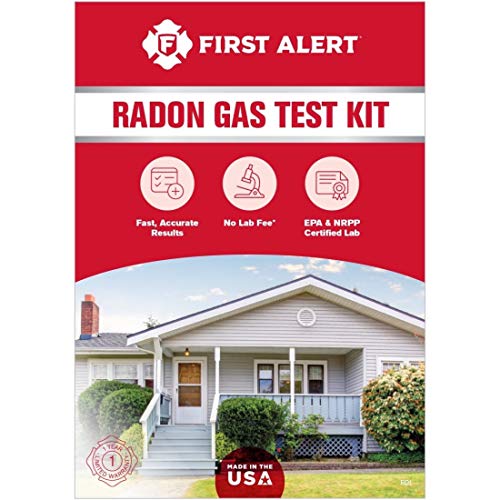 First Alert RD1 Radon Test Kit | Widely stocked; 48-hour charcoal test. | Amazon — $16.98 |
 Airthings Corentium Home | Digital monitor with a long-term average. | Amazon — $142.99 |