First Symptoms of Radon Exposure: Homeowner Guide

Despite the popular search term “first symptoms of radon exposure,” radon exposure does not cause acute toxic symptoms of any kind. There is no detectable sign or symptom that an individual can feel or observe in the days, weeks, or months after exposure. The only known health effect of radon exposure is increased long-term lung cancer risk, manifesting five to twenty-five or more years after sustained elevated exposure. EPA and the Surgeon General estimate radon causes approximately 21,000 lung cancer deaths per year in the United States — the second leading cause of lung cancer after smoking, and the leading cause among non-smokers. Any respiratory symptom, persistent cough, or lung-related concern should be evaluated by a physician immediately. Such symptoms are not caused by recent radon exposure and require independent medical evaluation. This guide summarizes EPA, CDC, and Surgeon General guidance current as of 2026 and explains why “first symptoms” is a search term that leads in the wrong direction.
Part of our Radon Levels guide — start there for the full picture →
Why There Are No First Symptoms
Radon is a colorless, odorless, tasteless radioactive noble gas that decays into radioactive progeny — polonium-218, polonium-214, lead-214, and bismuth-214 — which attach to airborne particles and lodge in lung tissue when inhaled. The radioactive decay events deposit alpha-particle energy in lung-cell DNA over time. The damage accumulates silently. There is no inflammation, no immune response, no respiratory irritation, and no nervous-system effect at any environmental radon concentration. The exposed person feels no different on the day of exposure than on any other day.
This biological fact is the most important thing to understand about radon. The risk is real and substantial, but it is a long-term cancer risk, not an acute toxicity risk. People who imagine they can identify whether their home has elevated radon by paying attention to how they feel are using the wrong mental model. The only way to know if a home has elevated radon is to test the air in the home — there is no symptom-based proxy.
What “Long-Term” Actually Means
Epidemiological data from uranium-miner cohorts, residential case-control studies, and pooled analyses published in the peer-reviewed literature have established the radon dose-response relationship. The shortest latencies for radon-attributable lung cancer reported in the literature are typically five years from initial exposure, although many cases manifest 15 to 30 years after exposure begins. The latency does not mean the damage waits to begin — DNA-damage accumulation starts with the first inhalation. The latency reflects the multi-decade process by which damaged cells progress through pre-cancerous and cancerous stages before becoming clinically detectable.
The dose-response curve is approximately linear with no identified threshold. That means each increment of radon exposure adds an increment of lifetime lung-cancer risk. Reducing radon concentration at any time reduces future risk, even after years of exposure — the damage already done remains, but additional damage is prevented going forward. This is the public-health rationale for testing and mitigating regardless of how long a household has lived in a home without prior measurement.
How EPA and the Surgeon General Frame Radon Risk
The Surgeon General has issued formal health advisories about radon since 2005. EPA publishes “A Citizen’s Guide to Radon” and the “Home Buyer’s and Seller’s Guide to Radon,” both of which characterize radon as a leading cause of lung cancer among non-smokers and the second leading cause overall. The agencies estimate 21,000 radon-attributable lung cancer deaths annually in the United States — approximately ten times the death toll from drunk-driving accidents.
The risk-communication challenge is exactly the search term this article addresses. Members of the public who hear about radon often look for symptoms because that is how most environmental hazards manifest. Radon does not. The public-health agencies have spent decades explaining that the absence of symptoms is not the absence of risk — it is the defining feature of the risk.
The Difference Between Radon and Acute Toxic Gases
Part of the source of the “first symptoms” search query is conflation with acutely toxic gases that do produce immediate symptoms. Carbon monoxide poisoning causes headache, dizziness, nausea, and confusion within minutes to hours of exposure at meaningful concentrations. Natural gas leaks announce themselves through the added mercaptan odorant and can cause respiratory irritation at high concentrations. Sewer gas at high concentrations produces nausea and headache. Each of these is detectable through symptoms because the gas interacts acutely with the body.
Radon is fundamentally different. It does not interact acutely with the body at any environmental concentration. The radioactive decay of inhaled radon progeny deposits energy in lung tissue, but the deposition does not register as a sensation. The biological damage occurs at the molecular level — alpha-particle hits on DNA bases — and the consequences appear years or decades later. The mental shortcut “if I do not feel anything, the air is fine” works for the acutely toxic gases. It does not work for radon.
What Symptoms Should Send You to a Physician
Any persistent respiratory symptom warrants a physician’s evaluation, but those symptoms are not caused by recent radon exposure. Persistent cough lasting more than three weeks, unexplained shortness of breath, chest pain not associated with exertion, coughing up blood, recurrent respiratory infections, and unexplained weight loss are all reasons to see a primary-care physician promptly. The differential diagnosis includes asthma, COPD, infection, allergy, and various non-radon-related causes. Lung cancer is also on the differential, particularly for current or former smokers and for individuals with documented long-term radon exposure, but the diagnosis is established by imaging and biopsy, not by symptom pattern alone.
The most important framing: anyone with respiratory symptoms should see a physician, and anyone living in a home that has not been tested for radon should test the home. The two actions are independent — symptoms do not indicate radon, and a positive radon test does not indicate disease. Both deserve independent attention.
What Long-Term Risk Looks Like Numerically
EPA publishes risk estimates for sustained residential exposure. The lifetime risk of developing lung cancer from exposure at 4 pCi/L is approximately 7 deaths per 1,000 people for never-smokers and approximately 62 deaths per 1,000 people for current smokers, assuming 70 years of exposure. At 8 pCi/L the never-smoker risk roughly doubles. At 20 pCi/L it roughly quintuples. The risk is roughly linear with concentration over the residential range, although the smoking interaction is multiplicative — smoking and radon together create dramatically higher risk than either alone.
These numbers are aggregate population estimates. Individual risk varies with the duration of exposure, the time spent at home, smoking history, age at exposure, and genetic factors that affect DNA repair. The numbers are useful for understanding the magnitude of the population-level effect and the value of testing and mitigation. They are not predictive of individual outcomes.
Why Search Engines Surface “Symptoms” Pages
Search engines pattern-match queries against pages that use matching language. A homeowner who types “first symptoms of radon exposure” gets back pages that use the words “symptoms” and “radon” together, regardless of whether the underlying content reflects the public-health consensus. Some of those pages oversimplify and list generic respiratory complaints as “early signs” — a framing that fails the evidence base on every count. EPA, CDC, NIH, and the American Lung Association are aligned: radon does not cause acute symptoms. Pages that suggest otherwise are misleading whether intentionally or otherwise.
The constructive response to encountering such pages is to compare what they say against the EPA Citizen’s Guide to Radon and the Surgeon General’s health advisory. The authoritative agencies say the same thing in plain language. Pages that contradict the authoritative consensus should be ignored regardless of their search ranking.
Testing as the Only Detection Pathway
Because radon has no symptoms, testing is the only way to detect it. EPA recommends every home be tested at least once and that homes with results above 2 pCi/L be retested or considered for mitigation. The radon testing pillar guide walks through testing methods and timing. Front Range homeowners in particular should test because the underlying geology produces statewide median indoor concentrations approximately twice the U.S. average — many Colorado homes test above the EPA action level of 4 pCi/L on the first measurement.
A free radon test kit program exists through CDPHE for Colorado residents, providing a no-cost baseline for households that want to start before commissioning a professional measurement.
Mitigation as the Risk-Reduction Pathway
Homes that test above 4 pCi/L should be mitigated. The standard residential mitigation is a sub-slab depressurization system installed by a certified mitigator. The system draws soil gas from beneath the slab through a sealed pipe, exhausts it above the roofline, and prevents the gas from entering the living space. Properly installed systems typically reduce indoor concentrations from above 4 pCi/L to below 2 pCi/L, often to below 1 pCi/L. The mitigation does not undo prior exposure but eliminates ongoing exposure.
Smoking Multiplies the Radon Risk
The combination of smoking and elevated radon is substantially more dangerous than either alone. Smokers exposed to elevated radon have an estimated lifetime lung-cancer risk roughly nine times that of never-smokers at the same radon concentration. This multiplicative interaction is the reason the Surgeon General’s radon advisory pays particular attention to smoking households. Former smokers retain elevated risk for years after cessation, although the risk gradually declines. The combined dose-response data appear in multiple peer-reviewed publications indexed by PubMed and are summarized in EPA’s risk-assessment documents.
The practical implication is straightforward. A smoking household living in a Front Range home with elevated radon should consider both smoking cessation and radon mitigation as priorities. Neither action alone produces the full benefit available from doing both.
What Happens If You Have Been Exposed
A homeowner who learns that their home has had elevated radon for years and is now concerned about prior exposure should see a primary-care physician for baseline guidance. The physician may recommend a lung-cancer screening protocol, particularly for current or former smokers in age ranges where screening is established (typically 50 to 80). Low-dose CT screening is the current standard for high-risk individuals. No screening protocol is specifically tailored to radon exposure alone, but the same screening tools detect any lung cancer regardless of cause.
The constructive response to past exposure is to mitigate the home, reduce future exposure, and follow physician-directed health monitoring. The destructive response is to look for symptoms — there are none, and the search itself generates anxiety without producing useful information.
References
- EPA health risk of radon — Environmental Protection Agency
- CDC radon overview — Centers for Disease Control and Prevention
- American Lung Association radon information — Lung.org
- NIH research on residential radon and lung cancer — National Institutes of Health
Frequently asked questions
What are the first symptoms of radon exposure?
There are none. Radon does not cause acute symptoms at any environmental concentration. The only known health effect is long-term increased lung cancer risk, which manifests 5 to 25 or more years after sustained exposure. Any respiratory symptom warrants a physician's evaluation but is not caused by recent radon exposure.
Can I tell if my home has radon by how I feel?
No. Radon is odorless, colorless, and tasteless, and does not produce any symptom that an individual can feel or observe. Testing the air in the home is the only way to detect elevated radon. EPA recommends every home be tested at least once.
If I have a persistent cough, could it be radon?
Not from recent exposure. Radon-attributable lung cancer has a multi-decade latency. Persistent cough lasting more than three weeks warrants a physician's evaluation for asthma, infection, allergy, COPD, or other causes — but those causes are not radon-related in the acute sense.
How many people does radon kill each year?
EPA and the Surgeon General estimate approximately 21,000 lung cancer deaths per year in the United States are attributable to radon exposure. Radon is the second leading cause of lung cancer overall and the leading cause among non-smokers.
Front Range homeowners who want to test or mitigate can reach our team through the contact page for a referral to a certified provider.
Test your home for radon
Radon is invisible and odorless, so a test is the only way to know your level. A short-term kit gives a first reading in days; a digital monitor tracks it over time.
| Product | Why | Buy |
|---|---|---|
 AirChek Charcoal Radon Test Kit | Lab fee usually included; EPA short-term protocol. | Amazon |
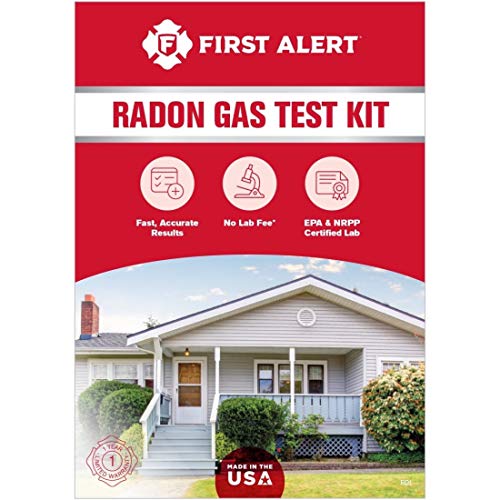 First Alert RD1 Radon Test Kit | Widely stocked; 48-hour charcoal test. | Amazon — $17.95 |
 Airthings Corentium Home | Digital monitor with a long-term average. | Amazon — $142.99 |