Radon Exposure Symptoms: EPA Confirmed Honest Answer
Radon exposure symptoms is a popular search phrase that returns an unfortunately straightforward answer: at residential exposure levels, radon does not cause acute toxic symptoms in humans. There is no detectable feeling, sensation, cough pattern, irritation, or other physical sign that announces ongoing radon exposure. The body has no sensory receptors for radon. EPA and the U.S. Surgeon General document only one health effect: increased long-term lung cancer risk, manifesting 5 to 25 or more years after sustained elevated exposure. EPA and the Surgeon General estimate radon causes approximately 21,000 lung cancer deaths per year in the United States — the second leading cause of lung cancer after smoking, and the leading cause among never-smokers. Any respiratory symptom should be evaluated by a physician immediately and not attributed to recent radon exposure. This guide summarizes EPA, Surgeon General, CDC, and American Lung Association guidance current as of 2026 and is informational only.
Part of our Radon Levels guide — start there for the full picture →
Why radon exposure has no acute symptoms
Radon is a colorless, odorless, tasteless radioactive noble gas formed from the natural decay of uranium and radium in soil and rock. As an inert gas it does not react chemically with body tissues. When inhaled, radon gas itself is largely exhaled within seconds. The body has no chemoreceptors, nerve endings, or inflammatory response that signals radon’s presence at typical residential exposure levels. EPA’s Citizen’s Guide states explicitly that radon “cannot be seen, smelled, or tasted.”
The harmful mechanism is alpha radiation from radon’s radioactive decay products — polonium-218 and polonium-214. These daughters attach to dust and aerosols in indoor air, deposit on lung tissue when inhaled, and emit alpha particles at close range to surrounding cells. Alpha radiation damages cellular DNA. Over years and decades of cumulative exposure, this damage raises lifetime lung cancer risk in a dose-response relationship.
The lung cancer that eventually develops
The cancer that radon causes is biologically identical to lung cancer from any other cause. It presents with the same symptoms: persistent cough, blood in sputum, chest pain, weight loss, recurrent pneumonia, and shortness of breath. These symptoms typically appear 5 to 25 years after the sustained exposure period, not during exposure itself. Once cancer presents, diagnosis follows the standard pulmonology workup: imaging (chest X-ray, CT), biopsy if indicated, and pathological staging. Treatment proceeds based on stage and tumor characteristics rather than presumed cause.
The dose-response is well-characterized. For a never-smoker exposed to 4 pCi/L (the EPA action level) for 70 years (a lifetime), excess lifetime lung cancer risk is approximately 7 in 1,000. For a smoker at the same exposure, excess risk rises to 62 in 1,000 because radon and smoking interact synergistically. The American Lung Association at lung.org documents this dose-response in consumer-friendly language. For broader context on how radon fits into Front Range housing risk, see the radon testing pillar guide.
Differentiating current symptoms from radon-related risk
If a homeowner is currently experiencing any respiratory or constitutional symptom — persistent cough, shortness of breath, chest tightness, fatigue, recurrent infections, blood in sputum — the path is to see a physician immediately for evaluation. The differential diagnosis includes viral infection, bacterial pneumonia, asthma exacerbation, allergic response, COPD, cardiac issues, occupational chemical exposures, and (if indicated) early-stage cancer. The physician’s workup is independent of any home radon testing plan.
An elevated radon test does not explain current symptoms because the cancer effect takes years to manifest. A clean radon test does not rule out the other causes. The two investigations run in parallel on different timelines. Skipping the physician visit on the assumption that a clean radon test means good health is dangerous; symptoms have many causes other than radon and need their own workup.
Population-level data on radon and lung cancer
EPA’s 21,000 deaths-per-year estimate is derived from population-level epidemiology calibrated by the National Research Council’s BEIR VI report (1999) and subsequent updates. Approximately 2,900 of those 21,000 deaths occur among never-smokers; the remaining are among current or former smokers, where the synergistic interaction with smoking amplifies risk. The estimate is based on cumulative exposure modeled across the U.S. population, with EPA Zone 1 areas (including most of the Colorado Front Range) contributing disproportionately to total exposure.
Among never-smokers specifically, radon is the leading cause of lung cancer in the United States — surpassing all other environmental and occupational exposures combined. This is part of why testing is recommended universally rather than only for high-risk individuals. The non-smoker population that develops lung cancer is small in absolute number compared to smokers, but radon is the dominant driver within that population.
Testing remains the only meaningful intervention
Since radon exposure produces no symptoms, the only way to know radon is present is to test the air. EPA recommends every home below the third floor be tested for radon. Front Range testing data shows approximately 40 to 50 percent of homes above the 4 pCi/L action level, well above the U.S. national average of around 6 percent. Most Colorado counties along the I-25 corridor sit in EPA Zone 1, the highest radon-potential tier.
Short-term test kits (charcoal or electret) cost $15 to $30 and require 48 hours to 7 days of exposure. Long-term test kits (alpha-track) cost $25 to $40 and require 90 days for a representative seasonal average. CDPHE-supported county programs in Colorado have periodically distributed free kits. The free radon test Colorado availability guide documents how to access free kits when available.
Mitigation reduces future risk, not current symptoms
If a test returns 4 pCi/L or higher, EPA recommends mitigation. The standard residential mitigation system is sub-slab depressurization (SSD), which uses a sealed PVC vent pipe from beneath the foundation slab routed above the roofline with an inline fan. Soil gas is drawn into the pipe before entering the home. Front Range SSD installation costs $1,200 to $2,500 turnkey by an NRPP-certified mitigator, and post-installation testing typically shows 80 to 99 percent reduction in indoor levels.
Mitigation reduces future lung cancer risk by lowering ongoing exposure. It does not affect any current health symptoms because current symptoms are not caused by recent radon exposure. EPA recommends post-mitigation short-term testing within 30 days of activation, then a long-term test in the second year, then every two to five years thereafter to catch fan failures.
Cumulative exposure and the lifetime-risk calculation
Radon risk is calculated as cumulative exposure measured in working-level-month (WLM) units originally derived from uranium miner studies. For homeowners, EPA converts residential exposure into equivalent WLM and applies the risk coefficient from the BEIR VI report. A homeowner exposed to 4 pCi/L for 70 years (with realistic occupancy assumptions of approximately 75 percent of time at home) accumulates roughly 16 WLM. The BEIR VI coefficient for never-smokers is approximately 0.6 percent excess lung cancer per WLM, yielding a lifetime excess risk of about 1 percent — consistent with the 7-in-1,000 figure EPA publishes.
For smokers, the risk coefficient is multiplied by a synergy factor of 9 to 10, reflecting the interaction between alpha-radiation damage and tobacco-smoke damage in lung tissue. This raises the lifetime excess risk to roughly 7 percent or 70 in 1,000, consistent with the 62-in-1,000 EPA figure. Former smokers carry an intermediate risk that decreases over time after smoking cessation. These calculations are the basis for EPA’s testing-and-mitigation recommendations and for the international consensus across WHO, IARC, and national health authorities.
Why mitigation matters even after exposure has occurred
Some homeowners who learn of high radon levels worry that past exposure cannot be undone. This is partially true — alpha radiation damage that has already occurred cannot be reversed. But future risk depends on future cumulative exposure, and mitigation cuts the ongoing exposure dramatically. A home that has been at 8 pCi/L for 20 years and is then mitigated to 1 pCi/L will accumulate far less additional cumulative exposure over the next 30 years than a home that remains unmitigated. The lung cancer risk calculation depends on the total integral of exposure over time, not just the historical period.
Mitigation also reduces exposure to children and future occupants of the home. A home occupied by young children for the next 18 years contributes substantially to those children’s lifetime cumulative exposure. Reducing the level from 8 pCi/L to 1 pCi/L during those formative years has a meaningful effect on the children’s lifetime risk decades into the future. The decision to mitigate is forward-looking; past exposure is sunk cost but future exposure is preventable.
Why this is the universal authoritative framing
Every authoritative radon resource — EPA, Surgeon General, CDC, American Lung Association, National Cancer Institute, World Health Organization — uses the same framing: no acute symptoms, only long-term lung cancer risk, testing as the only way to know, mitigation as the effective intervention. The repetition is deliberate because the alternative framing (radon as a symptom-causing toxin) is both incorrect and dangerous. It misleads homeowners into delaying medical evaluation of current symptoms, and it implies that the absence of symptoms means radon is not a concern.
For homeowners who recently tested high and feel anxious about long-past exposure, the practical guidance is: mitigate now to reduce future exposure, schedule baseline pulmonology assessment if the exposure period was particularly long or the levels particularly high, and continue routine annual physical exams to monitor general health. There is no specific radon-exposure medical test or treatment beyond stopping ongoing exposure. The related symptoms-of-radon-exposure framing guide walks through how to handle the worry that often accompanies a high test result.
What is and is not a radon exposure symptom
To clarify common misconceptions, here is what is not a radon exposure symptom: headache, fatigue, body aches, fever, chills, sore throat, runny nose, congestion, nausea, dizziness, lightheadedness, sinus pressure, eye irritation, skin rash, joint pain, concentration problems, sleep disturbance, mood changes, gastrointestinal symptoms, or any combination of these. None of these symptom patterns is caused by radon at residential exposure levels. Each has other documented causes that require their own evaluation.
What is a radon exposure consequence (not symptom): increased lifetime lung cancer risk, manifesting 5 to 25 or more years after sustained exposure. The lung cancer itself eventually presents with cough, blood in sputum, chest pain, recurrent pneumonia, and weight loss — but these are symptoms of the cancer once it develops, not of the radon exposure during the exposure period. The distinction matters because it shapes appropriate clinical response. Symptoms today require medical evaluation today for current causes; long-term radon exposure requires home testing and mitigation as forward-looking risk management.
Radon and other indoor air quality concerns
Radon is one of several indoor air quality concerns relevant to Front Range homes, but the others operate on different timescales and through different mechanisms. Volatile organic compounds (VOCs) from new paints, carpets, and furniture can cause acute symptoms (headache, eye irritation, throat irritation) during off-gassing periods. Combustion byproducts from gas appliances or wood stoves can cause acute symptoms (carbon monoxide poisoning is the most dangerous and produces headache, nausea, and dizziness). Biological contaminants such as dust mites, pet dander, and mold spores can cause allergic and respiratory symptoms.
These other indoor air quality concerns are sometimes investigated together with radon during comprehensive home air-quality assessments. The investigations are separate because each contaminant requires different sampling methods and intervention approaches. Conflating them under one umbrella term (“indoor air quality”) sometimes obscures the practical fact that they have different consequences and different solutions.
More Questions About Radon Exposure
Can radon exposure cause a cough or shortness of breath?
Radon exposure itself does not cause an immediate cough or shortness of breath. Radon is not an irritant at household levels, and its harm comes from radiation damage to lung cells that can lead to lung cancer over many years.
A persistent cough, coughing up blood, wheezing or breathlessness can be signs of lung disease from many causes, including cancer, infection or asthma. Anyone with these symptoms should see a doctor and mention any known history of high radon in the home, alongside smoking history.
Should someone exposed to high radon ask about lung cancer screening?
Yes, it is reasonable to raise a history of high radon exposure with a doctor, who can weigh it alongside age and smoking history. Current screening guidelines for low-dose CT scans are based mainly on age and pack-years of smoking.
Radon exposure alone does not automatically qualify someone for screening, but it is useful context for a clinician. The most effective personal steps remain testing the home, mitigating if levels are elevated and avoiding tobacco smoke.
Does radon exposure cause cancers other than lung cancer?
Lung cancer is the only cancer firmly linked to radon exposure in homes. The evidence comes from long-term studies of miners and from pooled residential studies that show lung cancer risk rising with long-term radon levels.
Radon decay products are inhaled and deposit in the airways, which is why the lungs take most of the dose. Researchers have looked at other cancers, such as leukemia and stomach cancer from radon in drinking water, but the evidence is far weaker. Lung cancer remains the basis for the EPA action level.
Does moving out of a high-radon home lower lung cancer risk?
Moving out of a high-radon home, or mitigating it, stops additional exposure, which is the main way to limit future lung cancer risk. Risk from radon is cumulative, so every year spent at a lower level adds less dose than a year at a high level.
Past exposure is not erased, so former occupants should still mention it to their doctor. For anyone staying in the home, mitigation is usually faster and cheaper than moving, with professional systems typically costing $1,200 to $2,500.
References
- EPA radon program and Citizen’s Guide — U.S. Environmental Protection Agency
- American Lung Association radon health information — American Lung Association
- CDC radon and lung cancer guidance — Centers for Disease Control and Prevention
- NIH National Cancer Institute radon overview — National Institutes of Health
Frequently asked questions
What are the symptoms of radon exposure?
There are no acute symptoms of radon exposure at residential levels. Radon causes no detectable sensation or sign during exposure. The only documented health effect is increased long-term lung cancer risk over 5 to 25 or more years of sustained elevated exposure.
How quickly do radon exposure symptoms appear?
They do not appear acutely. Radon does not produce symptoms during exposure. The lung cancer that radon can cause appears 5 to 25 or more years after sustained elevated exposure and presents with cough, blood in sputum, chest pain, or weight loss like any lung cancer.
Can short-term radon exposure make me sick?
No. Short-term exposure to typical residential radon levels does not cause illness or symptoms. The harm is cumulative DNA damage from alpha radiation over years and decades. Even high one-time exposure does not produce acute symptoms.
Is there a medical test for radon exposure?
There is no specific medical test or treatment for radon exposure beyond stopping ongoing exposure through home mitigation. Routine medical care including annual physicals and immediate evaluation of any respiratory symptom is the appropriate health-monitoring approach.
Can pets show symptoms of radon exposure?
Pets do not show specific symptoms of radon exposure, just as people do not. Animals that spend time in basements share the same long-term radiation dose, but no household symptom identifies radon. Testing the home protects every occupant, including pets.
Can radon in well water cause symptoms?
Radon in well water does not cause noticeable symptoms. Most of the risk comes from radon released into indoor air during showers, laundry and dishwashing, which is then inhaled. A small risk also comes from drinking the water. A certified lab water test is the only way to know the level.
Who is most at risk from radon exposure?
Current and former smokers face the highest risk from radon exposure, because tobacco smoke and radon together raise lung cancer risk far more than either alone. People who spend many hours in basements or ground-floor rooms of high-radon homes also accumulate a larger dose over time.
Front Range homeowners ready to test for radon and connect with an NRPP-certified mitigator can get in touch here.
Test your home for radon
Radon is invisible and odorless, so a test is the only way to know your level. A short-term kit gives a first reading in days; a digital monitor tracks it over time.
| Product | Why | Buy |
|---|---|---|
 AirChek Charcoal Radon Test Kit | Lab fee usually included; EPA short-term protocol. | Amazon — $21.95 |
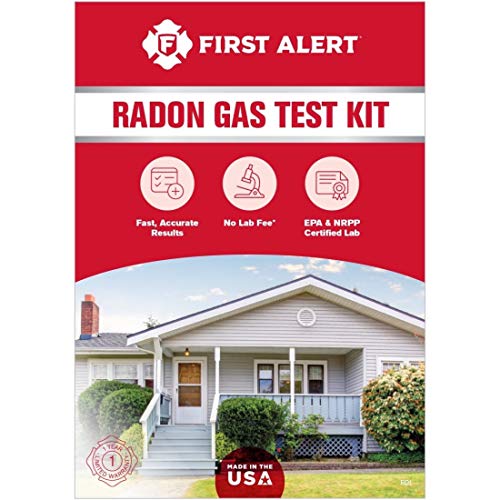 First Alert RD1 Radon Test Kit | Widely stocked; 48-hour charcoal test. | Amazon — $17.95 |
 Airthings Corentium Home | Digital monitor with a long-term average. | Amazon — $99.99 |