High Levels of Radon Symptoms: What “High” Means

The search “high levels of radon symptoms” usually comes from homeowners who got a positive radon test and want to know whether they should expect to feel something at elevated concentrations. The honest answer is: no. Even at 10, 20, or 50 pCi/L — concentrations that would worry any radon mitigation professional — radon produces no acute symptoms in humans. The U.S. Surgeon General and EPA are clear about this. What “high levels” mean is increased lung-cancer risk over the long term, not detectable symptoms in the short term. This guide explains what “high” actually means in numeric terms, what the elevated risk looks like in dose-response data, and what homeowners should do at each tier of elevation. This guide summarizes EPA, Surgeon General, CDC, and peer-reviewed lung-health guidance current as of 2026 and is informational only — consult a physician for any current respiratory symptoms because radon is not the cause.
Part of our Radon Levels guide — start there for the full picture →
The Direct Answer From EPA and the Surgeon General
Radon causes no acute symptoms in humans at any concentration found in residential exposure. There are no immediate signs of “radon poisoning” — not at 4 pCi/L, not at 10 pCi/L, not at 50 pCi/L, not at 100 pCi/L. The U.S. Surgeon General has issued formal advisories naming radon as the second-leading cause of lung cancer after smoking, responsible for roughly 21,000 deaths per year in the U.S., but only after long-term exposure with a 5- to 25-year latency. Anyone with current respiratory symptoms should consult a physician — those symptoms are not caused by radon.
What “High Levels” Means in Numbers
EPA’s action level is 4 pCi/L — the threshold for recommended mitigation. The mitigation industry typically describes elevation in tiers. Levels between 4 and 10 pCi/L are common in radon-prone areas like Front Range Colorado, with mitigation recommended. Levels between 10 and 20 pCi/L are noticeably elevated, with mitigation strongly recommended and faster timeline. Levels between 20 and 50 pCi/L are high enough to warrant accelerated mitigation, often within weeks rather than months. Levels above 50 pCi/L are rare but well-documented in radon-prone basements, and homeowners sometimes consider temporary relocation while mitigation is installed.
Why Even Very High Levels Produce No Acute Symptoms
The reason high radon levels do not produce acute symptoms is the dose rate. Even at 50 pCi/L, the lung dose accumulates slowly across days, weeks, and years. The alpha radiation from radon decay products damages cells one at a time at a rate that the body’s repair machinery can handle for any single day’s exposure. The damage that matters accumulates over decades. Acute radiation syndrome — the syndrome with nausea, vomiting, and bone marrow suppression — requires whole-body radiation doses orders of magnitude higher than anything residential radon produces. The dose rate is too low and too localized to lung tissue to produce acute syndrome.
The Dose-Response Curve
The dose-response relationship for residential radon is approximately linear with no clear threshold. Relative lung-cancer risk increases roughly 16 percent per 100 Bq/m3 (equivalent to roughly 6 percent per pCi/L) of long-term average exposure. A homeowner living 30 years in a 4 pCi/L home has a meaningfully elevated lifetime lung-cancer risk. A homeowner living 30 years in a 20 pCi/L home has a much higher risk — roughly five times the increase. The relationship is approximately linear, meaning the increment of risk per pCi/L is the same whether you are at 2 going to 4 or at 20 going to 22.
Smoker and Radon Combine Multiplicatively
For smokers, the elevated risk at high radon levels is dramatically larger. EPA estimates that at 4 pCi/L, lifetime lung-cancer risk in lifetime smokers is about 62 per 1,000, versus about 7 per 1,000 in never-smokers — roughly nine times higher. At 20 pCi/L sustained exposure, the smoker risk increases approximately fivefold from the 4 pCi/L baseline. The combination of smoking and high radon is the worst-case configuration for residential lung-cancer risk, which is why mitigation matters most urgently in households where any current or former smoker lives.
What 10-20 pCi/L Means in Practice
A reading in the 10 to 20 pCi/L range is uncommon in radon-resistant areas but reasonably common in Front Range Colorado basements. The mitigation response is the same as for lower elevations — sub-slab depressurization typically reduces the level by 80 to 99 percent. The post-mitigation target is below 4 pCi/L and ideally below 2 pCi/L. The timeline urgency increases compared to a 5 pCi/L reading, but acute health concern does not — there is no concept of “immediately unsafe” residential radon concentration in EPA guidance, because the harm is cumulative not acute.
What 20-50 pCi/L Means in Practice
A reading in the 20 to 50 pCi/L range warrants accelerated mitigation. EPA recommends mitigation as quickly as practical at elevations this high. Many mitigation contractors will offer expedited scheduling for results in this range. The lifetime risk for occupants sustaining such exposure across decades is substantial enough that the cost-benefit case for fast mitigation is unambiguous. Post-mitigation retesting is especially important to confirm the system reduced concentrations to the EPA target. The honest EPA answer on high radon symptoms covers this tier in additional detail.
What Above 50 pCi/L Means
Readings above 50 pCi/L are rare but well-documented in Front Range Colorado basements over uranium-rich geology. Mitigation is urgent. Some homeowners consider temporary relocation — particularly families with children or pregnant household members — while the mitigation system is designed and installed, though no formal EPA guidance requires this. Mitigation contractors familiar with very high readings will design more aggressive systems with larger fans, multiple suction points, or supplementary ventilation. Post-mitigation retesting is critical and may take multiple iterations to dial in the target.
The EPA Action Level Is Not a Safety Threshold
EPA’s 4 pCi/L action level is a regulatory trigger, not a safety guarantee. The agency also recommends mitigation consideration between 2 and 4 pCi/L because no safe level of radon exists. The World Health Organization recommends a stricter reference level of 2.7 pCi/L. The right framing is not “above 4 is dangerous, below 4 is safe” but rather “every reduction in radon concentration lowers cumulative lifetime risk, with mitigation strongly recommended above 4.” Households motivated to minimize risk often aim for under 2 pCi/L post-mitigation.
What to Do With an Elevated Result
A first short-term test result above 4 pCi/L should be confirmed with either a long-term test or a second short-term test. EPA recommends not relying on a single short-term measurement for major mitigation decisions, because day-to-day variation can be substantial. If the confirmatory test confirms elevation, contact a certified radon mitigation contractor for assessment and a system quote. The standard residential system is sub-slab depressurization, which typically costs 1,000 to 2,500 dollars in Front Range Colorado and reduces radon by 80 to 99 percent.
The Mitigation System That Works
Sub-slab depressurization, or SSD, involves drilling through the basement slab, installing a sealed riser pipe with a fan, and venting radon-laden air from beneath the slab up through the roofline. A properly installed SSD system typically reduces indoor radon by 80 to 99 percent within hours of activation. Sub-membrane depressurization is the equivalent system for homes over crawlspaces. Passive vent stacks built into newer homes can sometimes be activated by adding a fan. The SSD, SMD, and passive system options guide covers each in depth.
Choosing a Mitigation Contractor
Look for NRPP (National Radon Proficiency Program) or NRSB (National Radon Safety Board) certification. In Colorado, CDPHE maintains lists of certified mitigation contractors. Ask for guaranteed post-mitigation levels — a competent contractor will guarantee under 4 pCi/L, often under 2 pCi/L. Ask about post-installation retesting timing. Ask whether the proposed system uses an exterior wall-mounted fan or interior attic-mounted fan, with the exterior configuration being more common in colder climates. Ask for system warranty terms and fan replacement scheduling — fans typically last 5 to 10 years.
Post-Mitigation Verification
After a mitigation system is installed, retest with a short-term kit to confirm the system is working. EPA recommends retesting between 24 hours and 30 days after activation, with 30 days being more reliable. Subsequent retesting every two years is the recommended ongoing schedule. A small system manometer mounted on the riser pipe shows whether the fan is producing the expected pressure differential — homeowners can check this monthly as a quick health-check on the system.
Why Colorado Front Range Tests Run High
Colorado’s Front Range sits over uranium-bearing granite and shale, which slowly releases radon-222 into the soil. The gas diffuses upward through cracks and openings in foundations, accumulating in basements and lower floors. EPA classifies most Front Range counties as Zone 1 — the highest-risk classification — meaning more than half of homes tested in those counties exceed the 4 pCi/L action level. Boulder, Larimer, Denver, Jefferson, Adams, El Paso, and Douglas counties all fall in Zone 1. Readings above 20 pCi/L are not surprising in older Front Range basements with cracked slabs over uranium-bearing geology. The plain-language Front Range radon testing guide walks through testing logistics for Colorado homeowners.
Seasonal Variation in Radon Readings
Indoor radon concentrations vary substantially across seasons, with winter readings often two to three times higher than summer readings in the same home. The reason is stack effect — heated indoor air rises and creates negative pressure at the foundation, drawing more radon-laden air from beneath the slab. Short-term tests conducted in winter typically capture worst-case concentrations, while summer tests can underestimate annual average exposure. EPA recommends conducting initial short-term tests during winter or following up with a long-term test running 90 days or more to capture the true annual exposure pattern.
What Long-Term Tests Add
A long-term radon test running 90 days or longer produces an average concentration that more accurately reflects the year-round exposure pattern relevant to lifetime risk. Long-term tests use alpha-track detectors or electret ion chambers and are available from EPA-approved laboratories for 30 to 60 dollars including analysis. After a short-term test shows elevation, a long-term confirmatory test is the most defensible path to a mitigation decision when the budget allows for the wait. The long-term result, combined with seasonal context, gives the truest picture of what household exposure actually looks like.
Real Estate Transactions and Radon
Radon testing is increasingly common in U.S. real estate transactions, particularly in EPA Zone 1 regions like the Colorado Front Range. Buyers sometimes negotiate seller-paid mitigation as a condition of closing when test results exceed 4 pCi/L. Sellers preparing pre-1990s housing for market often install mitigation proactively to remove the issue from negotiations. Standard real estate radon tests run 48 to 72 hours in closed-house conditions and produce results in time for typical inspection-contingency timelines. Documented mitigation with post-installation test results is a defensible disclosure at any future resale.
Why Repeat Testing Matters
Radon levels in the same home can shift over time as foundation conditions change, soil moisture varies, or HVAC modifications alter pressure patterns. EPA recommends retesting every two years after mitigation, every five years in un-mitigated homes that previously tested below 4 pCi/L, and after any significant foundation or HVAC work. Repeat testing is inexpensive — a 15 to 30 dollar short-term kit — and produces the data needed to catch any trend back toward elevated concentrations before it persists.
References
- EPA Health Risk of Radon — U.S. Environmental Protection Agency
- CDC Radon Information — Centers for Disease Control and Prevention
- American Lung Association Radon Resource — American Lung Association
- CDPHE Colorado Radon Program — Colorado Department of Public Health and Environment
- BEIR VI Health Effects of Exposure to Indoor Radon — National Academies Press
Test your home for radon
Radon is invisible and odorless, so a test is the only way to know your level. A short-term kit gives a first reading in days; a digital monitor tracks it over time.
| Product | Why | Buy |
|---|---|---|
 AirChek Charcoal Radon Test Kit | Lab fee usually included; EPA short-term protocol. | Amazon |
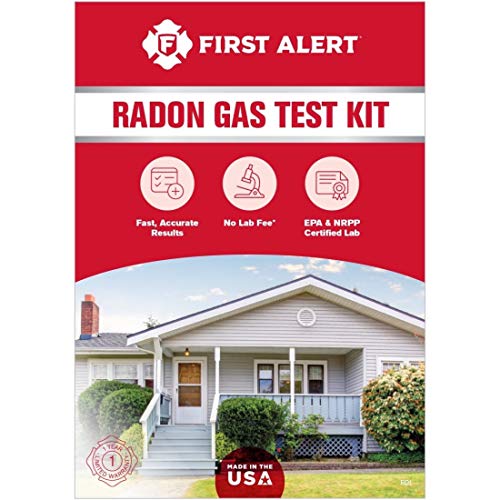 First Alert RD1 Radon Test Kit | Widely stocked; 48-hour charcoal test. | Amazon — $17.95 |
 Airthings Corentium Home | Digital monitor with a long-term average. | Amazon — $142.99 |