High Levels of Radon: What Homeowners Need to Know
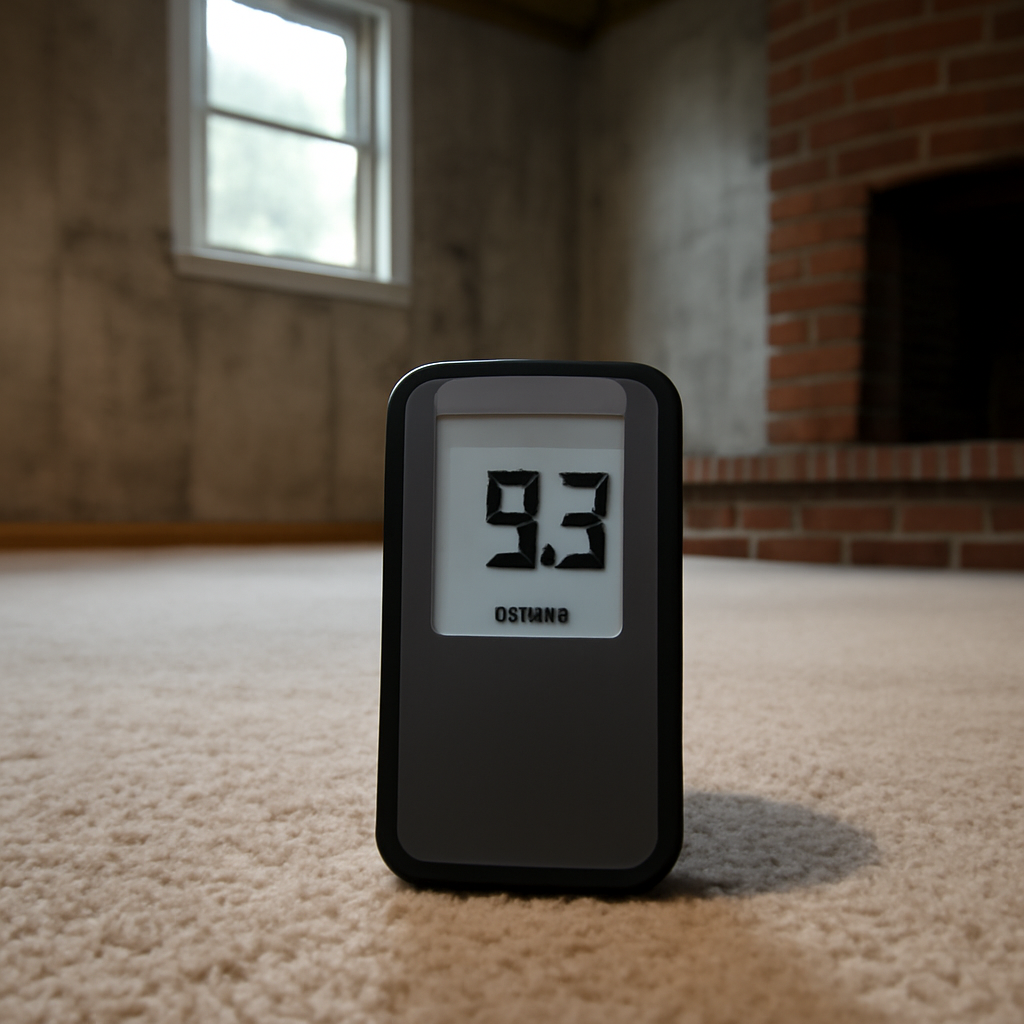
Radon does not produce immediate symptoms in most people. Persistent cough, shortness of breath, chest pain, or unexplained weight loss can be late-stage indicators of radon-caused lung cancer — but these appear only after years of exposure, not as a warning sign. High levels of radon — readings well above the EPA action level of 4 picocuries per liter — are common in Colorado, particularly along the Front Range, where geology and house construction interact to produce some of the highest indoor radon concentrations in the United States. This guide summarizes EPA and CDC guidance current as of 2026 — consult a certified radon professional for testing and your physician for symptom evaluation.
What counts as “high” radon
EPA does not use a single binary threshold. The agency frames radon concentrations on a continuum, with the 4 pCi/L action level as the point at which mitigation becomes cost-effective relative to lung cancer risk reduction. State radon programs and certified mitigation professionals typically use a more granular framework to communicate urgency.
Below 2 pCi/L
Outdoor air averages roughly 0.4 pCi/L. Indoor levels in the 0 to 2 pCi/L range are at or near the practical floor for residential air. EPA does not recommend mitigation in this range, though some homeowners pursue further reduction for peace of mind.
2 to 4 pCi/L
EPA recommends homeowners consider mitigation in this range. Lung cancer risk at sustained 2 to 4 pCi/L exposure is meaningful but lower than the action-level range. Mitigation in this band is a personal decision based on occupancy patterns, smoking history, and budget.
4 to 10 pCi/L — elevated
EPA’s action level of 4 pCi/L sits at the bottom of this range. Mitigation is recommended. Average mitigation timeline from contractor selection to verified post-mitigation results is two to four weeks for typical Front Range installations.
10 to 20 pCi/L — high
This range is common in Colorado finished basements. Mitigation is strongly recommended and the installation timeline is the same one-to-three week window for a properly designed sub-slab depressurization system.
20 to 50 pCi/L — very high
Concentrations in this range merit prompt mitigation. EPA does not declare the home uninhabitable, but the cumulative lung cancer risk at sustained 20+ pCi/L exposure is substantially elevated. Many Front Range homes test in this band on a first short-term test.
Above 50 pCi/L — mitigation urgent
EPA recommends rapid action. Some state radon programs recommend reducing occupancy of the affected space — particularly basements — until a mitigation system is installed and verified. The risk at this level is high enough that delay carries meaningful long-term health consequences.
What “high” levels actually indicate
High radon concentrations in a home reflect the interaction of three variables: soil radon production, foundation entry pathways, and indoor air dynamics that pull soil gas into the home.
Geology
Front Range geology — the granite and metasedimentary formations of the Colorado Mineral Belt, plus uranium-rich sedimentary units in the foothills — produces high-volume radon emanation. EPA’s Map of Radon Zones places the entire Front Range corridor in Zone 1, the highest radon-potential designation. Soil uranium concentration is the upstream variable that supplies the radon supply.
Foundation entry
Radon enters through cracks in basement floors, expansion joints between slab and foundation wall, sump pit openings, utility penetrations (plumbing stack, electrical conduit, gas line), and porous concrete. Older foundations with multiple cracks and settled slabs produce more entry pathways than newer construction with intact vapor barriers and sealed penetrations.
Indoor air dynamics
Houses develop negative pressure relative to soil through stack effect (warm air rising creates lower pressure at lower levels), exhaust fan operation (kitchen, bathroom, dryer), and HVAC imbalance. That negative pressure literally pulls soil gas through any available foundation pathway. Tightly sealed energy-efficient homes can paradoxically increase indoor radon by reducing dilution while maintaining or increasing stack-effect pressure.
Why high radon does not cause acute symptoms
Radon is a chemically inert noble gas. It does not bind to hemoglobin, disrupt enzyme function, or trigger acute respiratory irritation. Inhaled radon is largely exhaled. The harm comes from radon decay products — solid radioactive particles of polonium, lead, and bismuth — that lodge in the bronchial epithelium and emit alpha radiation over hours and days.
Alpha radiation causes cellular DNA damage. Over years and decades of exposure, this cumulative damage increases lung cancer risk. The risk is dose-dependent — higher concentrations and longer exposure both contribute — but it is not acute. A homeowner cannot tell from their body whether they are in a 4 pCi/L room or a 40 pCi/L room. Testing is the only signal.
This is why EPA, CDC, and the U.S. Surgeon General recommend testing every home regardless of symptoms. Symptom-based screening cannot detect radon exposure. Only direct measurement of indoor air radon concentration can.
Mitigation urgency framework
High levels of radon do not require evacuation. They do warrant prompt mitigation, with the urgency scaling roughly with concentration.
4-10 pCi/L
Standard mitigation timeline. Get two or three quotes from NRPP- or NRSB-certified contractors, select one, schedule installation. Typical Front Range installation runs $1,000 to $2,500 and takes one day on-site, with system effective within 24 to 48 hours. Post-mitigation testing verifies system performance.
10-20 pCi/L
Standard mitigation timeline applies. The system design is the same — sub-slab depressurization with a continuously running fan — but contractors typically size the fan for higher draw to maintain the same post-mitigation result.
20-50 pCi/L
Standard mitigation timeline still applies but with elevated urgency. EPA-aligned guidance recommends reducing occupancy of the most affected room — typically the finished basement — until mitigation is complete. If the basement is a child’s bedroom or a long-occupancy living space, temporary relocation upstairs during the two-to-three-week mitigation window is a reasonable precaution.
Above 50 pCi/L
Prompt mitigation is the standard recommendation. Some state radon programs recommend ventilating affected spaces with open windows and supplemental fans as a temporary measure until permanent mitigation is in place. The risk reduction from ventilation is partial and temporary; sub-slab depressurization remains the durable solution.
How mitigation actually works
Sub-slab depressurization (SSD) is the gold-standard mitigation method for high indoor radon. The system consists of a vertical pipe penetrating the basement slab, an in-line fan mounted in the attic or on the exterior, and an exhaust outlet at or above the roofline. The fan creates negative pressure in the soil gas beneath the slab, drawing radon away from the foundation entry pathways and venting it harmlessly to outdoor air.
A properly designed SSD system typically reduces indoor radon by 80 to 99 percent, depending on the home’s specifics. A 40 pCi/L home commonly drops to under 1 pCi/L after mitigation. The fan runs continuously and uses roughly 30 to 90 watts of electricity, equivalent to a few dollars per month in operating cost.
For broader context on radon entry and amplification factors that produce high readings, see the radon testing hub for Colorado homeowners. For deeper detail on the drivers behind elevated concentrations, the what causes high radon levels in homes guide covers geology, foundation, and HVAC factors in more depth.
Verifying mitigation worked
A post-mitigation test is part of every credible installation. The contractor or homeowner places a short-term test device — typically a 48-hour continuous monitor or a charcoal canister — in the same general location as the pre-mitigation test. The reading should fall below the EPA action level and ideally below 2 pCi/L.
If the post-mitigation reading does not fall below 4 pCi/L, the contractor should diagnose and adjust. Common causes of insufficient reduction include undersized fans, additional soil-gas entry pathways not addressed by the original design, leakage around the system pipe seal at the slab, or interaction with HVAC operation that overrides the soil-gas pressure differential. Reputable mitigation contractors include post-mitigation testing in the original quote and guarantee a result below the action level.
EPA recommends re-testing every two years after a system is installed and verified, and after any significant home modification — finished basement renovation, foundation work, HVAC replacement, addition construction. Annual fan operation checks confirm the system is still drawing air, which homeowners can verify visually with the system’s pressure indicator or by feeling airflow at the roof exhaust.
Front Range CDPHE Zone 1 context
The Colorado Department of Public Health and Environment maintains some of the most detailed state-level radon data in the country. CDPHE survey data shows that roughly half of tested Colorado homes register at or above the EPA action level. Finished basements test higher than upper floors at a roughly two-to-four ratio. Individual readings above 100 pCi/L are not unusual on the Front Range, particularly in foothill communities sitting directly on Mineral Belt geology.
Colorado’s statewide Zone 1 designation makes radon testing a baseline expectation in any Front Range home transaction. Real estate disclosure rules differ by jurisdiction, but the practical norm is that buyers either request a radon test as part of the inspection contingency or accept the seller’s recent testing data.
When to call a professional
Any homeowner with a test result above the EPA action level should contact an NRPP- or NRSB-certified mitigation contractor for an estimate. Get two or three quotes; install with the contractor whose design and pricing align with your home’s foundation specifics. Front Range certified contractors can be located through the CDPHE radon program directory or through the national NRPP search.
For homeowners who have never tested, a short-term DIY kit ($15 to $30) or a certified continuous radon monitor test ($150 to $250) produces the data needed to make a decision. Front Range geology means the prior probability of an elevated reading is high; testing is the only way to know.
For homeowners with high levels who have not yet mitigated, a baseline pediatric and adult health record can be useful for monitoring purposes. Discussing radon exposure history with a primary care physician produces context for any future respiratory symptoms and helps establish a personal exposure timeline. Radon-attributable lung cancer typically presents 5 to 25 years after sustained high exposure, with smokers facing the highest combined risk. A documented exposure history supports earlier screening if symptoms develop later.
Homeowners with very high readings — above 50 pCi/L — should treat mitigation as a 30-day priority rather than a deferred project. Front Range mitigation contractors typically have one-to-three week scheduling lead times, with same-week emergency installation available for the highest readings. Verifying the contractor holds NRPP or NRSB certification, asks for two or three quotes, and confirming the quote includes post-mitigation testing protects homeowners from underdesigned systems.
References
- EPA Radon FAQ — U.S. Environmental Protection Agency
- CDC Radon Health Information — Centers for Disease Control and Prevention
- Colorado Department of Public Health and Environment Radon Program — State of Colorado
- American Lung Association: Radon Health Risks — American Lung Association
Front Range homeowners with high radon test results who want to compare mitigation quotes from certified local contractors can reach out through our contact page. Front Range geology makes elevated readings common; mitigation is straightforward when handled by a certified professional.