What Is a High Level of Radon?
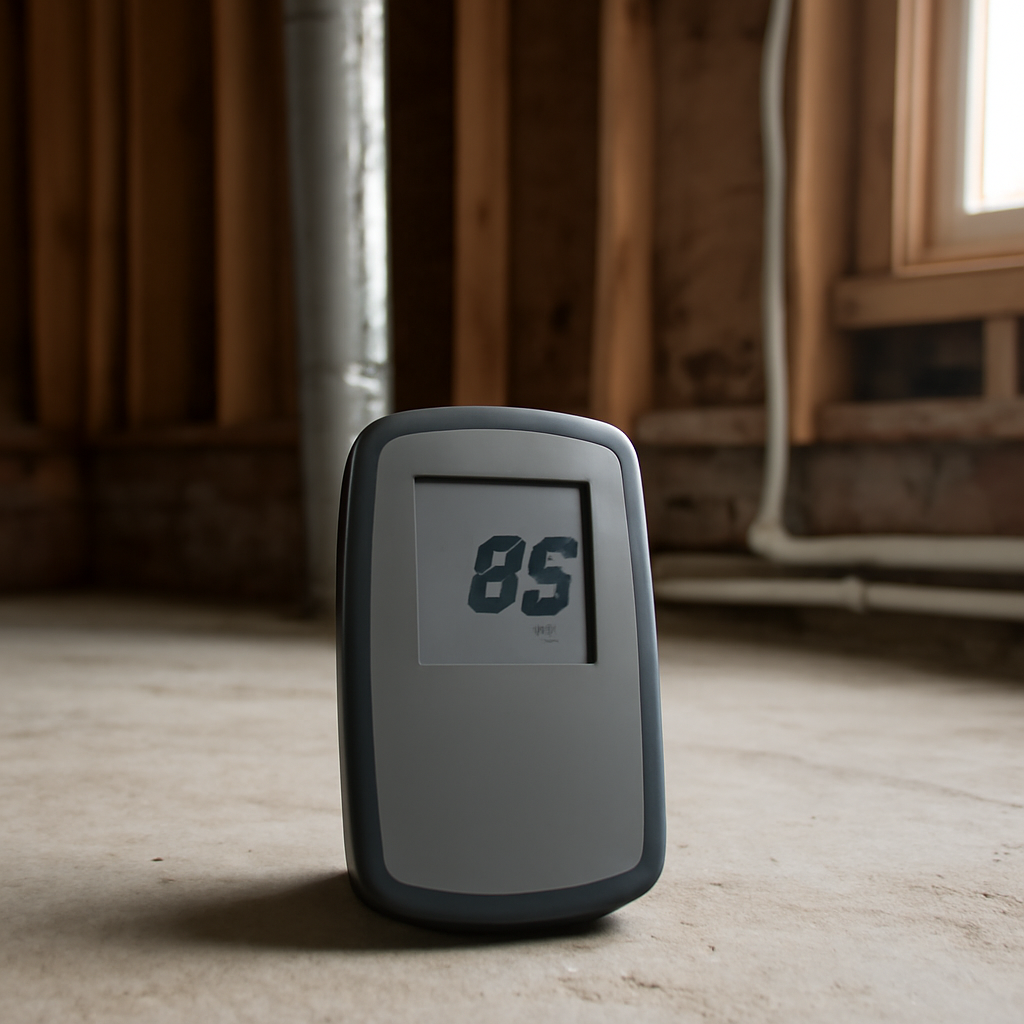
A radon test that comes back well above the average can be unsettling, and homeowners want to know how worried to be. Understanding what is a high level of radon means moving past a single threshold and recognizing tiers, because a reading of 5 pCi/L and a reading of 25 pCi/L call for very different urgency even though both exceed the action level. This guide summarizes EPA and CDPHE guidance current as of 2026; it is informational only and not medical advice, and any testing or mitigation decision should be confirmed with a certified professional. Radon is measured in picocuries per liter, written pCi/L.
What Counts as High
The EPA sets its action level at 4 pCi/L, meaning any result at or above that figure is high enough to warrant taking action to reduce it. Since the average indoor level is roughly 1.3 pCi/L, a reading at 4 pCi/L is already about three times the typical home. Anything above 4 pCi/L is fairly described as high, and the higher the number, the greater the urgency.
It helps to think in tiers rather than a single line. Readings from 4 to under 10 pCi/L are elevated and clearly merit mitigation. Readings from 10 to under 20 pCi/L are notably high and call for prompt action. Readings of 20 pCi/L and above are very high and warrant urgent attention. None of these tiers is a medical diagnosis; they are practical guides to how quickly to respond.
The 4 to 10 pCi/L Tier
This is the most common range above the action level. A home reading between 4 and 10 pCi/L has a radon problem that should be addressed, but it usually does not represent an immediate emergency. The EPA recommends confirming the result, since short-term tests vary, and then arranging mitigation by a qualified professional.
For Colorado homeowners, this tier is common precisely because much of the state, including the Front Range, sits in EPA Zone 1, the highest-potential category. A result in this range is typical for the region and very treatable. Confirmation testing matters here, because a single short-term test under unusual weather can land in this band when a longer test would settle lower or higher. The guide on radon levels in the home explains how typical home distributions cluster.
The 10 to 20 pCi/L Tier
A reading in this range is high and deserves prompt attention. At 10 pCi/L and above, the EPA encourages homeowners to act without long delay, because the level is well beyond the action threshold and the cumulative exposure adds up faster. There is no need to panic, but there is reason to move from considering mitigation to scheduling it.
Confirmation is still worthwhile, though many professionals will proceed toward mitigation planning at this level rather than waiting on a long-term test, given how far the reading exceeds 4 pCi/L. A properly designed sub-slab depressurization system typically brings even readings in this tier down dramatically, often below 2 pCi/L. The point of mitigation is to reduce the level as much as reasonably achievable, not merely to dip under the action line.
The 20 pCi/L and Above Tier
Very high readings, 20 pCi/L and up, warrant urgent action. The EPA advises that homeowners with results this high should arrange mitigation as soon as possible, because the level represents a substantial elevation above any normal range. Some homes in high-potential geology test even higher, into the dozens of pCi/L.
For results in this tier, a short-term test is enough to act on; waiting months for a long-term test is not advisable when the initial reading is this high. A qualified radon mitigation professional can install a system that brings the level down significantly, and re-testing afterward confirms the system is working. Treating a very high reading with urgency reflects the cumulative nature of radon risk: the longer a home sits at 20 pCi/L, the more exposure accumulates. For how mitigation thresholds are set, see the related discussion on at what level radon should be mitigated.
Why Higher Means More Urgent
Radon causes lung cancer, and the EPA and CDC identify it as a leading cause of the disease in the United States. The risk scales with both the concentration and the duration of exposure, so a higher level accumulates risk faster. That is the logic behind treating tiers differently: a home at 4 pCi/L and a home at 25 pCi/L both need mitigation, but the higher home should not wait.
This framing is about response speed, not health diagnosis. Radon does not produce immediate symptoms, and questions about personal health belong with a physician. What a homeowner controls is how quickly to reduce the level, and higher readings simply compress the reasonable timeline for acting. Lower is always better, and the further above 4 pCi/L a home tests, the more a prompt fix pays off.
Confirming and Responding to a High Result
The response to any high reading follows a sensible sequence. For results in the 4 to 10 pCi/L range, confirm with a second short-term test or a long-term test, then mitigate if confirmed. For results from 10 pCi/L up, lean toward mitigation planning quickly, with confirmation as appropriate. For results of 20 pCi/L and above, act promptly without prolonged delay.
In every case, mitigation should be performed by a qualified professional and verified with a post-mitigation test. Colorado homeowners can find guidance through CDPHE, and the inspectandtest Front Range radon testing resource outlines what local testing and mitigation involve. Keeping documentation of pre- and post-mitigation readings helps with future home sales.
Keeping Levels Down Over Time
Even after a high reading is mitigated, periodic retesting matters. Mitigation systems can lose effectiveness if a fan fails or a seal degrades, and home changes can alter radon entry. Re-testing every couple of years, and after major renovations or foundation work, confirms the system still holds the level low. A high result, addressed properly and monitored, becomes a managed condition rather than a lingering hazard.
How High Radon Enters a Home
Understanding why a home reads high helps homeowners see why mitigation works. Radon originates from the natural decay of uranium in soil and rock, and it migrates upward through the ground until it reaches the air or a building. A home sitting over radon-rich soil acts like a collection point, because the warm air inside creates lower pressure than the soil below, drawing the gas in through any available opening.
Those openings are more numerous than most homeowners realize. Cracks in a concrete slab, gaps where pipes and conduits penetrate the foundation, unsealed sump pits, crawl space floors, and joints between the slab and foundation walls all serve as entry points. The more entry paths and the richer the soil, the higher a home tends to read. This is why two homes on similar soil can differ: construction details and foundation condition shape how much radon gets in.
High readings, therefore, are not a sign that something is broken so much as a reflection of geology meeting building design. That framing matters because it explains why the standard fix, drawing radon away from beneath the foundation before it can enter, is so effective. Mitigation does not fight the geology; it intercepts the gas at the point of entry and routes it harmlessly outside.
How Mitigation Brings High Levels Down
The workhorse of radon reduction is sub-slab depressurization. A pipe is inserted through the slab into the soil or gravel beneath, and a continuously running fan draws radon-laden air from under the foundation and vents it above the roofline, where it disperses harmlessly. By creating suction beneath the slab, the system reverses the pressure dynamic that pulls radon indoors, intercepting the gas before it enters living space.
Well-designed systems are remarkably effective, often reducing even high readings to below 2 pCi/L. The exact design depends on the home: the number of suction points, the fan size, and the routing of the vent pipe are tailored to the structure and the severity of the problem. Sealing major entry points such as slab cracks and sump openings supports the system by reducing the air it must move.
Because the fan runs continuously and the reduction depends on it, a post-mitigation test verifies the system achieved its goal, and ongoing monitoring confirms it keeps working. Some systems include a simple pressure gauge that signals if the fan fails. This combination of an effective design and verification is why a high radon reading, while serious, is also a solvable problem for a qualified professional. For the broader framing of typical levels and benchmarks, see how to read radon pCi/L levels.
Acting Without Panic at a High Reading
A high radon result can feel frightening, but the appropriate response is measured action rather than alarm. Radon risk accumulates over years of exposure, so a home that has tested high has not created an emergency that demands evacuating overnight. What it calls for is a clear plan: confirm where appropriate, schedule professional mitigation, and verify the result afterward.
The urgency rises with the level, which is why the tiers matter. A home at 5 pCi/L can reasonably confirm before mitigating, while a home at 25 pCi/L should move promptly. In every case, the path forward is well established and the outcome reliable. Framing a high reading as a manageable problem with a proven solution, rather than a crisis, helps homeowners act decisively instead of freezing or, worse, ignoring the result. Questions about personal health effects belong with a physician, while the level itself is squarely within a homeowner’s power to reduce.
Documenting a High Reading for the Future
A high radon result, once addressed, becomes part of a home’s record, and keeping that documentation pays off later. Save the original test result, the details of the mitigation system installed, and the post-mitigation test that confirmed the reduction. Together these create a clear history showing the problem was identified and resolved properly.
This record matters most during a home sale, when radon results are commonly requested and a buyer may worry about a previously high reading. Documentation that demonstrates a working mitigation system bringing the level well below the action threshold reassures buyers far more than an unexplained high number ever would. For Colorado homeowners, where elevated readings are routine given the region’s Zone 1 geology, a documented mitigation history is an asset rather than a liability. Keeping the records organized turns a one-time high reading into evidence of responsible homeownership instead of a lingering question mark.
References
- EPA radon action level and mitigation guidance — U.S. Environmental Protection Agency
- Colorado radon testing and mitigation program — Colorado Department of Public Health and Environment
- CDC radon and lung cancer risk information — Centers for Disease Control and Prevention
If your Front Range home tested high for radon, you can reach a vetted inspector through our contact page to arrange confirmation testing and mitigation referrals.