High Radon Levels Symptoms: What the EPA Actually Says

Homeowners who receive a test result showing high radon levels often immediately search for symptoms to confirm or rule out current health effects. The answer is the same for high radon as for any radon: there are no acute symptoms at any indoor concentration. A test result of 10, 20, or even 50 picocuries per liter (pCi/L) does not produce immediate physical signs in the people living in the home. The health effect of radon is lung cancer, and it develops over 10 to 40 years of sustained exposure. This guide summarizes EPA and CDC guidance current as of 2026 and walks through what a high test result actually means, how to act on it, and why looking for symptoms is the wrong response to a high reading.
Part of our Radon Levels guide — start there for the full picture →
What counts as a high radon level
The EPA action level is 4.0 pCi/L measured as an annual average. Readings at or above this threshold trigger an EPA recommendation to mitigate. The EPA also recommends considering mitigation between 2.0 and 4.0 pCi/L, especially when children spend significant time in the home or when smokers live there.
Practical thresholds for context:
Below 2.0 pCi/L: low. Mitigation generally not recommended unless the household has high-risk individuals or planned construction would increase radon entry.
2.0 to 4.0 pCi/L: moderate. Mitigation worth considering, especially for households with children, smokers, or anyone with elevated baseline lung cancer risk.
4.0 to 10 pCi/L: above the EPA action level. Mitigation recommended. Confirm result with a second test if the first was short-term, then schedule mitigation.
10 to 20 pCi/L: elevated. Mitigation recommended without further confirmation. The expected risk reduction from mitigation is substantial.
Above 20 pCi/L: high. Immediate mitigation recommended. Some state programs prioritize these homes for expedited mitigation funding when available.
The highest recorded residential radon levels in the U.S. have exceeded 1,000 pCi/L in isolated cases. Even at these extreme levels, no acute symptoms have been documented. The Stanley Watras incident in Pennsylvania in 1984, which alerted regulators to the radon-in-homes issue, involved a worker who triggered radiation alarms at his nuclear plant job site after living in a home with extraordinarily high radon. He did not have radon-attributable symptoms at the time; the alarm detected radon decay products on his clothing.
Why high radon does not produce symptoms
The biological mechanism of radon exposure is slow, cumulative alpha radiation damage in lung tissue. Even at high concentrations, the energy delivered per breath is tiny. The damage accumulates over years and eventually produces lung cancer in some exposed individuals. There is no acute response because the biological pathway does not include immediate inflammation, immune activation, or any other process the body can register in real time.
This is fundamentally different from chemical exposures like carbon monoxide, ozone, or formaldehyde, which produce acute physiological responses that the body experiences as symptoms. Carbon monoxide displaces oxygen on hemoglobin and produces headaches, dizziness, and nausea within hours. Formaldehyde irritates mucous membranes and causes immediate symptoms. Radon does neither.
The key takeaway is that searching for symptoms after a high radon result is searching for evidence that the science says does not exist. The action that does help is environmental: confirm the result, install mitigation, and re-test to verify the reduction.
What homeowners should do after a high test result
The correct response to a high test result is mitigation, not symptom evaluation. The recommended sequence is straightforward:
First, if the initial test was a short-term test, confirm with a second test. Short-term tests can be affected by weather, HVAC settings, and recent ventilation. A confirmation test reduces the risk of mitigating based on an outlier reading. For very high readings (above 10 pCi/L), the EPA allows skipping confirmation and proceeding directly to mitigation.
Second, hire a licensed mitigation contractor. Colorado mitigation contractors are listed in the National Radon Proficiency Program (NRPP) and National Radon Safety Board (NRSB) directories. Most Front Range contractors carry both credentials. The contractor visits the home, evaluates the foundation type, and proposes a system.
Third, install the mitigation system. The most common system is sub-slab depressurization: a fan pulls air from beneath the foundation slab through PVC piping that exhausts above the roofline. Installation takes one day for typical residential applications.
Fourth, test again after mitigation. The EPA recommends post-mitigation testing 24 hours to 30 days after system activation. Most installations achieve readings below 2.0 pCi/L, well below the action level. The radon mitigation system Colorado guide covers the installation process in detail.
Mitigation cost and what it includes
Radon mitigation in the Denver metro and Front Range typically costs $1,200 to $2,500 for a standard sub-slab depressurization system. Higher cost applies to:
Multi-zone foundations: homes with additions, multiple slab pours, or interior walls that divide the sub-slab area may need multiple suction points or multiple fans.
Crawl space construction: encapsulation and a sub-membrane depressurization system cost more than slab-on-grade installations.
Finished basements: routing PVC pipe through finished living space requires careful planning and may involve drywall repair.
Difficult fan locations: the fan must be installed in a non-occupied space (typically the attic or exterior) and the exhaust must terminate above the roofline. Properties with complex roof geometry add labor cost.
Annual operating cost is $50 to $150 in electricity for the fan, plus a fan replacement every 8 to 12 years. Total lifetime cost over 30 years runs $4,000 to $7,000 including the initial installation, annual operation, and one to two fan replacements. The math compares favorably to the lung cancer risk reduction the system provides.
What happens to the radon after mitigation
Sub-slab depressurization does not destroy radon. It vents the gas from beneath the foundation to the exterior atmosphere, where it disperses to ambient levels well below any health concern. The exhaust point above the roofline is required to prevent re-entry through windows, vents, or other building openings.
The fan runs continuously. Most installations use 70 to 90 watt fans that cost $5 to $15 per month in electricity at typical Front Range power rates. The fan is rated for continuous duty and typically lasts 8 to 12 years before bearing wear requires replacement. Replacement fans cost $200 to $400 installed.
The system also reduces moisture entering the home through the slab, which is a secondary benefit for basements prone to high humidity. Some homeowners report drier basements and reduced musty odors after installation.
Continuous monitoring after mitigation
The EPA recommends re-testing every two years after mitigation to confirm the system continues to perform. Conditions in the home (HVAC modifications, foundation settling, additions) can affect radon entry, and the mitigation fan can degrade gradually before failing outright.
Some Front Range homeowners install continuous radon monitors that provide ongoing readings without requiring repeat short-term test kits. Consumer-grade monitors cost $150 to $400 and display rolling averages on a digital display or smartphone app. The monitor confirms ongoing low readings and alerts the homeowner if levels rise unexpectedly. The radon testing pillar guide covers monitor selection.
Children and exposure history
Parents who discover a high radon level often worry about retrospective harm to children who have lived in the home for years. The honest framing is that cumulative lifetime risk has been incrementally increased by the exposure to date, but the increase is statistical and small relative to other lung cancer risk factors at typical residential exposure levels.
The most useful action is mitigation now to prevent further accumulation. Once the system is installed and confirmed working, future exposure for the children is at the post-mitigation level (typically below 2.0 pCi/L), which presents very low lifetime risk. The exposure that has already occurred cannot be undone, but it is not actionable in any medical sense. Pediatricians do not currently recommend lung imaging or other screening for children with residential radon exposure history.
Parents who want additional reassurance can ask the pediatrician to note the radon history in the child’s medical record. This documentation becomes part of the lifetime environmental history that future physicians may consider if respiratory issues emerge. For most children with documented mitigation, no specific medical action is warranted.
The smoker question after a high reading
Smokers in homes with confirmed high radon face significantly higher lung cancer risk than non-smokers at the same exposure. The interaction between smoking and radon is multiplicative rather than additive: a current smoker at 4.0 pCi/L has roughly 25 times the lifetime lung cancer risk of a non-smoker at the same level.
The implication is that smoking cessation is the highest-impact action a smoker can take after learning of high radon, with mitigation as a complementary action. The CDC and EPA both emphasize this combined approach. The radon-attributable risk reduction from mitigation is real, but the smoking-attributable risk reduction from cessation is larger and more immediate.
For smokers who are unable or unwilling to quit, mitigation still produces meaningful risk reduction at the household level. Other household members who do not smoke benefit fully from mitigation, and the smoker also benefits proportionally. The radon cancer symptoms article covers the smoker interaction in more depth.
Real estate implications of a high reading
Homeowners who discover high radon during a real estate transaction face a different decision than long-term residents. The seller may be required to disclose the test result to future buyers under state disclosure law. Most Front Range sellers respond to a high pre-listing test by installing mitigation before listing and disclosing the result and the mitigation together.
Buyers who receive a high test result during their inspection period can request mitigation as part of the inspection objection. Sellers typically agree to install mitigation or credit the buyer at closing because the system is a one-time fixed cost and removes the issue from future negotiations.
What not to do after a high reading
Several reactions are common but not productive. Searching for symptoms (the topic of this guide): there are no symptoms to find. Demanding immediate medical screening: pediatricians and family physicians do not screen for radon-attributable disease in the absence of other risk factors. Selling the home in panic: mitigation is straightforward and inexpensive, and a mitigated home is a normal real estate transaction.
The productive response is mitigation. The EPA does not say “leave the home” or “see a doctor.” It says “fix the home.” The cost is modest, the technology is mature, and the result is documented protection against future exposure.
References
- EPA Citizen’s Guide to Radon — U.S. Environmental Protection Agency
- CDC radon health effects resources — Centers for Disease Control and Prevention
- CDPHE Colorado radon program and mitigation resources — Colorado Department of Public Health and Environment
- NIEHS radon research — National Institute of Environmental Health Sciences
Frequently asked questions
What level of radon causes symptoms?
No residential radon level produces acute symptoms. The health effect is lung cancer over years to decades. Even the highest recorded residential levels have not been documented to cause immediate physical signs. The biological mechanism is slow accumulation rather than acute response.
How quickly should mitigation be installed after a high test?
There is no medical urgency in days or weeks, but mitigation should be scheduled promptly to stop ongoing exposure. Front Range mitigation contractors typically schedule installations one to four weeks out depending on season. Confirm the result with a second test if it was short-term, then proceed.
Will a high reading damage the home itself?
No. Radon does not damage building materials, finishes, or systems. The gas does not corrode metals, stain surfaces, or affect home value when documented mitigation has been installed. Most real estate transactions accept a mitigated home as a normal sale.
Is medical screening recommended after high radon exposure?
Not in the absence of other risk factors. Pediatricians and family physicians do not currently screen for radon-attributable disease based solely on residential exposure history. The U.S. Preventive Services Task Force lung cancer screening guidelines focus on smoking history rather than radon. Individual concerns should be discussed with a primary care physician.
Front Range homeowners with a high radon test result can contact us for introductions to licensed mitigation contractors in the Denver metro and surrounding counties.
Test your home for radon
Radon is invisible and odorless, so a test is the only way to know your level. A short-term kit gives a first reading in days; a digital monitor tracks it over time.
| Product | Why | Buy |
|---|---|---|
 AirChek Charcoal Radon Test Kit | Lab fee usually included; EPA short-term protocol. | Amazon — $21.95 |
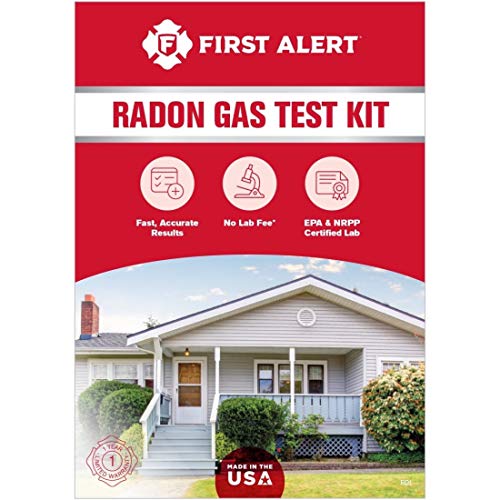 First Alert RD1 Radon Test Kit | Widely stocked; 48-hour charcoal test. | Amazon — $16.98 |
 Airthings Corentium Home | Digital monitor with a long-term average. | Amazon — $142.99 |