What Causes High Radon: A Plain-Language Guide
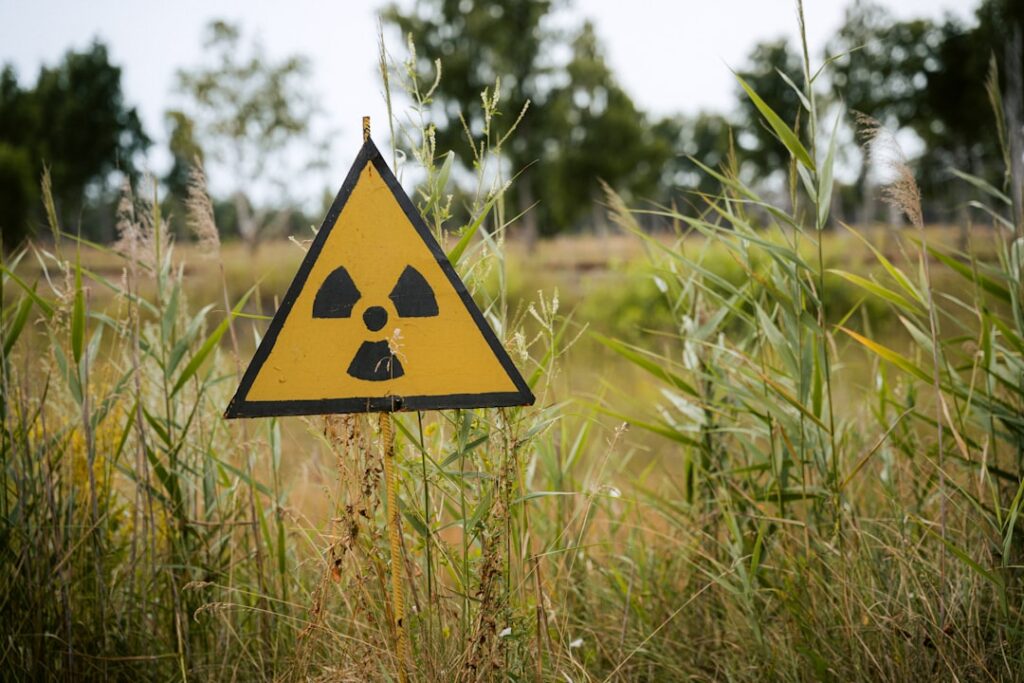
Radon does not produce immediate symptoms in most people. Persistent cough, shortness of breath, chest pain, or unexplained weight loss can be late-stage indicators of radon-caused lung cancer — but these appear only after years of exposure, not as a warning sign. The question “what causes high radon” is more directly answerable than the symptoms question, because the cause chain is well understood. Three factors combine to determine indoor radon concentration in a specific home: the uranium content of the underlying soil, the foundation’s connection to that soil, and the building’s operating conditions that influence soil-gas migration. This guide walks through the compact three-level framework. This guide summarizes EPA and CDC guidance current as of 2026 — consult a certified radon professional for testing and your physician for symptom evaluation.
What causes high radon — the three-level cause chain
Every elevated indoor radon reading traces back to some combination of three factors. The first factor is the geology beneath the home — specifically the uranium content of the soil and bedrock from which radon gas is generated as uranium decays. The second factor is the foundation pathway — the specific routes through which soil gas enters the building envelope. The third factor is the operating condition of the home itself — the indoor temperature, ventilation, and pressure patterns that determine how much soil gas actually migrates from the soil into living spaces.
All three factors must be present at meaningful levels for indoor radon to be elevated. Soil with high uranium content but a perfectly sealed foundation produces low indoor radon. A poorly sealed foundation over soil with low uranium content also produces low indoor radon. Elevated indoor readings occur when all three conditions align: uranium-bearing soil, a foundation that provides pathways, and operating conditions that drive soil gas into the home. The broader radon testing in Colorado pillar resource covers what testing reveals about the local cause profile.
Cause one: uranium-bearing soil and bedrock
Radon is a noble gas produced by the radioactive decay of uranium-238 — a naturally occurring element in many rock formations and the soils derived from them. Uranium decays through a chain of intermediate isotopes including radium-226, which decays directly to radon-222 (the radon isotope of primary concern for indoor air quality). The half-life of radon-222 is 3.82 days, which is long enough for the gas to migrate from its origin point in the soil to indoor air but short enough that it does not accumulate in soil over geologic time.
Soil and bedrock uranium content varies dramatically across the United States. The Colorado Front Range sits on or near uranium-bearing granite and sedimentary formations that produce locally significant radon source rock. EPA Radon Zone 1 — the highest-risk zone — encompasses most Front Range counties precisely because the underlying geology produces elevated radon generation rates. CDPHE radon program data confirms that the geographic risk pattern matches the geological mapping.
Cause two: foundation pathways that connect soil to interior
Radon generated in soil does not automatically reach indoor air. It must find a pathway through the building’s foundation to enter the home. The major pathways include cracks in the basement slab, gaps between the slab and the foundation walls, utility penetrations where plumbing or electrical conduits enter the building, sump pit openings, crawlspace access doors that are not sealed, and porosity in concrete and concrete-block construction.
The pathway profile depends on foundation type and construction quality. Slab-on-grade homes with poured concrete foundations have the fewest pathway types — typically slab cracks, slab-to-foundation-wall joints, and utility penetrations. Basement foundations add the additional pathways of sump pits and any drain-tile systems that connect basement spaces to the soil. Crawlspace foundations are typically the highest-pathway configuration, with the exposed soil floor providing a large surface area through which soil gas can migrate into the building. The homeowner fix guide covers pathway identification in more detail.
Why two adjacent homes can have different radon levels
Pathways explain why two homes on the same block can have very different radon readings despite identical underlying geology. One home may have a perfectly sealed foundation with tight slab construction and no sump pit; the adjacent home may have a cracked slab, a poorly sealed sump pit, and a crawlspace addition built in the 1980s without proper soil-gas barrier installation. The geology delivers the same radon source potential to both homes, but only one provides effective pathways for the gas to enter living spaces.
Cause three: house operating conditions
The third factor is how the home itself operates as a system. Buildings naturally develop pressure differentials between interior and exterior due to several effects. The stack effect — warm air rising through the building creates a slight negative pressure at lower levels and a slight positive pressure at upper levels — drives air movement that can pull soil gas through foundation pathways into the basement. Mechanical ventilation systems, exhaust fans, dryer vents, and combustion appliances all contribute to indoor pressure dynamics.
Cold weather amplifies the stack effect because the interior-exterior temperature differential is larger. This is why indoor radon concentrations on the Front Range are typically higher in winter than in summer — the cold-weather stack effect drives more soil gas through foundation pathways. It is also why short-term radon tests are most reliable when conducted under closed-house conditions: opening windows and operating exhaust fans changes the building’s pressure regime and the resulting soil-gas migration rate.
How HVAC operation influences indoor radon
HVAC system design and operation can significantly amplify or reduce indoor radon concentration without changing the underlying soil or foundation conditions. Combustion appliances — furnaces, water heaters, fireplaces — that draw combustion air from inside the home create indoor depressurization that pulls additional soil gas through foundation pathways. The same appliances configured for sealed-combustion or direct-vent operation, drawing air from outside the home, do not create this depressurization.
Air-tight construction in newer homes reduces uncontrolled air infiltration but can also amplify indoor radon concentrations if soil-gas entry pathways remain. The reduced overall air exchange means that whatever soil gas does enter the home accumulates rather than diluting. This is one reason newer homes can have higher radon readings than older, draftier neighbors despite better overall construction quality. New construction in many radon-prone jurisdictions therefore includes passive sub-slab depressurization systems as code requirements.
Seasonal and weather variation in radon levels
Indoor radon concentration is not a static number — it varies with weather, season, and building operating mode. Winter typically delivers higher readings than summer due to amplified stack effect and closed-house operating conditions. Major storms can shift readings temporarily as barometric pressure changes affect soil-gas migration patterns. HVAC mode transitions — switching from heating to cooling, opening or closing windows seasonally — shift the pressure regime and the resulting soil-gas entry rate.
This variability is why long-term tests (90 days to 1 year) provide more representative results than short-term tests (48 hours). Short-term tests are useful for real-estate transaction screening because they fit the deal timeline, but they capture only a brief snapshot of what is actually a time-varying concentration. A short-term test conducted in midwinter under closed-house conditions yields the most representative single reading for the period when indoor exposure tends to be highest. The high-radon-levels guide covers what elevated readings actually mean.
Why Front Range homes are particularly susceptible
Three local factors combine to make Colorado Front Range homes particularly vulnerable to elevated indoor radon. The first is the underlying geology — uranium-bearing granite and sedimentary formations across most of the region. The second is the prevalence of basement and walk-out basement foundation construction, which provides the foundation pathway profile most conducive to soil-gas entry. The third is the cold winter climate, which amplifies the stack effect that drives soil gas into living spaces during the months when occupants spend the most time indoors with windows closed.
The combination puts most Front Range counties in EPA Radon Zone 1. CDPHE radon program data indicates that roughly 50 percent of Front Range homes tested show indoor radon levels at or above the EPA action level of 4 pCi/L. The practical implication: every Front Range home should be tested, and elevated readings should be treated as a common rather than exceptional finding requiring mitigation.
What homeowners can do about the three causes
Homeowners cannot change the soil or bedrock geology — that factor is fixed. But the other two factors are addressable. Foundation pathways can be reduced through crack sealing, sump pit covers, and crawlspace soil-gas barriers. House operating conditions can be modified through sealed-combustion appliance upgrades, controlled ventilation system installation, and HVAC adjustments.
The more comprehensive solution — sub-slab depressurization mitigation — addresses the foundation pathway factor directly by reversing the pressure differential that drives soil gas into the home. A properly installed SSD system creates a vacuum under the slab so that soil gas flows out through engineered exhaust piping rather than in through foundation pathways. This is the standard solution for homes that test above the EPA action level, and it works reliably regardless of the specific combination of soil, foundation, and operating conditions present in a given home.
How specific construction features influence radon entry rates
Several construction features merit individual attention for their effect on radon entry. Sump pits are among the largest single-point pathway sources — an open sump pit can introduce substantial soil gas into the basement when not properly sealed. A passive sump cover with a gasket-sealed lid significantly reduces this pathway. Active mitigation systems often use the sump pit itself as the suction point, integrating the pathway into the engineered exhaust solution.
Cracked or porous concrete basement floors provide distributed pathway area that contributes to overall soil gas entry. Concrete is not a barrier to radon — it is a porous material through which radon can migrate, particularly through hairline cracks that develop with normal concrete shrinkage and seasonal movement. Floor sealants applied to basement concrete can modestly reduce permeability but rarely eliminate the entry pathway on their own.
Unsealed utility penetrations — where plumbing pipes, electrical conduits, and HVAC ducts pass through foundation walls or the slab — provide concentrated point pathways. Each penetration that is not sealed with appropriate flexible caulking represents a direct route for soil gas from the soil into the basement. The residential radon exposure reality guide covers what those entry pathways mean for occupant exposure.
Why new construction can have higher radon than older construction
Counterintuitively, newer homes often test for higher indoor radon than older draftier homes in the same neighborhood. The explanation lies in the air-tightness improvements that modern energy-code construction prioritizes. A 1960s home with original single-pane windows, minimal insulation, and uncontrolled air infiltration achieves natural air exchange rates of 1.0 or higher air changes per hour. A 2020s home built to current energy code, with high-performance windows, comprehensive air sealing, and tight envelope construction, may achieve air exchange rates of 0.3 or lower.
Lower air exchange means whatever soil gas enters the home accumulates rather than diluting. The same soil-gas entry rate that produced manageable indoor concentrations in the draftier 1960s home produces much higher concentrations in the tight 2020s home. This is why new construction in radon-prone jurisdictions increasingly includes passive sub-slab depressurization rough-in as a code requirement — recognition that improved energy performance creates new radon exposure considerations that require purpose-designed solutions.
The role of barometric pressure and weather patterns
Daily and hourly radon variation correlates strongly with barometric pressure changes. Falling barometric pressure draws soil gas toward the surface as the pressure differential between soil and atmosphere increases. Rising barometric pressure has the opposite effect, reducing soil-gas flow toward the surface. The result is that radon readings during stable high-pressure weather typically run lower than readings during periods of falling pressure or storm passage.
Wind also affects readings — high winds can pressurize one side of a building and depressurize the other, creating asymmetric soil-gas entry rates around the foundation perimeter. Temperature differentials between interior and exterior drive the stack effect described above. Cumulative effect: short-term radon readings can vary substantially day-to-day even in homes where the underlying conditions are stable, which is one reason long-term testing produces more representative results for understanding actual occupant exposure.
References
- EPA radon causes and mitigation guidance — U.S. Environmental Protection Agency
- CDC radon exposure prevention resources — Centers for Disease Control and Prevention
- CDPHE Colorado radon program and Zone 1 designation — Colorado Department of Public Health and Environment
Front Range homeowners with elevated radon test results can reach out through our contact page for a referral to a certified mitigation professional.