Free Radon Test Kit Colorado: What Homeowners Need to Know

The Colorado Department of Public Health and Environment (CDPHE) periodically offers free or subsidized radon test kits to Colorado residents through county health departments and the state radon program. This guide focuses on the kit itself — what it contains, how it works, how to deploy it correctly, and how to interpret results — so homeowners can use the kit they receive without wasted effort or invalid measurements. This guide summarizes EPA and CDPHE guidance current as of 2026; it is not medical advice. For health-related symptom concerns, consult a physician; for elevated results, consult an NRPP-certified mitigation professional.
Part of our Radon Levels guide — start there for the full picture →
Free radon test kit Colorado: what is in the box
The CDPHE-provided radon test kit varies slightly by distribution year and county source, but the most common kit type contains four items. First, a detector — typically a short-term charcoal canister or, less commonly, a long-term alpha-track detector. Second, deployment instructions printed on a single sheet with diagrams. Third, a chain-of-custody form to fill out with deployment dates, location in the home, and homeowner contact information. Fourth, a prepaid lab shipping envelope addressed to the analytical lab CDPHE contracts with for the program.
Charcoal canister kits are short-term detectors designed to be deployed for 2-7 days. Alpha-track detectors are long-term, deployed for at least 90 days. The kit packaging clearly identifies the type. Following the deployment period specified in the instructions is critical — too short and the detector under-reads; too long and the activated charcoal becomes saturated and produces an unreliable result.
How a charcoal canister kit works
A charcoal canister is a small metal or plastic container holding activated charcoal granules behind a porous filter or mesh cover. During the deployment period, radon gas diffuses through the cover and is adsorbed onto the charcoal. Radon’s short-lived progeny (polonium-218 and polonium-214) decay on the charcoal and produce gamma emissions, which the lab measures with a sodium-iodide detector after the canister returns.
The lab analysis calculates the average radon concentration during the deployment period, expressed in picocuries per liter (pCi/L). The unit measures radioactivity per volume of air — one picocurie equals one trillionth of a curie, and a curie equals 37 billion radioactive decays per second. EPA’s residential action level of 4.0 pCi/L means roughly 8-9 radon decays per second per liter of indoor air.
Limitations of the charcoal method
Charcoal canisters integrate exposure over the deployment period, so they capture the average concentration during those 2-7 days. They do not show hour-by-hour variation. If the deployment period happened to coincide with unusually low or high concentrations (storm-driven pressure changes, prolonged HVAC operation, opened windows), the result will reflect those conditions rather than typical annual average. EPA recommends a confirmatory follow-up test before mitigation decisions if the first short-term test shows elevated levels.
How an alpha-track kit works
Alpha-track detectors contain a small plastic film (typically CR-39 or polycarbonate) inside a chamber with a filtered air inlet. Alpha particles from decaying radon and its progeny strike the film, creating microscopic damage tracks. After the deployment period (90+ days), the lab etches the film in a chemical bath that enlarges the tracks to visible size, counts them under microscopy, and converts the track density to an average radon concentration.
Alpha-track detectors are more accurate for long-term average exposure because they integrate over a much longer period that captures seasonal variation. They are less common in CDPHE free-kit distributions because the longer deployment delays results and reduces program responsiveness.
Deployment instructions: getting a valid result
The instructions sheet in the kit specifies placement requirements. Following them is what separates a valid result from a wasted detector.
Where to place the detector
Place the detector in the lowest occupied level of the home — the basement if it is finished or regularly used, otherwise the lowest floor with regular occupancy. For most Front Range homes with finished basements, this means a basement bedroom, family room, or office. Avoid kitchens, bathrooms, and laundry rooms, where humidity and ventilation can distort readings.
Height and position
Place at breathing height — typically 2 to 6 feet above the floor. Keep at least 20 inches from exterior walls, 4 feet from doors and windows that open to the outside, and at least 4 inches from any other object. The detector should sit on a flat surface or hang from a string or hook.
Closed-house conditions
For short-term tests, maintain “closed-house conditions” for 12 hours before deployment starts and throughout the deployment period. This means keeping windows and exterior doors closed except for normal entry and exit. HVAC systems can run normally. Bath and kitchen exhaust fans should run only as needed for short periods. These conditions produce a conservative estimate that reflects the highest likely indoor radon concentration.
Timing
Start and end times must be recorded on the chain-of-custody form. The kit instructions specify an acceptable deployment window (commonly 48-168 hours, or 2-7 days). Document start time, stop time, exact placement, and any unusual events (severe storms, extended door openings, HVAC malfunctions) during the period.
Returning the kit and lab shipping
After the deployment period ends, seal the detector immediately. Charcoal canisters typically have a flexible seal strip or plastic film that you press into place to stop further radon adsorption. The chain-of-custody form goes in the prepaid envelope with the detector. Drop the envelope at any postal facility within 24 hours of ending deployment — delayed shipping degrades short-term test accuracy because charcoal canisters continue to lose adsorbed radon after the seal is applied.
The lab acknowledges receipt and analyzes the detector. Results typically return by email or mail within 1-3 weeks. The result report includes the measured concentration in pCi/L, the deployment dates, and basic interpretation guidance referencing EPA’s action level.
Interpreting your results
EPA’s action level is 4.0 pCi/L. The guidance breaks roughly into three tiers.
Below 2.0 pCi/L
Low risk. EPA recommends retesting every 2-5 years to confirm stable conditions. No mitigation action needed.
Between 2.0 and 4.0 pCi/L
EPA suggests considering mitigation. The risk at this range is reduced from the 4.0 pCi/L action level but not zero. Some homeowners install mitigation systems in this range; others retest and monitor.
At or above 4.0 pCi/L
EPA recommends mitigation. A confirmatory test — either a follow-up short-term test or a long-term test — is the standard next step before installing a mitigation system. If the confirmatory test confirms elevated levels, install an active soil depressurization (ASD) system through an NRPP-certified mitigation contractor.
Front Range basements commonly test above 4.0 pCi/L. CDPHE program data shows median results in many Front Range counties exceeding EPA’s action level. The broader [radon testing in Colorado pillar](https://inspectandtest.net/radon-testing/) covers what to do at each result tier in detail.
Differences between the free kit and a professional test
The CDPHE free kit produces a valid screening result for general household awareness. A professional NRPP-certified test produces a chain-of-custody-documented result suitable for real-estate transactions. The key differences:
- Real-estate use. Most real-estate transactions require an NRPP-certified test by a licensed measurement professional, not a homeowner-deployed free kit. The free kit is for household awareness.
- Continuous monitoring. Professional tests often use continuous radon monitors that record hour-by-hour data, including verification that closed-house conditions were maintained. Free kits do not.
- Mitigation decision support. A professional test with continuous monitor data informs mitigation contractor decisions more precisely than a passive integrated result.
- Cost. Free for the kit (sometimes a small fee); $150-$300 for professional short-term testing in the Denver metro.
For initial awareness — “do I have a radon problem?” — the free kit is sufficient. For real-estate or mitigation contracting, a professional test is the right tool. The local radon testing guide compares free-kit pathways to working with a nearby NRPP-certified measurement professional. The [how do you test for radon guide](https://inspectandtest.net/guides/how-do-you-test-for-radon/) covers methodology comparison in detail.
How to obtain a CDPHE free or low-cost kit
Kit availability varies by county and by year based on program funding. Check the CDPHE radon program website for current distribution channels. Some counties distribute kits through county health departments or extension offices. National Radon Action Month (January) often coincides with expanded distribution. Kit supplies are typically limited and may run out during high-demand periods. Many counties also partner with American Lung Association radon programs for additional kit access.
Common deployment mistakes that invalidate results
Several easy-to-avoid mistakes can render an otherwise valid free-kit result invalid or misleading. Recognizing them helps homeowners get usable measurements from a single deployment.
Placing the detector in a bathroom, laundry room, or kitchen produces results distorted by humidity, ventilation, and combustion appliances. The instructions explicitly direct placement to living-space rooms — basement bedroom, family room, office — for this reason. Placing the detector within 4 feet of a door or window that opens to outside dilutes the local concentration and under-reads typical exposure.
Running bath or kitchen exhaust fans continuously during the test produces results that reflect a non-typical ventilation state. Same with leaving windows open. Closed-house conditions mean closed-house — normal entry and exit are fine, but extended ventilation events distort the average.
Delaying mail-back after ending the deployment period degrades short-term test accuracy because charcoal canisters continue losing adsorbed radon after the seal. Drop the envelope at a postal facility within 24 hours of ending the deployment. Storing the sealed canister in a hot car or garage for several days reduces the lab-measured concentration and produces an artificially low reading.
Public health context for the Colorado program
CDPHE’s radon program operates under the EPA State Indoor Radon Grants framework, which funds state-level public health activities including outreach, low-cost kit distribution, and contractor training. The program prioritizes Front Range counties where geological surveys and historical testing data show high prevalence of elevated radon, with secondary distribution to mountain and Western Slope counties as funding permits.
National Radon Action Month in January traditionally features expanded kit distribution, community testing events, and outreach campaigns through county health departments and partner organizations including the American Lung Association. Some Front Range counties offer subsidized professional testing rates during the same period for households unable to deploy free kits effectively or seeking continuous-monitor data. The [radon testing in Colorado pillar](https://inspectandtest.net/radon-testing/) covers the Colorado program landscape in additional detail.
When to call a professional
Call an NRPP-certified measurement professional if results from the free kit show concentrations at or above 4.0 pCi/L and you need a confirmatory test, if you are buying or selling a home, or if you want a continuous-monitor-based assessment with hour-by-hour data. Call an NRPP-certified mitigation professional if elevated levels are confirmed and you are ready to install an active soil depressurization system. Call a physician for any respiratory symptoms — those require independent medical evaluation regardless of home radon results.
References
- Colorado Radon Test Kit Program — Colorado Department of Public Health and Environment
- A Citizen’s Guide to Radon — U.S. Environmental Protection Agency
- Home Buyer’s and Seller’s Guide to Radon — U.S. Environmental Protection Agency
- Radon Testing and Mitigation — American Lung Association
Frequently asked questions
What is in a CDPHE free radon test kit?
Most kits contain a short-term charcoal canister detector, deployment instructions, a chain-of-custody form, and a prepaid lab shipping envelope. Some distributions include alpha-track long-term detectors instead. The kit type is identified on the packaging.
How long does the free radon test take?
Short-term charcoal canister tests deploy for 2-7 days, with lab results returning 1-3 weeks after the detector reaches the lab. Long-term alpha-track tests deploy for 90+ days. Plan for total elapsed time of 3-4 weeks for short-term kits and 4-5 months for long-term.
Where should I place the detector in my home?
In the lowest occupied level — usually a finished basement room. Place at breathing height (2-6 feet), at least 20 inches from exterior walls, and 4 feet from doors and windows. Avoid kitchens, bathrooms, and laundry rooms. Maintain closed-house conditions during the test.
Can I use the free kit result for a real-estate transaction?
Generally no. Most real-estate transactions require an NRPP-certified test by a licensed measurement professional with chain-of-custody documentation. The free kit is appropriate for household awareness and screening, not transactional use.
Front Range homeowners ready to follow up a free kit result with a professional confirmatory test or mitigation can reach out through our contact page to connect with a vetted NRPP-certified professional.
Radon test kits we recommend
Short-term charcoal kits are the cheapest way to get a first reading; mail the canister to the lab and results come back in days.
| Product | Why | Buy |
|---|---|---|
 AirChek Charcoal Radon Test Kit | Lab fee usually included; EPA short-term protocol. | Amazon — $21.95 |
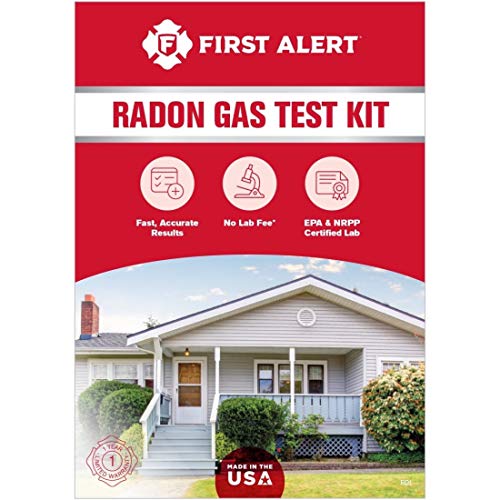 First Alert RD1 Radon Test Kit | Widely stocked; 48-hour charcoal test. | Amazon — $16.98 |
 AccuStar Two-Pack Charcoal Kit | Two-pack option for closed-house testing. | Amazon — $39.97 |