What Is a Radon Test Kit? A 2026 Plain-Language Guide
A radon test kit is a packaged tool — usually a small canister or detector plus mailing supplies — designed to let a homeowner measure the concentration of radon gas in the lowest occupied level of their home. The kit produces either a single average reading after lab analysis (charcoal canister, alpha-track) or ongoing real-time readings via an electronic monitor. This guide summarizes EPA, CDC, and Colorado Department of Public Health and Environment guidance current as of 2026, walks through how radon test kits work, what they measure, and what homeowners should do with the result. Consult a licensed radon measurement professional for any actionable decisions about your home.
Part of our Radon Levels guide — start there for the full picture →
What is a radon test kit, exactly?
A radon test kit is a measurement device or system that quantifies the concentration of radon-222 — a naturally occurring radioactive gas — in indoor air. Results are reported in picocuries per liter (pCi/L) or becquerels per cubic meter (Bq/m³). EPA’s recommended action threshold is 4.0 pCi/L (148 Bq/m³); the agency suggests considering mitigation between 2.0 and 4.0 pCi/L as well.
Radon is the second leading cause of lung cancer in the United States and the leading cause among non-smokers, per CDC and EPA. It enters homes through foundation cracks, slab penetrations, sump pits, crawlspaces, and well water. For Colorado Front Range homeowners, EPA’s Zone 1 designation makes testing especially relevant — the radon testing pillar guide covers the broader Front Range context.
What types of radon test kits exist?
Short-term charcoal canisters
A small container of activated charcoal that absorbs radon over 2–7 days. After the test period, the canister is sealed and mailed to an accredited lab for analysis. Results are returned in 5–10 business days. Cost typically $20–$45 including lab fee.
Alpha-track detectors
A small plastic detector exposed to indoor air for 90 days to one year. Alpha particles from radon decay create microscopic tracks in the plastic, which the lab counts under magnification. Best for long-term average exposure characterization. Cost $25–$50 per detector including lab fee.
Electret ion chamber detectors
A charged electret loses charge proportionally to radon concentration. Configurable for short-term or long-term use. Less common in the consumer market.
Continuous radon monitors (CRMs)
Battery- or plug-powered electronic devices that report ongoing radon levels via display or smartphone app. Consumer CRMs (AirThings, Corentium, RadonEye) cost $150–$300. Professional-grade CRMs (Sun Nuclear, Femto-Tech, AccuStar) cost $1,500–$3,000 and are used by licensed measurement professionals for real estate transactions.
The best radon test kits 2026 buyer’s guide walks through specific product recommendations for each category.
How does a radon test kit actually work?
Charcoal canisters
Activated charcoal has a porous structure that absorbs radon gas as air diffuses through it. After the exposure period, the canister is sealed and shipped to a lab. The lab measures the gamma radiation emitted by radon decay products absorbed onto the charcoal and calculates the average radon concentration over the test period. The canister has a roughly 4-day half-life sensitivity window, which is why short-term tests are limited to 7 days maximum.
Alpha-track detectors
Alpha particles from radon decay strike the plastic surface of the detector, creating microscopic tracks. After exposure, the lab etches the plastic with a chemical solution that enlarges the tracks for counting under microscopy. Track density correlates to average radon concentration over the exposure period.
Continuous radon monitors
Two main sensing technologies are used in 2026: pulse ionization chambers (AirThings) detect alpha particles via electrostatic charge collection, and silicon photodiodes (Corentium, RadonEye) detect alpha particles directly. Both technologies count individual decay events and integrate them over time to report a rolling average concentration. Electronic readout requires a settling period (typically 24 hours) before readings are reliable.
How much does a radon test kit cost?
- Short-term charcoal kit: $20–$45 including lab fee
- Long-term alpha-track kit: $25–$50 including lab fee
- Consumer CRM: $150–$300 (one-time purchase)
- Licensed professional test (real estate): $125–$200 bundled with general home inspection; $150–$250 standalone
For Front Range real estate transactions, a licensed-professional CRM test bundled with the general home inspection is the dominant pattern. The radon testing cost guide covers full pricing across categories.
Where to place a radon test kit
EPA recommends the lowest occupied level of the home. For most Front Range homes, that’s a finished basement. Specific placement guidance:
- At least 20 inches above the floor
- At least 4 inches from interior walls
- Away from drafts (HVAC vents, doorways, exterior walls)
- Away from direct sunlight
- Away from high-humidity sources (bathrooms, kitchens, laundry rooms)
- In a location representative of the breathing zone of typical occupants
Closed-house conditions are required for accurate short-term testing: windows and exterior doors closed except for normal entry/exit, no whole-house fans running, HVAC system in normal operation. EPA requires this protocol for at least 12 hours before the test period begins and throughout the test.
What do radon test kit results mean?
Below 2.0 pCi/L
EPA considers this acceptable. No mitigation action recommended. Retesting every two years is reasonable. CDC notes that no level of radon is considered absolutely safe, so even at low concentrations, time-averaged exposure matters over decades.
2.0 to 3.9 pCi/L
EPA suggests considering mitigation. Some Front Range buyers negotiate credits at this level during transactions; some homeowners preemptively mitigate to reduce long-term exposure.
4.0 pCi/L and above
EPA’s action level. Mitigation is recommended. A standard sub-slab depressurization system typically reduces indoor radon below 2.0 pCi/L. Most homes mitigate for $1,200–$2,500 in 2026 — see the radon mitigation cost guide.
High readings (10+ pCi/L)
Not unusual on the Colorado Front Range. CDPHE estimates roughly half of Colorado homes test above 4.0 pCi/L given Zone 1 designation. Mitigation is strongly recommended at high levels.
How accurate are radon test kits?
EPA-protocol short-term charcoal canisters from NRPP- or NRSB-affiliated labs are accurate within roughly +/- 25% of true average concentration when used correctly. Modern consumer CRMs publish accuracy within +/- 10% of professional-grade devices. Long-term alpha-track detectors are highly accurate for the 90-day-plus average exposure they’re designed to measure. The accuracy bottleneck for all categories is usually user error — open windows during the test period, improper placement near vents or humidity sources, or insufficient burn-in time for electronic devices.
For ongoing owner monitoring, a properly placed consumer CRM is well-suited. For real estate transactions, licensed professionals using calibrated professional-grade CRMs remain the dominant choice because of formal documentation, tampering-detection logs, and calibration traceability. The DIY radon test accuracy guide evaluates how reliable consumer kits really are.
What a radon test kit cannot tell you
- Where exactly radon is entering the home (mitigation contractors use sub-slab pressure-field tests for that)
- Whether radon levels in adjacent rooms differ from the test location
- Whether well water contains radon (a separate water test is required — see the radon in well water guide)
- Specific health effects on individual occupants
- Whether neighboring homes have similar levels (radon is house-specific even on the same street)
- Whether a real estate transaction radon contingency has been formally satisfied (lenders and inspection contracts typically require licensed-professional testing for that)
The InspectandTest editorial methodology page covers how we frame radon testing decisions for health-adjacent topics.
How to use a radon test kit step by step
- Read the instructions completely before opening the device. EPA protocol requires closed-house conditions for at least 12 hours before testing begins.
- Choose a placement location in the lowest occupied level: at least 20 inches above the floor, 4 inches from interior walls, away from drafts and humidity.
- Open the device per the instructions. Note the start date and time.
- Maintain closed-house conditions for the duration of the test (windows and exterior doors closed except for normal entry/exit; HVAC running normally).
- Avoid disturbance. Do not move the device, place objects on top of it, or expose it to direct heat sources.
- End the test at the time specified in the instructions (typically 48–96 hours for short-term kits).
- Seal and ship immediately for charcoal canisters. The seal-to-mail window matters because the canister continues to absorb radon if not sealed promptly.
- Wait for results. Lab turnaround is typically 5–10 business days; rush analysis is often available for an additional fee.
What to do with a high radon test kit result
- Verify with a second test if the result is borderline (4.0–5.0 pCi/L). Levels can fluctuate seasonally — winter readings tend to run higher than summer because of closed-house conditions.
- Consult a licensed radon mitigation contractor (NRPP or NRSB credentialed). Most states require certification.
- Get two or three quotes. Expect $1,200–$2,500 for a standard sub-slab depressurization system in 2026.
- Test again 24 hours to 30 days after mitigation system commissioning to verify performance. Target: below 2.0 pCi/L.
- Consider ongoing CRM monitoring after mitigation to catch any system drift over time.
More Questions About Radon Test Kits
How do you mail a radon test kit to the lab?
To mail a radon test kit, reseal the device in its packaging as instructed, fill out the data sheet with the start and end dates and times, and send it to the lab the same day the test ends whenever possible.
Charcoal kits are time-sensitive because the radon they absorbed keeps decaying, so a long delay in the mail can invalidate the result. Avoid mailing on a Friday or before a holiday, when the package may sit over a weekend. Many labs post results online within a few days of receiving the kit.
Do radon test kits expire?
Yes, many radon test kits, especially charcoal canisters, carry an expiration date printed on the package, and an expired kit can give an inaccurate or rejected result. The charcoal slowly absorbs moisture and gases even before the seal is opened.
Store unopened kits in a cool, dry place and check the date before starting a test. Alpha-track detectors generally have a longer shelf life than charcoal devices. Buying a kit shortly before a planned test, rather than stocking up years ahead, avoids wasting a device.
Can a radon test kit be used in a crawl space?
A radon test kit can be set in a crawl space for exploratory purposes, but the result does not represent what people breathe and should not be used to decide on mitigation. Official tests belong on the lowest lived-in level.
Crawl space readings often run several times higher than rooms above, and damp air can affect charcoal kits. A crawl space reading can help a mitigation contractor understand where radon enters, but a test on the main floor above gives the number that matters for health decisions.
Should you use two radon test kits at once?
Yes, running two radon test kits side by side, called duplicate testing, improves confidence in the result and helps catch a faulty or mishandled device. Some state and professional protocols call for duplicates in certain situations.
Place the kits about 4 inches apart in the same location and start and stop them together. If the two readings are close, average them. If they differ widely, especially on either side of 4 pCi/L, a retest or long-term test gives a clearer answer before spending money on mitigation.
Does a radon test kit include the lab fee?
Most radon test kits include the lab analysis fee and return mailing instructions in the purchase price, but some low-cost kits charge a separate fee when the device is sent in. The package or listing usually states which applies.
Comparing total cost, including lab fee and postage, gives a fair picture between kits. Free or discounted kits from state radon programs usually include analysis. Kits without prepaid analysis sometimes go unused because the extra charge is a surprise at the end of the test.
References
- EPA Radon Program — Environmental Protection Agency
- CDC Radon Information — Centers for Disease Control and Prevention
- CDPHE Radon Program — Colorado Department of Public Health and Environment
- EPA Citizen’s Guide to Radon — Environmental Protection Agency
Frequently asked questions
What is a radon test kit used for?
A radon test kit measures the concentration of radon gas in indoor air. The result tells the homeowner whether radon levels are at, above, or below EPA's 4.0 pCi/L action threshold. Mitigation is recommended at or above 4.0 pCi/L.
How long does a radon test kit take?
Short-term charcoal kits run 2–7 days followed by 5–10 business days of lab analysis. Long-term alpha-track kits run 90 days to 1 year. Consumer continuous monitors give real-time readings within hours and reliable 7-day averages within a week.
Where can I buy a radon test kit?
NRPP- or NRSB-affiliated lab vendors (often the most cost-effective), home improvement retailers, online retailers, and many state health departments offer kits. Some Colorado counties offer subsidized or free kits to residents — check with CDPHE or your county health department.
Is a radon test kit accurate enough for a real estate transaction?
Most lenders and inspection contracts require a licensed radon measurement professional for real estate transactions because of documentation and tampering-detection requirements. DIY kits are well-suited for owner-occupied testing but typically not accepted as transaction compliance evidence.
Can a radon test kit detect mold?
No, a radon test kit measures only radon gas and cannot detect mold or mold spores. Damp basements can have both radon and mold concerns, but mold needs a separate visual inspection or moisture investigation rather than a gas test.
What happens if a radon test kit is left out too long?
A short-term charcoal kit left out longer than the instructions allow may give an invalid result, because the charcoal stops absorbing radon evenly and earlier radon decays. Labs may reject kits exposed beyond the stated window, so a new test is usually needed.
Can humidity affect a charcoal radon test kit?
Yes, high humidity can reduce the accuracy of charcoal radon test kits because the charcoal absorbs water vapor as well as radon. Keep kits out of bathrooms, laundry rooms, kitchens and damp crawl spaces, and use a long-term or digital device in persistently humid spaces.
Front Range homeowners with questions about which radon test kit fits their situation can reach out through our contact page for a referral to a vetted local radon measurement professional.
Radon test kits we recommend
Short-term charcoal kits are the cheapest way to get a first reading; mail the canister to the lab and results come back in days.
| Product | Why | Buy |
|---|---|---|
 AirChek Charcoal Radon Test Kit | Lab fee usually included; EPA short-term protocol. | Amazon — $21.95 |
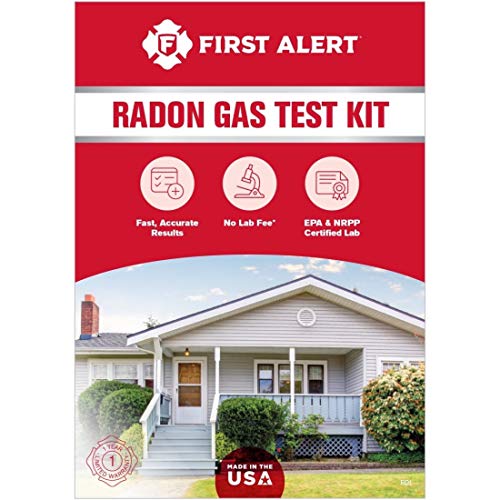 First Alert RD1 Radon Test Kit | Widely stocked; 48-hour charcoal test. | Amazon — $17.95 |
 AccuStar Two-Pack Charcoal Kit | Two-pack option for closed-house testing. | Amazon — $39.97 |