Home Radon Test Kit: What Homeowners Need to Know
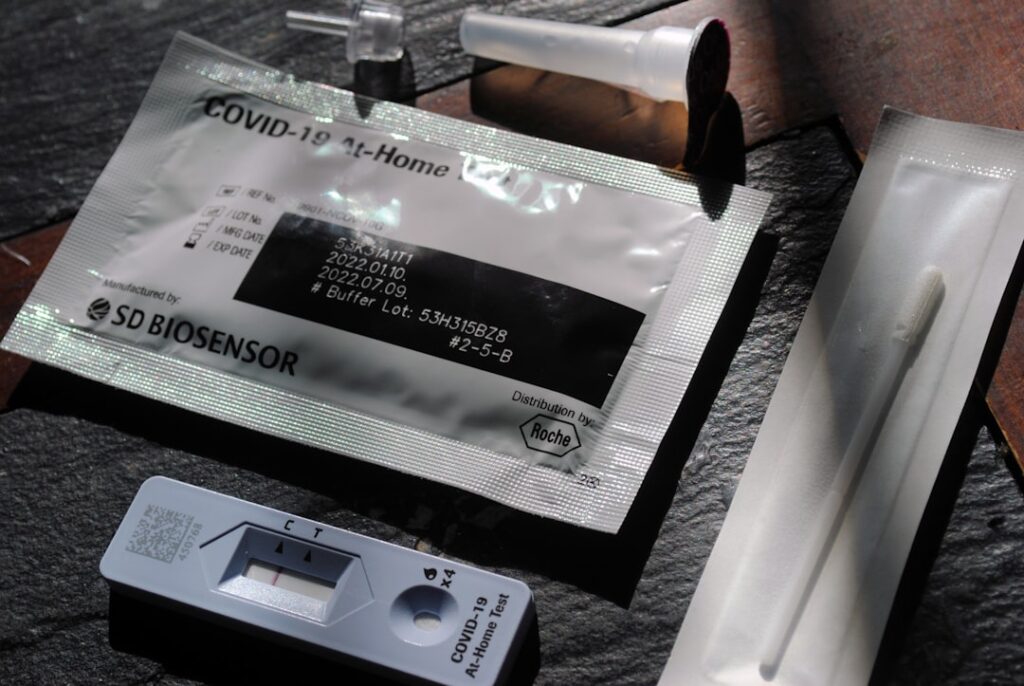
A home radon test kit is a consumer-grade detector that measures the concentration of radon gas in indoor air over a defined time window. Four product categories dominate the market — charcoal canister, alpha-track, electret ion chamber, and continuous radon monitor (CRM) — and each suits a different testing scenario. For 2026, basic short-term charcoal kits run $15 to $35 (including lab analysis), long-term alpha-track kits run $25 to $45, and consumer CRMs sell for $150 to $300. This guide summarizes EPA and Colorado Department of Public Health and Environment (CDPHE) guidance current as of 2026; it does not replace direct consultation with a certified radon professional, and any radon level above the EPA 4 pCi/L action level warrants mitigation planning.
Part of our Radon Levels guide — start there for the full picture →
What is a home radon test kit?
Radon (Rn-222) is a naturally occurring radioactive gas produced by the decay of uranium in soil and rock. It seeps into homes through foundation cracks, sump pits, crawl space soil, and around utility penetrations, and once indoors it can accumulate to levels well above outdoor background. The EPA identifies radon as the leading cause of lung cancer among non-smokers and attributes roughly 21,000 U.S. lung-cancer deaths per year to radon exposure. The EPA uses a 4 pCi/L (picocuries per liter) action level as the threshold for recommending mitigation; the World Health Organization uses a lower 2.7 pCi/L reference level. No level of radon exposure is considered fully safe — the relationship between exposure and risk is linear with no threshold.
A home test kit gives homeowners a quantitative measurement of average radon concentration over the test period, allowing comparison against those reference levels.
The four major kit types
Charcoal canister (short-term, passive)
The most common consumer kit. A small canister of activated charcoal absorbs radon over a 48-hour to 7-day exposure period, then ships back to an accredited lab for gamma spectroscopy analysis. Pricing: $15 to $35 including lab fees. Strengths: cheapest, fast turnaround (3 to 7 days from lab receipt), good for real estate transaction testing. Limitations: short test period means results reflect a specific time window; radon levels fluctuate significantly with weather, seasonal changes, and home operation, so a single short-term test may not reflect annual average exposure.
Alpha-track (long-term, passive)
A small plastic detector with a track-etch film that records alpha particles from radon decay. Deployed for 90 days to a full year. Pricing: $25 to $45 including lab fees. Strengths: provides annual or seasonal average — the most representative measure of actual exposure. Limitations: long turnaround (months by definition), not suitable for time-sensitive real estate testing.
Electret ion chamber (short or long-term, passive)
A small charged chamber that loses voltage proportional to radon exposure. Read with a specialized reader (typically by a radon professional). Pricing: not commonly sold as a consumer DIY kit — used primarily by certified radon measurement professionals. Strengths: flexible deployment periods, no lab analysis required (the reader provides immediate results). Limitations: not a DIY consumer product in most markets.
Continuous radon monitor (CRM, electronic)
An electronic device that continuously measures radon and displays hourly, daily, and long-term averages. Consumer models (Airthings Wave Plus, Airthings View Radon, RadonEye, Corentium Home) sell for $150 to $300 in 2026. Strengths: continuous data, hour-by-hour visibility, no per-test cost after purchase, useful for verifying mitigation system performance. Limitations: higher upfront cost, accuracy varies by model (look for AARST-NRPP or NRSB certification), some models require an app for full data access.
Which kit for which scenario
Match the kit type to the question.
Real estate transaction testing
Short-term charcoal canister or short-term electronic monitor following EPA’s 48-hour closed-house testing protocol. For real estate transactions, EPA guidance recommends a short-term test followed by either a second short-term test or a long-term test if the first reading is at or above 4 pCi/L.
Initial screening of a home you own
Short-term charcoal canister to get a fast read. If result is above 4 pCi/L, follow up with a long-term alpha-track or a CRM for verification before committing to mitigation.
Long-term ownership measurement
Long-term alpha-track or a CRM. The annual average is the most representative measure of actual exposure. Front Range homeowners in particular benefit from a long-term test because seasonal swings can be significant.
Post-mitigation verification
Short-term test (charcoal or CRM) at least 24 hours after mitigation system activation, followed by a long-term test after several months for confirmation. CRMs are especially useful here because they show ongoing system performance.
How testing actually works
EPA’s standard closed-house testing protocol — required for any short-term radon test of less than 96 hours — calls for:
- Doors and windows closed except for normal entry/exit
- External-fan operation limited (window fans, attic fans off; whole-house ventilation should not be elevated above normal)
- HVAC system on normal operation
- Testing began at least 12 hours after closed-house conditions are established
- Test placed in the lowest occupied level of the home (typically basement or first floor)
- Test placed at least 20 inches above the floor, away from exterior walls and doors
- Test placed away from drafts, direct sunlight, and high humidity
The exposure period is recorded, and the device is shipped to the lab (passive kits) or read on-device (CRMs).
EPA action levels and what to do with results
The EPA guidance:
- Below 2 pCi/L: Generally considered low. Retest every 2 years; consider long-term testing.
- 2 to 4 pCi/L: EPA recommends “consider mitigation.” This is the range where the WHO reference level (2.7 pCi/L) applies. Long-term retest is appropriate before deciding.
- 4 to 10 pCi/L: EPA recommends mitigation. Plan for a sub-slab depressurization system installed by a certified radon mitigation professional.
- 10+ pCi/L: EPA strongly recommends mitigation as soon as practical. Higher levels translate to higher long-term lung-cancer risk.
For a deeper look at testing approaches, our explainer on comparing radon test kits in 2026 covers product-by-product trade-offs.
Accuracy considerations
Three factors meaningfully affect kit accuracy.
Lab accreditation
Passive kits ship to a lab for analysis. The lab should be accredited by AARST-NRPP (American Association of Radon Scientists and Technologists — National Radon Proficiency Program) or NRSB (National Radon Safety Board). Verify accreditation before purchasing.
Device certification (CRMs)
Consumer CRMs should be certified by AARST-NRPP or NRSB. Uncertified electronic monitors vary widely in accuracy. Top-tier consumer models (Airthings, RadonEye, Corentium) appear on the certification lists.
Test placement
Improper placement — near a window, too close to the floor, in a basement utility room with high airflow — produces unreliable results. Follow EPA placement guidance carefully.
Colorado and the Front Range
Most of Colorado, including the entire Front Range, sits in EPA Zone 1 (predicted indoor radon screening levels greater than 4 pCi/L). Front Range homes — Denver, Douglas, Elbert, Arapahoe, Jefferson, El Paso, Adams, Boulder, Broomfield counties — typically test in the 2 to 8 pCi/L range in basements, with many properties above 4 pCi/L. Colorado building code requires passive radon-resistant new construction features in newer builds, but those features are not a substitute for testing. CDPHE manages the state radon program and occasionally distributes free or low-cost test kits through county health departments. Our broader radon testing pillar for Front Range homeowners covers the regional picture in more depth.
Common testing mistakes
Three errors regularly invalidate results.
- Not maintaining closed-house conditions. Opening windows during the test period invalidates short-term results. Closed-house conditions are mandatory for tests under 96 hours.
- Placing the kit in the wrong location. The test belongs in the lowest occupied level — basement if the basement is used, first floor if it isn’t. Placing in an attic, garage, or unfinished crawl space produces meaningless data.
- Ignoring the deployment time window. Charcoal canisters lose accuracy if left exposed longer than the manufacturer’s recommended period (typically 7 days maximum). Alpha-tracks lose accuracy if pulled too early.
Cost vs benefit
A $20 charcoal canister kit can identify a home that needs mitigation; mitigation costs $1,500 to $3,500 on the Front Range and typically reduces indoor radon by 50% to 99%. Compared to the long-term lung-cancer risk from chronic radon exposure, the test and mitigation stack is one of the highest-return home-health spends a homeowner can make.
How CRMs compare to passive kits in practice
The decision between a continuous radon monitor and a passive kit comes down to use pattern. A passive charcoal canister produces a single average reading for the test window and costs $15 to $35 for that one data point. A CRM produces hourly, daily, weekly, and long-term averages on an ongoing basis at $150 to $300 upfront. For a homeowner who plans to retest periodically, verify mitigation system performance, or track seasonal radon variation, the CRM pays for itself within 3 to 5 short-term tests. For a homeowner who needs a single screening test before deciding whether to mitigate, the passive kit is the right tool. Real estate transactions sometimes specify “professional measurement” rather than DIY, particularly when contracts include radon contingencies; in those cases a CDPHE-certified measurement professional with calibrated equipment is the appropriate choice regardless of kit availability at the consumer level.
Where to buy and what to verify
Home radon test kits are available at hardware stores (Home Depot, Lowe’s), online (Amazon, manufacturer direct), and through state and county health department programs. Before purchasing verify three items: lab accreditation (AARST-NRPP or NRSB), kit shelf-life expiration date on the packaging (charcoal canisters degrade over time and an old kit produces unreliable results), and lab analysis turnaround commitment. For CRMs, verify device certification through AARST-NRPP or NRSB and confirm the device firmware is current — most consumer CRMs update over Wi-Fi or via a companion app. Front Range county health departments — Tri-County, Jefferson, Boulder, El Paso, Denver — periodically distribute free or low-cost kits that come from accredited labs by default; those programs are worth checking before buying retail.
When to call a professional
Use a consumer home radon test kit for initial screening, real estate transaction testing, and long-term ownership monitoring. Hire a certified radon mitigation professional if the test result is above 4 pCi/L, if you need a defensible test result for real estate purposes in some jurisdictions, or if you’re verifying a newly installed mitigation system.
References
- EPA Radon Overview — U.S. Environmental Protection Agency
- A Citizen’s Guide to Radon — U.S. EPA
- Colorado Radon Program — Colorado Department of Public Health and Environment
- CDC Radon Information — Centers for Disease Control and Prevention
- Radon and Lung Health — American Lung Association
Frequently asked questions
How much does a home radon test kit cost?
Short-term charcoal canister kits cost $15 to $35 including lab analysis. Long-term alpha-track kits cost $25 to $45 including lab fees. Consumer continuous radon monitors (CRMs) range from $150 to $300 with no per-test cost after purchase.
How long should a radon test run?
Short-term tests (charcoal canister, electronic) need at least 48 hours under closed-house conditions per EPA protocol. Long-term tests (alpha-track) need 90 days to a full year. Long-term tests give the most representative picture of annual average exposure.
What radon level requires mitigation?
The EPA recommends mitigation at 4 pCi/L or higher. The WHO uses a lower reference level of 2.7 pCi/L. Between 2 and 4 pCi/L, the EPA suggests considering mitigation — no radon level is considered fully safe.
Are continuous radon monitors more accurate than passive kits?
Both can be highly accurate when properly used and certified. CRMs offer continuous hour-by-hour data and no per-test cost; passive kits offer simplicity and lower upfront cost. Look for AARST-NRPP or NRSB certification on any electronic device, and accredited lab analysis on any passive kit.
Front Range homeowners who want to confirm a test result or get a connection to a certified radon mitigation professional can reach out through our contact page.
Radon test kits we recommend
Short-term charcoal kits are the cheapest way to get a first reading; mail the canister to the lab and results come back in days.
| Product | Why | Buy |
|---|---|---|
 AirChek Charcoal Radon Test Kit AirChek Charcoal Radon Test Kit | Lab fee usually included; EPA short-term protocol. | Amazon — $21.95 |
 First Alert RD1 Radon Test Kit First Alert RD1 Radon Test Kit | Widely stocked; 48-hour charcoal test. | Amazon — $16.98 |
| Health Metric Radon Test Kit | Two-pack option for closed-house testing. | Amazon — $16.98 |