Best Home Radon Test Kit in 2026: A Buyer’s Guide

Buyers and sellers shopping for a home radon test kit are usually working against a contract deadline, not a calendar year. The inspection window in a purchase contract leaves room for a short-term test, a lab turnaround and maybe one follow-up, and little else. That changes which kit makes sense. The EPA’s guide for home buyers and sellers sets out three short-term options for real estate: two passive tests at the same time, two passive tests back to back, or a continuous monitor, each for at least 48 hours. This guide ranks six products against that timeline, then covers placement, interference and what to do with the number. The EPA recommends fixing a home at 4 pCi/L or more.
Part of our Radon Levels guide — start there for the full picture →
As an Amazon Associate we earn from qualifying purchases.
How we compared: we compared 15 current Amazon radon listings on what each listing states: number of detectors, minimum exposure, lab fee, lab turnaround, credentials, and for monitors, how fast and how often they record. Seven are mail-in lab kits and eight are digital monitors (seven distinct models). We did not lab-test any of these products or use them hands-on. Prices, lab fees and availability change, so check the current listing before buying.
Quick picks: home radon test kits for a real-estate timeline
| Product | Best for | Key features | Price | Buy |
|---|---|---|---|---|
| PRO-LAB RA100 | Side-by-side pair during a sale |
| $9.99as of Nov 3, 2026 12:36 pm GMT+0000 | Buy now →Check current price |
| First Alert RD1 | Fastest lab turnaround |
| $17.95as of Nov 3, 2026 10:05 pm GMT+0000 | Buy now →Check current price |
| empowerDX radon kit | Seller pre-listing test |
| $19.95as of Nov 3, 2026 6:45 am GMT+0000 | Buy now →Check current price |
| PRO-LAB RA155 | Back-to-back sequential tests |
| $32.99as of Nov 3, 2026 6:45 am GMT+0000 | Buy now →Check current price |
| METRINARY RM-62 SE | Continuous record during the test |
| $59.69as of Nov 3, 2026 7:52 pm GMT+0000 | Buy now →Check current price |
| RSSI AT-101 | Long-term test after closing |
| $38.95as of Nov 3, 2026 3:48 pm GMT+0000 | Buy now →Check current price |
Prices are Amazon’s listed prices as of the time shown and change often; check Amazon for today’s price. As an Amazon Associate we earn from qualifying purchases.
The six picks, compared listing by listing
1. PRO-LAB RA100 — Best Side-by-Side Kit for a Home Sale

Two short-term radon detectors for simultaneous testing in as little as 48 hours; lab fee per detector.
Check price on Amazon$9.99 as of Nov 3, 2026 12:36 pm GMT+0000 — prices change; see Amazon for current price.| Specification | Details |
|---|---|
| In the box | Two short-term passive detectors |
| Exposure | As little as 48 hours |
| Lab fee | Charged separately per detector; extra state fee for New Jersey residents |
| Results | Within a standard work week after the lab receives the detectors |
| Updates | Email or text notices from receipt to results |
| Detector media | not stated in listing |
PRO-LAB RA100 — 2 short-term detectors, 48-hr minimum, per-detector lab fee, results in ~1 work week, email/text updates
The Only Kit Here That Ships Two Detectors for a Simultaneous Test
The EPA’s first passive option for real estate is two short-term tests at the same time in the same location for at least 48 hours, with the home fixed if the average is 4 pCi/L or more. The guide notes that simultaneous tests improve precision. Of the seven kit listings on this shelf, the RA100 is the only one packaged as two detectors, and it states the 48-hour minimum. The listing also describes the pair as meeting real-estate transaction requirements, which is the seller’s claim; state rules and the contract control.
A paired test also fits a tight timeline best. Both detectors go out, sit together for 48 hours, and go back in one mailing, so there is one lab wait rather than two. The RA100’s stated turnaround, about a work week after the lab receives the detectors, is slower than the RD1 and empowerDX, so mail promptly.
What the listing does not do is include the lab fee: it is one of two kits on the shelf that charge it separately, per detector. It also does not name the detector media or a lab credential beyond “EPA approved” in the title.
Pros
- Two detectors for the EPA’s simultaneous option
- 48-hour minimum exposure stated
- One mailing, one lab wait
- Email or text status updates
Cons
- Lab fee charged per detector
- Turnaround of about a work week
- Detector media not stated
Check PRO-LAB RA100 (2 detectors) price on Amazon
2. First Alert RD1 — Best for the Fastest Lab Turnaround
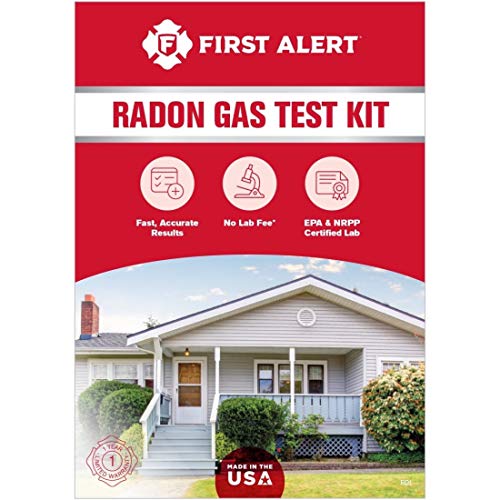
Mail-in radon kit with lab fees included outside New Jersey and emailed results within 72 hours of lab receipt.
Check price on Amazon$17.95 as of Nov 3, 2026 10:05 pm GMT+0000 — prices change; see Amazon for current price.| Specification | Details |
|---|---|
| Type | Single mail-in kit; detector media not stated in listing |
| Lab fee | Included, except New Jersey state fees |
| Results | Emailed within 72 hours after lab receipt |
| Program named | Listing says it is listed under the EPA radon measurement proficiency program |
| Exposure time | not stated in listing |
First Alert RD1 — single kit, lab fees included (outside NJ), emailed results within 72 hrs of lab receipt
The Quickest Stated Results Among the Seven Kits
On a contract deadline, lab turnaround can decide whether a result arrives in time to negotiate. Three of the seven kit listings state one: the RD1 at 72 hours, empowerDX at 3 to 5 business days, and the PRO-LAB RA100 at about a work week. The RD1 is the fastest, and its lab fee is included outside New Jersey.
Two RD1 kits can be placed side by side to follow the EPA’s simultaneous option, or one after the other for the sequential option. The EPA’s guide says the sequential approach would most likely give a better picture of the seasonal average, while simultaneous tests improve precision; on a short deadline, simultaneous usually wins.
The listing does not name the detector media or the exposure window, so read the package instructions to confirm it can run the 48 hours the EPA sets as a minimum. It also does not mention prepaid return postage.
Pros
- 72-hour emailed results after lab receipt
- Lab fees included outside New Jersey
- Easy to buy two for a paired test
Cons
- Exposure window not stated
- Detector media not stated
- Return postage not stated
Check First Alert RD1 price on Amazon
3. empowerDX Radon Test Kit — Best for a Seller’s Pre-Listing Test

Mail-in radon kit analyzed by an NRPP-certified lab, with results 3 to 5 business days after the lab gets it.
Check price on Amazon$19.95 as of Nov 3, 2026 6:45 am GMT+0000 — prices change; see Amazon for current price.| Specification | Details |
|---|---|
| Lab credentials | NRPP certified; described as EPA listed |
| Results | 3 to 5 business days after the lab receives the sample |
| Return shipping | Customer returns the sample with any carrier |
| Lab fee | New Jersey state fee at registration; otherwise not stated plainly |
| Type / exposure | not stated in listing |
empowerDX radon kit — NRPP-certified lab, results 3–5 business days after receipt, return by any carrier
One of Two Kits Here That Name a National Proficiency Credential
The EPA’s guide tells sellers to test before putting a home on the market if they can, in the lowest level that could be used regularly. A pre-listing test is where a named lab credential helps most, because the report may be handed to buyers. Two of the seven kits name the NRPP, one of the two national programs the EPA recognizes: empowerDX and RSSI. The empowerDX kit is the short-term one of the two.
Its 3 to 5 business-day turnaround is the second-fastest stated on the shelf. Shipping by any carrier lets a seller use overnight service when a listing date is close.
The listing does not state the detector type or exposure window, or whether return postage is prepaid. Buyers often want a test performed by someone not involved in the sale, as the EPA’s citizen’s guide notes, so a seller’s own kit result may prompt the buyer’s own test anyway.
Pros
- NRPP-certified lab named
- 3 to 5 business-day results
- Any carrier, including faster services
Cons
- Detector type and exposure not stated
- Return postage not stated as prepaid
- Lab-fee inclusion not stated plainly
Check empowerDX Radon Test Kit price on Amazon
4. PRO-LAB RA155 — Best for Back-to-Back Sequential Tests

Single short-term radon detector rated for as little as 48 hours, with lab analysis included in the price.
Check price on Amazon$32.99 as of Nov 3, 2026 6:45 am GMT+0000 — prices change; see Amazon for current price.| Specification | Details |
|---|---|
| In the box | One short-term passive detector |
| Exposure | As little as 48 hours |
| Lab fee | Included; no separate fees after purchase |
| Updates | Email or text notices |
| Results timing | not stated in listing |
PRO-LAB RA155 — 1 short-term detector, 48-hr minimum, lab analysis included, email/text updates
The Lab-Included Version of the 48-Hour Detector
Two kits state a 48-hour exposure: the RA100 pair and this single RA155. The RA155 states the lab fee is included, so two of them make a fee-included pair. The EPA’s second passive option is an initial short-term test of at least 48 hours followed immediately by a second test with an identical device in the same location. Buying two RA155s covers that exactly, though it doubles the testing time to at least four days.
That longer window is the trade. The EPA’s guide says sequential testing most likely gives a better picture of the seasonal average, but on a short inspection period it may not leave time for lab turnaround. Use it when the contract gives room, or for a seller testing ahead of listing.
The listing does not state how quickly results arrive after the lab receives the detector, which is the number that matters most on a deadline. It also does not name the detector media.
Pros
- Lab analysis included
- 48-hour minimum exposure stated
- Two make a fee-included pair
Cons
- Results turnaround not stated
- Sequential use takes at least 4 days
- Detector media not stated
Check PRO-LAB RA155 price on Amazon
5. METRINARY RM-62 SE — Best Continuous Record During the Test

Rechargeable radon monitor with hourly logging, a 12-hour first stable reading, peak and cumulative averages.
Check price on Amazon$59.69 as of Nov 3, 2026 7:52 pm GMT+0000 — prices change; see Amazon for current price.| Specification | Details |
|---|---|
| Sensor / range | Semiconductor; 0.09 to 1000 pCi/L (3.3 Bq/m³ to 37 kBq/m³) |
| Readings | First stable reading after 12 hours; records hourly |
| Averages shown | 24, 48, 72 and 96-hour, cumulative and peak; up to 504 days stored |
| Power | 2000 mAh rechargeable, USB-C; about 45 days with the screen off |
| Alerts / display | Adjustable threshold with flashing red light and beeps; 2.0-inch color screen |
METRINARY RM-62 SE — semiconductor, 0.09–1000 pCi/L, hourly log, 48-hr avg + peak, 504-day storage, USB-C
The Only Monitor Here That Shows a Peak Level Next to Its 48-Hour Average
The EPA’s third real-estate option is active: test with a continuous monitor for at least 48 hours. Its guide adds that a device that frequently records radon levels can reveal unusual swings during the test, one way to spot interference. Of the seven monitor models on this shelf, the RM-62 SE is the only one whose listing names a peak-level view alongside fixed 24, 48, 72 and 96-hour averages. A 48-hour average next to an hourly log and a peak gives a buyer something concrete to look at.
Three of the seven monitor models state a first reading at about 12 hours (this one and two AEGTEST models). The RM-62 SE is also the only one describing a color screen.
The limit matters in a transaction. A consumer monitor is not the calibrated, documented device a qualified tester uses, and the CDC notes the EPA recommends hiring a qualified tester when buying or selling. Use it as a buyer’s own cross-check or a seller’s pre-listing look, not as the contract test. The listing names no app and no temperature or humidity sensor.
Pros
- Hourly log with 48-hour, cumulative and peak views
- 12-hour first stable reading
- Adjustable alarm threshold
- Reusable after closing
Cons
- Not a substitute for a professional transaction test
- About 45 days per charge
- No app or remote data
Check METRINARY RM-62 SE price on Amazon
6. RSSI AT-101 — Best Long-Term Test After Closing
Long-term alpha-track kit (1 month to 1 year) with analysis and prepaid postage both ways; NRPP-certified lab.
Check price on Amazon$38.95 as of Nov 3, 2026 3:48 pm GMT+0000 — prices change; see Amazon for current price.| Specification | Details |
|---|---|
| Type | Passive alpha-track detector |
| Exposure | One month to one year; the listing notes 91 days or more counts as long term |
| Included | Analysis, prepaid shipping and return postage within the U.S. |
| Report | Email or mail, online access, plus EPA and state radon program contacts |
| Credentials | NRPP and C-NRPP certified; state licensed |
RSSI AT-101 — alpha track, 1 month–1 year, analysis + postage both ways, NRPP/C-NRPP, state licensed
The Right Kit Once the Deadline Is Gone
No long-term kit fits an inspection window; a long-term test, by the EPA’s definition, runs more than 90 days. But the EPA also says radon levels vary from day to day and season to season, and that a long-term test is more likely to reflect the year-round average. After closing, a new owner who passed on mitigation over a borderline short-term result, or who plans to finish the basement, has time for one.
Three of the seven kits use alpha track. The AT-101 is the one that states analysis included, prepaid postage both ways and named credentials. Its report also lists the state radon program phone number, a practical starting point for finding a mitigation contractor.
The listing does not state a results turnaround, and the company cannot ship to New Jersey. The one-month minimum is not long-term by the EPA’s definition, so leave it for at least 91 days.
Pros
- Year-round-average alpha-track test
- Analysis and postage both ways included
- NRPP, C-NRPP and state license named
Cons
- Far too slow for a contract deadline
- Results turnaround not stated
- Cannot ship to New Jersey
Check RSSI AT-101 Alpha Track price on Amazon
The EPA’s three real-estate testing options
The EPA’s Home Buyer’s and Seller’s Guide to Radon was written for the time pressure of a sale, and it is slightly different from the EPA’s general advice. It lists three short-term options:
| Option | How it works | Fix the home if | Products here that fit |
|---|---|---|---|
| Passive, simultaneous | Two short-term tests at the same time, same location, at least 48 hours | Average of the two is 4 pCi/L or more | PRO-LAB RA100; two RD1 or two RA155 kits |
| Passive, sequential | One short-term test of at least 48 hours, then a second identical test immediately in the same spot | Average of the two is 4 pCi/L or more | Two RA155 or two RD1 kits |
| Active | Continuous monitor for at least 48 hours | Average is 4 pCi/L or more | Professional continuous monitor; a consumer monitor like the RM-62 SE as a cross-check |
The guide notes the trade-off: simultaneous tests improve precision, while sequential tests most likely give a better representation of the seasonal average. It also recommends testing in the lowest level that could be used regularly, since a buyer may use a lower area than the seller does.
Building the test into a contract timeline
A practical sequence for a buyer on a short inspection period:
- Day 1: Place the detectors (or have the inspector set up a monitor) as soon as the contract is signed. Closed-house conditions should already be in place; the EPA’s citizen’s guide says to close windows and outside doors at least 12 hours before a 2 or 3-day test.
- Day 3: End the test after at least 48 hours, reseal and ship the same day. Overnight shipping shortens the gap.
- Days 4 to 8: Results arrive, depending on the lab’s stated turnaround (72 hours to about a work week on this shelf).
- Before the objection deadline: If the average is 4 pCi/L or more, request a mitigation system or a credit. See radon mitigation cost for typical scope.
That plan leaves little slack, which is why many buyers order the radon test with the home inspection. Our guide to the home inspection radon test explains how inspectors run it.
Placement and interference
The EPA’s buyers and sellers guide says not to test in a closet, stairway, hallway, crawl space, or an enclosed area of high humidity or high air velocity, which can include a kitchen, bathroom, laundry room or furnace room. The citizen’s guide adds: at least 20 inches above the floor, away from drafts, high heat, high humidity and exterior walls.
Interference is a real concern in a sale, where an occupant may not want a high number. The EPA lists ways to prevent or detect it, including a device that frequently records radon levels to reveal unusual swings, motion detectors, and recording temperature and barometric pressure. A mail-in kit offers none of those, and the CDC notes that the EPA recommends hiring a qualified tester when buying or selling. Our page on DIY radon test accuracy covers more of the limits.
Reading the result
The EPA recommends fixing the home if the radon level is 4 pCi/L (150 Bq/m³) or more, and says radon below 4 pCi/L still poses some risk. The average indoor level in U.S. homes is about 1.3 pCi/L. Our radon levels chart shows how to read each range. A result just under 4 pCi/L is a reason to plan a long-term test after closing, not a guarantee.
If the home already has a mitigation system, the EPA’s guide says to make sure the vent fan is operating properly before the test.
Colorado Front Range notes
In the EPA’s Map of Radon Zones, 53 of Colorado’s 64 counties are Zone 1, the highest-potential category, including every Front Range county. The EPA says the map should not decide whether a particular house is tested, because elevated homes appear in all zones. Colorado contracts also set their own inspection and objection dates, so confirm the timeline with the real estate professional before scheduling. Our Colorado radon levels by zip code guide adds local context, and the radon testing pillar covers the full process.
When to hire a professional instead
For the test that goes into the negotiation, a qualified tester is the stronger choice: the CDC notes the EPA recommends one when buying or selling, and the EPA says to find providers through a state radon program or the NRPP and NRSB. A professional brings calibrated continuous equipment, interference controls and a documented report the other side is more likely to accept. DIY kits still earn their place for a seller’s early look and for long-term follow-up after closing. To book a radon test with a Front Range home inspection, contact us.
References
- Home Buyer’s and Seller’s Guide to Radon — U.S. Environmental Protection Agency
- A Citizen’s Guide to Radon — U.S. Environmental Protection Agency
- What Is EPA’s Action Level for Radon and What Does It Mean? — U.S. Environmental Protection Agency
- The EPA Map of Radon Zones — U.S. Environmental Protection Agency
- Testing Your Home for Radon — Centers for Disease Control and Prevention
Frequently asked questions
What is the best home radon test kit for a home purchase?
For a purchase on a short timeline, a pair of short-term detectors placed side by side for at least 48 hours fits the EPA's real-estate guidance, especially from a lab with a fast stated turnaround. Many buyers instead have a qualified tester run a continuous monitor as part of the home inspection.
How long does a radon test take during a home sale?
The EPA's real-estate options all run at least 48 hours. Add shipping and lab time, which current kit listings state as anywhere from 72 hours to about a week after the lab receives the kit, so plan for roughly a week from setup to result.
Should I use two radon test kits at once?
Two short-term tests at the same time, in the same location, is one of the EPA's real-estate options and improves precision. Fix the home if the average of the two is 4 pCi/L or more. Two tests back to back is the other passive option.
Can a seller's own radon test be used in a sale?
A seller can share a recent result, but buyers often want a test made by someone not involved in the sale. A seller's pre-listing test is still useful for spotting a problem early and planning mitigation before listing.
What if the radon result is just under 4 pCi/L?
The EPA says levels below 4 pCi/L still carry some risk and suggests considering a fix between 2 and 4 pCi/L. After closing, a long-term test of more than 90 days gives a better picture of the year-round average.
Buying or selling on the Front Range and need a radon test that holds up in negotiations? Reach out through our contact page to connect with a vetted local inspector.
Radon test kits we recommend
Short-term charcoal kits are the cheapest way to get a first reading; mail the canister to the lab and results come back in days.
| Product | Why | Buy |
|---|---|---|
 AirChek Charcoal Radon Test Kit | Lab fee usually included; EPA short-term protocol. | Amazon — $21.95 |
| First Alert RD1 Radon Test Kit | Widely stocked; 48-hour charcoal test. | Amazon — $17.95 |
 AccuStar Two-Pack Charcoal Kit | Two-pack option for closed-house testing. | Amazon — $39.97 |