What Is in a Radon Test Kit: 2026 Contents Guide
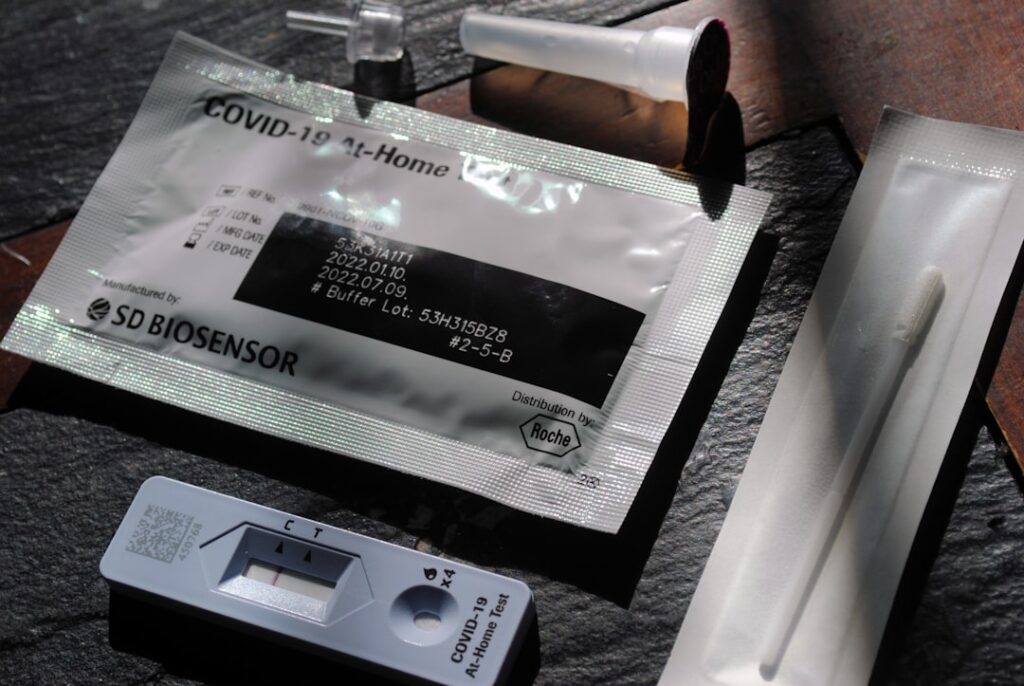
The exact contents of a radon test kit depend on which detection technology the kit uses, but every consumer kit contains three core elements: the detection device itself, written deployment instructions, and lab-return packaging (for kits that require lab analysis). This guide walks through what a homeowner actually receives when ordering each major kit type — charcoal canister, alpha-track, and electret e-PERM — and explains how each piece of the kit is used during a typical deployment. This guide summarizes EPA, CDPHE, and AARST guidance current as of 2026 — consult an NRPP- or NRSB-certified professional for transaction-grade testing and your physician for health symptoms.
Part of our Radon Levels guide — start there for the full picture →
The three main kit types and what each contains
Three detection technologies dominate the consumer kit market. Charcoal canister kits — short-term deployment, lab analysis required. Alpha-track kits — long-term deployment, lab analysis required. Electret (e-PERM) kits — short or long-term deployment, requires reader equipment. Each kit type has a characteristic content list. Continuous monitors (CRMs) are a fourth category that is more device than kit; CRMs are purchased as standalone equipment rather than as test kits.
What is in a charcoal canister kit
A typical short-term charcoal canister kit contains seven items.
The activated charcoal canister
A small metal or plastic canister (typically 2 to 3 inches in diameter, 1 inch tall) filled with activated charcoal. The canister has a sealed lid that the homeowner removes at deployment to begin absorption. The activated charcoal absorbs radon gas and its short-lived decay products from indoor air over the deployment period (typically 48 to 96 hours).
Deployment instructions
A printed or QR-code-linked instruction sheet covering: where to place the canister (lowest livable level, at least 20 inches above floor, at least 4 inches from any wall, away from drafts and HVAC outlets), how to record start and end times, what “closed-house conditions” require, and how to seal the canister at the end of deployment.
A deployment log card
A simple paper form for recording deployment start time, end time, location in the home, weather conditions during the test, and any unusual events (windows opened, HVAC turned off, etc.). The form ships back to the lab with the canister.
A pre-paid lab return envelope or shipping label
The canister must be sent back to the analyzing lab within a tight window (typically 24 to 48 hours of retrieval) to minimize background subtraction errors as radon decays. The envelope or shipping label includes the lab’s address and the kit’s pre-printed sample identifier.
A seal sticker or tape
A sticker the homeowner places over the canister opening at the end of deployment to seal in the absorbed radon for shipment. The seal must be applied immediately at the deployment end-time.
Quality-assurance documentation
A reference to the kit’s lot number, manufacturer information, and EPA-accreditation status of the analyzing lab. This documentation supports the kit’s validity for personal-use measurement.
Online result-portal access
Many modern consumer kits include a registration card or web link directing the homeowner to a results portal where the lab posts the analyzed result (typically 5 to 10 business days after lab receipt). The result is reported in pCi/L with reference to the EPA 4.0 pCi/L action level.
What is in an alpha-track kit
Alpha-track kits are designed for long-term deployment (90 days to 1 year) and contain different components than short-term kits.
The alpha-track detector
A small plastic film cassette (typically 2 inches square, 0.5 inch thick) with a thin polycarbonate film inside. Alpha particles from radon decay etch microscopic pits in the film during the deployment period. The detector is designed for extended exposure rather than rapid absorption.
A protective plastic holder
The detector sits in a small plastic mount that protects it from dust and accidental disturbance during the long deployment. The mount has integrated airflow openings that allow ambient air to reach the film while preventing tampering.
Long-term deployment instructions
Instructions for placing the detector for the long deployment period, including reminders that closed-house conditions are not required for long-term tests (only short-term tests need closed-house procedures), instructions for periodic checks to confirm the detector is still in place, and guidance for handling the detector at retrieval.
A start-date log
A small log card for recording the deployment start date and intended end date. The deployment duration affects the etch-density-to-concentration conversion the lab performs.
A pre-paid lab return envelope
For shipping the detector to the lab for etch analysis. Alpha-track results typically take 4 to 6 weeks to return because the lab uses chemical etching and microscope counting to read the film.
Result-portal access
Same online portal mechanism as charcoal canister kits, with the longer result-delivery timeline reflecting the lab analysis process.
What is in an electret (e-PERM) kit
E-PERM consumer kits are less common than charcoal or alpha-track because they require reader equipment. Professional kits dominate this category. A consumer-accessible e-PERM kit, when available, contains:
The electret detector
A small charged plastic disk in a metal or plastic chamber. The electret loses charge proportional to ambient radon exposure during deployment.
Pre-deployment voltage reading documentation
For consumer kits, the manufacturer typically pre-reads the electret voltage at the factory and includes the pre-deployment value on the kit packaging. The homeowner records the start date and deployment length.
Deployment instructions
Standard EPA-compliant deployment guidance similar to charcoal and alpha-track kits.
A return envelope
The electret ships back to the lab (or in some configurations, to the manufacturer’s reader location) for post-deployment voltage reading. The voltage difference combined with the deployment duration produces the radon concentration result.
Deployment duration by kit type
Charcoal canister kits deploy for 48 to 96 hours. The closed-house condition (doors and windows kept closed except for normal entry and exit) applies to the entire deployment period. Alpha-track kits deploy for 90 days to 1 year. Closed-house condition is not required for the long-term deployment; normal household ventilation patterns are appropriate. Electret kits deploy for 2 to 7 days (short-term electrets) or up to 1 year (long-term electrets). Closed-house condition applies only to short-term deployments. For broader context on test types and durations, see our guide on radon test duration by type.
What kits do NOT contain
Three things consumers sometimes expect but most kits do not include. Calibration certificates — consumer kits ship with factory QA documentation but not individual NIST-traceable calibration certificates. That documentation is reserved for professional kits. Tamper-detection equipment — consumer kits do not include the tilt sensors, motion detectors, or continuous logging that professional CRMs use. Tamper protection on a consumer kit relies on the homeowner’s good-faith deployment. Multiple deployment devices — most consumer kits include a single detector. Many homeowners purchase 2 to 3 kits for simultaneous deployment on different levels of the home to capture the spatial variation in indoor radon. For more on professional-grade kit options, see our guide on professional radon test kit options.
Where to buy consumer kits
Multiple channels distribute EPA-approved consumer radon test kits. Hardware retailers (Home Depot, Lowe’s, Ace Hardware) stock charcoal-canister kits at $15 to $30 typically. Air Chek, Pro-Lab, and Accustar are common consumer brands. Direct-to-consumer online (Air Chek, RadonAway, EPA-listed labs) offer kits with prepaid lab fees from $20 to $40. State and local health departments sometimes distribute free or subsidized kits — CDPHE periodically offers free Colorado kits during National Radon Action Month in January. National Radon Program Services at Kansas State University also distributes low-cost kits ($15 including lab analysis) through their consumer program.
Cost vs information value
Charcoal canister kits: $15 to $40 typical retail. Alpha-track kits: $25 to $60 typical retail. Electret consumer kits: $40 to $80. Consumer continuous monitors (purchased rather than kit-based): $150 to $300 for devices from Airthings, Ecosense, and RadonEye. The cost difference between consumer kits ($15 to $40) and professional services ($100 to $200 per test) reflects the calibration, chain-of-custody, and certified-analyst overhead in professional testing — appropriate for transactions but not necessary for personal-awareness testing.
How to verify a kit is EPA-approved
EPA does not directly approve consumer kits, but EPA maintains a list of accredited radon measurement labs and recognized device technologies. The two private accreditation bodies — the National Radon Proficiency Program (NRPP) and the National Radon Safety Board (NRSB) — credential the labs that analyze consumer kits. Reputable consumer kits ship with the analyzing lab’s NRPP or NRSB accreditation number printed on the kit packaging or in the result-portal documentation. Homeowners should verify accreditation through the AARST or NRSB website lookup tools before purchasing a kit, particularly when buying from online sources rather than major hardware retailers. An unaccredited lab’s result is not defensible for any transactional or compliance purpose.
What the result actually means
Radon kit results are reported in picocuries per liter (pCi/L), the U.S. standard unit for indoor radon concentration. Internationally, becquerels per cubic meter (Bq/m³) is the SI unit; the conversion is 1 pCi/L equals 37 Bq/m³. The EPA action level is 4.0 pCi/L (148 Bq/m³); CDPHE recommends action between 2.0 and 4.0 pCi/L as well. A short-term kit result represents the average concentration during the 48 to 96 hour deployment window — it can vary substantially from the annual average due to seasonal, weather, and HVAC variation. EPA recommends following up borderline short-term results with a long-term alpha-track test to establish a more reliable annual-average baseline.
What to do after a positive result
A short-term kit result above 4.0 pCi/L is a recommendation to take action but is not the final word — short-term results can be biased by short-window weather or HVAC events. EPA recommends three follow-up steps. Confirm with a second short-term test or, preferably, a long-term alpha-track test for the annual-average baseline. If the long-term result confirms the elevated reading, engage an NRPP- or NRSB-certified mitigator for system installation. After mitigation installation, the mitigator performs a verification test 30 days post-install to confirm the system reduced indoor radon below the target threshold. The full workflow takes about 4 to 6 months from initial discovery through final verification — most of that time is the long-term confirmation test, which can be compressed using a continuous monitor if speed matters.
Storage and shelf life
Consumer kit shelf life depends on the detection technology. Charcoal canister kits typically expire 6 to 12 months from manufacture; using an expired canister can produce inaccurate results because the activated charcoal absorbs some background radon during storage. Alpha-track kits have longer shelf lives (often 2 to 3 years) because the polycarbonate film does not absorb background radon during storage. Electret kits expire when the pre-deployment charge degrades, typically 1 to 2 years. Homeowners storing kits should keep them sealed in original packaging, away from heat, and check the manufacture date before deployment. Expired kits should be discarded rather than used.
References
- EPA Radon Test Kit Lookup — U.S. Environmental Protection Agency
- CDPHE Colorado Radon Program — Colorado Department of Public Health and Environment
- CDC Radon Health Resources — Centers for Disease Control and Prevention
- American Lung Association Radon Resources — American Lung Association
Frequently asked questions
What is in a typical consumer radon test kit?
A typical charcoal canister kit contains the activated charcoal canister, deployment instructions, a log card, a pre-paid lab return envelope, a seal sticker, QA documentation, and online portal access for results. Alpha-track and e-PERM kits have different but analogous components.
Are kit contents the same for short-term and long-term tests?
No. Short-term charcoal kits include closed-house deployment instructions and rapid lab-return packaging. Long-term alpha-track kits include long-deployment instructions and protective mounting for extended placement. The detection technology and accompanying materials differ.
Do consumer kits include calibration certificates?
Consumer kits include factory QA documentation but not individual NIST-traceable calibration certificates. Professional kits used in real-estate transactions include the certified-calibration documentation that consumer kits omit.
How long does it take to get results from a kit?
Charcoal canister kits return results 5 to 10 business days after lab receipt. Alpha-track kits return results 4 to 6 weeks after lab receipt. Electret kits return results 1 to 3 weeks. Continuous monitors give immediate readings on the device.
Front Range homeowners with questions about radon testing or kit selection can connect through our contact page for a referral to a certified professional.
Radon test kits we recommend
Short-term charcoal kits are the cheapest way to get a first reading; mail the canister to the lab and results come back in days.
| Product | Why | Buy |
|---|---|---|
 AirChek Charcoal Radon Test Kit AirChek Charcoal Radon Test Kit | Lab fee usually included; EPA short-term protocol. | Amazon — $21.95 |
 First Alert RD1 Radon Test Kit First Alert RD1 Radon Test Kit | Widely stocked; 48-hour charcoal test. | Amazon — $16.98 |
| Health Metric Radon Test Kit | Two-pack option for closed-house testing. | Amazon — $16.98 |