At Home Radon Test Kit: What Homeowners Know
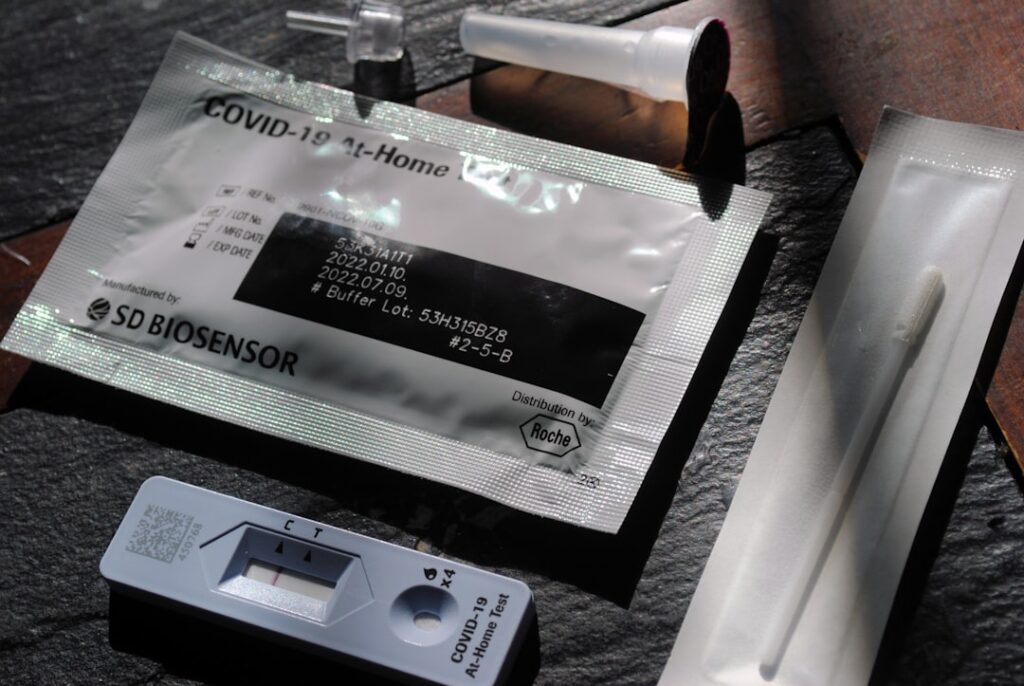
Radon is invisible and odorless, so the only way to know whether a home has a problem is to measure it, and for most households the entry point is an inexpensive at home radon test kit. Colorado’s geology makes this especially pressing: the Front Range corridor shows high radon potential, and the state health department urges every home to test regardless of age or construction. A test kit costs a fraction of a professional measurement and, used correctly, gives a reliable first read on whether mitigation is warranted. This guide summarizes EPA and Colorado Department of Public Health and Environment guidance current as of 2026; it is educational and not a substitute for a certified radon professional or medical advice from your physician.
Part of our Radon Levels guide — start there for the full picture →
How Does an At Home Radon Test Kit Work?
An at home radon test kit captures a sample of your indoor air over a set period, then either reports a reading directly or is mailed to a laboratory that analyzes it. Passive kits, such as charcoal canisters and alpha-track detectors, absorb radon decay products and require lab analysis. Continuous electronic monitors measure radon in real time and display a running average without mailing anything.
The kit is placed in the lowest livable level of the home, typically a basement or ground floor, since radon concentrates near the soil. After the exposure period, you either send the device to the lab or read the monitor’s display. The result, expressed in picocuries per liter, tells you whether the level approaches the EPA action threshold. The broader hub on radon testing for Front Range homeowners explains how this fits into the testing landscape.
The Main Types of Radon Test Kits
Kits fall into short-term and long-term categories, with electronic monitors as a growing third option. Each answers a slightly different question and suits a different timeline.
Short-Term Charcoal Kits
Charcoal canister kits measure radon over roughly two to seven days and are the cheapest, fastest option. They are ideal for an initial screening or a real estate transaction where time is short. Their weakness is that radon levels swing day to day with weather and home use, so a short-term result is a snapshot rather than a long-term average. The EPA suggests following an elevated short-term result with a confirmatory test.
Long-Term Alpha-Track Kits
Alpha-track detectors measure for 90 days or longer, producing an average that better reflects the actual year-round exposure. They cost a little more and take longer to deliver results, but they smooth out the daily fluctuations that can mislead a short test. For a homeowner who wants the most representative number, a long-term test is the stronger choice.
Continuous Electronic Monitors
Electronic monitors provide ongoing readings and a running average, letting homeowners watch how levels change with seasons and activities. They cost more upfront but require no lab fees and can be reused indefinitely. For Colorado homes, where the winter stack effect drives radon higher, a continuous monitor offers useful long-term visibility. Specific devices are reviewed in the resource on the RadonEye RD200 electronic monitor.
How to Test Your Home Correctly
Accurate results depend on following the protocol precisely. Place the kit in the lowest level you regularly use, at least 20 inches above the floor, away from drafts, exterior walls, windows, and high-humidity areas. Keep it clear of vents and appliances that could skew airflow around the device.
For short-term tests, the EPA recommends closed-house conditions: keep windows and exterior doors closed except for normal entry and exit, beginning 12 hours before the test and throughout. Avoid testing during severe storms or unusually windy weather, which can distort readings. Record the start and stop times accurately, since the exposure duration is part of the calculation. The guide on the radon house test process walks through placement step by step.
Reading and Interpreting Your Results
Results come back in picocuries per liter. The EPA’s action level is 4.0 pCi/L; at or above that figure, the agency recommends mitigation. The agency also stresses there is no completely safe level and that homeowners may consider action between 2.0 and 4.0 pCi/L, since risk persists below the threshold.
A single short-term result above the action level should be confirmed with a second test, ideally a long-term test or a follow-up short-term test, before committing to mitigation. A result well below 2.0 pCi/L is reassuring, though periodic retesting is still wise because levels change over time. Front Range homeowners trying to gauge regional risk can consult the resource on the radon gas map, while remembering that only a test of your specific home gives a real answer.
DIY Kits Versus a Professional Test
For initial screening and routine monitoring, a quality DIY kit is accurate, affordable, and recommended by the EPA. Where DIY falls short is in high-stakes situations: real estate transactions sometimes require a tamper-resistant test performed by a certified measurement professional, because a self-administered test can be questioned by the other party.
Professional testing also brings calibrated equipment and protocol expertise that reduce the chance of user error. For a confident homeowner doing a personal screening, a DIY kit is the sensible first step. When the result drives a purchase decision or a mitigation contract, a certified measurement adds credibility. Both paths lead to the same goal: an accurate number you can act on.
Why Front Range Homeowners Should Test Regardless of Home Age
A common misconception is that only old homes, or only homes with basements, have radon problems. Neither holds up. Radon enters from the soil, so a brand-new, tightly sealed home can trap it as effectively as a century-old one, and slab-on-grade homes without basements still draw soil gas through cracks and penetrations. The Colorado Department of Public Health and Environment urges every home in the state to test, because the gas does not discriminate by construction type or vintage.
The Front Range corridor sits in the EPA’s highest radon-potential zone, driven by uranium-rich soils. A neighbor’s low reading does not predict yours, since radon levels vary house to house based on foundation details, soil, and how the home is operated. The only way to know your home’s level is to test your home. A modestly priced kit removes the guesswork, and given that radon is the second leading cause of lung cancer, the cost-to-risk ratio strongly favors testing.
Common Testing Mistakes That Skew Results
Most inaccurate DIY results trace back to a handful of avoidable errors. Placing the kit too close to a window, exterior door, or HVAC vent lets outside air dilute the reading. Setting it in a bathroom, kitchen, or other high-humidity space can interfere with certain detector types. Putting it on an upper floor rather than the lowest livable level understates the home’s true exposure.
Timing errors matter too. Failing to maintain closed-house conditions during a short-term test, or running the test during a severe storm or high winds, distorts the result. Recording the wrong start or stop time throws off the lab’s calculation. Bumping or moving the device mid-test compromises the sample. Reading the kit’s instructions carefully and following them to the letter is what separates a usable result from a misleading one, and it costs nothing beyond a little attention.
Short-Term Then Long-Term: A Sensible Testing Strategy
A practical approach combines the strengths of different kit types rather than relying on one. Many homeowners start with an inexpensive short-term charcoal kit for a quick initial read. If that result comes back low, well under the action level, the home is likely fine, though periodic retesting remains wise. If the short-term result is at or above 4.0 pCi/L, or sits in the uncertain 2.0 to 4.0 range, a follow-up confirms it before any costly decision.
For confirmation, a long-term alpha-track test of 90 days or more gives the most representative average, smoothing out the daily and weather-driven swings that can mislead a short test. This staged strategy, screen quickly, then confirm thoroughly, balances cost, speed, and accuracy. It avoids both the false alarm of acting on a single high reading and the false security of trusting one low reading taken on a favorable day. For Front Range homes, where winter levels can spike, ensuring at least one test captures the heating season strengthens confidence in the result.
What to Do After Testing
If your result lands at or above 4.0 pCi/L, confirm it and then plan mitigation, since established systems reliably lower radon to safe levels. If the result is between 2.0 and 4.0, weigh mitigation based on how much time the household spends in the affected space. Below 2.0, retest periodically, especially after major renovations or foundation work that could change radon entry.
Because Colorado’s seasonal swings affect indoor radon, retesting every couple of years is a reasonable habit for Front Range homes even after a low reading. Testing is cheap, lung cancer is not, and a kit on the shelf does nothing until it is deployed. The conservative approach is to test, confirm, and act on whatever the number shows.
How Weather and Seasons Affect Your Reading
Radon levels are not static, and understanding the variables behind a reading helps a homeowner interpret it correctly. Barometric pressure, wind, temperature, and precipitation all influence how much soil gas enters a home on a given day. A storm that drops pressure can pull more radon indoors, while a windy day can either increase or dilute levels depending on how it affects the home’s air exchange. This is why a single short-term test is a snapshot rather than a definitive year-round figure.
Season matters most of all in Colorado. The winter stack effect, warm indoor air rising and escaping upper levels, creates negative pressure at the foundation that actively draws soil gas, and radon with it, into the home. A test run in summer with windows open can read far lower than the same home in January with the heat running. For the most protective assessment, the Colorado Department of Public Health and Environment encourages testing during the heating season or using a long-term test that averages across conditions, so the result reflects the home at its worst rather than its best.
Cost of Test Kits Versus the Risk They Address
Test kits are among the least expensive home-safety tools available. A basic short-term charcoal kit with bundled lab analysis typically costs in the low tens of dollars, a long-term alpha-track kit somewhat more, and a reusable electronic monitor a one-time purchase in the low hundreds. Against the cost of a professional measurement, which can run several times higher, a DIY kit is a bargain for an initial screening.
That low cost stands in stark contrast to the risk radon poses. As the second leading cause of lung cancer overall, radon causes thousands of deaths a year by widely cited estimates, yet a problem it takes years to inflict can be detected for the price of a modest dinner out. For Front Range homeowners in a high-radon region, the math is straightforward: the kit is cheap, the test takes minimal effort, and the information it provides can prompt a one-time mitigation that protects every future occupant. Few home investments offer a comparable return in safety per dollar spent.
References
- A Citizen’s Guide to Radon — U.S. Environmental Protection Agency
- Test Your Home for Radon — Colorado Department of Public Health and Environment
- Radon and Lung Health — American Lung Association
Frequently asked questions
Are at home radon test kits accurate?
Yes, when used correctly. The EPA recommends DIY kits for initial screening. Accuracy depends on proper placement in the lowest livable level, maintaining closed-house conditions for short-term tests, and following the timing instructions precisely. An elevated short-term result should be confirmed with a second test.
Short-term or long-term radon kit, which is better?
Short-term charcoal kits give a fast snapshot in days and suit initial screening or real estate timelines. Long-term alpha-track kits measure 90 days or more for a more representative average. For the most accurate picture of true exposure, a long-term test is stronger.
Where should I place a radon test kit?
Place it in the lowest level you regularly use, at least 20 inches above the floor, away from drafts, exterior walls, windows, vents, and high-humidity areas. Radon concentrates near the soil, so basements and ground floors give the most relevant reading.
What radon result means I need to act?
The EPA action level is 4.0 pCi/L; at or above that, mitigation is recommended. There is no completely safe level, so action between 2.0 and 4.0 may be worthwhile. Confirm an elevated short-term result with a second test before committing to mitigation.
Front Range homeowners who want a vetted, independent professional to confirm a DIY radon result or perform a certified measurement before a sale can get in touch through our contact page, and we will help connect you with a qualified local specialist.
Radon test kits we recommend
Short-term charcoal kits are the cheapest way to get a first reading; mail the canister to the lab and results come back in days.
| Product | Why | Buy |
|---|---|---|
 AirChek Charcoal Radon Test Kit AirChek Charcoal Radon Test Kit | Lab fee usually included; EPA short-term protocol. | Amazon — $21.95 |
 First Alert RD1 Radon Test Kit First Alert RD1 Radon Test Kit | Widely stocked; 48-hour charcoal test. | Amazon — $16.98 |
| Health Metric Radon Test Kit | Two-pack option for closed-house testing. | Amazon — $16.98 |