Radoneye Rd200: What Homeowners Need to Know
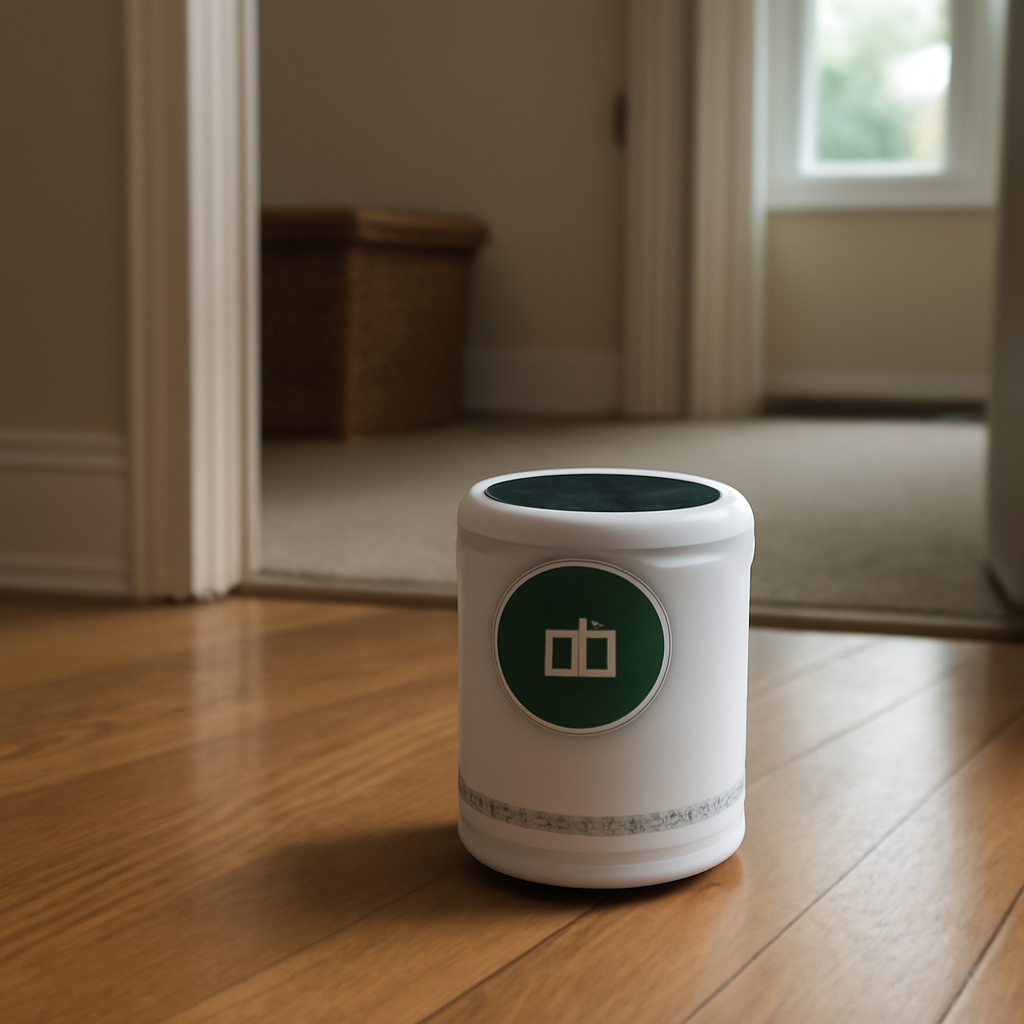
Continuous electronic radon monitors have made tracking this invisible gas far easier for homeowners, and the RadonEye RD200 is among the most widely discussed consumer devices in that category. Unlike a charcoal kit that must be mailed to a lab, the RadonEye RD200 measures radon on an ongoing basis and shows readings on a display and a companion phone app. For Colorado’s Front Range, where high-radon geology makes year-round awareness valuable, a continuous monitor offers visibility that single tests cannot. This guide summarizes EPA and Colorado Department of Public Health and Environment guidance current as of 2026; it is educational and not a substitute for a certified radon professional or medical advice from your physician.
What Is the RadonEye RD200?
The RadonEye RD200 is a consumer-grade continuous radon monitor that measures indoor radon and reports the concentration in picocuries per liter on a small display and through a Bluetooth-connected smartphone app. It uses a pulsed ion chamber sensor to detect radon decay, and it updates its reading frequently, building short-term and long-term averages over time rather than producing a single snapshot.
Because it runs continuously and is reusable, the device lets a homeowner watch how radon shifts with seasons, weather, and home use, which a one-time test cannot reveal. That makes it useful both for an initial assessment and for ongoing monitoring after mitigation. Homeowners can place it within the broader context of measurement methods through the hub on radon testing in Colorado.
How Does the RadonEye RD200 Work?
The device draws indoor air into a pulsed ion chamber, where radon decay events generate electrical pulses that the sensor counts. From that count, the unit calculates the radon concentration. After a short initial period, it begins displaying a reading and refines its accuracy as more data accumulates, which is why manufacturers of continuous monitors generally advise letting the device run for at least a day or two before trusting the number.
The companion app connects over Bluetooth and logs readings over time, charting daily and longer-term trends. This data view is the monitor’s main advantage over a charcoal canister: it shows not just a number but a pattern. For Front Range homes that experience a winter stack effect, seeing radon rise in cold months can be eye-opening. The role of continuous monitors generally is covered in the resource on the electronic radon detector.
Pulsed Ion Chamber Versus Other Sensors
Pulsed ion chamber technology is regarded as more responsive than some alternative consumer sensor types, reacting to changes in radon relatively quickly. That responsiveness is what lets the device show how a reading climbs overnight with windows closed or falls when a basement is ventilated. The trade-off is that any consumer device should be understood as a screening tool, not a substitute for a certified measurement in a high-stakes situation.
How Accurate Is the RadonEye RD200?
Consumer continuous monitors like the RadonEye RD200 are generally considered accurate enough for homeowner screening and trend tracking, and the device is frequently cited in homeowner discussions for tracking well against reference measurements. Accuracy improves as the unit accumulates readings, so a value taken in the first hours should be treated as preliminary.
That said, the EPA distinguishes between screening with consumer devices and the calibrated, protocol-driven measurements used in real estate transactions. For a self-directed homeowner assessment, the RD200 is a strong tool. For a measurement that drives a purchase decision or a mitigation contract, a certified measurement professional adds credibility a consumer device cannot. Comparing the device against simpler options is easier with the guide on radon detectors for home use.
Setting Up and Placing the Monitor
Proper placement matters as much for a continuous monitor as for a passive kit. Position the RD200 in the lowest level the household regularly uses, since radon concentrates near the soil. Keep it at least 20 inches above the floor, away from drafts, exterior walls, windows, vents, and high-humidity sources that could skew the reading.
Plug the unit in, pair it with the app, and let it run undisturbed. For an initial assessment, maintaining closed-house conditions, windows and exterior doors kept shut except for normal use, gives the most comparable reading to a standard short-term test. After the first day or two, the displayed average becomes meaningful, and over weeks the long-term trend emerges. The placement principles mirror those in the guide on the radon house test process.
Reading the Results and Knowing When to Act
The RD200 reports in picocuries per liter and shows both recent and longer-term averages. The EPA action level is 4.0 pCi/L; at or above that average, mitigation is recommended. The agency stresses there is no completely safe level, so a persistent average between 2.0 and 4.0 may also warrant action depending on how the space is used.
Because a continuous monitor reveals fluctuation, focus on the longer-term average rather than reacting to a single high hourly spike, which can reflect a closed-up day or a weather event. If the multi-day average sits at or above the action level, confirm with attention to consistent placement and consider a certified measurement before committing to a mitigation contract. The monitor then becomes a valuable post-mitigation verification tool.
Using the RD200 After Mitigation
One of the strongest use cases for a continuous monitor is verifying and watching a mitigation system over time. After a radon fan system is installed, the RD200 can confirm the level dropped below the action threshold and then keep watch indefinitely. If a fan begins to fail, the monitor will show radon creeping back up, often before the system’s own manometer prompts attention.
This ongoing visibility complements, rather than replaces, the post-installation test a certified mitigator performs. For Front Range homeowners, leaving a continuous monitor in place after mitigation provides season-over-season reassurance that the system is still doing its job through Colorado’s cold-weather radon peaks.
Continuous Monitors Versus Passive Test Kits
The RD200 represents a different testing philosophy than the charcoal canister or alpha-track kit. Passive kits capture a single window of exposure and produce one number, while a continuous monitor builds an ongoing record. For a homeowner who wants to understand not just whether radon is present but how it behaves through the day and across seasons, that running record is the monitor’s defining advantage.
The trade-offs are cost and verification standing. A passive kit is cheaper upfront and, when sent to an accredited lab, carries documentation that suits certain formal uses. A continuous monitor costs more initially but is reusable indefinitely with no per-test lab fee, so a household that tests repeatedly comes out ahead. For Front Range homes, where radon climbs in winter due to the stack effect, the ability to watch that seasonal swing in real time makes the continuous monitor especially informative. Neither approach replaces a certified professional measurement when a transaction or mitigation contract is at stake.
Interpreting Daily Fluctuations Without Overreacting
One challenge unique to continuous monitors is that they expose how much radon naturally varies, which can alarm a homeowner watching the display hourly. A reading might spike overnight when the house is closed up, climb during a storm, or drop sharply when a basement is ventilated. None of these short-term swings, on their own, should trigger a decision.
The figure that matters is the multi-day or longer-term average, which smooths out the noise and reflects actual exposure. The EPA’s 4.0 pCi/L action level is best applied to a sustained average rather than a single high hour. A homeowner who reacts to every spike will chase a moving target; one who watches the trend over days and weeks gets a stable, actionable picture. This is also why letting the device run undisturbed for an initial period before drawing conclusions produces a more reliable assessment than reading it the first afternoon.
Comparing the RD200 to Other Consumer Monitors
The RadonEye RD200 is one of several continuous monitors a Front Range homeowner might consider, and understanding what distinguishes it helps in choosing. Its pulsed ion chamber sensor is generally regarded as more responsive than the sensors in some lower-cost monitors, meaning it reflects changes in radon relatively quickly. That responsiveness suits a homeowner who wants to see how levels react to weather, ventilation, or the change of seasons.
Other consumer monitors compete on different features: some emphasize multi-pollutant sensing, combining radon with temperature, humidity, and other air-quality metrics, while others prioritize a simple display and the lowest price. The trade-off is usually between specialized radon accuracy and broader but shallower air-quality data. For a homeowner whose primary concern is radon in a high-radon region, a dedicated, responsive radon monitor generally serves better than a multi-sensor device that treats radon as one feature among many. Whichever device a buyer chooses, the same principle applies: a consumer monitor is a screening and tracking tool, not a replacement for a certified measurement when a transaction or mitigation decision is on the line.
When a Professional Measurement Is Still the Right Call
A consumer monitor is excellent for screening and monitoring, but certain situations call for a certified professional. Real estate transactions often require a tamper-resistant, protocol-driven test that a self-administered device cannot satisfy to a buyer’s or lender’s standard. A surprising or borderline result that will trigger a costly decision also benefits from professional confirmation.
Think of the RD200 as the homeowner’s everyday tool: affordable, reusable, and informative for personal awareness and post-mitigation tracking. When the stakes rise to a purchase, sale, or mitigation contract, pair it with a certified measurement. Used that way, the device fits sensibly into a layered approach to managing radon risk in a high-radon region like the Colorado Front Range.
Battery, Power, and Placement Practicalities
Beyond accuracy, a few practical details shape how well a continuous monitor like the RD200 serves a household. The device runs on power and needs to stay put through the measurement period, so a stable location near an outlet, in the lowest livable level, works best. Moving it frequently resets the context of its averaging and undermines the trend data that is the monitor’s main advantage. Once placed, it is meant to be left alone to accumulate a record.
The Bluetooth app is part of the experience, logging readings and charting trends, but it requires pairing with a phone or tablet to retrieve the detailed history, while the device itself shows current and average readings on its display. For Front Range homeowners who want to track radon across the seasonal swing from summer lows to winter highs, leaving the monitor running year-round in a consistent spot produces the most useful picture. Treating it as a permanent fixture rather than a one-time test tool is how a continuous monitor earns its higher upfront cost.
Using Monitor Data to Decide on Mitigation
The real payoff of a continuous monitor is the quality of decision it supports. A passive kit gives one number; the RD200 gives a pattern, which makes the mitigation decision more informed. If the multi-week average sits comfortably at or above the 4.0 pCi/L action level across varied weather, the case for mitigation is clear and not an artifact of a single bad day. If the average hovers between 2.0 and 4.0, the monitor’s record helps weigh how much time the household spends in the affected space and whether levels trend upward in winter.
Because Colorado homes commonly see radon climb during the heating season, a monitor that captures a winter peak can reveal a problem that a summer snapshot would miss. Once mitigation is installed, the same device confirms the drop and then keeps watch, so a failing fan shows up as a slow rise rather than going unnoticed. For a high-stakes decision like a real estate transaction, pair the monitor’s data with a certified professional measurement, but for personal planning and long-term peace of mind, the continuous record is exactly the kind of evidence that turns an uncertain worry into a confident, well-supported choice.
References
- A Citizen’s Guide to Radon — U.S. Environmental Protection Agency
- Test Your Home for Radon — Colorado Department of Public Health and Environment
- Radon and Lung Health — American Lung Association
Front Range homeowners who want a vetted, independent professional to confirm a monitor reading or perform a certified radon measurement before a sale can reach out through our contact page, and we will help connect you with a qualified local specialist.