Radon Detectors for Home: What Homeowners Know
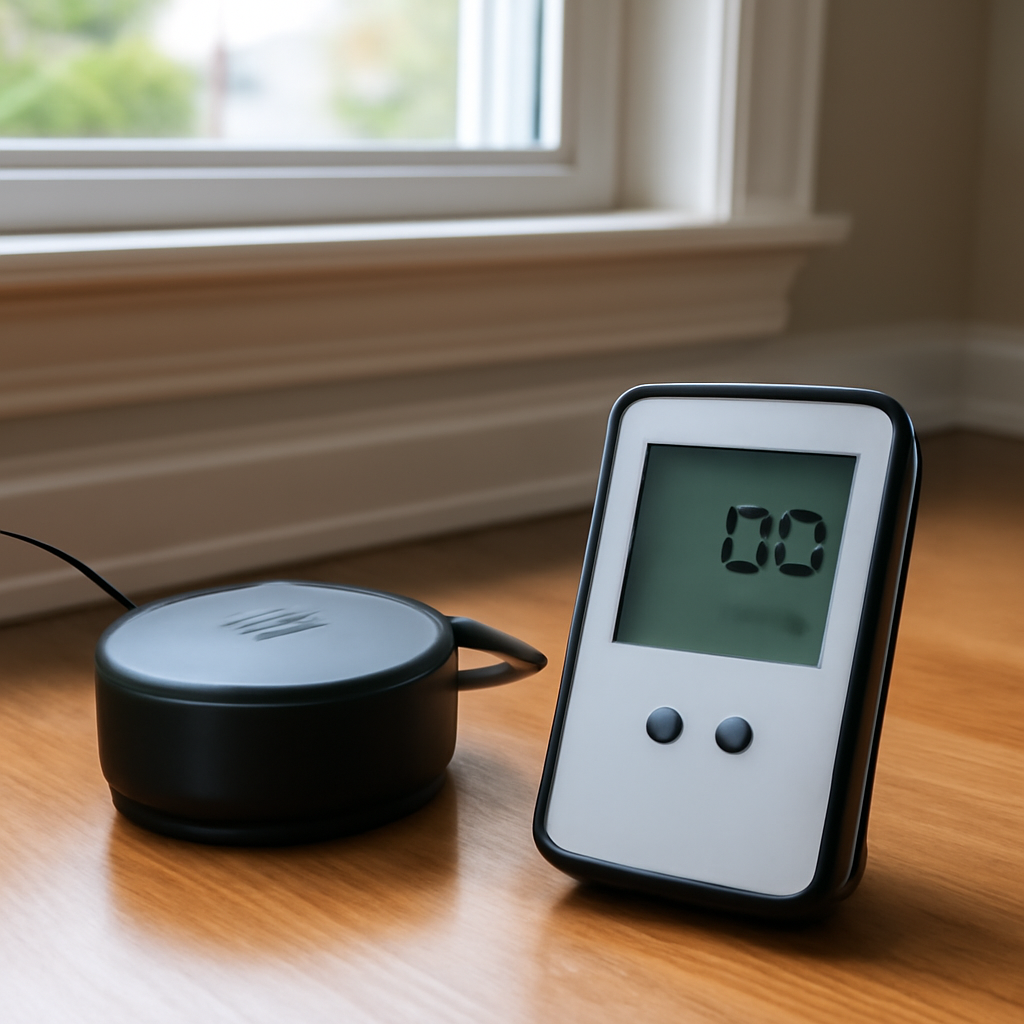
Picking among radon detectors for home use can feel confusing because the options range from a few-dollar mail-in kit to a digital monitor that sits on your shelf for years. They all answer the same underlying question, but they do it in very different ways and at very different price points. For Colorado Front Range homeowners, where elevated radon is common, choosing the right detector matters. This guide compares the types, explains accuracy and placement, and helps you decide. The information summarizes EPA and Colorado state guidance current as of 2026 for general education; consult a certified professional for mitigation decisions.
What are radon detectors for home use?
Home radon detectors are devices or kits that measure the concentration of radon gas in indoor air, reported in picocuries per liter. Some are single-use kits you expose for a set period and mail to a lab; others are reusable electronic monitors that display continuous readings. All serve to reveal a gas you cannot see, smell, or taste.
The right choice depends on your goal. A one-time screening before a purchase suits a kit, while ongoing awareness or verifying a mitigation system favors a continuous monitor. The Colorado radon testing hub explains why this awareness is especially important across the Front Range.
Types of home radon detectors
Detectors fall into a few main categories, each with strengths and trade-offs worth understanding before you buy.
Short-term test kits
Charcoal canisters and electret kits sit in the home for two to seven days, then go to a lab for analysis. They are inexpensive and widely available, ideal for a quick first screening. Their limitation is that they capture only a brief window, which radon’s fluctuations can make unrepresentative.
Long-term test kits
Alpha-track detectors remain in place for 90 days or more and produce an average that better reflects year-round exposure. They cost a little more and take longer, but the result is more representative of true risk.
Continuous electronic monitors
Plug-in or battery digital monitors sample air continuously and display short- and long-term averages. They are reusable, require no lab fees after purchase, and let you watch trends. The guide on the electronic radon detector covers how these work in depth.
How accurate are home radon detectors?
Accuracy depends on the type and on following instructions. Lab-analyzed kits, when used under proper closed-house conditions, give dependable single readings. Continuous electronic monitors vary by model, and their accuracy improves the longer they average. Reputable monitors publish accuracy specifications and the time needed to reach reliable readings.
For formal purposes such as real estate transactions, a professional measurement or a lab-analyzed test generally carries more weight than a consumer monitor’s instantaneous reading. Consumer detectors excel at ongoing awareness; official decisions often call for professional-grade measurement. Whatever the device, a meaningful result comes from sustained measurement, not a single momentary number.
Choosing the right detector for your situation
Match the device to the need. For a fast pre-purchase screen, a short-term kit is cheap and quick. For an accurate annual picture, a long-term kit captures seasonal variation. For ongoing monitoring or verifying that a mitigation system keeps working, a continuous electronic monitor is the better tool.
Many Colorado homeowners use a combination: a kit to establish a baseline and a continuous monitor for long-term peace of mind. If a result is tied to a transaction, professional testing may be required. The guide on a radon house test helps you decide which method fits a given purpose.
Where to place a radon detector
Placement strongly affects results. Position the detector in the lowest livable level of the home, such as a basement or a regularly used first-floor room, a couple of feet above the floor. Keep it away from drafts, exterior walls, windows, vents, and heat or humidity sources, all of which can skew readings.
For short-term testing, maintain closed-house conditions: keep windows and exterior doors shut except for normal use, starting 12 hours before and throughout the test. For continuous monitoring, place the detector where the household spends the most time so readings reflect actual exposure. Consistent placement also makes trend comparisons meaningful over time.
Why Colorado homeowners should prioritize detection
Colorado’s radon potential is among the highest in the nation. The state health department and EPA mapping place most of the Front Range, including Denver, Boulder, Douglas, Jefferson, and El Paso counties, in elevated-radon zones, with many homes testing above the EPA action level of 4 picocuries per liter.
Because elevated radon is common here rather than rare, owning a reliable detector is a sensible long-term investment. A continuous monitor lets Front Range homeowners track levels across Colorado’s seasonal heating swings and confirm a mitigation system keeps performing. The guide on what level of radon is dangerous explains how to interpret the readings your detector provides.
What to do when a detector reads high
If readings stay at or above 4 picocuries per liter, the EPA recommends taking action, and levels between 2 and 4 may warrant consideration since no level is risk-free. A high reading is a prompt to confirm with a follow-up test and consult a certified radon professional about mitigation.
Mitigation, usually a sub-slab depressurization system, reliably lowers radon below the action level. After installation, your detector becomes a watchdog, confirming the system holds levels down over time. A high reading is not a crisis but a clear, actionable signal.
How radon detectors actually sense the gas
Understanding the sensing technology helps you judge a detector’s reliability. Charcoal-based kits adsorb radon onto activated charcoal during their exposure period; the lab then measures the radioactive decay products to calculate the average level. Alpha-track detectors use a plastic film that records tiny tracks left by alpha particles from radon decay, which the lab counts after the long exposure.
Electronic detectors sense radon directly and continuously. Some use an ionization chamber, where decay events inside a small chamber produce measurable electrical signals. Others use a solid-state silicon sensor that detects the alpha particles radon and its progeny emit. Each technology has trade-offs in cost, speed, and accuracy, but all ultimately measure the same radioactive decay that makes radon detectable and hazardous.
Comparing detector costs over time
Cost comparison depends on how long you plan to monitor. A single short-term kit is cheapest for a one-time check, and a long-term kit costs modestly more for a season-spanning average. Both incur the cost again each time you retest, since they are single-use and require lab analysis.
Electronic detectors carry a higher upfront price but no per-test lab fee, so they become more economical for homeowners who monitor for years. For a Front Range homeowner who tests once before buying and then wants ongoing assurance afterward, the combination of an initial kit and a reusable monitor often makes the most financial and practical sense. Calculating cost over the time you intend to monitor, rather than per single test, clarifies which approach fits your situation.
Detectors and radon mitigation verification
One of the most valuable roles for a home radon detector comes after mitigation. Once a sub-slab depressurization system is installed to lower radon, a detector confirms the system is working and continues to work. A continuous electronic monitor is ideal here, because it shows whether levels stay low across seasons and alerts you if a fan fails or levels creep back up.
This ongoing verification matters because mitigation systems can degrade over time. Relying on memory of a single post-installation test leaves a gap; a monitor closes it. For Front Range homeowners who have invested in mitigation, a detector turns a one-time fix into a continuously verified solution, providing lasting confidence that the household’s radon exposure remains controlled.
Maintaining and trusting your detector
For electronic monitors, follow the manufacturer’s guidance on warm-up time, calibration, and maintenance. Allow the first day or two of readings to settle before trusting them, and base decisions on sustained averages rather than spikes. Keep the sensor clean and the device powered as directed.
For kits, use them before the expiration date and follow placement and timing instructions precisely. Whichever detector you choose, the value lies in acting on what it tells you. In a high-radon state, a detector that prompts testing, mitigation, and follow-up does exactly the job a homeowner needs it to do.
Common mistakes when using home radon detectors
Even a good detector gives poor results if used incorrectly. The most frequent error is failing to maintain closed-house conditions during a short-term measurement, which lets outdoor air dilute radon and understate the level. Opening windows, running whole-house fans, or excessive ventilation skews the reading low.
Placement mistakes are also common: positioning a detector near a window, in a draft, in high humidity, or right on the floor rather than a couple of feet up distorts readings. Judging a continuous monitor by its first few hours, before it has stabilized, leads to false alarms. And testing only in summer, when homes are more open, can miss the higher winter levels typical along the Front Range. Following placement and timing instructions precisely is what makes a detector’s data trustworthy.
Interpreting your readings and next steps
Once a detector gives a reliable result, the EPA’s guidance frames what to do. At a sustained average of 4 picocuries per liter or higher, the EPA recommends taking action to lower the level. Between 2 and 4, action is worth considering, since no amount of radon is entirely risk-free.
A high reading is a prompt to confirm with a follow-up measurement and consult a certified radon professional, not a reason to panic. Mitigation reliably brings levels down, and after installation the detector verifies the fix holds. For Front Range homeowners, where elevated readings are common, treating a high result as a routine, solvable issue, and acting on it promptly, is the sensible response. The detector’s job is to surface the information; acting on it is what protects health.
Detectors for real estate transactions
When radon comes up during a home sale, the type of detector matters more than in everyday use. Real estate transactions generally call for a tamper-resistant continuous monitor placed by a measurement professional, or a lab-analyzed test, rather than a consumer device left on a shelf. The result may drive negotiation, so it must be defensible and resistant to interference.
For a buyer, this often means hiring a professional to perform the radon test, sometimes alongside the home inspection. The professional ensures proper placement, closed-house conditions, and a documented result. A consumer detector is still valuable for ongoing monitoring after purchase, but for the transaction itself, the more formal measurement carries the weight. Knowing which detector fits which purpose prevents using a casual device for a high-stakes decision.
Choosing your first radon detector
For a homeowner buying their first detector, the decision comes down to purpose and budget. If you simply want to know whether your home has a radon problem right now, an inexpensive short-term lab kit answers that quickly. If you want a representative annual picture, a long-term kit is better. If you want ongoing awareness and the ability to verify a mitigation system, invest in a reusable electronic monitor.
Front Range homeowners, living in a high-radon region, often benefit from owning a reliable electronic monitor for the long term, supplemented by an initial kit for a baseline. Whatever you choose, follow placement and timing instructions, base decisions on sustained averages, and act on elevated results. A detector is only as useful as the action it prompts, and in Colorado, acting on radon is a meaningful step for household health.
References
- A Citizen’s Guide to Radon — U.S. Environmental Protection Agency
- Radon in Colorado — Colorado Department of Public Health and Environment
- Radon and Lung Health — American Lung Association
Front Range homeowners who get an elevated reading and want help confirming or fixing it can connect with a vetted local radon professional through our contact page.