Where to Buy Radon Test Kit: 2026 Channel and Selection Guide
Homeowners searching where to buy a radon test kit usually want a simple, defensible answer that points them toward a reliable product without overwhelming detail. The honest answer is that several legitimate purchase channels exist, each with tradeoffs in price, kit type, lab accreditation, and convenience. This guide summarizes EPA and Colorado Department of Public Health and Environment guidance current as of 2026 and is not medical advice. The aim is to help readers pick a purchase channel that fits their use case rather than endorse specific retailers. Front Range homeowners with elevated results from any channel should consult a certified mitigation contractor for remediation planning.
Part of our Radon Levels guide — start there for the full picture →
Five main channels for buying radon test kits
Radon test kits in 2026 are available through five primary channels. State and county health departments often distribute discounted or free kits to residents in high-priority radon zones. Online retail channels stock a wide range of kits with fast shipping and customer reviews. Big-box hardware stores carry short-term charcoal kits in their air-quality aisles. Direct-from-lab purchases bypass retail markup and ship the kit directly from the analytical laboratory. Certified radon professionals can supply kits as part of a paid testing engagement.
Each channel has different strengths. Health departments offer affordability and consumer protection. Online retail offers convenience and selection. Hardware stores offer immediate physical pickup. Direct-from-lab offers the highest level of lab accreditation assurance. Certified professionals offer protocol expertise. The right channel depends on the homeowner’s budget, timeline, and use case. The radon testing pillar guide covers the full method and channel landscape.
State and county health department kits
Many state and county health departments operate radon outreach programs that distribute test kits to residents at significant discounts or free of charge. The Colorado Department of Public Health and Environment offers low-cost radon test kits to Colorado residents, often pricing them at $5 to $15 compared with the $20 to $40 typical retail price. The kits are usually short-term charcoal canister kits sourced from an NRPP-listed manufacturer with an NRPP-recognized analytical lab.
Health department kits are an excellent starting point for first-time testers because the public-health agency has vetted the supplier and lab on the homeowner’s behalf. Availability and pricing vary by state and county. Colorado residents can check CDPHE’s radon page for current kit availability. Other state programs operate similarly under their respective state health departments. The bureaucratic overhead is minor: an online request form, shipping to the residence, and follow-up lab analysis.
Online retail channels
Online retail platforms stock a wide range of radon test kits with fast shipping. The selection includes short-term charcoal canisters, long-term alpha-track detectors, electronic continuous monitors, and multi-pack offerings. Pricing for short-term kits typically runs $15 to $40 including lab fees. Long-term kits run $25 to $50. Continuous monitors run $150 to $400. Customer reviews can help differentiate kits within the same product category, though reviews of measurement accuracy should be treated cautiously because most home users cannot independently verify a kit’s reading.
Online channel risks include counterfeit products, expired kits, and unverified seller credentials. Verifying that the seller is the manufacturer or an authorized distributor reduces these risks. Checking the kit’s expiration date before deployment is essential because charcoal absorption capacity degrades with age. Reputable online listings disclose the expiration date or shelf life clearly.
Big-box hardware stores
Major hardware retailers carry short-term charcoal radon test kits in their indoor air quality or testing-supplies aisles. The advantage is immediate physical pickup. The selection is typically limited to two or three short-term kit options at any given store, sometimes priced higher than online retail. Hardware-store kits are usually shipped from NRPP-listed manufacturers but may have spent longer in retail inventory than direct-from-lab purchases, raising the chance of an aged kit with reduced absorption capacity.
Pricing at hardware stores typically runs $20 to $45 per short-term kit including lab fees. Long-term kits and electronic continuous monitors are less commonly stocked at hardware retailers. Buyers wanting immediate access for time-sensitive testing benefit from this channel. Buyers wanting selection should look elsewhere.
Direct-from-lab purchases
Several NRPP-listed analytical laboratories sell radon test kits directly to consumers through their own websites. Direct-from-lab pricing typically runs $20 to $50 per short-term kit including return shipping and analysis. The advantage is high confidence in lab accreditation because the lab fulfills the entire workflow. Direct-from-lab purchases also tend to offer fresher kits because the lab manages its own inventory and shipping rather than relying on intermediate retail distribution.
Direct-from-lab purchases are particularly useful for homeowners testing multiple properties or for landlords wanting consistent kit sourcing across portfolio units. The lab can sometimes offer volume pricing for repeat or bulk orders. Lab websites also typically include detailed placement and deployment instructions, sample-handling protocols, and result-interpretation guidance.
Certified professional supply
Certified radon professionals can supply test kits as part of paid testing engagements. The professional places the kit, monitors deployment conditions, retrieves the kit, and processes the result. The total cost typically runs $150 to $300 for a single short-term test on a residential property. The advantage is protocol expertise. The professional knows how to position the kit, how to verify closed-house conditions, and how to interpret confounding results. Real estate inspection contingencies often favor or require professional testing over DIY kits.
Certified professionals can also deploy electronic continuous monitors as part of a multi-day testing engagement. The professional retrieves the monitor at the end of the testing period, downloads the data, and produces a formal report. Pricing for continuous-monitor testing typically runs $200 to $450 depending on the duration and the professional’s pricing structure.
Comparing kit types across channels
Short-term charcoal canister kits dominate every retail channel because they are inexpensive, fast, and produce a defensible single result. Long-term alpha-track kits are less common in retail but available through online retail and direct-from-lab channels. Electronic continuous radon monitors are typically sold through online retail and direct-from-manufacturer channels rather than hardware stores or health departments. Each kit type has legitimate uses; the available channels reflect the relative demand for each.
The best radon test kit comparison guide in this batch covers the kit-type comparison in detail. The choice between kit types depends on use case (transactional speed versus long-term confidence) rather than purchase channel.
What to check before buying
Five attributes separate reliable radon kit purchases from weaker ones regardless of channel. First, the kit should be NRPP-listed or NRSB-listed under EPA’s proficiency-program framework. EPA’s radon measurement device guidance covers the listing framework. Second, the analytical lab processing the kit should be NRPP-accredited or NRSB-accredited. Third, the kit should report results in pCi/L (the U.S. standard unit) with one-decimal precision. Fourth, the kit should have a clear expiration date or shelf life printed on the packaging. Fifth, the kit should include detailed placement and deployment instructions.
Channels that disclose all five attributes openly are the safest. Channels that obscure any of these warrant investigation before purchase. State health department kits typically score well on all five because the public-health agency has done the vetting upfront.
Pricing comparison across channels
Short-term charcoal kit pricing in 2026 by channel typically runs as follows. State health department: $5 to $15. Direct-from-lab: $20 to $50. Online retail: $15 to $40. Big-box hardware store: $20 to $45. Certified professional: $150 to $300 (includes deployment, retrieval, and report). The certified professional channel is dramatically more expensive but includes labor and protocol expertise. The other four channels are DIY and produce comparable results when the homeowner follows placement instructions carefully.
For homeowners testing a single home for the first time, the health department channel is the strongest combination of price and quality assurance. For homeowners testing repeatedly or wanting multi-pack pricing, direct-from-lab or online retail channels offer flexibility. For transactional contexts, the certified professional channel is the right choice despite the higher cost.
Verifying the lab and the kit on arrival
When the test kit arrives, a quick inspection before deployment improves the chance of a reliable result. Check the expiration date printed on the kit or canister. Kits past their printed shelf life produce unreliable readings because the activated charcoal absorbs background radon during storage. Confirm the analytical lab is named on the packaging or instructions. Cross-reference the lab against the NRPP or NRSB recognized-labs list before deploying. Verify the kit includes prepaid return shipping. Kits without prepaid shipping require the homeowner to pay separately, which adds friction and sometimes causes test samples to languish at home rather than being shipped promptly.
Reputable kits arrive with detailed placement and deployment instructions. Skim the instructions before placing the kit. Confirm the recommended exposure duration matches the homeowner’s intent. Confirm placement guidance fits the available space. If the instructions seem inconsistent with what the product page promised, contact the seller or manufacturer before deployment rather than after.
Buying for rental properties or multi-property portfolios
Landlords and property managers testing multiple properties benefit from bulk pricing and standardized lab sourcing. Direct-from-lab purchases of 10 to 100 kits at a time typically receive volume discounts of 15 to 30 percent off retail per-unit pricing. Standardized sourcing ensures all units are tested with comparable methodology and lab procedures, which makes cross-property comparisons meaningful. Bulk purchases also reduce the chance that kits from different sources produce results with inconsistent interpretation.
The radon testing kits catalog guide covers the kit categories most commonly available in bulk. Portfolio managers should consider a periodic testing program (every two years per unit) as part of risk management for tenant safety and disclosure compliance under any applicable state radon laws.
What to do with the result
EPA recommends action when radon readings exceed 4.0 pCi/L. Initial short-term readings above the action level should be confirmed with a second short-term test or a long-term test before committing to mitigation expense. Readings between 2.0 and 4.0 pCi/L warrant repeat testing and possible mitigation based on individual risk tolerance. Readings below 2.0 pCi/L generally do not warrant mitigation. The acceptable radon level guide covers the action threshold in plain language.
Confirmed elevated readings warrant mitigation by a certified mitigation contractor. Installation costs typically run $1,500 to $3,500 for residential sub-slab depressurization systems. Post-installation testing confirms the mitigation reduced indoor radon below the action level.
Connecting with a Front Range radon professional
Front Range homeowners with confirmed elevated readings from any purchase channel can reach a vetted local mitigation contractor through our contact page. We work with NRPP-certified and NRSB-certified mitigation specialists across Denver, Douglas, Arapahoe, Jefferson, Boulder, and surrounding counties.
More Questions About Choosing a Radon Test Kit
Are digital radon monitors worth buying?
Digital radon monitors are worth buying for homeowners who want ongoing readings, need to check a mitigation system, or plan to test across seasons. Consumer models typically cost about $130 to $250, based on common retail pricing.
They show short-term and long-term averages without mailing anything to a lab. However, many consumer monitors are not certified for real-estate testing, and accuracy improves with longer run times. For a one-time screening, a lab-analyzed kit is cheaper. For ongoing peace of mind, a monitor pays off over several years.
Is a charcoal or alpha track radon kit better?
A charcoal radon kit is better for a quick short-term reading over 2 to 7 days, while an alpha track kit is better for a long-term average over 90 days to a year.
Charcoal kits are sensitive to humidity and must be mailed promptly. Alpha track detectors record radon over months, smoothing out seasonal and weather swings, which gives a more accurate picture of annual exposure. Many homeowners start with charcoal and use alpha track for confirmation or ongoing monitoring.
Does a radon kit price include return shipping?
Many radon test kits include prepaid return postage and the lab fee in the box price, but not all do. Some low-cost kits require the buyer to pay postage and a separate lab fee of about $25 to $50.
State program kits and lab-direct kits often include everything. Retail listings should state what is included, so read the package or product details. Because short-term kits must reach the lab quickly, kits with prepaid priority return mail are worth a slightly higher price.
Can a store-bought radon kit be used during a home sale?
A store-bought radon kit can be used during a home sale if both parties agree, but many buyers, lenders, and state rules prefer or require testing by a certified radon professional using continuous monitors.
Professional tests use tamper-resistant devices and follow real-estate protocols, which helps prevent disputes over windows being opened or devices being moved. A DIY kit is better suited for a seller’s early screening before listing. Buyers relying on the seller’s results should ask how and when the test was done.
Do radon test kits work in homes with crawl spaces?
Yes, radon test kits work in homes with crawl spaces. The kit goes in the lowest lived-in level, usually the main floor above the crawl space, not in the crawl space itself.
Place it in a regularly used room about 20 inches or more above the floor and away from vents and exterior walls. Crawl space homes can test high when soil gas enters through gaps in the floor system. If results are elevated, a sealed vapor barrier with a fan drawing from beneath it is the typical fix.
References
- Citizen’s Guide to Radon — U.S. Environmental Protection Agency
- Radon Measurement Method Devices — U.S. Environmental Protection Agency
- Radon Information for Colorado Residents — Colorado Department of Public Health and Environment
Frequently asked questions
Where is the cheapest place to buy a radon test kit?
State and county health departments often offer the lowest prices, typically $5 to $15 for short-term charcoal kits including lab fees. The Colorado Department of Public Health and Environment offers low-cost kits to Colorado residents. Other state health departments operate similar programs.
Can I buy a radon test kit at a hardware store?
Yes. Major hardware retailers carry short-term charcoal radon test kits in their indoor air quality aisles, typically priced at $20 to $45 including lab fees. Selection is usually limited to two or three options per store, and long-term kits and electronic monitors are less commonly stocked.
Are direct-from-lab radon kits better than retail kits?
Direct-from-lab kits offer high confidence in lab accreditation and often fresher inventory because the lab manages shipping directly. Retail kits from NRPP-listed manufacturers using NRPP-recognized labs are equivalent in quality but may sit in retail inventory longer.
Should I buy a radon kit or hire a certified tester?
For initial screening of a long-tenure home, a DIY kit is cost-effective and produces a usable result. For real estate transactions, post-mitigation verification, or contested situations, a certified tester is the right choice. The DIY-to-pro pricing ratio runs roughly 1:10 to 1:20.
How soon must a radon test kit be mailed after testing?
A short-term radon test kit should be mailed the same day it is closed or as soon as possible, because the radon captured in charcoal kits decays and labs often reject samples arriving several days late. Check the kit's maximum transit window before testing.
Can radon test kits be used in summer?
Radon test kits can be used in summer, but readings may be lower than in winter, when homes are closed up and the stack effect draws more soil gas indoors. Keeping windows closed during the test helps. A long-term test smooths out seasonal swings.
Are free radon test kits as good as paid ones?
Free radon test kits from state or county programs are generally as reliable as paid kits, because they are often the same lab-analyzed charcoal or alpha track devices sold in stores. Availability is limited, so check the state radon program or local health department.
Front Range homeowners with elevated DIY radon readings can connect with a vetted mitigation contractor through our contact page for remediation planning.
Radon test kits we recommend
Short-term charcoal kits are the cheapest way to get a first reading; mail the canister to the lab and results come back in days.
| Product | Why | Buy |
|---|---|---|
 AirChek Charcoal Radon Test Kit | Lab fee usually included; EPA short-term protocol. | Amazon — $21.95 |
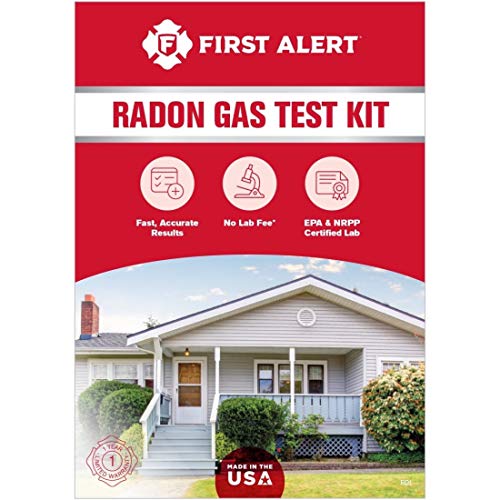 First Alert RD1 Radon Test Kit | Widely stocked; 48-hour charcoal test. | Amazon — $17.95 |
 AccuStar Two-Pack Charcoal Kit | Two-pack option for closed-house testing. | Amazon — $39.97 |