Radon Test Kit Guide: Types, How to Test and Results
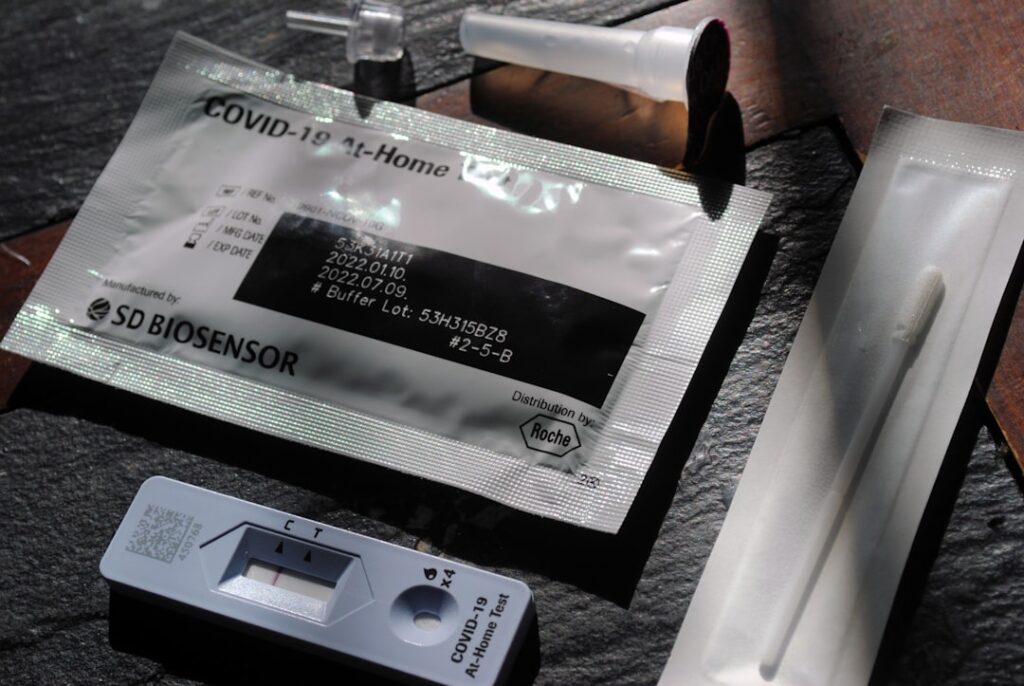
A radon test kit is a small detector you place on the lowest lived-in level of your home to measure radon gas, then either mail to a lab or read on a digital display. Short-term charcoal kits give a result in two to seven days plus lab time; long-term alpha-track kits run 90 days or more and show your year-round average; continuous monitors log hourly readings. The EPA recommends fixing a home at or above 4 picocuries per liter (pCi/L) and considering action between 2 and 4 pCi/L. In Colorado, where the EPA places most Front Range counties in its highest-risk zone, every home should be tested regardless of age or what the neighbors found. This guide summarizes EPA, CDC, and Colorado Department of Public Health and Environment (CDPHE) guidance current as of 2026 for educational purposes; it is not medical advice, and a certified radon professional should handle real-estate and post-mitigation testing.
Part of our Radon Levels guide — start there for the full picture →
What a Radon Test Kit Measures
Radon is a colorless, odorless radioactive gas that forms when uranium in soil and rock breaks down. It seeps into homes through slab cracks, floor-wall joints, sump pits, crawl spaces, and gaps around pipes. The EPA estimates radon causes about 21,000 lung cancer deaths a year in the United States and identifies it as the leading cause of lung cancer among people who have never smoked. Radon causes no immediate symptoms, which is why testing is the only way to know your level.
A radon test kit, sometimes sold as a radon detection kit, measures the average concentration of radon gas in indoor air over the exposure period. In the United States results are reported in pCi/L; international labs and many digital monitors also show becquerels per cubic meter (Bq/m³), where 4 pCi/L equals roughly 148 Bq/m³. The kit does not measure a dose or a health outcome. It gives you a number to compare against EPA guidance, and that number drives every decision that follows.
Shoppers will find kits in our radon test kit collection; the sections below explain which type fits which job, because the right kit depends on why you are testing.
Types of Radon Test Kits
Three technologies cover nearly every homeowner test. They differ in how long they run, how they report, and what situations they suit.
Short-Term Activated Charcoal Kits
The most common consumer kit. A canister or envelope of activated charcoal sits open for two to seven days, adsorbing radon from the air. When the test ends, you seal it and mail it to the lab named on the package, which counts the radioactive decay of what the charcoal captured and calculates the average concentration. Charcoal kits are fast, simple, and well suited to a first screening. Their weak points: they weight the last part of the exposure more heavily, they are sensitive to high humidity, and they must reach the lab quickly because radon-222 has a half-life of about 3.8 days.
Long-Term Alpha-Track Kits
An alpha-track detector holds a small piece of plastic film. Alpha particles from radon decay leave microscopic tracks in the film, and the lab etches and counts them to calculate the average concentration. Alpha-track kits run a minimum of 90 days and often up to a year. Because indoor radon swings with weather, season, and how the house is operated, the EPA treats a long-term result as the better estimate of your actual year-round exposure. The trade-off is patience.
Continuous Radon Monitors
Continuous radon monitors (CRMs) are electronic devices that sample air and log readings, typically hourly. Professional CRMs are calibrated regularly, listed with a national proficiency program, and produce a printed chart that also records temperature, humidity, and, on many models, tamper or movement events. That chart is why certified testers use CRMs for real-estate transactions.
Consumer digital monitors are a separate category. They plug in or run on batteries and show a running average on a screen or phone app. They are useful for watching trends, spotting seasonal swings, and confirming a mitigation fan is still working between formal tests. Short-window readings can bounce around, and most consumer monitors are not certified for transaction testing. Our guide on whether digital radon detectors are accurate explains how to read them alongside a lab-analyzed kit.
Radon Test Kit Comparison
| Kit type | Test length | How results arrive | Best for | Main limitation |
|---|---|---|---|---|
| Short-term charcoal | 2 to 7 days | Mail to lab; results in days after receipt | First screening; quick follow-up test | Single snapshot; humidity and shipping-time sensitive |
| Long-term alpha-track | 90 days to 1 year | Mail to lab after exposure | True year-round average; decision on borderline results | Slow; easy to forget or move mid-test |
| Professional CRM | 48 hours minimum | Hourly chart from certified tester | Real-estate transactions; post-mitigation checks | Requires a certified professional |
| Consumer digital monitor | Ongoing | Display or app, running averages | Trend watching; fan-failure early warning | Not a substitute for a certified test |
How to Use a Radon Test Kit Correctly
Most bad radon results come from bad placement or a test run in the wrong conditions, not a bad kit. The EPA’s guidance and the ANSI/AARST measurement standards boil down to a short set of rules.
Where to Place the Kit
- Lowest lived-in level. Test the lowest level that is used, or could be used, as living space. In most Front Range homes that is the finished or unfinished basement; in a slab-on-grade ranch it is the main floor. Crawl spaces themselves are not test locations.
- Breathing height. Set the kit at least 20 inches above the floor, on a shelf or table, not on the floor.
- Away from drafts and walls. Keep it about 3 feet from exterior doors and windows, about a foot from exterior walls, and away from supply vents, fans, and fireplaces.
- Not in wet or hot rooms. Skip kitchens, bathrooms, laundry rooms, and furnace closets. Heat and humidity can skew charcoal kits.
- Undisturbed. Pick a spot where pets, kids, and cleaning will not move it.
Closed-House Conditions
For short-term tests, keep windows and exterior doors closed, except for normal coming and going, starting at least 12 hours before the test and throughout it. Run the furnace or air conditioner normally, but do not run whole-house fans, attic fans, or window fans that pull in outside air. Avoid testing during severe storms or unusually high winds, which can push results up or down. Long-term tests do not need closed-house conditions; living normally is the point.
Start, Stop, and Ship
Write down the exact start date and time on the lab form. When the exposure period ends, record the stop time, seal the kit immediately, and mail it the same day if possible. Avoid starting a charcoal test right before a weekend or holiday if it means the kit will sit in a mailbox. Many labs reject or flag samples that arrive too long after the stop time, and the instructions will list the limit.
Reading Your Results Against the EPA Action Level
The EPA action level of 4 pCi/L is a practical threshold for when fixing a home is recommended, not a line between safe and unsafe. The agency is clear that no level of radon is risk-free and that reducing levels below 4 pCi/L still lowers risk. For context, the EPA estimates the average indoor level in U.S. homes at about 1.3 pCi/L and the average outdoor level at about 0.4 pCi/L. Our explainer on radon levels covers what each range means in more detail.
| Result | What EPA guidance suggests | Practical next step |
|---|---|---|
| Below 2 pCi/L | Low; no action recommended | Retest every few years and after major changes to the house |
| 2 to 3.9 pCi/L | Consider reducing radon | Run a long-term test to confirm the year-round average |
| 4 pCi/L or higher on a first test | Follow up before deciding | Second short-term test for speed, or long-term test for accuracy |
| Confirmed 4 pCi/L or higher | Fix the home | Hire a certified radon mitigation professional |
The EPA’s flow for a first short-term result at or above 4 pCi/L is to run a follow-up test. If you need an answer quickly, or the first result was well above 4, use a second short-term test and average the two. If time allows, a long-term test gives the better picture. Base the mitigation decision on the long-term result or the average of the two short-term tests.
A confirmed elevated result is fixable. Most Front Range homes are mitigated with an active soil depressurization system, and our guide to the radon reduction system explains how those systems work and what a certified installer should provide.
Retesting: When and Why
One test is not forever. Radon levels change when the house changes, and a result from the previous owner’s era may not reflect today’s conditions. Plan to retest in these situations:
- After mitigation. Test no sooner than 24 hours after the fan starts and generally within 30 days of installation, then at least every two years per EPA guidance.
- After renovation. Finishing a basement, adding a bedroom on the lower level, replacing the furnace, adding a sump, or major air-sealing work can all change how soil gas moves.
- When you start using a lower level. If a basement becomes a bedroom or office, test that level.
- Every few years in an untreated home. Even a low result is worth repeating, ideally with a long-term test during the heating season.
- After a foundation change. New cracks, settlement repairs, or earthwork near the house can open new entry paths.
Lab Fees and What to Check Before You Buy
Most consumer radon test kits bundle the laboratory analysis into the purchase price, but not all of them. Some low-cost kits charge a separate lab fee when you mail the sample back, and some do not include return postage. Read the package before you buy so the true cost is clear.
The brand on the box matters less than the lab behind it. Check for these points:
- Certified device and lab. Look for a device listed with the National Radon Proficiency Program (NRPP) or the National Radon Safety Board (NRSB). Both are the national certification programs the EPA points consumers to.
- Lab fee included or extra. Confirm whether analysis and return postage are part of the price.
- Turnaround time. Many labs email results within a few business days of receipt; some take longer.
- Expiration date. Charcoal kits have a shelf life. An expired kit can produce an invalid result.
- Report content. A good report lists the result, the exposure dates you entered, the lab’s certification, and a plain-language interpretation.
Colorado households should also check with CDPHE and their county public-health department. The state radon program has periodically offered free or discounted short-term kits to residents, and availability varies by county and funding year.
Colorado and the Front Range: Why Testing Matters Here
Colorado is one of the highest-radon states in the country. The EPA’s map of radon zones places most Front Range counties, including Denver, Jefferson, Boulder, Douglas, Arapahoe, Adams, Larimer, and El Paso, in Zone 1, the category with the highest predicted average indoor levels. CDPHE reports that about half of Colorado homes test above the EPA action level of 4 pCi/L.
Three local factors drive those numbers. Uranium-bearing granite and shale underlie much of the foothills and plains. Basements are common, which puts living space in direct contact with soil. And Colorado’s long heating season produces a strong stack effect, as warm air rising and escaping through upper floors pulls soil gas in at the bottom of the house. Winter results are often higher than summer results for that reason.
Neighboring homes can test very differently, even on the same street, because soil permeability and foundation details vary. A zip-code average is a reason to test, not a substitute for testing. Our page on radon levels by zip code in Colorado shows how variable local data can be, and the Colorado radon testing guide covers the full picture from testing through mitigation.
DIY Kit or Professional Test? A Decision Checklist
A homeowner-placed radon test kit is the right tool for many situations, and the wrong one for a few. Use this checklist to decide.
A DIY Kit Makes Sense When
- You own the home and want a first screening.
- You want a long-term, year-round average to settle a borderline result.
- You are checking periodically between professional tests, or after a minor renovation.
- You can follow placement rules and keep closed-house conditions for the test period.
Hire a Certified Tester When
- You are buying or selling a home and the result will be part of a negotiation. A professional CRM chart documents the test conditions.
- You need a post-mitigation verification test that a buyer, lender, or installer warranty will rely on.
- Your DIY results conflict, or a short-term result is well above 4 pCi/L and you want certainty quickly.
- The house has multiple foundation types, such as a basement plus a slab addition or a crawl space, and you need testing on more than one area.
In a real-estate deal, either side can run a test, but buyers usually prefer a test they control. Many Front Range inspectors offer radon testing as an add-on to the general inspection, setting the monitor at the start of the inspection and collecting it 48 hours later.
Testing During a Home Sale
Radon testing in a real-estate transaction follows the same science as a homeowner test, with extra attention to documentation and tampering. The EPA’s home buyer’s and seller’s guidance lays out several acceptable approaches, including two short-term kits run side by side at the same time, two short-term tests run back to back, or a continuous monitor running at least 48 hours. Because the buyer’s objection deadline in a Colorado contract usually arrives within a week or two of the accepted offer, a long-term test is rarely practical during a sale.
A seller who already has a recent, properly documented test can share it, and some buyers accept it. Many buyers still prefer their own test, since they did not control the conditions of the seller’s. If the house has an existing mitigation system, ask for the installation paperwork and the most recent post-mitigation result, and check that the manometer on the vent pipe shows suction. A working, documented system with a fresh low result is usually a plus at sale, not a red flag.
If a transaction test comes back at or above 4 pCi/L, buyers commonly ask the seller to install a mitigation system before closing, with a passing post-mitigation test as a condition, or negotiate a credit and handle the installation themselves after closing.
Homes With Crawl Spaces, Slabs, and Additions
Many Front Range houses mix foundation types: a basement under the original house, a slab under a later family room, and sometimes a crawl space under an addition. Radon can enter through each one at a different rate, so a single kit in the basement may not tell the whole story. Test the lowest lived-in level first. If a living area sits over a different foundation type, such as a bedroom over a crawl space, consider placing a second kit in that area. Run the kits at the same time so the conditions match, and note which result came from which room when you report to a mitigation contractor. That detail helps the installer decide whether the crawl space needs its own membrane and suction point.
What to Do While You Wait for Results
Lab turnaround is usually a matter of days, and there is no reason to panic while you wait. Radon risk comes from long-term exposure over years, not from a few weeks in the house. If you want to reduce exposure in the meantime, spending less time in the basement and avoiding smoking indoors are reasonable steps; the combination of radon and tobacco smoke carries a much higher lung cancer risk than either alone, according to the EPA. Opening windows will temporarily lower radon but is not a fix, and it will invalidate any short-term test that is still running. When the result arrives, compare it with the table above and decide on the next step calmly.
Common Radon Testing Mistakes
- Testing on the wrong floor. A kit on the second floor will usually read lower than one in the basement and can hide a problem.
- Leaving windows open. Fresh air dilutes the reading and produces a falsely low result on a short-term test.
- Placing the kit on the floor or near a vent. Airflow and floor-level gradients distort readings.
- Mailing late. Charcoal kits lose accuracy as the captured radon decays in transit.
- Treating one short-term test as final. A single 2-day test is a snapshot. Confirm elevated or borderline results before acting.
- Relying on a neighbor’s or previous owner’s result. Every house is different, and houses change.
Radon often comes up alongside other indoor-air questions in older basements. If you are also worried about dampness or musty odors, our guide to mold and radon testing explains how to sequence the two.
References
- A Citizen’s Guide to Radon — U.S. Environmental Protection Agency
- Health Risk of Radon — U.S. Environmental Protection Agency
- EPA Map of Radon Zones — U.S. Environmental Protection Agency
- About Radon — Centers for Disease Control and Prevention
- Radon — American Lung Association
Frequently asked questions
How accurate are home radon test kits?
Lab-analyzed kits from NRPP- or NRSB-listed labs are accurate when placed and run correctly. Most errors come from placement, open windows, or late mailing. A short-term kit is a snapshot, so the EPA recommends confirming a result at or above 4 pCi/L with a second short-term or a long-term test.
How long does a radon test kit take?
Short-term charcoal kits run 2 to 7 days, plus mailing and lab time, so most homeowners have results within about two weeks. Long-term alpha-track kits run at least 90 days and often up to a year. Professional continuous monitors run at least 48 hours.
Where should I put a radon test kit?
On the lowest level that is used or could be used as living space, at least 20 inches off the floor, away from exterior doors, windows, vents, and exterior walls. Avoid kitchens, bathrooms, and laundry rooms.
What radon level is dangerous?
The EPA recommends fixing a home at or above 4 pCi/L and considering action between 2 and 4 pCi/L. No level is considered risk-free, so lower is always better. Consult a physician with any health concerns.
How often should I test for radon?
Retest every few years in an untreated home, after renovations or a change in how you use the lower level, and after mitigation. Once a system is installed, the EPA recommends retesting at least every two years.
Got a radon test kit result at or above 4 pCi/L, or buying a home along the Front Range and need a documented test before your deadline? Reach out here and we will connect you with a certified local radon professional.
Radon test kits we recommend
Short-term charcoal kits are the cheapest way to get a first reading; mail the canister to the lab and results come back in days.
| Product | Why | Buy |
|---|---|---|
 AirChek Charcoal Radon Test Kit AirChek Charcoal Radon Test Kit | Lab fee usually included; EPA short-term protocol. | Amazon — $21.95 |
 First Alert RD1 Radon Test Kit First Alert RD1 Radon Test Kit | Widely stocked; 48-hour charcoal test. | Amazon — $17.95 |
| Health Metric Radon Test Kit | Two-pack option for closed-house testing. | Amazon — $17.95 |