Radon Level Test Kit: 2026 Measurement Guide
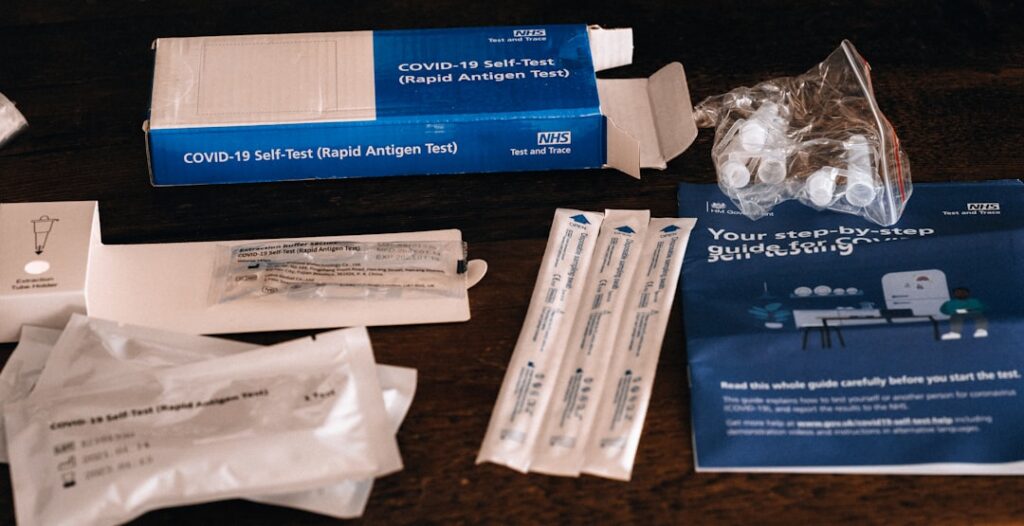
A radon level test kit measures indoor radon concentration and reports the level in picocuries per liter (pCi/L), the unit used in U.S. radon guidance. This guide summarizes EPA, CDC, and CDPHE guidance current as of 2026 — consult a certified radon professional for testing decisions on your property. The level framing emphasizes the quantitative output of the kit: not just whether radon is present (it almost always is at some concentration) but what the actual concentration is, how it compares to EPA’s 4 pCi/L action level, and what the homeowner should do based on the specific number returned. This guide walks through the level-measurement workflow, result interpretation, and follow-up decisions.
Part of our Radon Levels guide — start there for the full picture →
What a Radon Level Test Kit Measures
A radon level test kit measures the indoor air concentration of radon-222 expressed in picocuries per liter (pCi/L). One picocurie equals 0.037 disintegrations per second, so a reading of 4 pCi/L means approximately 0.148 radon decay events per second per liter of air sampled. The kit converts the count rate detected during the exposure period into the concentration units through a calibration factor specific to the device or analytical method.
International units are becquerels per cubic meter (Bq/m³), with 1 pCi/L equal to 37 Bq/m³. EPA’s 4 pCi/L action level corresponds to 148 Bq/m³. The World Health Organization recommends a lower action level of 100 Bq/m³ (approximately 2.7 pCi/L). Most U.S. radon level test kits report results in pCi/L only, though some professional instruments display both units. Our broader radon testing pillar covers the residential context for Front Range homes.
Interpreting the Radon Level Reading
EPA radon level guidance establishes a stepped framework based on the measured concentration:
Below 2 pCi/L: Low
Concentrations below 2 pCi/L are considered low risk under current EPA guidance. Mitigation is not recommended. Periodic re-testing every 2 to 5 years confirms the level has not shifted due to building changes, soil settling, or seasonal pattern changes. A reading below 2 pCi/L is the most common outcome in newer construction with radon-resistant features built in.
Between 2 and 4 pCi/L: Moderate
Concentrations between 2 and 4 pCi/L sit in EPA’s “consider action” range. EPA does not require mitigation, but recommends consideration based on time spent in the basement, presence of children, smoking status, and personal risk tolerance. The World Health Organization recommends mitigation above 2.7 pCi/L. Many Front Range households in this range install mitigation as a precaution; many do not. Re-testing in the opposite season (winter for a summer baseline, or vice versa) confirms the result.
Between 4 and 10 pCi/L: Elevated
Concentrations above 4 pCi/L trigger EPA’s action-level recommendation. Mitigation is strongly recommended in this range. Standard sub-slab depressurization systems typically reduce indoor radon by 80 to 99 percent, bringing 4 to 10 pCi/L properties well below the action level after mitigation. Cost runs $1,200 to $2,500 for typical Front Range single-family homes.
Between 10 and 20 pCi/L: High
Concentrations between 10 and 20 pCi/L indicate substantial soil-gas entry. Mitigation is recommended with priority — the cumulative lung-cancer risk at sustained 15 pCi/L exposure is several times that at 4 pCi/L. Sub-slab depressurization remains the standard approach but may require larger fans or multiple suction points to achieve good reduction.
Above 20 pCi/L: Very High
Concentrations above 20 pCi/L indicate substantial radon entry from one or more high-source pathways. Mitigation is urgent. Some properties at this level require more complex mitigation including multi-point systems, crawlspace membrane installation, or aggressive air sealing in combination with active soil depressurization. Post-mitigation re-testing verifies effective reduction.
Choosing a Radon Level Test Kit by Type
The radon level reading from any kit type ultimately reports the same physical quantity, but the kit type affects how the reading is generated and how confident the result is. Short-term charcoal canister and electret kits ($20 to $80) provide a 48-to-96-hour average and produce a defensible reading for first-time testing or transaction documentation when used correctly. Long-term alpha-track kits ($25 to $50) provide a sustained 90-day to one-year average that captures seasonal variation. Continuous electronic monitors ($180 to $400 consumer, $1,000 to $3,500 professional) deliver hourly readings on a smartphone app or device display.
For ongoing household monitoring, continuous monitors provide the most useful long-term data. For a one-time decision point in a real estate transaction, professional continuous monitors used by inspection professionals or short-term passive kits are typical. For confirming a previously elevated reading or establishing a sustained-average baseline, alpha-track long-term kits are the standard. Our best long-term radon test kit piece covers the long-term landscape in detail.
Where to Position the Radon Level Test Kit
EPA testing protocols specify positioning that produces representative readings for the building’s lowest occupied space. The kit should be placed in the lowest occupied living level — typically a basement family room, finished basement bedroom, or first-floor living area if no basement is present. Breathing height (3 to 6 feet above the floor) is preferred. The kit should be placed away from drafts (heating registers, exterior doors, windows), away from direct sunlight, and at least 12 inches from exterior walls. Closets and other enclosed spaces produce non-representative readings and should be avoided.
The home should be in closed-house conditions for at least 12 hours before testing begins and throughout the exposure period for short-term tests. Windows and exterior doors remain closed except for normal entry and exit. Whole-house ventilation fans should be off. Heating and cooling systems can operate normally; the closed-house condition does not require turning off the HVAC.
What to Do With the Radon Level Result
The numeric result from the test kit feeds directly into the mitigation decision. A reading at or above 4 pCi/L drives the standard “EPA recommends mitigation” response. Households at 2 to 4 pCi/L often retest in the opposite season to confirm whether the moderate reading is stable or seasonally variable. Households below 2 pCi/L typically set a 2-to-5-year re-testing reminder and move on.
For households whose initial reading was elevated, the next steps include obtaining mitigation contractor quotes (typically two or three for comparison), confirming the contractor holds appropriate radon mitigation credentials (the National Radon Proficiency Program or National Radon Safety Board provide certification), arranging installation (typically a one-day project), and conducting a post-installation short-term test to confirm the mitigation has reduced the indoor level below the EPA action level. Our residential radon mitigation piece walks through the mitigation workflow.
Common Mistakes That Affect Radon Level Test Kit Accuracy
Several common mistakes produce misleading radon level readings. Opening windows during the closed-house exposure period dilutes indoor air and lowers the reading below the building’s true average. Placing the kit in a closet or against an exterior wall produces a non-representative reading. Placing it directly above a heating register or below an air handler produces erratic readings due to airflow. Forgetting to mail the kit promptly after the exposure period causes radon decay between exposure and analysis, producing a falsely low reading. Each of these mistakes is correctable by reading the kit instructions carefully before testing begins.
The closed-house condition is the most commonly violated requirement. Households conducting a 48-hour test during pleasant weather often open windows without thinking, especially when guests visit or cooking requires ventilation. The result is a false-low reading that may produce false reassurance about radon presence. EPA testing protocols specifically address this concern and recommend that the household plan around the closed-house requirement.
Comparing Radon Level Test Kit Brands
For short-term passive kits, the leading brands include AccuStar, Air Chek, RTCA (Radiation Technical Services), Pro-Lab, and several state public-health-distributed kits. All use comparable charcoal canister or electret technology and report similar precision. Price differences mostly reflect laboratory turnaround time and customer service rather than measurement quality. State public-health distributed kits are often subsidized — Colorado’s CDPHE program has at times offered free or low-cost kits during awareness campaigns.
For continuous monitors, AirThings, RadonEye, and Ecosense lead the consumer market. Professional-grade EPA-listed instruments are dominated by Sun Nuclear, Pylon Electronics, and Femto-TECH. The professional instruments are not appropriate for consumer purchase because of price, calibration requirements, and the operational complexity of generating defensible reports. Most homeowners are well served by consumer brands.
Radon Levels in Front Range Colorado
Front Range Colorado sits in EPA Radon Zone 1, the highest of three zones in EPA’s nationwide map. CDPHE estimates that approximately 50 percent of Colorado homes test above 4 pCi/L at some point in their measurement history. County-level variation is meaningful: Douglas, Jefferson, Boulder, and El Paso counties show higher average levels than the Colorado baseline, while parts of Adams and Arapahoe counties show levels closer to the national average. This geographic variation reflects the uranium content of underlying bedrock and soil.
For Front Range homeowners, the practical implication is that the prior probability of an elevated radon level is high — high enough that proactive testing is the standard recommendation. Many new homes built in Colorado in the last fifteen years include radon-resistant new construction features (passive sub-slab piping with provisions for activation if needed). Older homes typically do not include these features and benefit most from systematic testing followed by mitigation if levels are elevated. CDPHE radon resources include county-level data.
Re-Testing Cadence for Different Result Ranges
Re-testing frequency varies by initial result and life events. Households with confirmed low readings (below 2 pCi/L) re-test every 2 to 5 years to confirm conditions remain stable. Households with mitigation systems installed re-test every 2 years to confirm the system continues to perform. Households after major renovation, foundation work, or addition construction re-test because building changes can alter the radon entry profile.
The post-mitigation re-test is a particularly important step that many households overlook. Mitigation fans typically run for 7 to 12 years before requiring replacement; the U-tube manometer on the system pipe shows airflow but not the indoor radon level. Periodic re-testing with a short-term kit or continuous monitor is the only direct confirmation that the system is still doing its job.
Documenting the Level Result for Future Use
The radon level test kit result becomes part of the property’s environmental record. Many homeowners save the laboratory PDF certificate (or screenshot the continuous monitor app data) in a folder alongside other property records. Future buyers, inspectors, and insurance carriers may reference the history. Pre-2026 buildings with a documented multi-year radon testing record provide useful context for any new buyer evaluating the property.
For households who install mitigation, the pre-mitigation reading, the system installation documentation, and the post-mitigation verification reading together form the radon record. Buyers of these properties often consider the mitigation history a positive feature because the property has already been brought into EPA-recommended compliance. Sellers should expect to share the radon record during the disclosure phase of a transaction.
References
- EPA Radon Action Level Guidance — U.S. Environmental Protection Agency
- CDC Radon Health Information — Centers for Disease Control and Prevention
- Colorado Department of Public Health and Environment Radon Program — CDPHE
- American Lung Association Radon Resources — American Lung Association
Frequently asked questions
What unit does a radon level test kit report?
Picocuries per liter (pCi/L) in U.S. guidance, with 1 pCi/L equal to 37 becquerels per cubic meter (Bq/m³) in international units. EPA's 4 pCi/L action level corresponds to 148 Bq/m³.
What does the EPA recommend at different radon level test kit readings?
Below 2 pCi/L: low, no mitigation. 2 to 4 pCi/L: consider mitigation based on personal factors. 4 to 10 pCi/L: elevated, mitigation recommended. 10 to 20 pCi/L: high, mitigation prioritized. Above 20 pCi/L: very high, mitigation urgent.
How precise is a radon level test kit?
Consumer kits typically report 10 to 15 percent uncertainty in the reading, which is sufficient for action-level mitigation decisions. Professional EPA-listed continuous monitors calibrated annually against reference standards report tighter precision suitable for transaction documentation and litigation.
How often should I re-test radon levels?
Every 2 to 5 years for confirmed low readings, every 2 years after mitigation system installation, and after major renovation or foundation work that could alter the radon entry profile.
Front Range homeowners with elevated radon level readings or questions about mitigation can contact us through our page to connect with a vetted local radon professional.
Radon test kits we recommend
Short-term charcoal kits are the cheapest way to get a first reading; mail the canister to the lab and results come back in days.
| Product | Why | Buy |
|---|---|---|
 AirChek Charcoal Radon Test Kit AirChek Charcoal Radon Test Kit | Lab fee usually included; EPA short-term protocol. | Amazon — $21.95 |
 First Alert RD1 Radon Test Kit First Alert RD1 Radon Test Kit | Widely stocked; 48-hour charcoal test. | Amazon — $16.98 |
| Health Metric Radon Test Kit | Two-pack option for closed-house testing. | Amazon — $16.98 |