Radon Measurement: How It Works and What to Know
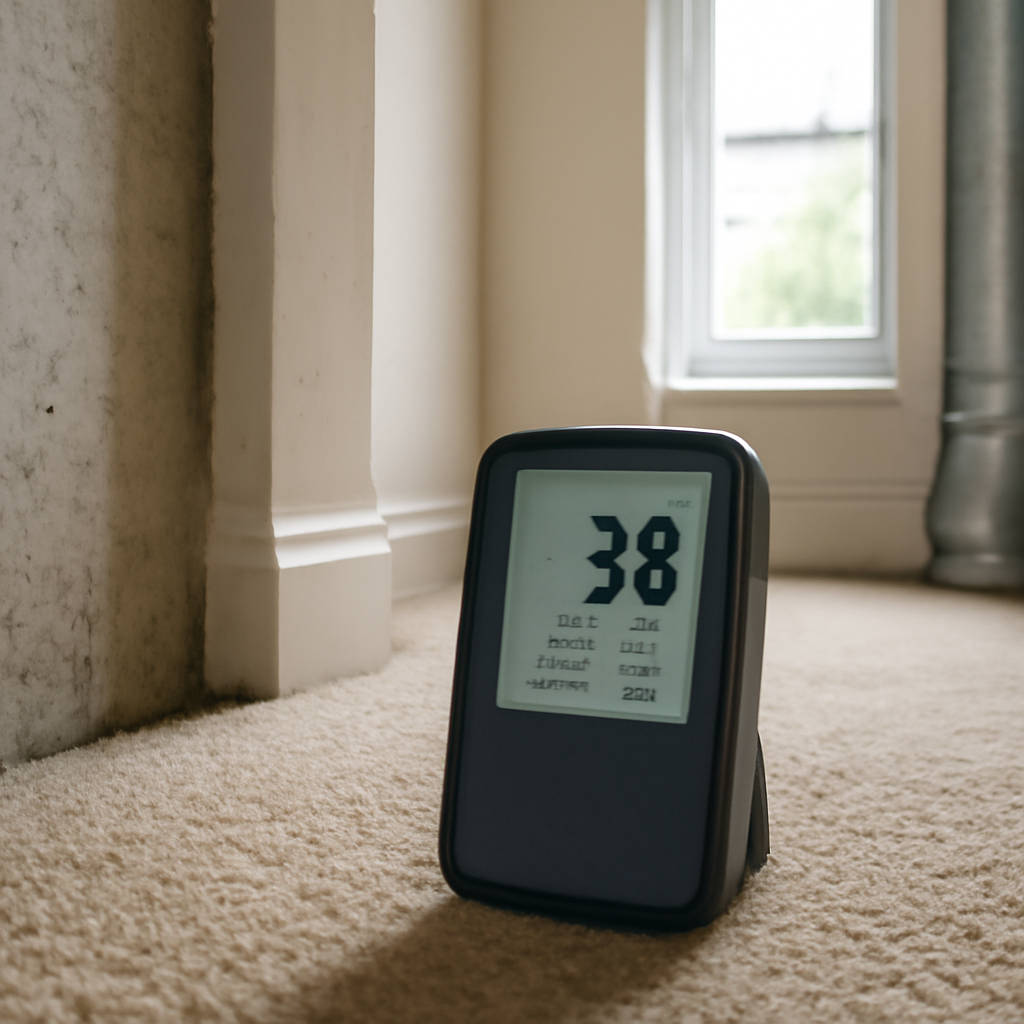
Radon measurement is the only way to know whether a home has a radon problem, because the gas is invisible, odorless, and tasteless. Getting an accurate number means choosing the right method, running the test under proper conditions, and understanding the units the result is reported in. This guide explains how radon is measured, the difference between short- and long-term tests, the devices involved, and the conditions that make a reading trustworthy. It summarizes EPA and Colorado state guidance current as of 2026 and is educational only — consult a certified radon professional for testing decisions and your physician for any health concerns.
Part of our Radon Levels guide — start there for the full picture →
How is radon measured?
Radon is measured by capturing or continuously sampling the air in a home and quantifying the radioactive radon (and its decay products) present. The result is reported in picocuries per liter of air (pCi/L) in the United States, where the EPA sets the action level at 4.0 pCi/L. Other countries use becquerels per cubic meter (Bq/m³); roughly 1 pCi/L equals about 37 Bq/m³.
Measurement methods fall into two broad categories: passive devices that collect radon over a set period and are then analyzed, and active monitors that continuously sample and log levels electronically. Both can give accurate results when used correctly. The radon testing guide for Front Range homeowners covers when to test, and the radon testing device guide details the hardware.
Short-term vs long-term measurement
The most important choice in radon measurement is duration, because it changes what the number represents.
Short-term tests run from 2 to 7 days (some up to 90). They give a fast screen and are common in real estate transactions where time is short. The trade-off is that radon fluctuates daily and seasonally, so a short-term reading is a snapshot, not a yearly average. A short-term test should be run under closed-house conditions for validity.
Long-term tests run from 90 days to a year and produce a result much closer to the home’s true annual average, smoothing out daily and seasonal swings. They are the better choice for understanding actual exposure, though they take longer to deliver an answer. The long-term radon test kit guide explains when to choose one.
A common approach is to start with a short-term test; if it is elevated, follow up with either a second short-term test or a long-term test before deciding on mitigation. Interpreting either result is covered in the radon test results guide.
Why measurement is the only way to know
Radon cannot be sensed without measurement. It is colorless, odorless, and tasteless, produces no immediate symptoms, and leaves no visible trace, so no amount of looking at a home reveals its radon level. Two visually identical homes can have very different levels, and a home’s level can change over time and after renovations, so even past knowledge can be out of date. Measurement is the single bridge between an invisible gas and an informed decision.
This is also why guidance from the EPA and the Colorado Department of Public Health and Environment centers on testing every home rather than relying on assumptions. A homeowner who has never measured simply does not know their exposure, regardless of the neighborhood, the home’s age, or the foundation type. On the high-radon Front Range, where a large share of homes test above the action level, the odds of an elevated reading are significant enough that measurement is the responsible default rather than an optional step.
Measurement devices
Passive devices
Passive devices require no power and are exposed for a set period, then sent to a lab. Common types include charcoal canisters and activated-charcoal kits (short-term), alpha-track detectors (long-term, registering tracks left by radon decay), and electret ion chambers. They are inexpensive and widely available, but the result depends on the lab and on following the exposure instructions exactly.
Active continuous monitors
Continuous radon monitors (CRMs) sample air electronically and log hourly readings, giving a result on a display without a lab. Professional-grade CRMs are used by inspectors and often include tamper detection for real estate tests. Consumer continuous monitors, such as the units discussed in the Ecosense radon monitor guide, let homeowners watch levels over time and see how weather and seasons affect their home. Active monitors cost more upfront but show trends a single passive test cannot.
Test conditions that affect accuracy
A radon measurement is only as good as the conditions it was run under. The EPA specifies closed-house conditions for short-term tests: keep windows and exterior doors closed (except for normal entry and exit) for at least 12 hours before and during the test, and avoid running whole-house fans or systems that bring in large amounts of outside air. This standardizes the test and reflects how radon concentrates in a closed home.
Placement matters too. Tests should be done in the lowest livable level of the home — typically a basement or ground floor that is used — at least a few feet off the floor, away from exterior walls, drafts, heat, and high humidity. The test should not sit near windows, in a closet, or in a kitchen or bathroom where conditions skew the reading. Following placement and condition rules is what separates a defensible result from a misleading one.
Seasonal and weather effects
Radon levels rise and fall with weather, barometric pressure, and season. In colder months, homes are sealed up and heating creates a stack effect that can draw more radon indoors, so winter readings often run higher — relevant across Colorado’s long heating season. This variability is exactly why long-term measurement gives a truer picture of annual exposure than a single short-term snapshot.
Measurement for real estate transactions
Radon measurement during a home sale has stricter requirements than a casual homeowner test, because money and trust ride on the result. Real estate radon tests are typically short-term, performed under closed-house conditions, and increasingly use continuous monitors with tamper and disturbance detection — features that flag if a window was opened or the device was moved during the test, which could artificially lower the reading.
For this reason, transaction tests are often run by a certified radon measurement professional rather than with a mail-in kit. The professional documents placement, conditions, and the hourly data, producing a defensible result both parties can rely on. Buyers should ensure the test runs in the lowest livable level and that the seller maintains closed-house conditions for the required period. Whether a radon test is mandatory in a sale varies by location and is covered in the guide on whether a radon test is required when buying a home.
If a transaction test comes back elevated, it commonly becomes a negotiation point — a buyer may request that the seller install mitigation before closing or provide a credit toward it. Because mitigation is relatively affordable and effective, elevated radon rarely kills a deal, but it should be addressed rather than ignored, and the result documented for the record.
Avoiding common measurement mistakes
Several avoidable errors undermine radon test accuracy. Opening windows or running ventilation during a short-term test dilutes the reading and understates the true level. Placing the device in the wrong location — a closet, a kitchen, a bathroom, on the floor, or against an exterior wall — produces a reading that does not represent the living space. Testing in an unoccupied lowest level only when the family actually lives upstairs can mislead in either direction; the test should reflect where people spend time, generally the lowest lived-in level.
Disturbing or moving the device mid-test invalidates passive kits and is flagged by good continuous monitors. Ignoring season can mislead, since a single summer reading may understate winter levels. Following the kit or professional’s placement and condition instructions exactly is what makes a measurement trustworthy, and re-testing to confirm a borderline or elevated result is sound practice rather than overkill.
Interpreting and acting on the measurement
Once a valid measurement is in hand, compare it to the 4.0 pCi/L action level. At or above 4.0 pCi/L, the EPA recommends mitigation. Between 2 and 4 pCi/L, homeowners may choose to mitigate to lower cumulative exposure. Below 2 pCi/L, the level is relatively low, though re-testing periodically is still wise since levels change over time and after home modifications.
A measurement is a decision tool, not an endpoint. An elevated result points toward a radon mitigation system, which routinely reduces levels well below the action threshold. The best radon mitigation system guide explains what that involves. The Colorado context — high prevalence of elevated readings — is documented by the Colorado Department of Public Health and Environment.
DIY kits vs professional measurement
Homeowners have two broad routes to a radon measurement, and each fits a different situation. DIY test kits — charcoal canisters and alpha-track detectors sold at hardware stores and online — are inexpensive, widely available, and reliable when the instructions are followed exactly. The homeowner exposes the device for the specified period under closed-house conditions, then mails it to a lab that reports the result. For an initial screen or routine periodic check, a DIY kit is perfectly adequate.
Professional measurement uses certified equipment, often a continuous radon monitor, operated by a trained measurement professional who documents placement and conditions. This route is the better choice for real estate transactions, where a defensible, tamper-aware result matters; for confirming an elevated DIY reading before spending on mitigation; and when an accurate, well-documented number is needed quickly. Professionals also know placement and condition rules cold, reducing the chance of an invalid test.
A practical hybrid is common: use an inexpensive DIY kit or a consumer continuous monitor for the first screen and ongoing awareness, and bring in a professional for transactions or to confirm a borderline result. Continuous consumer monitors, such as those discussed in the Ecosense radon monitor guide, bridge the two by letting a homeowner watch trends over time without a lab. Whichever route, the value of the measurement depends on following the conditions and placement rules, since a poorly run professional test is no better than a poorly run DIY one.
After any measurement that prompts mitigation, a follow-up test confirms the system worked, and periodic re-testing keeps the picture current. The broader testing context for Front Range homeowners is covered across the radon testing resources.
How often to re-measure
A single radon measurement is a starting point, not a permanent verdict, because a home’s level changes over time. The EPA recommends re-testing periodically — generally every couple of years for a home with low results — and after any event that could alter how soil gas enters or moves through the structure. Finishing a basement, replacing or modifying the HVAC system, sealing and weatherizing the home, or foundation work can all change radon levels, sometimes raising a previously low reading.
A home that has had a mitigation system installed should be re-tested after installation to confirm it worked, then periodically to verify it continues to perform, since fans eventually wear out and conditions shift. Buyers should not rely solely on an old test from a prior owner, especially if the home has been renovated since. Seasonal context also argues for periodic measurement: a single summer reading may understate winter levels, so a home tested only in warm months may benefit from a cold-season or long-term follow-up.
For Front Range homeowners, where elevated radon is common, treating measurement as a recurring part of home maintenance — like checking smoke detectors — rather than a one-time task keeps the picture current. The cost of a periodic re-test is small against the cumulative-exposure risk that an outdated low reading could mask. The full testing-to-action path is laid out across the radon testing resources.
When to call a professional
Homeowners can run a reliable do-it-yourself test by following kit instructions and closed-house conditions, but a certified radon measurement professional is the right call for real estate transactions, for confirming an elevated DIY result, and when an accurate, tamper-resistant reading is needed. Any home should be re-tested after mitigation and periodically thereafter. On the Front Range, where elevated radon is common, testing is best treated as routine.
References
- A Citizen’s Guide to Radon — U.S. Environmental Protection Agency
- Radon in Colorado — Colorado Department of Public Health and Environment
- Radon and Lung Health — American Lung Association
Frequently asked questions
What unit is radon measured in?
In the United States, radon is measured in picocuries per liter of air (pCi/L), and the EPA action level is 4.0 pCi/L. Other countries use becquerels per cubic meter (Bq/m³), where roughly 1 pCi/L equals about 37 Bq/m³.
How long should a radon test run?
Short-term tests run 2 to 7 days for a fast screen, while long-term tests run 90 days to a year for a result closer to the home's true annual average. A common approach is a short-term test first, followed by a longer test if the result is elevated.
What conditions are needed for an accurate radon test?
Run short-term tests under closed-house conditions, keeping windows and exterior doors closed for at least 12 hours before and during the test. Place the device in the lowest livable level, a few feet off the floor, away from drafts, exterior walls, and humidity.
Do radon levels change with the season?
Yes. Levels rise and fall with weather, pressure, and season, and often read higher in winter when homes are sealed and heating draws air upward. This is why long-term measurement gives a more representative picture than a single short-term test.
If you need an accurate radon measurement for a Front Range home or want to confirm a DIY result, you can contact us here to connect with a certified local radon professional.
Test your home for radon
Radon is invisible and odorless, so a test is the only way to know your level. A short-term kit gives a first reading in days; a digital monitor tracks it over time.
| Product | Why | Buy |
|---|---|---|
 AirChek Charcoal Radon Test Kit AirChek Charcoal Radon Test Kit | Lab fee usually included; EPA short-term protocol. | Amazon — $21.95 |
 First Alert RD1 Radon Test Kit First Alert RD1 Radon Test Kit | Widely stocked; 48-hour charcoal test. | Amazon — $16.98 |
 Airthings Corentium Home Airthings Corentium Home | Digital monitor with a long-term average. | Amazon — $147.14 |